Friday, March 31, 2006

Morocco - Sardine capital of the world.


Here's something you probably didn't know about Morocco. Morocco is the world's largest exporter of sardines. And now the little fish is about to make further contributions to the economy as Morocco replaces Venezuela as main supplier of sardines to Brazil.

Morocco became the main supplier of sardines to Brazil in the first two months of the year, taking over the market share left by Venezuela, which has stopped exporting the fish. Brazil had purchased 8,500 tonnes of the Moroccan fish up to February.

"Morocco tends to benefit as, behind Venezuela, it is the country that most exports sardines to Brazil," stated Luiz Eduardo Carvalho Bonilha, general coordinator of Industrial Fishery of the Special Secretariat of Aquiculture and Fishery (Seap), a federal government organization. Venezuela, according to Bonilha, is turning its fishery to the foreign market, as the country has reduced sardine fishing to protect its shoals.

Venezuela supplied 31,800 tonnes of sardine to Brazil in 2005, according to figures supplied by the Foreign Trade Secretariat (Secex). The figures include frozen and pickled sardines. The volume supplied by the South American country represented 94.6% of the total imported by Brazil in the period. According to Bonilha, the full volume may be supplied by Morocco and also by the United States and Russia. "But Morocco is the country, outside South America, that stands out most in our exports," he said.

Around one month ago sardine import tariffs were reduced to zero. Before that, the tariff for import of the product from countries like Morocco was 2%, but the government decided to bring benefits to other nations that export the product, giving them the same advantages as Venezuela, as a South American country, had. To supply the domestic demand in Brazil, the tariff will remain zeroed not only during the period in which sardine fishing is prohibited in the country, due to reproduction and growth of the fish, but also throughout the year.

Up to last year, however, sales of the Moroccan product to Brazil were not so impressive. Morocco shipped 962 tonnes to the country, which represented 2.8% of the total imported. Even so, Morocco was the second foreign supplier of sector products in the sector. Exports generated revenues of US$ 572,000 to the Moroccans.

This year, just in the first two months, Moroccan sardine sales to Brazil reached US$ 4.7 million. The country has become the largest supplier of the product to Brazil. The domestic market imported a total of US$ 5.6 million in sardines, canned and frozen, between January and February. In terms of volume, Morocco answered for 83.3% of Brazilian imports, which totalled 10,200 tons.


Tags:

Thursday, March 30, 2006

Most viewed posts - week ending March 31


We track the most popular posts so that we can make the content of The View From Fez more applicable to your needs. Here are the top posts from the last seven days.

  • Morocco at a glance - A quick tour.

  • Walking the Fez Medina

  • Three Moroccan Recipes

  • Fes Festival of World Sacred Music Program

  • Black Widow - A novel on the aftermath of Beslan.

  • Buying and restoring a house in Fez

  • Tags:

    Roundup of Moroccan blogs

    Once again Farah Kinani has done the hard work for Global Voices and compiled a roundup of this weeks Moroccan blogs - although this week with a specific focus.

    Moroccan bloggers who choose to blog in another language(Arabic) than Arabic are facing a new wave of criticism(Arabic). “Why don’t you blog in Arabic?” (French) Is a question they had to answer last week, and as I told you in my latest roundup, they were many to justify(French) their choice of language(French). So today, we’ll pay a visit to the Arabic Moroccan blogs, and we’ll try to find out more about them. We’ll also see how the Moroccan blogosphere (blogoma) reacted to the headlines news and we’ll of course have our usual “Coup de coeur” .

    Casablanca..Angel or Demon?

    Thanks to the daily updated list of Moroccan blogs offered by Larbi, I had no problems finding the Arabic ones. My first remark is that they are a minority in the blogoma who obviously prefers French, since even the English ones are a tiniest minority!

    Read on: Moroccan Arabic blogs opt for the sarcasme and CAIR dare to defend a Christian convert


    Tags:

    What planet are they from?

    Moroccan fashion? Sometimes you have to ask the question - where did these people come from? The latest instance comes from the fashion world where the online "fashion store" Banana Republic who have released a line of clothing they claim is based on Moroccan themes. Only one problem, it has nothing to do with any Morocco I have ever seen! But then I might be a little out of date, so check for yourself.


    "Consider it a journey in chic"- Banana Republic

    Tags:

    Essaouira's Gnaoua Music Festival


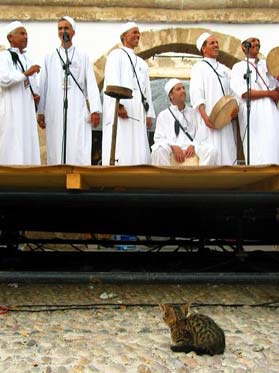
    If you have never visited the Moroccan city of Essaouira, well here is all the excuse you will ever need. A Gnaoua festival! Musicians from around globe will congregate at the 9th Gnaoua and World Music Festival between June 22 and 25.

    The beautiful seaside town of Essaouira will be exploding with the sound of music from the four corners of the world - a real feast as the Gnaoua Maalems' Guembris and crotales echo in symbiosis with Jazz, Rock and other universal musical rhythms.

    Fifteen Gnaoua maâlems will take turn on the scene, including the very known Mahmoud Guinea, Hamid El Kasri, Omar Hayat, Mustapha Bakbou and Abderrahim Benthami. These big names will share the scene with emerging stars, such as Hassan Boussou and Hicham Merchane.

    Music lovers will be treated to world artists such as guitarist Pat Metheny, who fuses world music, techno, heavy metal and Flamenco. Also in attendance will be quartet of Italian saxophonist Stefano Di Battista and the American pianist Scott Kinsey, adept of electric jazz.

    For world music aficionados the mysterious world of Pakistani Qawwali will be explored through the brilliance of brothers Mehr and Sher Ali - and their ten singers. Other names signed up are Guinean magician kora Ba Cissoko, Malian jazzy Ali Keita, Brazilian percussionists Luis Conte and Zé Luis Nascimiento and Algerian Gâada Diwane of Bechar.

    Photo Credit P.E. Rastoin


    Here is what the festival director, Neila Tazi, has to say:

    How to describe the energy and motivation we find each year to put on the Essaouira Gnawa and World Music Festival? From all over the world come musicians and the public, eager to join in this unique celebration.

    We are driven by our passion for music and genuine encounters, our desire to preserve some innocence and dreams in a harsh world. For four days we create a world with values we believe in: simplicity and the basic things in life.

    Artists have a gift for reminding us that being kind, taking the time to listen to others and loving one another are at the very heart of our lives. Songs urging us to stop creating discord and helping those in need are sending us messages of wisdom and peace.


    For more information: ESSAOUIRA GNAOUA FESTIVAL


    Tags:

    Three years in Moroccan jail for German sex tourist

    A Moroccan court has jailed a German tourist for three years for having sex with a teenage boy whom he had paid about $11 and a packet of cigarettes. According to court officials and lawyers, the court in Agadir, southern Morocco's main tourist spot, also fined the unnamed man 5 000 Moroccan Dirhams ($550).

    Reports say that the police caught the man earlier this month having sex with the teenager, and also discovered hundreds of pictures of teenagers and young men in sexually-suggestive positions.

    The court convicted the man of paedophilia, inciting a minor to vice, fitting out a premises for vice and prostitution and fostering sex tourism.

    The court also jailed two 20-year-old Moroccans for six and four months respectively for helping the German man find other young men.

    Tags:

    Wednesday, March 29, 2006

    Moroccan Saffron - As precious as gold dust.


    The mauve flower of the saffron crocus (Crocus sativus) is a precious commodity. The tiny threads of the stigmas are saffron.

    Taliouine, between Ouarzazate and Agadir, is Morocco's capital of saffron and in ancient times women collect the stigma from each flower - a long and painstaking process - from the wild flowers growing on the mountainside. In more recent times, prior to the 1960s, the Jews of Taliouine helped finance saffron production and trade.


    These days there are several hundred hectares of flowers grown on light chalky hillsides at an altitude of between 1200 and 2000 metres (4000 - 6500 feet). Each September the bulbs are planted and come into flower towards the end of October when the harvesting takes place. Harvesting is no easy job, the delicate procedure taking between fifteen and twenty days and only during the early hours of the morning before the flower heads open to the sun.

    The stigmas are carefully removed, dried and stored in waterproof sacks, well away from direct light in order to preserve the quality and flavour. It is easy to understand the price of saffron once you realise that it takes on average 100,000 flowers to produce a single kilogram of saffron.


    Good saffron is readily available in Moroccan souks, but always buy the whole threads rather than powdered saffron which is quick to lose its flavour.

    Tags:

    Nine Billion USD tourism & housing boost.

    Yesterday Morocco and two United Arab Emirates companies signed eight conventions on tourist and housing projects that are to cost nine billion USD and to be based in several Moroccan towns. The scale of the investments is huge and the implications for the economy, tourism and employment are all positive.

    The conventions, signed under the chairmanship of King Mohammed VI, involve the Moroccan State and two UAE companies: "Dubai Holding" and "EMAAR" They provide for investing over a 10-year period in the projects that are to be carried out in Rabat (5.1Bn), Marrakech (2.4Bn), Casablanca (1Bn) and Tangier (0.65Bn).

    Investment amounting to USD 3.1Bn is to go to the development of a 330-hectare area around the Rabat ledge. The 110"hectare Amwaj project along the Bouregreg River valley, also in Rabat, is to receive 2Bn of investments.

    The 600-hectare tourist project in the Oukaimden Mountain, close to Marrakech, is to be carried out with a budget of USD 1.4Bn. Two other tourist projects in Chrifya (Marrakech-140 hectares) and on the route to Ouarzazate (600 hectares) are getting USD 1Bn.

    The convention on the marina project and "Khalij El Hank" project in Casablanca, to cover a 40-hectare area, provides for a fund of USD 1Bn to implement the projects.

    The housing and tourism resort project in Tangiers is allotted USD 650Mn and to cover 230 hectares. It includes a marina, several hotels, as well as recreation and shopping facilities.

    Tags:

    Haifa Wahbi in Morocco

    Remember our story about Haifa Wahbi being banned from entering Morocco? Well how quickly things have changed! Here is the original story: : Morocco rejects Haifa Wahbi

    Many young Moroccans had been angry that she was banned, but not all. Some more conservative types were pleased that she was not allowed in Morocco because they object to her dress and behaviour - there is no word as to why the ban was overturned. Here is the latest news:

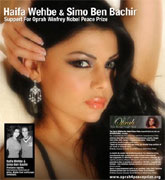
    Lebanese singer Haifa Wahbi arrived in Morocco yesterday with an invitation from the Red Badge Organization. Haifa is to take part in a couple of events for fighting AIDS.

    Haifa will be holding a press conference and will undergo a blood test. Haifa Wahbi will also be participating in the support & nomination of Oprah Winfrey for a Nobel Peace Prize for her role in fighting AIDS & poverty in Africa.


    Our updated Haifa story: What is the fascination with Haifa Wahbi?

    Tags:

    Tuesday, March 28, 2006

    Media: Le Matin takes on the Gulf.

    In an interesting move in the media landscape, Moroccan newspaper Le Matin is set to conquer Gulf press markets. The project of printing the French-language daily in Manama aims at serving the needs of the French speaking community in the Gulf region, which counts more that 500,000 residents from the different francophone countries.

    The move is part of the Bahraini King's contribution to the promotion of the French culture and language, and the reinforcement of Bahrain's leading role in the promotion of culture and qualitative activities, such as hosting ‘Formula 1' car race, and organising the Gulf Festival of Radio and TV. Bahrain seeks to make this festival a real future “Oscar”, like those of Cannes and Hollywood, besides other distinguished international experiences.

    For his part, Othman el-Omeir, president of the leading Moroccan press group Maroc Soir Ltd, praised the decision, which, he said, shows the King's strong attachment to the media field and the importance he gives to the cultural and linguistic diversity in the region.

    He also underlined that the move is in line with the ambitions of HM King Mohammed VI, who has achieved a quantum leap in terms of openness and in the reinforcement of freedom of the press.

    The president of the Maroc Soir group added that “the Gulf edition of Le Matin will be the first of its kind, after the Lebanese and Egyptian experiences, especially as it belongs to such a well experienced institution as Group Maroc Soir Ltd.” The group publishes four newspapers in four languages: Assahraa Al-Maghrebia (Arabic), Le Matin du Sahara (french) Maroc Soir (French), La Manãna (Spanish), and the English-language website Morocco Times.

    Tags:

    Plan to save Moroccan oases

    Hassan Benmehdi, writing in the on-line journal Magharebia points to the disappearance of oasis in the Saharan zone of Morocco.


    For centuries, oases have played a major role in the history of Morocco despite unfavourable climatic conditions. They constitute rare phenomena that long ago developed into a model of long-term sustainable exploitation of natural resources.

    However, the Saharan phenomena are currently endangered and threatened with disappearance if negative conditions persist. The conditions that are killing off the oasis areas have raised the alarm for urgent and effective measures to be taken to save and promote them. Minister for Land, Water and Environmental Development Mohamed El Yazghi recognises the scale of the problem.

    Outlining the national plan to save the oases, which will be implemented this year around Tafilalet, he explained that oases deserved to be restored.

    "The strategy adopted to develop the oases rests on three main independent criteria: optimisation of the use of the available resources, progressive moves towards a more traditional agricultural model and the development of a national oasis tourism strategy," said El Yazghi, adding that "the overexploitation of water resources is endangering the future of oasis areas and this situation will deteriorate further in the case of a lack of rainfall".

    El Yazghi's plan consists of controlling the management of the water shortage and reducing wastage, reducing demographic pressure and making the most of human resources. A traditional farming system will also be set up to ensure that the government is involved in managing resources to diversify the economy and to promote employment through the development of integrated rural centres.

    Link to the full story: Moroccan Oases

    Tags:

    Arab Civil Forum condemns reforms record

    The Second Arab Civil Forum yesterday expressed its disappointment that the majority of Arab nations had "failed to meet their promises in regard to political reforms".

    More than 100 participants from 14 Arab countries attended the forum held in Rabat, Morocco, in mid-February.

    However, the final communiqué, released in Bahrain yesterday, called on Arab governments to remove all legislative and administrative restrictions imposed on creation and administration of non-government organisations, trade and labour unions, and political parties.

    It also demanded the immediate release of imprisoned reform and human rights activists, and abolition of all forms of prejudice towards women.

    The document called upon the Arab Summit, beginning today in Khartoum, Sudan, to assess reforms accomplished so far by member states and their rights records and present reasons for failure to implement the Tunisia Declaration.

    Tags:

    Monday, March 27, 2006

    Fez Sacred Music Festival - update #3

    Many people have emailed saying that they are having problems getting information from the official festival website either because the pages they want are still under construction or are not in English.

    For a comprehensive look at the festival and some good links to further information, please visit our guide to the festival: Fes Festival of World Sacred Music Program

    For those who speak French the official site now has some further information on the Sufi Nights and literary cafes.

    Although there are semi-regular newsletters, the last only contained a dissapointing interview with the festival director, Faouzi Skali, and had little information to encourage people to attend. It is to be hoped that future newsletters are of more interest.

    Here, in part, is what Faouzi Skali had to say in the newsletter about spiritual values and the economy:

    We are becoming more and more conscious that it’s not just an economic crisis we face, but a crisis of the Economy; in other words, a particular way of looking at the world. When we talk of globalisation, most people think of economic globalisation. But in fact, we see in the news every day that we must look at globalisation in conjunction with a great number of other parameters in play in the world today. One of the most important of parameters is that we find ourselves in a world where different cultures coexist, interact with each other and even collide sometimes, and that there are no general rules of managing this coexistence. I also feel that, parallel with economic globalisation, one must also consider political globalisation, the like of which we already see in some international organisations such as the United Nations, for example, or at the major summits such as Kyoto where decisions are made that affect everyone on the planet. One must also mention the increasingly important role played by the policies of international law. There is another level of accomplishment to attain within this political globalisation, it is the success in building up a truly international community founded upon common values and the harmonisation of cultures. Cultures, as we can see daily, emanate from different visions and perceptions of the world, rather like individual members of the same society. We must therefore try to create democratic management strategies that will function on the level of culture, just as they function on the level of the individual, be it national or local. This is something that hasn’t been done yet. But if we don’t succeed in this, it will be extremely difficult to find non-violent ways of resolving conflicts

    Tags:

    Morocco at a glance - A quick tour.


    If you are contemplating a trip to Morocco, your biggest problem will be deciding what to see and what to miss. The kingdom is as culturally rich as it is geographically diverse and cannot fail to impress. Here is a quick guide to the "must see" attractions on the coastal side of the Atlas mountains. We will visit the Sahara and kasbah country in a later post.

    Fez is the bustling cultural and spiritual centre of Morocco.

    The main attraction in Morocco is Fez and central to that attraction is the medieval medina in the colourful old city, which has been continuously inhabited since the 10th century. It is busy with traditionally dressed Moroccans, and rich with the noise of buying and selling, veiled women going about their work and bell-ringing water sellers. It is the last living medina on the planet and to enter it is to enter a time warp that takes you back hundreds of years. There are other medinas, but none approach the extraordinary experience that is Fez.

    This is not a place for a single day, so, if possible, give yourself at least a week. At first glance a guided tour is the easiest way to tackle the buzzing hive that is traditional Fez, but if you are brave, you can negotiate the tiny alleyways, too narrow for cars whilst risking getting lost and then haggling with a local to be guided back out! After the first day or two you will be ready to explore on your own and for further information on how to do that, check out our post: Walking the Fez Medina.
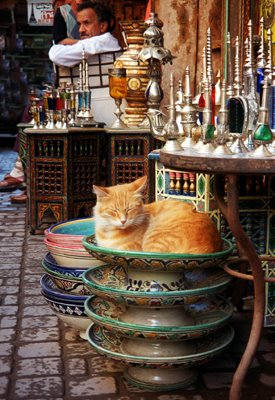


    See also our post of pictures from around the souks of Fez: Around the souqs and Faces in the Medina Also, if you want a unique experience: A visit to the hammam

    The Tanneries: A visit to the souks will lead to a visit to Fez's famous tanneries, where one of the oldest arts in the world is practiced to produce the soft leather do characteristic of Morocco. Many people warn you that you’ll need a strong stomach for the smells given off during curing, while you look down on the fascinating tanners’ yard and its impressive 1000 year old vats of different coloured dyes and piles of skins. However it is not as bad as some sensetive souls insist! Open 9-6, admission free.

    View Point: The best vantage point over the ancient walled city is from the ruined Merenid Tombs on a hilltop to the east of the city. From here you can see the skyline with its profusion of satellite dishes, and a general mass of palaces, green-roofed holy places, the tanneries, as well as the adjacent Karaouine Mosque. Sunrise and sunset can be wonderful times to get the best photographs.

    Moulay Idriss ll: In the depths of the old city sits the shrine that houses the remains of the founder of the city of Fez, Moulay Idriss II. It is one of the holiest buildings in the city. Non-Muslims may not enter, but you can glimpse inside to see the saint’s tomb, which is receives constant devotional visits from groups of women who burn candles and incense.

    A couple of hours from Fez you will find Volubilis: it was built on top of a previous Carthaginian city and dates back to around the 3rd century BC, being a centre of Roman administration in Africa. Volubilis was inhabited until the 18th century, when it was carelessly demolished to provide building materials for the palaces of Moulay Ismail in Meknes. This meant a great deal of Morocco’s Roman architectural heritage was lost. However, today the ruins include some well-preserved columns, a basilica, a triumphal arch and about 30 beautiful mosaics.

    Marrakech


    Walking through the alleyways and souks of Marrakech, particularly in the Medina of the old city, it is easy to believe you have been transported back in time to the “Arabian Nights”. It is this enchanting mood that brings thousands of sightseers to the most visited of Moroccan cities.

    The Medina while not as interesting as that in Fez, is characterized by much noise, hustle and bustle with tradesmen and craftsmen going about their daily tasks of cloth dying, copper beating or leather working, as well as herbalists, perfumers and slipper makers. Snow-covered peaks of the High Atlas Mountains form a beautiful backdrop for the city, although they are often hidden by the heat haze.
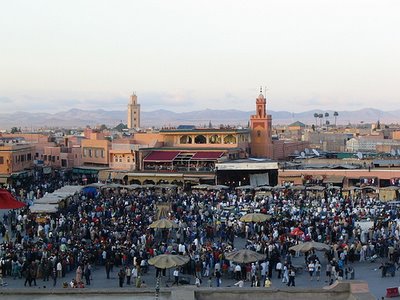


    Djemaa el-Fna:
    On the edge of the Medina. It is an irregular 'square' and a hub of action where tourists flock to soak up the busy atmosphere. Tourism, though, has not spoilt, but rather added to the complete picture. This large town square translated as “Square fo the Dead” offers a colourful scene and is a magnet performing artists, snake charmers, musicians, storytellers and healers, all vying for attention. Passing tradesmen offer anything from boiled snails, vegetable soup and kebabs to fresh orange juice. There are many cafés here from which to watch the busy scene, and from where you may then visit the souks to find some shade from the searing Moroccan sun.


    Marrakesh has a modern side with its luxury hotels, banks and streets bursting with motor scooters, while it blends effortlessly with the past of the old city. Marrakech was founded in 1062 by Youssef bin Tachfine of the Almoravide dynasty, and his son perfected the city by bringing in architects and Andalucian craftsmen from Córdoba to build palaces, baths, mosques and a subterranean water system. The city walls were raised from the red mud from the plains.

    Horse drawn carriages: Known as calèches, are one of the best ways to view the city when you are not on foot exploring in the Medina.

    Koutoubia Mosque:
    This is the city’s main landmark and the 69 metre high minaret towers over the labyrinth of streets and markets in the Medina. The red stone mosque was first built in 1147 but it was knocked down and rebuilt in 1199 because it was had not been built correctly aligned with Mecca. The mosque is large enough for thousands to pray in.

    Dar Si Saïd Museum:
    The Museum is housed in a palace on the Riad Ezzitoun El Jadid and shows the arts, crafts and culture of the Berber people, including displays of some Moorish cedar wood furniture, elaborate door and window frames and artefacts from every day life in the Sahara desert. Open 8.30-11.45 and 2.30-5.45 except Tuesdays. Admission Dh20

    Saadian Tombs: Built in the late 16th century, this beautiful necropolis has 66 lavishly decorated indoor tombs. The central mausoleum has a high vaulted roof which is exceptionally ornate, including carved cedar panels and Italian marble columns. Open 9.00-11.45 and 2.30-5.50 except Tuesdays. Admission Dh15

    Around Marrakesh

    Oukaimeden: A ski resort in the desert with camels instead of ski lifts! Yes, thick snow envelops the Jabal Oukaimeden mountain peak during the winter months (usually January and February) and it is just a 46-mile (74km) drive from Marrakech. The town can be reached by taxi or car and is well equipped for skiers seeking restaurants, ski equipment hire, and comfortable hotels within a stunning alpine setting.

    Ouirgane: A village in the foothills of the Atlas Mountains about 1 ½ hour’s drive from Marrakesh. It is a popular place to visit, where summers are cooler and winters are less harsh. The Berber villages are enchanting whilst set in forests with wild flowers, including the famous rose gardens, fruit trees and streams cascading from the High Atlas.

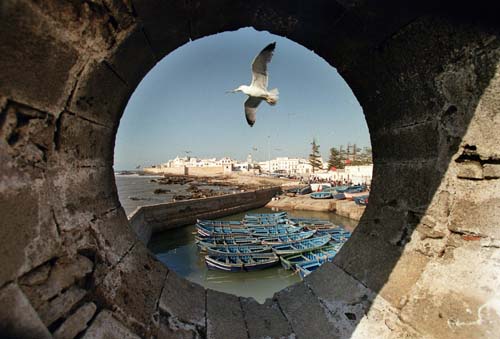
    Essaouira: This popular resort town dates from the 18th century, and is easily reached by bus from Marrakech. The town is surrounded by a fortified wall and faces the sea. The beach is a wide, stunning stretch with pretty whitewashed houses, boat-builders’ workshops and art galleries. Visitors come for the laid-back atmosphere and the high wind that makes it a very popular centre for wind- and kite-surfing.

    Essaouira is also famous for its wood carving tradition, mainly using local, fragrant Thuya wood. The harbour is a hive of activity at all times, particularly during the daily fish auction, attracting as many onlookers as buyers and sellers.

    Agadir: Is a major seaside resort south of Marrakech. It is new and modern with magnificent sandy beaches. Its “newness” is largely due to an uncharacteristic earthquake that shook the town in 1961, and it has now been re-modelled as a popular package holiday destination as well as a major fishing port. Agadir boasts 300 days of sunshine and a huge supply of hotel beds, reputedly a quarter of the total in Morocco. But be warned you may find the locals outnumbered by tourists.

    Rabat


    Morocco’s capital city is characteristically modern with wide, conservative boulevards, gardens and large blocks of flats. The king lives here in a beautiful palace surrounded by trees and flowers.

    Despite having a rich history dating back to 7th century, Rabat is a far cry from the magical backstreets of Fez or the hubub of Marrakech. However the old part of the city has a Medina and a Kasbah.

    Rabat is located on the Atlantic coastal plain, opposite its twin city of Sale, and it is near some beautiful sandy beaches.

    For those who enjoy chasing around a little white ball, Rabat’s Dar Es Salaam Golf Course is world-renowned.

    Kasbah des Oudaïas:
    A Kasbah is a “village within a city” and is a good place to take in the sights of the city. It is guarded by the impressive arched gate built in 1195. The Palace and Andalucian gardens and the terrace gives beautiful views from the Kasbah mosque, over the river and sea. The Palace Museum and gardens date back to the 17th century. The museum houses Moroccan art such as Berber jewellery, costumes and carpets.

    Citadel of Chellah: Located in the new town of Rabat, the ruins of Chellah, once a Roman port, provide interesting sightseeing. Just inside the gate are Roman ruins dating from 200 BC, which includes a forum, a temple and a craftsmens’ quarter.

    Hassan Mosque: You will see the towering 50 metre minaret of the Hassan Mosque from many parts of the city. Each façade of the minaret is intricately patterned with different motifs on each face.

    Mausoleum of Mohammed V: The mausoleum was inaugurated in 1967. Located opposite the Hassan Mosque, it is one of the great monuments of modern Morocco. The deceased king lies in a white onyx tomb, surrounded by royal guards, while and hundreds of Moroccans pay homage each day.

    The Medina: This medina was created by Muslim Andalucian refugees from Badajoz, Spain. It was essentially the first “seed” of the city until the arrival of the French in 1912 who began creating the new town. Not on the scale of Fez, but you certainly won't get lost!

    Archeology Museum: Here you can find a collection of Roman bronze figures, dating from the first and second centuries and recovered from Volubilis. Also other artifacts from Phoenician, Carthagian and Roman settlements throughout Morocco are to be viewed here. Open 9.00-11.30 and 2.30-5.30, closed Tuesdays.

    Casablanca: This is a huge, busy European style port city and has attracted much immigration from the Moroccan countryside. People are modern with little sign of traditional dress or modesty. The old town is small but similar to all the other bazaars found in Morocco.
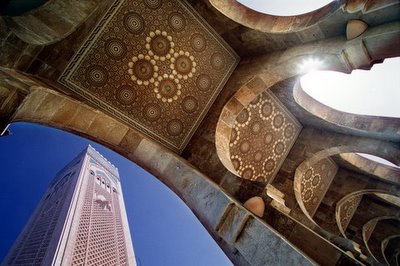
    Photo credit: Zany

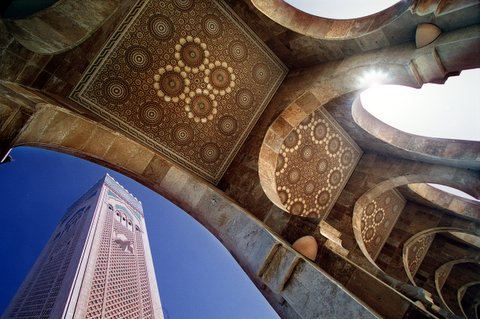
    The impressive Hassan ll Mosque is the 3rd largest religious monument in the World, with fantastic views over the Atlantic Ocean. This is one of the few mosques that non-Moslems may enter - and it is worth it. One of the great buildings of the world.

    Temara:
    Lies on the coast, some 13Km from Rabat. It is a favourite weekend spot for city dwellers. Temara has a sandy beach, along with many hotels, nightclubs, restaurants, a zoo and other leisure facilities to entertain visitors.

    Tangier

    Tangier was once a playground for the rich and famous seeking a fashionable café culture as well as a tax haven. When Spain relinquished Tangier back to Morocco in 1960, its duty-free status went with it, along with the fashionable crowd. The decayed grandeur of today still has much to offer and slowly Tangier is regaining its splendor as an attractive tourist destination.

    Grand Socco: Socco means Souk in Spanish and it is named so due to its Spanish heritage. A Souk is a market to us and is an interesting place to watch passing Rif people in colourful costumes selling vegetables and fresh mint. It begins at a busting square and the medina is entered from the square, through a large arched entrance.

    Kasbah:
    dates back to the 17th century and it is interesting to wonder through its little alleyways, patios and hidden terraces. The Kasbah Mosque boasts an unusual octagonal minaret.

    Sultan’s Gardens,
    Rue Riad Sultan, just north of the Kasbah Mosque, are a pleasant place to visit and watch the local craftsmen at work while sipping mint tea and enjoying views across the Straits of Gibraltar to Tarifa on the Spanish coast, only 14.5 Km away.

    Dar el Makhzen: This is a 17th century palace containing and impressive collection of art from all regions of Morocco.

    Forbes Museum: This is located in the Marshan Villa district, about 20 minutes walk from the medina. The museum is the former palace of United States multi-millionaire and media magnate, Malcolm Forbes. The house is open to the public and houses Forbes’ collection of 8,000 miniature soldiers!

    Chefchaouen

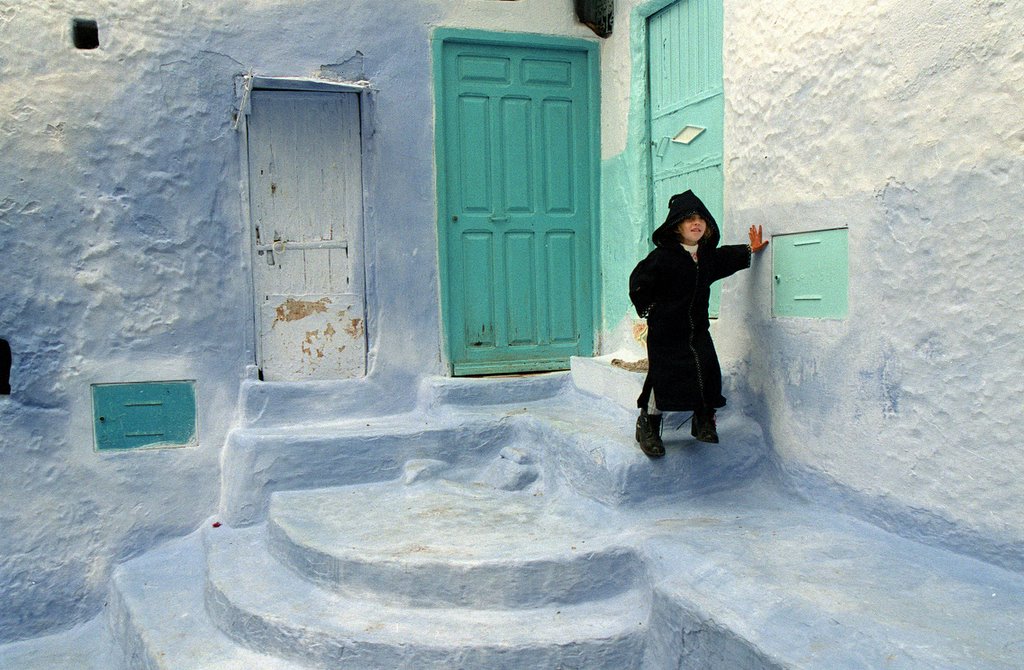
    Chefchaouen was first settled by Spanish Muslim refugees in the middle-ages and has retained its distinctive Spanish character. It is just an hour’s drive from Tangier in the Rif mountains.


    The medina is beautiful and bustling with craftsmen working diligently and tradesmen selling the usual fare of carpets, leather goods, pottery and copper utensils. The Great Mosque, in the middle of the medina dates to the 17th century sits on a picturesque square with restaurants and cafes.

    Asilah


    Located south of Tangier, Asilah is a very poplular seaside resort, famous for its nearby Paradise Beach. Paradise Beach is a short taxi or a fun horse and cart ride from the village and is famous for its enormous expanse of unspoilt white, sandy beach.

    Despite growing numbers of visitors, Asilah has retained its relaxing atmosphere. Asilah is known as the Artists’ Village and here you can find many locally painted canvases adorning the souks of its 15th century medina. The town is small enough to explore on foot or by donkey cart and is renowned for its great seafood restaurants.

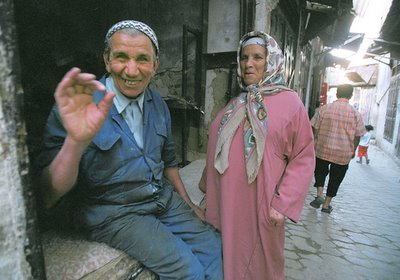
    In Conclusion - whatever you do on your trip make certain you get to meet the Moroccan people. They are warm, hospitable and will make you feel welcome.

    Tags:

    Fès Culinary Arts Festival

    The annual Fès Culinary Arts Festival will take place on April 28 through to the 30th

    Entering its third year, the festival will once again highlight the culinary expertise of acclaimed national and international chefs with entertainment and informational food seminars and tasting events.

    Organized by Moroccan specialist in culinary arts, Fatéma Hal and the "Esprit de Fès" Foundation, the festival is a unique event in Morocco bringing together culinary arts writers, historians and journalists, in addition to hotel business managers.

    Tags:

    Marina de Casablanca


    Casablanca is to get a make-over which aims at improving the architectural quality of the city, upgrading the Royal Armed Forces Avenue, reinforcing regional reforestation and developing a green belt round the city. But most impressive of all is the plan for a new Marina.

    On Monday HM King Mohammed VI launched the construction works of the pleasure port Marina de Casablanca (Marina of Casablanca) and presided over the signing ceremony of three conventions related to the programme of the regional tourism development of Casablanca.

    The programme is part of the Plan Mada'in aiming to develop the potentials of Casablanca as a tourist and business destination. This is also part of the Kingdom “Vision 2010” tourism policy that seeks particularly the development of a diversified hotel offer of high quality, the rehabilitation of the cultural soul of Casablanca, the setting up of infrastructures and equipment of congresses and exhibitions, and the improvement of the urban quality of the city.

    This ambitious programme will allow the construction of 10,000 supplementary beds and create 30,000 jobs by 2012.

    The King was also briefed on the project of Marina de Casablanca presented by the Director General of the Caisse de Dépot et de Gestion (CDG) Mustapha Bakkoury. It extends over approximately 24 ha and has been allocated a budget of MAD 5 billion, 1.5 of which will be financed by the State.

    The project aims to construct hotel units, offices, houses, commercial and leisure facilities. In relation to the geographic position of the project, the port will include a vital tourist pole offering various services that will contribute to the upgrading of the neighbouring environment that comprises particularly the Casablanca port and the ancient medina.


    Tags:

    Sunday, March 26, 2006

    A growing silence?

    While it is the nature of the blogosphere for blogs to come and go, it is sad when blogs that you have enjoyed visiting go silent. This is particularly true of English language blogs in the Moroccan world. Over the last few weeks we have noticed that for various reasons - ranging from health to other committments - some of our favourite bloggers have either said farewell or taken an extended break.

    Foulla in her blog wonderful blog Refusenik says "I'm quitting..I 'll stop blogging for some times since i realised it's really time consuming.and i do need all my time to be around my two babies who are growing up fast." - and that is totally understandable, but does leave a hole in the blogosphere that is hard to fill.

    Likewise, Hujaina bids us farewell with "ce sera peut etre mon dernier post et si je revien se sera sur blogspot car là: its suffocating but ill be around."

    Hale in Bloggin the Maghreb has a painful reason for taking a break - "One of these accidents resulted in a broken left wrist -and, being left-handed, it is difficult to type with just my right hand! I have enjoyed bloggin' and hope to have the opportunity to get back to it when all the various parts heal."

    There are others too who appear to have simply stopped. Saad, in his The World from Rabat has not posted since mid-December and one can only hope that he is simply taking a well earned break and will return.

    Why is all this important? While there are many wonderful voices blogging about Morocco and the Maghreb in French and Arabic, there are precious few in English. Of course there are some great blogs by travellers, whose attention turns to Morocco during their adventures, but they come and go. We do need a diversity of voices and although we not always agree on the way we see the world, a variety of voices allows us to gain a greater understanding of this part of the world and of each other.

    On the plus side there is Global Voices where Farah Kinani does a wonderful job of distilling the essence of the Moroccan blogosphere each week and does so in a way that gives English speakers a glimpse into the worlds of Arabic and French bloggers.

    Tags:

    New Sahrawis Website

    Today, approximately 50,000 Sahrawi men, women and children are being held hostage in highly guarded camps in the Tindouf region of Southern Algeria. Right now, nearly 3,000 Sahrawi children, who have been ripped from their families, are being indoctrinated in Cuba. As the international community sits passively, thousands of dollars of donated food, clothing and medicine destined for the captive Sahrawi refugees remains unaccounted for.

    A new website has been launched to speak for the men, women and children trapped the concentration camps in Tindouf. The launching of the website coincided with the visit of a delegation composed of Moroccan nationals from the kingdom's southern provinces to the US.

    The website aims at informing internet users on the hell endured by the population sequestered by the Polisario Front, on the torture of children taken forcefully from their families and deported to Cuba for a political indoctrination and military training as well as the embezzlement of humanitarian aids which are resold by the Polisario.

    “Separated Families”, “Stolen Donations”, “Inhumane Suffering” reads the front page of the website to denounce the violations undertaken by the Polisario for over 30 years.

    The site also includes testimonies of Sahrawis who have been deported to Cuba and endured all kinds of manipulation.

    “How long will the Polisario Front be allowed to terrorize and manipulate the oppressed Sahrawi people before someone speaks?” exclaimed the creators of the site, which was launched by the Washington-based National Council of Clergy.

    The internet users may also download, from the website, a letter which they may address to the State Department, namely to John Hanford, the ambassador in charge of religious freedom in the world.

    In the letter, they can express their concern over the situation of people sequestered in concentration camps, denounce the practices of the Polisario and ask the American administration to intervene to put an end to the embezzlement of the humanitarian aids and make sure that the income of the stolen goods does not fund their illegal and terrorist activities.

    The Moroccan delegation held meetings in New Jersey and Florida with many religious leaders, pastors and parishioners.

    During these meetings, the members of the Moroccan delegation, Saadani Maa Oulainine, Boussoula Mohammed Ebeya, Bachir Edkhil, Ali Najab and Ali El Jaouhar, revealed shocking testimonies about the torture they have been inflicted by the Algeria-backed Polisario.

    Check out the website here: Speak for Sahrawis

    Tags:

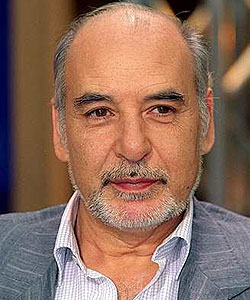
    The Last Friend - Tahar Ben Jelloun


    The Last Friend by Tahar Ben Jelloun is translated by Kevin Michael Cape and Hazel Rowley. The book is published by New Press.

    The Last Friend, was the winner of the 2004 International Dublin/IMPAC award, is a Rashamon-like tale of friendship and betrayal set in twentieth century Tangier. Written in Ben Jelloun's inimitable and powerfully direct style, the novel explores the twists and turns of an intense thirty-year friendship between two young men struggling to find their identities and sexual fulfillment in Morocco in the late 1950s, a complex and contradictory society both modern and archaic. From their carefree university days through their brutal imprisonment and ultimate release, the two rely on each other for physical and psychological survival, forging bonds not easily broken. Each narrator tells his version of the story, painting a vivid portrait of life lived within and in opposition to the moral strictures of North Africa. Set against a backdrop of repression and disillusionment, The Last Friend is a tale of loss of innocence and a nation's coming of age.

    Here is a review that appeared in the San Francisco Chronicle. The reviewer is John Freeman is the president of the National Book Critics Circle.

    What a strange and delicate flower is male friendship. Grant it too much sun and water, and you grow something soggy or overheated. Ignore it entirely and you rarely wind up with a desert rose.

    In his latest novel, "The Last Friend," Moroccan-born writer Tahar Ben Jelloun explores this dilemma with the tale of a friendship that suddenly dissolves. For 90 pages, we hear from Ali, who searches his past to explain why his friend Mamed suddenly scorned him. Then we learn from Mamed the poignant source of their breakup.
    Something about this setup provokes the obvious question: Were they lovers? The answer is no, but as Ben Jelloun presents the relationship, the issue is rather beside the point.

    The two men meet as boys in the Moroccan port city of Tangiers in the late 1950s and fall into a fast friendship. They trade sex stories and film magazines, jibe each other gently about their backgrounds.
    They also meet just before girls become their primary occupation. This is an important distinction, for it sets up the betrayal -- or at least the impression of one -- that gnarls so many male friendships, without making them necessarily homosexual. "I fell in love," Ali remembers, "which bothered him.

    Her name was Zina; she was dark and sensuous. For the first time it occurred to me that he might be jealous of me."
    But as it turns out, Mamed wasn't jealous. In fact, he was probably just preoccupied. To hear his version of events, the two boys were comrades in a winner-take-all race for female virginity. "Girls willing to have sex were rare," he recalls, "we knew about them only because they already had a steady boyfriend or were in their last year of school. They came to school wearing makeup and perfume. We watched them from a distance making lewd comments."

    Readers who come to this novel under the impression that stories from the Muslim world will be prudish or full of allusion are in for a surprise. This is a sexy, racy novel, energized -- for a long stretch -- by its two protagonists' frantic search for a girl who doesn't prefer sodomy to vaginal intercourse. None of their prospects wants to break her hymen.

    Though it might be new territory for some of his readers, this is not necessarily new material for Ben Jelloun. Since he made his fiction debut in 1973 with "Harrouda," a novel about a fallen prostitute in the city of Fez, where Ben Jelloun was born, he has been interested in the way we negotiate our identities through desire.


    In "The Sand Child," he told the story of a man so desperate to have a son that he names his eighth child, a girl, Ahmed, and says she is a boy. "The Sacred Night," which won the Prix Goncourt in 1987, continued Ahmed's story as she suffers a convoluted pathway to adulthood.
    "The Last Friend" is a more conventional story by comparison, but it still has the power to shock. Ali and Mamed have masturbation contests and go to prostitutes to slake their urges. Ali watches in horror as his lady of the night removes her dentures. When the time comes, they marry and start families. Only one of them stays faithful to his wife.

    In this sense, "The Last Friend" is primarily a novel about the replacements that can sour a friendship. There is a bond that develops among men who share this period of frantic sexual exploration, and it is powerful indeed -- almost more powerful than prisons, which both characters endure during a crackdown on leftist students.


    But there is a second wedge driving this friendship apart, and it has to do with nationality. After university, Ali moves to a coastal town and teaches while Mamed emigrates to Sweden, where he finds a clean and modern country of respectful people.
    "Arriving in Sweden from Morocco, the first thing you notice is the silence," Mamed notes. "It's a silent culture, without disruption or disorder. ... Their silence, the whiteness of their skin, their clear eyes and distant look, their gestures, their routine pleasures, and their respect for rules. ... I discovered a culture of individuals!"

    Yet for all the benefits Mamed gleans from his adopted country, a part of him dies there, too. Ali isn't just a connection to Morocco but to a particular Morocco, a place of the very ancient past. "Seen from Tangier, Fez appeared to be a city beyond the reach of time," Ali says, describing his hometown at one point. "Nothing, nothing absolutely had changed since the day it was built. Its beauty lay in relationships to time." Nations and individuals move forward in syncopated fashion -- until sometimes the leap forward is so great that the only thing to do is break with the past. With this sour, sweet tale of two men looking at each other across this divide, Tahar Ben Jelloun shows how what tumbles into the breach is sometimes our closest friendships.

    Tags:

    Saturday, March 25, 2006

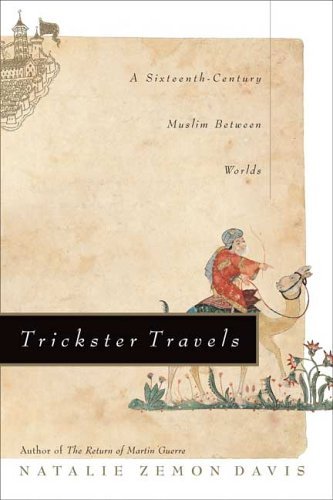
    Between two worlds - Trickster Travels


    "YOU know me, I am one of you."

    So said the bird when he arrived among the fish. Blessed with the ability to live in air or water, he had lived happily among the birds until their king came demanding his taxes, at which point the amphibious bird plunged into the sea. Claiming kinship with the fish, the bird found comfort among them. But when the fish-king came around for his taxes, the bird shot from the water and rejoined the flock. So it went for the rest of his days, the bird claiming membership in each of the societies he moved between, but never granting his full allegiance to either.


    This is one of the stories told by 16th century scholar al Hasan al Wazzan in The Description of Africa, the first narrative geography of the continent to appear in Europe. The itinerant author explains that he will "be like the bird": He will tell the truth of his subject because he belongs to no nation. Wazzan is better known as "Leo Africanus".

    Wazzan's travels are revisited in a new book: Trickster Travels: A Sixteenth-Century Muslim Between Worlds written by Natalie Zemon Davis who offers the first comprehensive reconstruction of Al Wazzan's life.

    The book takes us from his birth in Islamic Granada in the 1480s; his family's flight as Christian armies expelled the Moors from Spain; his education in the madrassas of Fez, Morocco, and his years traveling as a diplomat in North Africa and the Levant, among the Berbers, Arabs, Jews and black Africans who populated those lands.

    She writes of his kidnapping by Spanish pirates who offered him as tribute to Pope Leo X in Rome; his christening as "Giovanni Leone" (hence Leo Africanus) by the pope; his life of independent scholarship in Bologna and his departure from Italy after nearly a decade, during which he produced "The Description of Africa" and other works.

    Read a review here: Tricksters Travels

    Tags:

    Friday, March 24, 2006

    Most viewed posts - week ending March 25


    Each week we track the most popular posts so that we can make the content of The View From Fez more to your liking. Here are the top posts from the last seven days.

  • Three Moroccan Recipes

  • Black Widow - A novel on the aftermath of Beslan.

  • Abdul Rahman - Insane or Christian?

  • Fes Festival of World Sacred Music Program

  • Walking the Fez Medina

  • Buying and restoring a house in Fez

  • Tags:


    Tags:

    Forget fundamentalism - fight poverty.

    The Islamist Development and Justice Party (PJD) , who are widely tipped to win Morocco's parliamentary election next year, will focus on fighting corruption and poverty rather than pushing a fundamentalist agenda, its leader said.

    Saadeddine Othmani, who could be Morocco's first Islamist prime minister, said his moderate Islamist Development and Justice Party could be compared to Christian Democrat parties in Europe.

    'The PJD is a political party with Islamic references,' he said.

    PJD is the third-largest group in the 325-member parliament, just behind the Socialist Union of Popular Forces (USFP) which dominates a centrist coalition government with the nationalist Istiqlal party.

    But, according to a poll by the U.S.-based International Republican Institute, the PJD could overwhelm USFP and Istiqlal and win 47 percent of the vote compared to 29 percent for the two other parties together.

    Othmani played down the poll and predictions of a PJD win, which would cause concern among the secularist elite.

    'Predictions often do not coincide with facts and reality. So let's not think too far ahead and let's wait. Voter opinions can change and the polls are not for tomorrow,' he told Reuters in the interview on Thursday.

    If the PJD wins the 2007 election, it would be the first Islamist victory in North Africa since the Islamic Salvation Front looked set to win Algeria's parliamentary polls in 1991.

    The ISF had a commanding lead after the election's first round. The Algerian military scrapped the elections before the final second round, provoking civil strife that lasted more than a decade and cost about 200,000 lives.

    The PJD, mindful of the bloody experience in neighbouring Algeria, is sending messages of moderation at home and abroad.

    Othmani and other party officials are expected next month to begin trips to France, the United States and other countries to drum up support for the PJD's moderate programme.

    "Our duty is to reach out to the other side (the West) and listen to what they say. We must have a way with the West and use the good manner to win acceptance and respect," he said.

    The US State Department has reportedly drawn up a memo calling for direct and permanent political dialogue with Egypt's Muslim Brotherhood, which cruised to an impressive parliamentary victory last year.

    Tags:

    HRH Mohammed VI pardons Polisario guerrillas.

    Morocco's King Mohammed VI will pardon 290 inmates, including members of the Polisario Front, Arab daily al-Sharq al-Awsat reported on Friday. The report said the amnesty will mainly concern detainees arrested in the wake of recent protests in the city of al-Ayoun, in western Sahara. Many of the detainees belong to the Polisario movement fighting for the independence of Morocco's Western Sahara region.

    The Algerian backed Polisario has waged an 18-year guerrilla campaign against Moroccan forces. Morocco reclaimed Western Sahara after Spain withdrew from the colony in 1975.

    The conflict ignited a long and bitter guerrilla war that was ended in 1991 by a UN-brokered cease-fire. Polisario, backed by neighbouring Algeria, still claims sovereignty over the area but has little international support.

    Anonymous sources cited by the paper said the king decided to grant the amnesty to pursue negotiations with the movement, after undertaking a goodwill tour of Western Sahara in the past few days.

    Tags:

    Moroccan telephone numbers change today!

    Here's what changes:

    Numbers that begin with 02 do not change
    Numbers that begin with 03 do not change

    Numbers that begin with 04 will now begin with 02
    Numbers that begin with 05 will now begin with 03 THIS IS FEZ!!

    Mobile phone numbers (which start with 06 or 07 ) do not change

    Toll-free numbers (which start with 08) do not change

    Premium rate numbers (which start with 09 do not change)

    Tags:

    Thursday, March 23, 2006

    Abdul Rahman - Insane or Christian?

    At a time when we are just getting over the impact of the Danish cartoon fiasco and moderate voices on all sides are seeking closer ties between Christians and Moslems, the last thing that Islam needs is the spectacle of a Christian convert being put to death for having rejected Islam.

    Yet that is just what is unfolding in Afghanistan. All of which must be very embarrassing for Afghan President Hamid Karzai. However, Moayuddin Baluch, a religious adviser to Karzai thinks he has the answer - insanity. Baluch points to a statement by prosecutor Sarinwal Zamari that ... "We think Abdul Rahman could be mad. He is not a normal person. He doesn't talk like a normal person."

    So is this the way out for Afghanistan? Is this the sensible way to save face? The implication that Abdul Rahman was insane to convert must appear a winning ploy - but ducks the question about just what sort of democracy and freedom have the American's imposed in Afghanistan. Surely a reform of the law would be a more sensible way forward. Getting rid of the Taliban was generally popular - getting rid of archaic laws would be a smart move as well.

    Islam is in need of good PR and incidents such as the case of Abdul Rahman can easily derail the campaign to show that modern Islam is a tolerant religion.

    The Christians also need to be careful not to get too righteous in all this. Mind you it is a while since they burnt witches at the stake.

    BACKGROUND

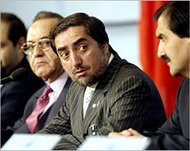
    Abdul Rahman (pictured centre left) is charged with rejecting Islam and could face the death sentence under Sharia law unless he recants.

    He converted 16 years ago as an aid worker helping refugees in Pakistan. His estranged family denounced him in a custody dispute over his two children.

    It is thought to be Afghanistan's first such trial, reflecting tensions between conservative clerics and reformists.

    Trial judge Ansarullah Mawlazezadah has said that the 41 year old Abdul Rahman will be asked to reconsider his conversion.

    "We will invite him again because the religion of Islam is one of tolerance. We will ask him if he has changed his mind. If so we will forgive him," the judge said.

    But if he refused to reconvert, then his mental state would be considered first before he was dealt with under Sharia law, the judge added.

    He said he expected the case to take about two months to be heard.

    Precedent

    The Afghan Human Rights Commission has called for a better balance in the judiciary, with fewer judges advocating Sharia law and more judges with a wider legal background.

    Several journalists have been prosecuted under blasphemy laws in post-Taleban Afghanistan.

    The editor of a women's rights magazine was convicted of insulting Islam and sentenced to death last year - but was later released after an apology and heavy international pressure.

    Mr Karzai's office says the president will not intervene in the case.

    Observers say executing a converted Christian would be a significant precedent as a conservative interpretation of Sharia law in Afghanistan.

    REACTION - "Tolerant like the Taliban"

    Around Europe the media was quick to attack. Denmark's notorious Jyllands-Posten, the daily that first ran the Prophet Mohammad cartoons, quoted Syrian-born member of parliament Naser Khader as saying: "If necessary, Danish troops should liberate Abdur Rahman and Denmark should offer him asylum. This matter underlines that sharia must be fought wherever it exists," he said.

    "Tolerant like the Taliban!" was Munich's Sueddeutsche Zeitung's take.

    Die Welt in Berlin wrote that Afghanistan faced "the dark ages of barbarity" if it executed Rahman.

    Milan's Corriere della Sera said Western states helping Afghanistan should launch a movement to reform Islam there.

    The Dutch daily Trouw wrote. "We have a duty not to cooperate in bringing back the burning of heretics at the stake."

    France's Marianne magazine made clear Western critics might not be satisfied if the Kabul court arranges to avoid the death sentence by declaring Rahman insane and unfit for trial. "If he is not tried, he will probably end up in a psychiatric hospital, which for a man of sound mind is sometimes worse than death," it commented.

    Tags:

    Imams and Rabbis for peace

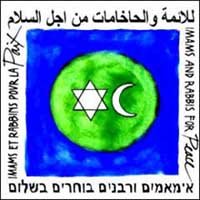
    The second Imams and Rabbis for Peace World Congress held in the Spanish city of Seville, condemned "every attack on people's religious beliefs. At the end of the congress, the 150 participants from all over the world called on the international community to promote respect toward religious beliefs and the sacred shrines "notably the holy land for its specific sensibility."

    The congress, under the auspices of Moroccan and Spanish kings, also condemned violence and wars led in the name of religion, calling for "life and human dignity respect."

    Organized by the Seville-based "Trois Cultures" foundation in conjunction with "Hommes de parole," the four-day congress aimed to give the floor to Muslim and Jew peace lovers against "the integrists that preach and violence."

    The congress brought together several participants among them king's advisor, André Azoulay, Moroccan university Al-Akhawayn President Rachid Benmokhtar, and Habous and Islamic Affairs ministry senior official Ahmed Abbadi in addition to Islamic educational, scientific and cultural organisation (ISESCO) director general, Abdulaziz Othman Altwaijri, great-Rabbis from Israel and Norway and the Imam of Ghaza (Palestine) as well as the Mufi of Istanbul.

    Tags:

    Moroccans turn down media funds from USA.

    At a time when the Moroccan press laws are under review, it is maybe time to amend the legislation that outlaws foreign funding for media projects. While many countries have strict controls on foreign media ownership, the regulations pertaining to funding for training need to be more flexible. The problem was highlighted when on the Moroccan cabinet refused US funding for its local media.

    Yet there is another view of the situation. Many observers are sceptical about the American push to use the Middle East Partnership Initiative as a way of increasing American influence under the guise of aid. The last thing Morocco needs is for its own media to become a trojan horse for American influence.

    In the latest case it seems that the government has taken a sensible and cautious line.

    According to the Moroccan daily, Aujourd'hui le Maroc , the government communicated its refusal to the US ambassador to Rabat Thomas Riley to accept money under a programme of the United States administration, the Middle East Partnership Initiative (MEPI). MEPI had offered 100 thousand to 1 million dollars for a three-year project promoting local media with the aim of supporting democracy in the country.

    The deadline to apply for the funding is 31 March. However, the Moroccan daily reported that it was unlikely media outlets would apply considering that communications minister Nabil Benabdallah and foreign affairs minister Taib Fassi Fihri reportedly told Riley that the project went against national legislation "forbidding foreign funding to the national media."

    MEPI was created in December 2002 by then secretary of state Colin Powell and funds programmes promoting democratic change. The US Congress voted in 2005 to give MEPI A 74.4 million dollars budget for its programmes in North Africa and the Middle East.

    Presse : rejet de l’offre américaine

    Lors d’une rencontre tenue au siège du ministère des Affaires étrangères et de la Coopération, le ministre de la Communication et le ministre délégué aux Affaires étrangères ont informé l’ambassadeur américain de l’illégalité de l’offre de subvention aux médias nationaux.

    La MEPI (Middle East partnership initiative), initiative de l'Administration américaine pour la presse "indépendante" dans le monde arabe, coince au Maroc. C'est ce qui ressort d'une réunion de travail tenue lundi 20 mars 2006 au siège du ministère des Affaires étrangères et de la Coopération entre deux membres du gouvernement marocain et l'ambassadeur US à Rabat. Selon une source informée, le ministre de la Communication, Nabil Benabdallah et le ministre délégué aux Affaires étrangères, Taïb Fassi Fihri, ont tenu une réunion avec le chef de la mission américaine à Rabat, Thomas Riley, pour l’informer que l'"offre américaine" était en contradiction avec les lois marocaines et notamment l'article 20 du Code de la presse qui interdit aux médias nationaux d'accepter des subventions directes ou indirectes de l’étranger.

    Tags:

    Wednesday, March 22, 2006

    Weekly Blog Roundup


    Farah Kinani writes on the Global Voices Blog Roundup..."Now that I’m becoming more familiar with the Moroccan blogosphere, I can tell that one of its characteristics is the fact that many of its members are doctors or student-doctors. In this week’s roundup, we’ll find out what interested some of those doctors-bloggers last week. We’ll also pay a visit to some “news oriented” blogs, and will read excerpt from literary ones."


    Read the roundup here: Doctors Most likely to Blog in Morocco.

    In other Blogs:

    In the always interesting blog, Morocco Time, Liosliath writes about the emergence of female Imams!

    AJ and Andrew who blog on The Vagabond's Journal are all set to end their adventures in Morocco but are promising a final podcast:
    a walk through Marrakech’s Djemaa el Fna.

    John Turnbull, writing in The Global Game , turns his attention to the African immigrants trapped in the camps in Melilla. For a taste of the familiar after months-long journeys by land and sea, football has much to offer hundreds of displaced Africans. Recently the CETI Club de Fútbol started to compete in a 10-team city league in this Spanish enclave on the coast of northern Morocco.

    Miliana writes about the experiences of an American woman in Morocco in her blog What Fresh Hell is this?... It's a culture, to use a well-worn phrase, that's very much like an onion. There are outer layers that a first or second time visitor may see. It is only through several visits and a genuine interest in peeling back the layers and examining what's underneath that one can truly appreciate the heart of the rich combination of history and tradition.

    And finally, Cat in Rabat is on holiday in the dunes. We hope she has a wonderful time and returns soon with great stories.

    Tags:

    Chirac suggests Spain returns Sebta and Melilla.

    The long held dream of Moroccans to get back their Spanish occupied territory, may be a step closer with the release of a new book that shows just how firmly the notion is on the political agenda.

    French president Jacques Chirac suggested to former Spanish prime minister Jose Maria Aznar that Spain should turn over Ceuta, Melilla, and Spanish uninhabited islands along the north coast of Africa to Morocco in order to solve the Perejil Island crisis. Moroccan troops had illegally landed on Perejil, a Spanish possession near Ceuta, and raised that country's flag. Spanish troops reoccupied the island without violence. Aznar made the statement in a book titled Distant Neighbors: The Secrets of the Spain-Morocco Crisis by Ignacio Cembrero.

    The book also includes a statement by former CNI (Spanish secret service) chief Jorge Dezcallar, who said that the Perejil Island crisis was "the tipping point that made Aznar jump into Bush's arms," since the US was the only country that supported Spain in its attempts to solve the dispute.

    Cembrero's book analyzes the relationship between Spain and Morocco since King Mohammed VI acceded to the throne, and also includes the opinions of dozens of officials, diplomats, and business executives from Spain, Morocco, France, and Algeria. According to Cembrero, the Perejil crisis could have been solved in another way, "but they wanted to give the most attention-getting lesson possible to Morocco and its King." He quotes Aznar saying that the crisis "could not be explained without Chirac's practically unconditional support" for Mohammed VI.

    Cembrero believes that the Zapatero government "has gone very far in its approach to Morocco," and sometimes Spain's relationship with Morocco "goes beyond" that country's relationship with France, "Morocco's principal European ally." In his opinion, drawing the maritime frontier between Spain and Morocco in the Atlantic and Mediterranean, and the relationship between Ceuta and Melilla and their hinterlands, are the two principal problems between the countries.

    Cembrero declared, "The most interesting question in upcoming years in Morocco is to learn whether the monarchy is capable of channeling Islamism," since, he said, "Moroccan society in its great majority agrees with the Islamists," and political Islamism is the strongest force in the country.


    Tags:

    Tuesday, March 21, 2006

    Dar Seffarine


    If you are looking for one of the best places to stay in Fez, check out Dar Seffarine. They now have their own website and booking is easy. The couple who own Dar Seffarine are friends of The View From Fez, and we can not praise the accomodation too highly!

    Check it out here: Dar Seffarine


    Tags:

    1400 hectares of argan trees to be planted.


    Great news for lovers of Moroccan Argan oil! Some 1400 hectares of argan tree land are to be replanted with the endemic tree in the south-western region of Souss-Massa-Draa in 2006 to fight desertification, Regional Director of the Water and Forests Department, Abdelkrim Azenfar said on Tuesday.

    Out of the 1400 ha, the High Commissioner of Water and Forests has pledged to fund the planting of 1050 ha, while the remaining are to be financed in partnership by other local institutions and Ngos, Azenfar said at an information meeting on forest development and desertification held by the Regional Direction of Water and Forests of Agadir, south-west Morocco.

    In 2005, Azebfar said some 800 ha were replanted with argan trees, that grow exclusively in the south-west region of Souss (researchers have however found specimens in the north-east region of Morocco, while experiment to grow the tree in the north have been conducted in the Khemisset region, 60 km east of Rabat).

    The tree almond-like nuts are processed into argan oil. The oil is edible, mingled to ground almonds and honey we obtain a peanut butter-like paste. The tree nuts and leaves are feed for goats, mainly. The tree also provides firewood for local populations.

    The Regional Direction also conducted a study to assess the impact of planting other plants and trees in the argan land.

    Natural forests in the Souss expand over 1,200,000 ha, which is a 17% forestation at the regional level and 13% at the national level. The argan tree is two thirds of the forests in the Souss.

    Azenfar deplored the degradation of the forests in Souss because of man-made factors, such as grazing, collecting firewood, forest clearing for other farming, and others like desertification.

    The Moroccans have been using for centuries the Argan oil as food as well as a beauty product, notably as an ointment for skin and hair. The oil is relatively rich in vitamin E and is antioxidant that can limit the appearance of wrinkles.

    The Soussis and the Moroccans at large use it to remedy arthritis and for some decades it has been used to lower cholesterol rate and hence prevent heart diseases.

    The Argan tree (argania spinosa) grows in a harsh environment, surviving heat, drought and poor soil. It is little known outside Morocco, and many Moroccans themselves have never heard of it because it grows only in the south-west of the country - roughly between Essaouira and Agadir, in an area covering 700,000-800,000 hectares.

    But within the area where the Argan grows there are about 21 million trees, which play a vital role in the food chain and the environment, though their numbers are declining. The tree, which is thorny and can reach heights of 8-10 metres, probably originated in Argana, a village north-east of Agadir (off Route 40). It lives longer than the olive and requires no cultivation.

    The production of Argan oil, which is still mostly done by traditional methods, is a lengthy process. Each nut has to be cracked open to remove the kernels, and it is said that producing one litre of oil takes 20 hours of work.

    Argan tree with goats


    The story of argan oil is an amazing mix of history, biology, conservation and haute-cuisine.

    For hundreds of years the Berbers in the South Western part of Morocco in an area covering 700,000-800,000 hectares have let their goats climb the argan trees (Argania spinosa). These spiny evergreens produce a slightly larger than olive-sized fruit, the pits of which pass right through the goat’s digestive system and are collected by the Berbers. The pits are then split open and the three small kernels are ground to produce the aromatic oil.
    The argan tree is a real survivor that can be traced back as far as the Tertiary Period 1.5 million years ago. Part of its success is due to its ability to remain virtually dormant and fruitless during years of drought. Yet despite its tenacious qualities it is under threat as never before. Local demand for wood, overgrazing by goats and the fact that it is never commercially propagated has lead to a huge decline in tree numbers. Some experts say that 60% of all trees have vanished in the last half century.

    The Process

    The production of this oil is a demanding and laborious process which was until recently done completely by hand. The manual method consists in first collecting the pit of the fruit from among the goat droppings. The pit's hard shell is then cracked to collect the kernels. These are roasted by mild heating and once cooled, ground in a stone rotary quern. Later the kernels are hand-mixed with a small amount of water to form a dough. It is from this dough that the oil can be extracted by hand.

    Recently mechanical presses have been introduced to extract argan oil. This process reduces considerably the time needed to extract 1 litre of oil. Once the kernels are roasted, the mechanical press takes care of the grinding and extraction. More oil is extracted and since no water is added to press the dough, the oil can be stocked longer.The most consuming time of the process, cracking the nuts, is still done by hand.

    And here is an argan oil recipe

    Tags:

    International Poetry Day


    ‘The International Day of Poetry is an occasion to pay tribute to poetry and to commemorate poets' creativity in this kind of literature,' said poetess Fatima Berroudi.

    She added that the celebration of this day is marked by decades of delay, considering its important role in the society.

    In this respect, she explained that poetry contributes to the creation of equilibrium in societies.

    “It is also an important means of expression, especially when talking about the political reality in different stages,” she underlined.

    According to the Moroccan poetess, the celebration of this day is taking place in good conditions, considering the numerous events organised in this respect.

    “Poetry remains marked by its spiritual aspect which contributes to the promotion of culture, dialogue, tolerance, diversity, freedom and peace,” she added.

    Berroudi also talked about the importance of publication, noting that it is the principal condition for the promotion of modern Moroccan poetry.

    She underlined the necessity of providing readers with low-cost poetic works and the introduction of the tradition of reading this kind of literature, especially in Moroccan schools.

    “It is necessary to introduce a reform in the educational system, giving more interest to poetry as it plays a primordial role in the intellectual promotion,” she concluded.

    Earlier, La Maison de la Poésie (Bayt Achiir), the Moroccan association founded in 1996, organised a poetic meeting in Casablanca to celebrate the International Day of Poetry on March 21.

    In this occasion, the association has awarded the first prize to Abdelilah Assalhi for his collection of poems entitled “Koullama Lamasta Chayan Kassartaho” (Whenever you touch something, you break it).

    The Moroccan association brings together poets, who write in different languages including Arabic, French, English and Berber.

    Tags:

    HRH Mohammed VI tours Western Sahara

    Morocco's King Mohammed VI has begun a week-long tour of the Western Sahara to win local support for an autonomy plan for the territory. The Algerian controlled Polisario rebels have rejected the plan advance.


    The King arrives in the southern city of Laâyoune


    King Mohammed arrived in the territory's main city of Laayoune late on Monday. He is to announce his autonomy proposals next month after years of unsuccessful U.N.-sponsored efforts to hold a referendum on self-determination in the Western Sahara.

    Morocco has centuries-old rights over the territory rich in phosphates, fisheries and possibly offshore oil deposits but after former colonial power Spain pulled out in 1975 a low-level guerrilla war was started by the Algeria-backed Polisario Front.

    A United Nations ceasefire was brokered in 1991 with the promise of holding a referendum on whether the Western Sahara remains under Rabat's control or becomes an independent state sought by the Polisario.

    But disputes about who is eligible to vote have prevented the referendum from taking place.

    During his tour, King Mohammed will inaugurate development projects and meet leaders of local tribes and civic associations.

    The central government in Rabat plans to invest 7.0 billion Moroccan Dirhams in 226 development projects, including water and fishing schemes, over the next few years, the officials said.

    The Polisario warned in a statement reported by Algiers state media that the king's visit could have "serious repercussions" on peace and stability in North Africa.

    "Rabat has opted for provocation, escalation (and) tension," added the Polisario, which insists on a referendum and has rejected an autonomy deal.

    SECURITY COUNCIL

    King Mohammed was expected to wrap up his trip in the Western Sahara with a speech on Saturday, in which he may outline his vision of the territory's autonomy.

    "This also aimed at bolstering Morocco's diplomatic offensive which seeks to better explain the kingdom's vision about a final settlement to this arbitrary conflict over the Moroccan Sahara," said state news agency MAP.

    Moroccan officials have said Rabat will submit the autonomy proposals to the U.N. Security Council in April.

    The Rabat government, which repeatedly affirms Morocco controls the Western Sahara, hopes to win U.N. support for its autonomy plan.

    Officials have yet to give details of the proposals.

    Moroccan political analyst Abdelmoughit Benmessaoud Tredano, author of two books about the Western Sahara dispute, said he believed Rabat's proposed autonomy would be "larger than regionalisation but less than independence".

    "Local authorities in the territory will enjoy all the power of a local government, except defence, diplomacy, money and justice, which remain prerogatives of the central government," he told the local Economist newspaper.


    Tags:

    Monday, March 20, 2006

    Fez to host film festival


    The 11th Moroccan Film Days will be held in Fez from March 31 to April 6 under the theme “The Moroccan Film Comes First”.

    The festival, initiated by the “Medi Film Creation Maroc” Association, will be attended by major Moroccan cinema makers, actors, and directors. Movies to be featured during the festival include Mohammed Asli's “A Casablanca les anges ne volent pas” (In Casablanca, Angels Don't Fly) and Ismael Ferroukhi's “Le Grand Voyage” (The Great Trip).

    “Al Fajr” (Dawn), “Doubaba al Baidaa Wa Ana” (The White Fly and I), “Al Wafate” (The Decease), “Avec l'Accord des Parents” (With Parents' Approval), and others will also be screened during the event.

    The festival is organised in cooperation with the Moroccan Cinematographic Centre and Fez's Regional Delegation of the Ministry of Culture.

    Tags:

    US government report on Morocco's human rights

    The US Department Of State released the Country Reports on Human Rights Practices- 2005, by the Bureau of Democracy, Human Rights, and Labor. As relating to Morocco, the report card was positive, with only certain areas pointed out as needing improvement. In some cases the Moroccan government had already moved to make changes prior to the release of the report; for example in media freedom and in the laws relating to torture. Here is a short version of what the report said:


    Morocco is a constitutional monarchy with an elected parliament and a population of approximately 30 million. Ultimate authority rests with King Mohammed VI, who presides over the Council of Ministers, appoints or approves members of the government, and may, at his discretion, terminate the tenure of any minister, dissolve the parliament, call for new elections, and rule by decree. In the bicameral legislature, the lower house may dissolve the government through a vote of no confidence. The 2002 parliamentary elections for the lower house were widely regarded as free, fair, and transparent. The 2003 elections for local government councils were recognized as well-administered. In the latter elections, the government limited the participation of the Islamist Party of Justice and Development (PJD), one of the 27 political parties in the country. The civilian authorities generally maintained effective control of the security forces.

    There was progress in the implementation of the Moudawana (Family Status Code); the work of the Equity and Reconciliation Commission (IER); and the suppression of sex tourism during the year; nevertheless, the human rights record remained poor in many areas. Human rights organizations and the Polisario Front (Popular Front for the Liberation of the Saguia el Hamra and Rio de Oro), an organization seeking independence for the western Sahara, accused the government of excessive force in Laayoune and Dakhla (Western Sahara) against demonstrators in May and in the fall and criticized the subsequent trials and harsh sentences given demonstrators. Human rights activists in the Western Sahara reported to Amnesty International (AI) and Human Rights Watch (HRW) that they were tortured. Monthly demonstrations by unemployed university graduates in front of the parliament were disrupted by consistently excessive security force intervention.

    The following human rights problems were reported:
    • inability of citizens to change fully their government
    • excessive police force resulting in deaths of demonstrators and migrants
    • unresolved cases of disappearance
    • allegations of torture
    • poor prison conditions
    • arbitrary arrest and incommunicado detention
    • police and security force impunity
    • lack of judicial independence
    • occasional warrantless searches
    • restrictions on freedoms of speech and press
    • some restrictions on religious freedom
    • corruption and lack of transparency
    • societal discrimination affecting women
    • trafficking in persons
    • child labor

    Poverty Declines.

    In another report, the poverty rate declined 2.3 per cent over the last decade in Morocco. Around 4.2 million Moroccans -- or 14.2 per cent of the population -- were poor in 2004, according to a report called "Poverty, Human Development and Social Development in Morocco" submitted last week by High Commissioner for Planning Ahmed Lahlimi. The report was aimed at giving a statistic and cartographic representation of the social condition in all rural and urban areas of the country and defines the needs of each region in terms of infrastructure, social and economic development. Lahlimi said that despite the 2.3 per cent decrease in poverty compared to 1994, the phenomenon still raises concern in rural areas.

    Tags:

    Goodwill reprieve for Tel Quel.

    The unease about the way authorities have handled ( or misshandled ) the Tel Quel debacle has been simmering for a long time now and for those of you who are not up to speed on the issue, check out our earlier stories (linked below). But in brief - Morocco's most popular weekly - TelQuel magazine, published in its issue N°184 an article criticizing a deputy from the "Middle Atlas" mountain, giving her the name of Asmaa "to avoid being accused of defamation," according to the complainant lawyer, Mohamed Jaouhari. Certainly the magazine had overstepped the mark and should at most been slapped over the wrist - instead the courts handed down sentences and fines so markedly dissproportionate that the average Moroccan's eyebrows reached new heights.


    Thankfully the courts seemed to have realised that they went way too far and slowly but surely they reduced the fines and suspended the jail sentences. At one point the Casablanca Appellate Court reduced the fine against Tel Quel weekly from 99,000 USD to USD 55,000.

    The court, however, maintained a USD 1,100 fine against TelQuel on a defamation charge.

    The editor, Ahmed Reda Benchemsi and journalist Karim Boukhari had been ordered last December to pay a fine USD 1,100 and USD 88,000 as indemnity to the plaintiff.

    SURPRISE DEVELOPMENT

    And now there has been a twist in the story that nobody could have guessed at.

    Moroccan MP Halima Assali has decided to waive her right to the fine on Tel Quel of 86,500 USD (MAD 800,000) .

    The Popular Movement representative, Halima Assali, decided to refuse the money publicly, stressing that her decision was not politically motivated. "My honor is definitely not worth that amount of money", she said, noting that such a defamation case will be best be settled through high moral.

    For its part, Ahmed Réda Benchemsi who confirmed the information said he was satisfied... “This is a good news. With a reciprocal goodwill we can find a common ground.”

    LINKS:

  • Call for press freedom

  • TelQuel Campaign


  • Tags:

    Morocco rejects Haifa Wahbi


    Mystery surrounds the decision by Moroccan authorities to deny Lebanese singer Haifa Wahbi entry to the Kingdom where the popular singer was to to hold a charity concert for HIV research. After submitting a request for permission to enter the country, Haifa was surprisingly denied.

    The European sponsor of the event was forced to relocate the concert to Tunisia, where Haifa is more than welcome to perform. The purposed concert will take place on April 10. This will be a popular decision in Tunisia return as Haifa recently held a spectacular performance in there after she received a special invitation from Tunisia’s Joy Youth Association. The head of the association presented the singer with an honorary award in front of 7 thousands spectators.

    Many young Moroccans are expected to travel to Tunisia for the latest concert.

    Haifa Wahbi has joined the ‘British Breast Friend Association’ that will sell personal photographs of several international stars worldwide, and proceeds go directly to support women with breast cancer.

    Haifa is a firm favourite in the Arab world with recent live concerts alongside Lebanese singer Wael Kfoury in Abu Dhabi, a private concert in celebration of the launching of a new international perfume, in Dubai and in the beginning of April Haifa will begin shooting the first scenes of the new film "Too Bad for Them" produced by Lebanese-American producer Elli Samaha and directed by Randa Alshahal.

    Wahbi remains on her successful journey through the music world. She continues to break the record for most attended performances, the latest being in Muscat, which drew an audience of over 150 thousand.

    Given the above, the question needs to be asked "why are young Moroccan's missing out?"

    UPDATE: Haifa gets in to Morocco

    Tags:

    Casablanca's charm offensive


    Casablanca is an important city, but it always misses out on the tourist dollar compared to Tangier, Marrakech and the wonderful medina of Fez. Cassablanca is often used as little more than an entry and exit point with maybe a quick tour to the Hassan II mosque before travellers head on to the rest of the country.

    Now it seems that the good folk of Casa are fighting back and a flurry of articles extolling the wonder of Casablanca are appearing.

    Here's an example from a British tour site:


    Although Casablanca has been romanticised by Hollywood, the place itself is now a far cry from how it was portrayed; it is actually a modern city, but nevertheless beautiful in its own right.

    The Portuguese founded Casablanca, but it was never a very important town. The French came into Morocco in the beginning of the 20th century, and Casablanca's status improved drastically.

    The old cities of Fes and Marrakech started to loose their importance in the commerce industries and many of the merchant families moved to Casablanca, knowing that the real money was to be made on the coast.

    The centre of Casablanca is fairly impressive. It has big, lively boulevards and high, well-kept buildings, and it's clean and efficient.

    The city is modern in a Moroccan way, and an excellent example of Moroccans' capacity of taking charge of the future of their country.

    However, the one area that depicts the Casablanca of Bergman and Bogart is the old city. It's small, consisting mainly of smaller houses, which all seem to be from this century, and the alleyways dominating in other old cities are rarely found.

    The Beaches: Bouznika beach is located between the major cities of Casablanca and Rabat. This beach has become on of the trendiest beaches and golf resorts in Casablanca. It attracts the local weekend and summer tourists. Bouzinika is the ideal destination for people who wish to combine great golfing and a fabulous beach in a unique Moroccan experience.

    Agadir beach offers long, wide beautiful beaches with gorgeous white sand. There are various sea sports on offer and you could even rent a camel and go for a ride along the beautiful beach.

    Ain Diab beach has many clubs, which line the oceanfront, but the beach itself is really quite enjoyable, and perfect to sit and enjoy the day.

    Shopping: The city has a laidback feeling to shopping, however it is one of the better places in all of Morocco to pick up something unique.

    The Houbous offers a great variety of crafts and typical Moroccan shops where you can buy all you need and even find that special gift for the important person back home.

    The Old Medina is a market zone with excellent shopping opportunities where the narrow streets lead to various souks and bazaars, which sell almost anythin you can imagine.


    Tags:

    Sunday, March 19, 2006

    Moroccan law reform gains speed.

    Those who were sceptical about the winds of change blowing through the Moroccan justice and media laws, will have to think again. New media reform laws are in the wings and already the laws outlawing torture in detention are in place.

    Minister of Justice Mohammed Bouzoubaa declared that “the new law against torture is part of a judicial arsenal which reinforces the respect of human rights' principles”.

    In an interview published in “Maroc Hebdo International”, the minister affirmed that “torture was already sanctioned by the penal code. It is from now on an object of a special repressive and more severe system. No mercy towards torturers.”

    Bouzoubaa evoked a series of guarantees provided by this new law, including the control of the judicial police's activities.

    The new law also includes providing people under custody with medical expertise and lawyer's assistance.

    “These guarantees aim at avoiding any mistreatment that a person under custody can be subjected to during the preliminary investigations,” said the Minister.

    Bouzoubaa talked about the effect of corruption on the justice sector as well as on the social and economic ones. He stressed that “people feel that they can have their rights through corruption. That's why a network of swindlers was composed within the justice administration.”

    “We will fight this phenomenon,” concluded the Minister.

    Earlier The View from Fez posted about proposed new media laws and the fact that they were to be discussed with media professionals and media owners. According to the Minister of Communication and spokesperson of the government, Nabil Benabdallah, the government intends to “profoundly” revise the press law and that the discussions with professionals are “extremely encouraging.”

    In an interview with the Moroccan daily Aujourd'hui le Maroc, Benabdallah pointed out that the government will work for the “integration of all the active political forces in the nation” in this process.

    “We will have, and soon, a new press law, in which we have taken account of all that is internationally recognised,” he underlined, adding that “we have done this in concert with professionals” in the domain.

    The minister also was optimistic that the law might see the light of day this year.

    As to the new audiovisual scene, fusing the two national channels, SNRT and Soread-2M, he said that the government is willing to do more to improve this scene.

    “We hope to continue because we have taken the right path,” he explained, adding that “given the great number of channels in the world, Morocco needs to create a certain number of them, both public and private.”

    This, the minister concluded, “should lead to raising the level of our audiovisual, improving quality, and diversifying the offer.”

    Morocco is to be congratulated and encouraged to continue down this path towards a more liberal society.


    Tags:

    Three Moroccan Recipes


    We have had a number of emails asking about Moroccan food, and recipes. So we decided to share three of our favourites. A couple of basic things you will need are a decent tagine that will fit in your oven, some preserved lemons ( see link below for a classic recipe) and some Moroccan spices. Most good food shops stock everything you need.


    Chermoula

    Chermoula can be used as a great dipping sauce for flatbread, but is traditionally used as a marinade**. Superb on fish but fine on any other meat - or even vegetarian tagines.

    To make one cup:

    1 well washed bunch of fresh coriander.
    3 large cloves of garlic, peeled and squashed.
    1 teaspoon each of ground cumin, coriander and paprika.
    1 small red chilli (remove the seeds!)
    1/2 teaspoon of sea salt.
    Juice of 1 large lemon
    1/4 cup of olive oil.

    Blend to a rough textured paste with a food processor or mortar and pestle.

    **For a marinade - add 1/2 a tablespoon of tomato paste, 3 extra tablespoons of olive oil, 2 generous pinches of good quality saffron and 1/3 of a cup of water. After coating fish or chicken in the marinade, assemble in tagine and pour remainder over entire dish.


    Samir's fish tagine with preserved lemon and chermoula

    Takes about 15 minutes to prepare and cooks for 90 minutes (Serves 8)

    8 thick portions of white fish.
    500 grams of sliced tomatoes.
    3 large oniuons sliced.
    1 green and 1 red pepper, sliced.
    1 preserved lemon cut in thin strips.
    1 generous cup of chermoula marinade.

    Rub fish in marinade.
    Cover the base of the tagine ( or deep earthenware dish) with a layer of half the onions and tomatoes and lemon strips.

    Next add the fish and then the remaining onions, tomatoes, lemon strips and peppers.
    Pour remaining chermoula over the top and place the tagine lid on firmly.

    Cook at 150 celsius for ninety minutes and serve on a bed of couscous.

    Note: You can substitute chicken or lamb for the fish.


    Lamb Shanks with Dates and Olives

    Serves 4

    2 tablespoons olive oil
    3 1/2 to 4 pounds lamb shanks
    1 tablespoon ground cumin
    1 tablespoon sea salt
    1 tablespoon coarsely ground black pepper
    2 teaspoons dried thyme
    3 bay leaves, broken in half
    2 sprigs plus 3 tablespoons chopped flat-leaf parsley
    1/2 cup green Moroccan olives, either pitted or unpitted
    1/3 cup capers with a little of the juice
    1 cup dry red wine
    1/3 cup red wine vinegar
    1/3 cup palm sugar
    12 large Medjool dates, unpitted
    1/4 teaspoon harissa or two pinches hot red pepper flakes
    water

    Heat oil in a large, nonreactive, deep-sided pot with a lid, set over medium-high heat. When hot, add lamb shanks and brown on all sides, 4 to 5 minutes. Remove pot from heat.

    In a small bowl, mix together cumin, salt, pepper and thyme, then sprinkle this mixture over browned lamb. Add bay leaves, 2 parsley sprigs, olives and capers to pot. Pour wine and vinegar over lamb, then sprinkle brown sugar over the mixture. Cover pan tightly with a double thickness of aluminum foil, then with the lid.

    Bake on center rack of preheated 375-degree oven for 45 minutes, then remove pot from oven and turn meat. Add dates; cover pan again with foil and lid, and continue to cook until meat is fork-tender, about 50 to 60 minutes more.

    Remove pan from oven and uncover it. Stir in harissa or red pepper flakes and 1/2 cup water. (Lamb can be prepared two days ahead. Cool, cover it with foil and lid, and refrigerate. Reheat, covered with foil and lid, in 375-degree oven until hot, about 25 minutes.)

    To serve, arrange lamb shanks over couscous mounded in a serving bowl or on a platter. Ladle sauce with dates and olives over lamb, then sprinkle with chopped parsley. With a sharp knife, slice lamb shanks before serving. You can also serve lamb individually by cutting lamb from shanks first. Mound some couscous in four shallow bowls and arrange meat on top, then ladle sauce over and sprinkle with parsley. Be sure to let everyone know there are pits in the olives, if you used unpitted ones.

    Link: Preserved Lemon Recipe - Moroccan Preserved Lemon.

    Tags:

    Friday, March 17, 2006

    USA - Morocco, Sister City Visit

    A goodwill mission to Morocco this week will extend a hand in friendship from U.S. citizens to the people of Morocco. Sister Cities International is sending a "Partnership & Peace Tour" to Morocco for a historic ten-day mission to build sister city ties.

    The delegation's forty-two members will be led by Mary Jean Eisenhower, granddaughter of President Dwight Eisenhower and CEO of People-to-People International, and Sherman Banks, President of the Sister Cities International Board of Directors. Both People-to-People-International and Sister Cities International trace their origins to a White House Summit on Citizen Diplomacy convened by President Eisenhower in 1956.

    The delegation will visit Rabat, Fez, Marrakech and Casablanca. They will hold meetings with several key officials seeking to set up new sister city ties and strengthen existing linkages. More than 150 wheelchairs purchased with donations from throughout the United States, will be distributed to needy residents during the trip. As part of the 50th Anniversary of the citizen diplomacy movement in 2006, the delegation will hold a conference in Casablanca with 150 attendees titled, "Reaching Out to Your Global Neighbors Through Citizen Diplomacy: Promoting Islamic - U.S. Relationships."

    Tags:

    Drama of past abuse.


    A new play Chamaa (The Candle), is the first Moroccan play to tackle the issue of past human right abuses in Morocco, following the recent process of reconciliation undertaken by Equity and Reconciliation Commission (IER)

    In 1983, a young Moroccan woman, Jamila, was kidnapped and held among 97 male and female prisoners for years, during which she underwent all forms of torture and sexual abuse. Fifteen years later, after she had regained freedom, got married, and not forgetting her past sufferings, she meets by chance a man whose voice and smell she recognised as being those of her torturer. She ties him up and decides to interrogate him, in a desperate attempt to get psychological relief by hearing the crime admitted.

    Chamaa tells her story. Directed by young director Jaouad Essounani, the play's avant–première was performed by the group DABATEATR Wednesday evening in Rabat's Bahnini theatre. The talented young director based his play on an adaptation of Death and the Maiden by the Argentine-Chilean novelist, dramatist, essayist, and human rights activist, Ariel Dorfman.

    The play, however, was given a totally Moroccan makeover. As a title, “Chamaa”, is a reference to a song which is part of the Moroccan popular heritage. But the choice was also based on the symbolism of “the candle”, the light that accompanies prisoners during their plight, the poetic devise which is always linked to commemoration, and also a clear reference to the logo of human rights organisation Amnesty International.

    The three main characters - the woman, Jamila, the husband, Kamal, and the ex-torturer, Amine - were played by Moroccan actors Jamila Lhaouni, Kamal Kadimi, and Amine Naji. The actors used their own names, as a means of identifying with the characters.

    “We didn't change our names because both the torturer and the victim can be anyone of us,” Naji said.


    Tags:

    Most viewed posts - week ending March 17


    We track the most popular posts so that we can make the content of The View From Fez more applicable to your needs. Here are the top posts from the last seven days.

  • Black Widow - A novel on the aftermath of Beslan.

  • Islamaphobia - a rising tide

  • Fes Festival of World Sacred Music Program

  • Walking the Fez Medina

  • Buying and restoring a house in Fez


  • Tags:

    Thursday, March 16, 2006

    Walking the Fez Medina

    For the adventurous visitor to Fez, who wants to get off the main tourist streets of the Tala'a Kbira and the Tala'a Sghira, there are several interesting options. If you want to play the accidental tourist, simply turn right off the Tala'a Sghira and trust that you will eventually find your way out of the Medina (insh'Allah!). However, if you like something a little more structured you will find signposted walks with blue and red markers and most of the tourist hotels will give you information about these.


    The other alternative, and in my opinion, the best, is to purchase a copy of the book Fez from Bab to Bab: Walks in the Medina by Hammad Berrada; if you can't find it in English, get Fes de Bab en Bab: Promenades dans la Medina.. (Fez from gate to gate). If you find it hard to get simply grab a taxi and go to the American Language Centre (The Arabic Language Institute in Fez, B.P. 2136, Fez 30000, Morocco. Tel: (212/55) 62 48 50 Fax: (212/55) 93 16 08 Email: info@alif-fes.com). The book has possibly the best map of the medina and smaller maps of 11 individual walks.

    The walks described vary in length and complexity, but they are certain to take you places that are well off the tourist routes and you will discover aspects of Fez that are known only to the locals. Most of the walks are between two or three hours but can be adapted and shortened at will. The fabulous thing about the book is that in order to navigate you have to actually look at where you are and identify landmarks and buildings that you might otherwise walk past without getting to learn something about them. All walks end at points where you can get a taxi back to your starting point.

    My favourite walk : From Batha Square to Bab Rcif via Qettanine and Rhabt Zbib. This is a two and a half hour walk and along the way you will discover the beautiful Dar Adiyel, now wonderfully restored, built by an 18th century noble who is probably the builder of the famous Nejjarine fountain. There are many other notable sights but the Cherratene Medersa (1670), is a standout. This is an Alaouite medersa. Ras Cherratene is a busy street and you can easily get distracted. Let it happen! Down the side streets you will find horn and wood-handle knives being made (Sekkakine Lane). At about this point you may be getting hungry and you will find a great little snack shop at Bab Sensla... and so it goes. Best of all you will have a feeling of great a pride at having navigated part of the medina without a guide.


    Tags:

    NATO to meet in Morocco


    NATO ambassadors will hold their first meeting in a Muslim country next month when they gather with north African and Mideast counterparts in Morocco.

    The meeting, which will take place in Rabat April 6-7, aims to promote closer contacts between the north Atlantic alliance's 26 members and the "Mediterranean dialogue" states of Algeria, Egypt, Israel, Jordan, Mauritania, Morocco and Tunisia. Last month, defense ministers from the seven states met their NATO colleagues in Taormina, Sicily.

    NATO spokesman James Appathurai said the meeting, which will be chaired by Secretary General Jaap de Hoop Scheffer, would assess what the Mediterranean dialogue has achieved in its first decade and agree to future joint projects. Alliance officials said Israel, Algeria and Morocco are expected to join Operation Active Endeavor at the Rabat meeting. Under the operation, NATO ships are patrolling the Mediterranean, monitoring shipping and providing escorts to non-military vessels through the Straits of Gibraltar to help detect, deter and protect against terrorist activity.

    Ambassadors will also discuss further joint military exercises, ways of making the two sides' forces more interoperable and how to manage crisis situations in the Mediterranean basin.


    Tags:

    Wednesday, March 15, 2006

    Moroccan Blog Roundup


    Just a quick click away - the latest from the Moroccan Blogosphere - compiled on Global Voices by Farah Kinani.

    Moroccan Blogosphere


    Tags:

    Call for more female participation.

    According to the Moroccan High Commissioner for Planning, Ahmed Lahlimi, women's activity rate is too low in Morocco; below 30% compared to 80% for men.

    Speaking at the opening ceremony of the 2nd international multidisciplinary colloquium themed "Job Market and Gender in Maghreb Countries," Lahlimi ascribed this rate to the historical passivity women have suffered from in terms of access to knowledge and material autonomy.

    This situation is also due to housework that mobilizes a large part of the female labor force, notably in the rural area, he pointed out.

    Lahlimi said the Moroccan experience shows that a voluntary policy that adopts social reforms and positive political and institutional discrimination would improve women’s social status.

    Organized by the Moroccan High Commissioner for planning, the colloquium examines the conditions of women’s access to job market in a bid to determine the reasons why this access is more restricted to women compared to men in the Maghreb region as well as in Europe for migrating Maghreban women.

    Tags:

    Where inequality and poverty lead.


    With thanks to the Morocco Times.


    Tags:

    Moroccan Fashion Week - Daring caftan show.


    Take a look at the images of the latest fashions hitting the Morccan catwalk and you'll find they are a long way from the hijab and the burqa - in fact by anyone's standards they are chic and modern. Young women in the larger Moroccan cities have long ago given up on traditional garb and look to the passing eye that they might just have easily been strolling on the streets of Paris rather than Casablanca. In the medinas and cities like Fez, the older styles still hold sway but even that is changing.

    The latest fashion event, organised by Femmes de Maroc Magazine and entitled “La Semaine De La Mode” (Fashion's week), started on March 11 with many fashion parades of local clothes designers.

    More than 20 stylists have participated in the event, including Zahra El yaagoubi, zineb souissi, Meriem Kettani, Valerie Navarro and Hicham Belmekki.

    Launched in 2005, the event brought together Moroccan stylists to display their creations in the field of ready-to-wear with a Moroccan touch, and young talented stylists to compete.

    Fashion's week is also an opportunity for Moroccan creators to exhibit their works and meet fashion professionals.

    The five selected winners will participate in Show Caftan, which will take place in Marrakech's Palais des congrès.

    For the young talents, Caftan adventure is a wonderful opportunity and a start of a promising career.

    The success of Caftan event pushed the organisers to adventure in the ready-to-wear field, trying to impose Moroccan brands through “more accessible” creations, including dresses and jeans with Moroccan touch.

    Also check out Cat in Rabat - Fashion Victims


    Tags:

    90% of Moroccan medinas in "alarming situation"


    Minister Delegate to the Prime Minister in charge of Housing and Urbanism, Ahmed Toufiq Hjira, has described the condition of the medinas in Morocco as "alarming". Calling for the preservation of the historic medinas he said that ... “90% of them are in an alarming situation.”

    Hjira explained that the current legislation regulating the sector does not take advantage of the Moroccan richness of the urban patrimony, such as medinas, ksours and kasbas. This has led to the emergence of densely populated urban and rural zones and an environment of architectural disequilibrium.

    He also said that a total of 4.700.000 people live in shantytowns in different Moroccan cities.


    “The State, civil society and all the economic and social actors have to mobilise themselves in order to find adequate solutions for housing problems,” Hjira said during a study day themed “The Project of the Urbanism Law in light of the Royal Letter of January 18, 2006”.

    According to Hjira, the study day, which is part of the national debate on the promulgation of the Urbanism Law, aims at defining the orientations of a new policy of urbanism based on the dynamic mobilisation of all the professionals in the housing sector.

    He added that the architects have an important role to play in modernising the quality, improving and preserving the architectural patrimony for a sustainable economic and social development.

    Hjira highlighted that the new urbanism law constitutes a great social project that will contribute to the modernisation of Morocco.

    He stressed the necessity to democratise the debate on the urbanism law and organise study days of dialogue on this project with the different actors of the society.

    Hjira affirmed that the adoption of this new law is part of developing mechanisms and tools to regulate the urbanism sector in the Kingdom.

    “The new law will contribute to consolidating the proximity policy in order to encourage investment, human development and fighting poverty,” said Hjira.

    Asked about the norms of construction that can allow the construction of a house at a cost of MAD 120.000, Hjira excluded the revision of the current norms.

    “Such revision of the norms entails an elaboration of a specific apartment programme. This means that the housing professionals have to introduce new construction technologies with prefabricated material,” said the minister.

    Concerning the introduction of new construction technologies, he stressed that “it is not for the government to get engaged in buying this technology, and the traditional aid methods are not part of the Moroccan current choice.”

    He concluded that if private operators are holding back on the introduction of technology, foreign investors will not hesitate to pull the carpet from under their feet.


    Tags:

    Tuesday, March 14, 2006

    50 Cent shoots film in Ouarzazate


    Irwin Winkler's full length film “Home of the Braves”, starring the American rapper “50 cent” and the “Pulp Fiction” actor Samuel L. Jackson is being filmed in the studios of the southern Moroccan city Ouarzazate.

    Winkler, who already directed “Life as a House” and produced the saga “Rocky”, deals in his new film with a wartime drama set against the backdrop of the war in Iraq. The US intervention in Iraq has become more and more a reflection subject for many filmmakers and authors.

    Written by first-time screenwriter Mark Friedman, the story will picture three soldiers who return home from the Middle East and face difficult readjustment.

    Samuel L. Jackson has been cast as a middle-aged doctor who is surprised to discover that his tour of duty at home is even more daunting than the one he has just finished in the Middle East.

    The film's shooting started in Morocco this month with a budget of USD 12 million.

    Tags:

    HM King Mohammed VI opens new children's centre.


    In Agadir on Tuesday, HM King Mohammed VI inaugurated a new child protection centre for girls by chairing the signing ceremony of a partnership agreement for the center's management and administration.

    The new centre is just one of the integrated projects of the Mohammed VI Foundation for the Reintegration of Detainees. The centre costing 11.4 million MAD extends over 2,800 square meters with a capacity of 240 boarders.

    The boarders, whose age varies between 11 and 18 years, have all gone through difficult conditions (delinquency, drugs etc )and will benefit from various services, such as vocational training, non-formal education and literacy courses.

    The project is part of Mohammed VI Foundation mission to consolidate the reformatory and pedagogical aspect of youth detention centers.

    In this respect, it mobilises the means to provide delinquent children with a pedagogical and vocational training to facilitate their social, family and professional integration after their release.

    The Foundation manages 14 child protection centres for boys and 3 for girls with a capacity of 1,000 boarders in the cities of Tangier, Témara, Oujda, Casablanca and Benslimane.

    Tags:

    Birds vanish from Marrakech Magic Festival!.


    It's the kind of story that you could imagine was invented by a news sub-editor during a long night shift with no real news on the wires. But Maghrebia.com swears it's true. The 2006 International Magic Festival in Marrakech will feature 26 magicians from ten countries. One popular magician who features parrots in his show will not perform due to bird flu concerns.

    Bird flu concerns with parrots? According to all the experts the chances of a parrot trained to being pulled from a magician's hat is highly unlikely to have anything worse than dandruff. However, the Moroccan Festival organisers are taking no chances.


    French magician, Alpha (pictured above), holds the attention of young and old alike by using parrots in his magic shows in a set reminiscent of pirate stories and treasure hunts, . He has earned a worldwide reputation and is called "Magician of Birds and Fire".

    Alpha was to participate at the third International Festival of Magic in Marrakech, but Moroccan authorities will not allow his parrots into the country. Over the last two weeks, authorities have forbidden the import of all kinds of birds from France following confirmation of the first cases of bird flu there.

    The festival, scheduled in Marrakech for 16-19 March, will then move over the next few weeks to Casablanca, Mohammedia, Rabat, and Tangier. A total of 26 magicians from ten countries, including ten Moroccans, are expected to take part.

    The International Magic Festival is an initiative of Moroccan magician Baby Dahan, who has been fascinated with the art form since childhood. He honed his skills when he was young, when his family lived in Washington. He was able to forge contacts with famous magicians who opened doors for him in a specialised club there and went on to become one of the most famous magicians in the world.

    Tags:

    Noteworthy blog on travel in Morocco

    The Vagabond's Journal is a blog worth reading for an outsider's view of Morocco. The posts and podcasts are all wonderful as are the pictures.

    You will find it here: The Vagabond's Journal.


    Tags:

    Monday, March 13, 2006

    3000 call for Moroccan Sahara solidarity

    More than 3000 Moroccans living in Europe staged a peaceful demonstration on Sunday in front of the Algerian embassy in the Hague to denounce the manoeuvres aiming at harming the Moroccan territorial integrity and express solidarity with their compatriots sequestrated in the camps of Tindouf, south-west Algeria.

    Tindouf Camp


    The peaceful demonstrators, come to the Hague from other Dutch towns, France, Belgium, Italy and Germany, upheld Moroccan flags and portrait of King Mohammed VI and chanted slogans reiterating attachment to the Moroccan Sahara.

    The Algeria-backed "Polisario", claiming the separation of the Moroccan southern provinces, known as the Sahara, retrieved from Spanish rule in 1975, had lured thousands of Sahrawis into the Tindouf camps and has been preventing them since then from returning to Morocco.

    Organizers of the Hague protest said they wanted to alert the international public opinion on the dangers of the escalation of tension lately in the buffer strip of the Sahara because of the so-called celebration of the anniversary of the fake Sahrawi Republic. They pointed out the celebration was a new provocation to the Moroccan people and blatant of international law.

    At the end of the demonstration, a delegation of the protestors handed to the Algerian embassy letters calling on Algeria to put an end to its interference in the Sahara and allow the Moroccan sequestrated in Tindouf camps go home.

    On the Sahara issue, Paulo Mindo, former Portuguese Health Minister, said the Moroccan territory was never a Terra Nullius and has always been under Moroccan sovereignty.

    In a research titled « Morocco and the ‘Polisario Front’, ran by the daily "Primeiro de Janeiro", on Thursday and Friday, the expert on Moroccan-Portuguese relations, said the Moroccan stance never recognized any other sovereignty over the Sahara, giving evidence to this end of numerous Moroccan actions after the Berlin Conference decision, notably the upheaval of Cheikh Maa El Ainin in the southern provinces.

    The Berlin decision gave the Moroccan southern provinces to Spain, which administered the territory since the conference till the retrieval of the Sahara by Morocco in 1975.

    The division of the Moroccan territory goes back to 1885, when European colonial powers convened in the German capital city deciding the division of African territories they said at the time were Terra Nullius, the expert said adding from that division were born the present borders.

    The arbitrary act has created big sovereignty problems devastating Africa, he said adding the late King Mohammed V, after the independence of Morocco, had vowed to take back all Moroccan territories thus divided. The action was pursued by the late King Hassan II.

    The Sovereigns actions helped retrieve the Moroccan territories under Spanish rule in the north of the countries as of 1956, and those of Tarfaya and Sidi Ifni in the south later on and lastly the southern provinces in 1975.

    The Sahara issue was discussed at a meeting held in Santiago on Saturday between Moroccan Premier, Driss Jettou, and Colombian vice-president, Francisco Santos, who affirmed his country has always respected the sovereignty of countries, multilateral institutions and international law.

    Tags:

    Moroccan film industry gets Italian boost

    A film course organised by the Italian Lazio region with Italian companies Cinecitta Holding and Istituto Luce and Moroccan production house Dagham Film will kick off at the end of April in the Moroccan southern city of Ouarzazate. The course, which has reached its second edition this year, will be held by ten Italian teachers for 100 Morrocan students under 25 years of age. Luciano Sovena, the managing director of Istituto Luce, said the aim of the initiative is "to help Morocco's cinema industry give students the know how enabling them to work on international sets."

    "We have decided to set up this school in Morocco [the Euromediterranean centre of film and audiuvisual education] because the country hosts great productions" without the means to make its own films, Sovena told Adnkronos International (AKI). Ridley Scott's Crusades was one of the international productions to be shot in Morocco.

    The studios in Ouarzazate where the course will be held belong to Italy's De Laurentis production company.

    The Moroccan cabinet isn't involved in the project, though Sovena said organisers are hoping to get funding in the future.

    Tags:

    Sunday, March 12, 2006

    Photographs of old Morocco


    Old Fez

    The View From Fez has just come across some wonderful old photographs from the 1920s and over the next few days we will scan and share some with you. Here are the first examples.


    Snake charmer in Marrakech


    Old Rabat


    Old Marrakech


    Old Fez


    Old Fez


    Tags:

    The Charismatic King of Morocco


    Several readers have emailed us with links to the BBC story by reporter John Laurenson on HRH Mohammed VI. For those of you who didn't see the article a link is below. The thing that strikes Laurenson is the devotion towards the King held by a majority of Moroccans.

    Laurenson's findings would be confirmed by even a quick poll of Moroccans. The reasons for the devotion are, of course, more complex. Many will point to the reforms he has instituted, some to the new family code, others to his obvious diplomatic skills. But as an outsider, looking in, it also becomes clear that the Moroccan king has a charismatic appeal. He is young, bright and, if his actions are a measure, equally devoted to his people. Under Mohammed VI the door of modernity has opened in Morocco and unlike leaders in many other countries, it is open to a majority of the population. The initiatives on literacy, poverty-eradication, slum-clearance and truth and reconciliation are great examples of forward thinking and deserve praise.

    Of course, there is always more that can be done but under Mohammed VI the door to the future remains open. I hope in the future to obtain an interview with the Moroccan king and report back. In the meantime here's a taste of the BBC article:

    The Moroccan royal family is one of the most ancient and most powerful in the world. It also commands extraordinary loyalty from its subjects. I had been round at Moulay's house for at least 15 seconds. It was, therefore, high time for tea. I remained sitting on a mat on the red earth floor while the master of the house, as tradition requires, went off to make the sweet, minty national drink. We were high in the scrubby, green hills of the Middle Atlas. When we stopped the car, the only sounds were of birds and children. I waited for the tea. A fly buzzed in from the afternoon sun. A couple of uncles who had also dropped in nodded benignly from the other side of the room. I hazarded a bit of small talk. "One of your brothers?" I asked, pointing to a photo of a rather introspective looking chap with a sweaty face on top of the television. "The King!" they replied.

    Full article here: BBC ONLINE

    Tags:

    Fes Festival of World Sacred Music - UPDATE

    The full links list for the festival is at the bottom of this post, but here is the quick guide to the programme as it stands at the moment. It is subject to change.

    Provisional Programme

    Friday 2 June

    08:30 p.m. Bab Makina

    William Christie and Arts Florissants -bio- (France)
    Rameau, Mondonville, Rigel, Mozart

    Saturday 3 June

    04:30 p.m. - Batha Museum

    Hassan Haffar and Omar Sermini -bio- (Syria)

    08:30 p.m. Bab Makina

    First part : Keyvan Chemirani -bio- - Rhythm of Speech (Iran, India, Mali)

    second part : Abida Parveen -bio- (Pakistan)

    Sunday 4 June

    04:30 p.m. - Batha Museum

    Agrupación Música - Missa Criolla -bio- (Argentina)
    17th & 18th century Music of Latin American Cathedrals


    08:30 p.m. Bab Makina

    Za Ondekoza -bio- - Taiko Drumming from Tokyo, (Japan)
    « Running, beating, and dancing on the Earth »

    Monday 5 June

    04:30 p.m. - Batha Museum

    Yungchen Lhamo -bio- (Tibet)

    08:30 p.m. Bab Makina

    El Llibre Vermell -bio- – Capella de Ministrers and Cor de la Generalitat Valenciana – (Spain)
    Direction : Carles Magraner

    Tuesday 6 June

    04:30 p.m. - Batha Museum

    Jordi Savall and Monserrat Figueras -bio- (Spain)
    Ancient Music of the Cherifian Kingdom (Morocco) and the Kingdom of Spain : Creation

    08:30 p.m. Bab Makina

    Antonella Ruggiero -bio- (Italy)
    Sacrarmonia with the Arké Quartett and Ivan Ceccarelli - percussions

    Wednesday 7 June

    Volubilis :
    - Songs of the Brotherhoods of Morocco, - El Boussairi -bio- (Marocco)

    Thursday 8 June

    04:30 p.m. - Batha Museum

    Black Voices -bio-–« Spiritual Journey » Sacred songs A capella (England)

    08:30 p.m. Bab Makina

    Enrico Macias and Lotfi Bouchnak -bio- (France and Tunisia)

    Friday 9 June

    04:30 p.m. - Batha Museum

    Aygun Baylar -bio- (Aïzerbadjan)
    – Mugam from Azerbaïdjan - Mystical songs

    08:30 p.m. Bab Makina

    Saber Rebaï -bio- (Tunisia)
    Songs of Abou al Hassan ash-Shusturi

    Saturday 10 June

    04:30 p.m. - Batha Museum

    Mystical songs of the Women of the Maghreb -bio- (Morocco, Algeria and Tunisia)

    08:30 p.m. Bab Makina

    First part: Cantates pour la Mare Nostrum – Mômeludies : Children Chœur with Romain Didier and Enzo Enzo (France)

    Salif Keita -bio- - « M’bemba » (Mali)

    LINKS:

    THE FULL PROGRAMME WITH DETAILS: THE VIEW FROM FEZ: The Fes Sacred Music Festival

    Official Festival Site

    THE SPIRIT OF FES

    THE VIEW FROM FEZ: More on the Fes Sacred Music Festival

    THE VIEW FROM FEZ: Festival Accommodation Shortage!

    Tags:

    Saturday, March 11, 2006

    Another call to hand back the Spanish-occupied territories.

    In a move that will add further weight to the decades long campaign, Arab political parties gave backing to Morocco for the return of its Spain-occupied territories

    The Arab political parties 4th Congress in Damascus voiced solidarity with Morocco for the retrieval of its towns of Sebta and Melillia, north-east of the north African country, and the Chaffarines Islands in the Mediterranean, still under Spanish occupation.

    The final communiqué of the Congress, wrapped up on Tuesday in the Syrian capital, recommended the adoption of the UN resolution banning and condemning "colonialism which is a crime against humanity."

    The Congress asked the UN and the Security Council to adopt a resolution that bans and condemns acts harming religions, prophets and God messengers, in general.

    The gathering also called for the respect of the Palestinian people democratic choice and national unity and asked the coming Arab summit to support the Palestinian people, and warned Arab States on the danger of disarming the Syrian and Lebanese resistance. The Congress voiced support for the retrieval by Syria of its occupied territories and called for attachment to Lebanon Arabity.

    As to the Iraq issue, the meeting reaffirmed the need to preserve Iraq unity, to request the immediate departure of occupation forces and to back the national resistance.

    The Congress denounced the colonialist plans threatening Sudan, and rejected the deployment of international forces in this Arab African country.

    It called on Arab countries to initiate constitutional, legal, political and economic reforms, stressing the initiative has to come from within free from any foreign pressure.

    Tags:

    Morocco - press code reform necessary

    The heavy handed application of outdated press laws in recent years has given rise to a very negative reaction by the Moroccan and international community of journalists.

    Now it seems that the winds of change and modernity are blowing through the Moroccan system and the court decisions that imposed heavy fines and prison sentences may soon be a thing of the past.

    Moroccan Communications Minister Nabil Benabdellah is to be congratulated and encouraged after his admission on Thursday that press code reform is "necessary".

    In an interview for Version Homme magazine, he said his ministry is working with the National Press Syndicate and the Moroccan Federation of Newspaper Editors on a new code.

    The minister said the future code "will both lift almost all prison terms and reform the systems of submission of a case before the court and newspaper banning," while guaranteeing "to every person the possibility to defend himself against the press, which can be found guilty of excess or reprehensible practices. We have lifted prison terms in about 20 out of 25 articles and are engaging in discussion with all the actors," assured the minister.

    It can only be hoped that the Moroccan media work closely with the minister to encourage these long overdue reforms.

    Tags:

    Marathon Des Sables- 760 to compete

    At a press conference in Paris, the Marathon event director, Patrick Bauer, said this year's 760 athletes representing 32 countries will experience an innovative track full of surprises.

    Bauer said that famous stars will take part in this edition, notably former coach of French first league team Olympique de Lyon, Paul Le Guen, British TV anchormen and Japanese top-models and actors.

    Noting that athletes will undergo anti-doping tests according to the IAAF criterion, he said that a medical team specialized in sports and tropical medicine will be present during the event onboard assistance vehicles.

    The 240km endurance race is all about management, as everyone must manage strength, food and water needs; especially in Southern Morocco at a time of year when the temperature can exceed 100 degrees Farhenheit in the sun.

    The marathon will be watched all over the world, Bauer said, adding that a large number of journalists will cover this edition, considered one of the world toughest marathon races.

    The marathon will also be an opportunity to launch several humanitarian actions.


    Tags:

    The War on Drugs. Morocco's contribution.


    The main illicit drug of abuse in Africa is cannabis also known as marijuana, dagga or kif, which is used regularly by more than 34 million people in the region.

    According to International Narcotics Control Board (ICBN) 2005 report just released by the United Nations, the cannabis plant is illicitly cultivated throughout Africa, and cannabis is smuggled within the region and beyond, mainly into Europe and North America.

    While cannabis herb is illicitly produced in all sub-regions of Africa, Morocco continues to be the worlds largest suppliers of cannabis resin or hashish, the report says.

    It is therefore encouraging to note that, as a result of intervention by the government, both the total area under illicit cannabis plant cultivation and the total potential production of cannabis resin in Morocco decreased by 10 per cent in 2004 over the previous year.

    The report says drug traffickers increasingly use West African countries along the Gulf of Guinea for smuggling cocaine from Latin America, as evidenced by the record seizures that have been effected in that sub-region during the past two years.

    Moreover, two recent seizures of cocaine in Kenya, totalling over one ton, may indicate that cocaine traffickers have also begun using eastern Africa as a transit area.

    It notes that while cocaine continues to be abused mainly in the cities and tourist centres in southern and western Africa, there is concern that the increased trans-shipment of illicit drugs through the area of the Gulf of Guinea might have a spill-over effect, resulting in increased drug abuse on countries in those sub-regions.

    Although the abuse of opiates has remained limited in Africa, the increasing abuse of such drugs, including injection, is becoming a cause for concern, particularly in African countries along the Indian Ocean.

    In southern Africa, one recent worrying development is the rapidly emerging abuse of MDMA (ecstasy) and methamphetamine in South Africa, particularly in the Western Cape area.

    While the subject is smuggled from China, some of it also illicitly manufactured in laboratories in South Africa as evidenced by the increasing number of illicit methamphetamine laboratories dismantled in the country.

    See our earlier story: Anti-Cannabis drive in Morocco


    Tags:

    Friday, March 10, 2006

    Moroccan News Briefs - #23

    Moroccan News Briefs published in The View From Fez draw on open source material, contributions from readers, as well as material from Maghreb Arabe Presse (MAP), Morocco Times and official Moroccan Government press releases.

  • Salé criminal court postpones trial of 19 terror suspects


  • The Criminal Court (1st degree) has decided to postpone the trial of 19 terror suspects, members of the fundamentalist Salafia Jihadia movement.

    The court, which postponed the trial to April 21, also decided to free Moncef Zaitouni, one of the 19 accused who include seven minors, MAP news agency reported.

    The accusations levelled at the suspects include “endangering national security, theft, embezzlement, illegal arms possession, creating a criminal gang and planning terrorist acts.”

    The presumed terrorists are also accused of belonging to non-recognised associations and organising non-authorised public meetings.

    The decision to postpone the cases came following a request made by the suspects' lawyers who asked for more time to prepare the defense.

    The court said in a release that the suspects were “indoctrinated” by the Salafia Jihadia, which calls for action against the regime and preaches violence as a means for change.

    The release added that the cell to which the suspects belonged had designed their plans on the basis of ideas permitting illegal actions like theft, violence and recruiting new people to reinforce their activities.

    Three years after the May 16 terrorist attacks that struck the city of Casablanca, the Moroccan intelligence services are still investigating terrorist activities. Dozens of presumed terrorists were arrested in various cities of Morocco, where the "Salafia Jihadia" network was able to establish its secret cells.

  • 10 DIE IN MOROCCO ROAD CRASH

  • Ten people have been killed and 17 injured early Friday in a collision between a bus and a truck in southern Morocco. There have been several such crashes in recent months and it is hoped that authorities will take action to cut down the accident rate.

    The accident occurred around 1:00 am (0100 GMT) near Argana on a notorious stretch of road linking Agadir and Marrakesh. The truck driver was believed to have been drunk at the time of the collision, local officials said.

    According to another report, the truck's driver fled the scene but police caught him and held him for questioning after finding he had been drinking, the official news agency MAP reported, citing the Marrakesh state prosecutor.

    Morocco launched a road safety campaign two years ago after it was estimated that around 10 people died every day in road accidents.

  • Sebta Muslim community march to denounce racism


  • Thousands of Muslims on Friday took to the streets in the Spanish-occupied Moroccan northern city of Sebta to denounce racism against the Muslim community during a festival that had been organized lately.

    Some 10,000 demonstrators, "almost all Muslims" according to the organizers, chanted "for coexistence, against racism."

    The Muslim community in the two Spanish-occupied Moroccan northern cities of Sebta and Mellila was outraged by a racist and hateful song wording composed and sung by local police part of their annual Carnival.

    The Muslim community in Spain-occupied city of Sebta is extremely shocked as the racist and fascist song was awarded for best wording.

    The demo organizers read a manifesto, which calls on the city governor, Jesus Vivas, to "make excuses to all the city inhabitants, notably Muslims" and retrieve the prize granted to the racist "song."

    The song composed by a local policeman makes no distinction between animals, and Arabs and Muslims (namely Turks). Moreover, the song regrets that in Holocaust "Hitler did bad by exterminating Jews instead of Muslims."

    The Sebta main opposition Democratic Union party, which includes three Muslim representatives in the local assembly, lodged a complaint and intends to sue the band members for “genocide apologia, xenophobia and racism.”

    The political formation also stressed the risk the song represents for the peace of the different communities living together and denounced the silence of authorities.

    Up to now, no entitled authority condemned the song in Spain, nor did the Spanish media, except for “ABC” daily. There is one news story saying the award has been taken from the group, but The View From Fez could not yet confirm that.


    Tags:

    March 11 Bombing - a conspiracy?

    The terrorist attack on Madrid massacre on 11 March 2004 was the prelude to the political defeat of Spain’s political right. Two years on, says Mariano Aguirre, it is deploying a conspiracy theory about 11-M as part of its comeback.


    For the last two years journalists from the radio network Cadena Cope (belonging to the episcopal conference of the Catholic church), the newspaper El Mundo, some talk-show commentators, and members of the Partido Popular have been insisting that 11 March was the result of a plot between ETA, members of the Moroccan and Spanish intelligence services, the Partido Socialista Obrero Español (Spanish Socialist Party / PSOE) and the media group Prisa (publisher of El Pais newspaper and the radio network Cadena Ser).

    The conspiracy narrative

    This group's theory has caused huge uncertainty and doubt among the population. It alleges that Aznar was persuaded that ETA had committed the massacre after receiving premeditated misinformation from the intelligence services. When he shared this information with the Spanish public, the response was a vigorous media campaign by El Pais and Cadena Ser accusing him of lying. Within seventy-two hours, the people voted to oust the Aznar government from office in the general election of 14 March.

    The conspiracy argument continues by noting that the first step taken by the new socialist prime minister, José Luis Rodríguez Zapatero, was to withdraw the Spanish troops that Aznar had sent to Iraq. The point is twofold: that Zapatero accepted al-Qaida's blackmail (thus setting a very bad example to other countries), and that the whole cycle of events – from the train attacks to the troop withdrawal – had been planned by the Islamist network.

    The falsity of this view is evident: Zapatero had promised during his electoral campaign to bring the troops home, because he believed that the war in Iraq was illegal. His later decision was the democratic fulfilment of this promise.

    The earlier stage of the theory is also groundless. The Spanish judicial investigation has not revealed the slightest evidence that ETA, nor any part of Morocco's or Spain's intelligence services, were involved in the 11-M plot. On the contrary, judge Juan del Olmo's indictment clearly identified the criminals: a group of fourteen (five of whom died in a suicide-blast in the Madrid suburb of Leganés on 3 April 2004 when the police surrounded their hideout) politically affiliated to the Islamic Combatant Moroccan Group (GICM). The GICM has links in France, Belgium, Iraq and Italy and the group's ideology was the radical Salafist interpretation of Islam (see "El juez culpa del 11-M, a una célula islamista local conectada con Irak, Francia, Bélgica e Italia", El Pais, 9 March 2006).

    A democracy under siege


    In the days after 11 March, it was refreshing and even surprising to see Spanish citizens reacting with calm, a lack of desire for revenge, and a strong reaffirmation of support for democracy, justice and tolerance. This restraint was even more impressive in light of the fact that Spain, a former colonial power in northern Morocco, has experienced both a heavy flow of immigrants from Morocco and constant tension at the borders of its Ceuta and Melilla enclaves (adjacent to Morocco) over immigrants from sub-Saharan Africa. Spain and Morocco are also in dispute over the status of western Sahara, fishing quotas, drug-trafficking and trade of agricultural produce.

    His article is here: Spain’s 11-M and the right’s revenge

    Tags:

    Black Widow - A novel on the aftermath of Beslan.

    The book I was promoting on my recent visit to literary festivals in Australia was my latest novel Black Widow.

    Rather than write about it myself, here is the first of the reviews. A link to more information on the book follows the review.

    Black Widow is one of the most moving and thought provoking books of the year, a psychological thriller that humanises a tragedy and examines the possible result of succumbing to the “eye-for-an-eye” urge that would pass through all victims. Beautifully paced and sensitively presented this is an outstanding novel.

    Australian Crime Fiction Database at www.crimedownunder.com.


    The Bottom Line: The Beslan School siege is the basis from which this beautifully told story of revenge comes. One of the books of the year.

    Full Review:

    "We have not survived Beslan. We are no longer the people we were before September the first. We are different people now. Deep in all of us, like deeply buried shrapnel, lies the legacy of those days. Like so many others, it has become part of who we are. We are Beslan."

    Sandy McCutcheon has taken a tragic real-life event and expanded it out into a fascinating “what-if” scenario that blurs the line between fact and fiction. The impotent feelings of rage that I should imagine are experienced by every victim of terrorism are given vent in Black Widow a tale that chronicles a carefully planned and executed act of revenge.

    This all-consuming need for revenge forms the basis for a deeply moving story that masterfully combines the details of the horrors inside the walls of a Beslan school with a gripping fictional response and the disturbing emotional fallout that followed. The terrifying and dramatic takeover of the Beslan Number One School by a group of Chechen terrorists in September 2004 saw over 1300 men, women and children taken hostage. Over the next 3 days were held in complete terror, some were executed, they were kept in the most trying of conditions on the gymnasium floor without water and were subjected to traumatic scenes that would stay with them for the rest of their lives. When the siege was finally ended by Russian soldiers, the lives of 1300 people had been changed forever.

    This fictional account is about six teachers who survived the horrors of the school massacre in Beslan and have put together a gripping memorial to honour the dead on the anniversary of the tragic event. Over three days they plan to remember the events that have scarred their lives, only this time, they’re the ones who are going to be in control, they’re the ones who would be heard, and they’re the ones who will decide whether their captives will live or die.

    As part of their memorial, the six women have taken hostage 4 young people, 3 men and a woman, each of them a relative of the original terrorists. Over 3 gruelling days they carry out their carefully rehearsed plan, subjecting their hostages to a specific brand of torture in an attempt to purge themselves of 2 years worth of built up rage and hatred against their captors. But what the women aren’t prepared for is the level of defiance and anger demonstrated by their captives.

    Filming themselves and their hostages, the teachers seek to recount their horrific experiences, putting their captive audience through the same deprivations and humiliations that they suffered. It’s an extremely moving experience and is designed to allow the teachers to feel as though they have achieved some form of justice, but they find that justice is not an easy state to achieve.

    Though the process is supposed to be a healing one, once the memories are recalled, the women find themselves battling to survive all over again. This time they’ve got to escape from themselves. It’s an emotionally harrowing story that I found deeply moving making what had previously been simply a news story from the other side of the world into a much more personal and moving tragedy.

    Fatima, Tatyana, Madina, Zoia, Katya and Alina carry out their plan with an efficiency that begins with an outward calm that belies the immense emotion that they feel inside. They are scarred both inside and out and are all itching to get at their hostages, wanting to make them feel their pain. Each of the women are explored, their background, their specialities and, now, the way they have been affected after Beslan.

    Black Widow is a methodical recounting of the events that took place on September 1, 2004, only now these events are being paced by the memorial 2 years later. Minute for minute the women pay their respects to the dead and try to explain the pain and suffering to their captives, in fact, they’d like nothing better than to have their captives suffer the way they did.

    McCutcheon has poured immense measures of emotion into his story. Katya, the story’s narrator is a noted storyteller and it’s through her lectures and anecdotes told to the captives that we gain a true idea of just how deeply they have been marked. Their need to hurt in retaliation exudes from each of the women, in their words and actions with stinging barbs and promises of a cruel death designed to strike fear in their hostage’s hearts.

    In my opinion Black Widow is one of the most moving and thought provoking books of the year, a psychological thriller that humanises a tragedy and examines the possible result of succumbing to the “eye-for-an-eye” urge that would pass through all victims. Beautifully paced and sensitively presented this is an outstanding novel.

    Out of interest, "the Black Widows" is the name given to the female terrorists who sit amongst the hostages with explosives strapped to their bodies. Should a rescue attempt be made or the hostages attempt to attack or escape, these explosives may be detonated either by the woman herself or by one of the other terrorists.

    More Info or to purchase a signed first edition: click here.

    MORE REVIEWS:

    'Would you be capable of killing to avenge the death of a child? … — a story like Beslan can seem so very far away. In Black Widow, McCutcheon brings it right up close in chilling, painful detail. The cleverly constructed plot will propel you through the pain of it. It's a taut psychological drama carefully written with compassion and empathy.' — Lucy Clark, Sunday Telegraph

    If you like the work of John Le Carré and Martin Cruz Smith, you’ll like the work of Sandy McCutcheon.’— Herald Sun

    Each of Katya's moments to camera prompts a flashback on her part to the tragic turn of events in Beslan, which, to McCutcheon's credit, are vividly rendered. With the outcome already known, it's testimony to an artful narrative structure that one feels compelled to read on given such confronting revelations about events that we know to be true.

    As the action alternates between the deteriorating situations in the hangar in the forest and the school, time begins to run out, prompting the question, will the teachers of Beslan carry out their terrible revenge? There are no guarantees.

    In Black Widow, McCutcheon takes political events of the recent past and gives them an immediate human dimension. The fact that his focus is primarily on the women and children caught up in a war about power is understandable and worthy. The book evokes a strong sense of moral outrage and compassion.
    - Sue Turnbull, Sydney Morning Herald & The Age (Melbourne)


    Six female teachers who survived the Beslan school massacre by Chechen terrorists in 2004 that ended with 331 people dead – half of them children – decide on a terrible act of revenge and justice. They dress in the same black garb as the terrorists and take the sons and a daughter of the terrorists hostage. While a camera rolls they retell the horrors of what happened inside the school, moment by moment, in front of the hostages. ABC presenter McCutcheon narrates a taut psychological drama that challenges notions of revenge and justice – Frank Walker – Sun Herald


    The first of September was a special day for schoolchildren in Beslan, traditionally celebrated as the ‘Day of Knowledge’. But after September 2004 the day would be remembered for all the wrong reasons, when a group of terrorists took hostages at Beslan’s School Number One …

    Real-life headlines have given Sandy McCutcheon the substance of a plot that wrestles with information and disinformation in a masterful telling of the betrayals of ordinary people caught in political conflict.

    Six teachers of children killed in the school siege - Fatima, Tatyana, Madina, Zoia, Katya, and Alina – have come together to plan a unique memorial for the dead hostages. In a gripping role-reversal, they have become the hostage-takers, and a group of the terrorists are at their mercy. But, as they come face to face with their arch enemies, each ‘black widow’ is forced to confront her own demons. What is justice? What price revenge? What price truth? Black Widow ratchets up the unbearable tension for an explosive showdown.

    A taut and compelling psychological thriller, Black Widow is an astonishing achievement.

    The publisher's website: Scribe Publications

    More Info or to purchase a signed first edition: click here.


    As a side note, my next novel (due out in September) is called The Cobbler's Apprentice and features (among other places) the wonderful city of Fez.

    Tags:

    Thursday, March 09, 2006

    Moroccan News Briefs - #22


    Moroccan News Briefs published in The View From Fez draw on open source material, contributions from readers, as well as material from Maghreb Arabe Presse (MAP), Morocco Times and official Moroccan Government press releases.

  • Spanish group loses award after Muslim outcry over song

  • Yussef Qaradhawi’s Islam Online reports that a song allegedly insulting Muslims won the first prize in the Chirigota festival recently held in Sebta, a Moroccan northern city still under Spanish occupation.

    Local Muslims and political parties have succesfully called for the withdrawal of the prize.

    "The Democratic Party in Sebta [which groups many Spanish Muslims of Moroccan origin] is planning a legal action against the festival’s organizers for the racism displayed in the song’s lyrics," party head Mohamad Ali said

    The lyrics describe Muslims as "animals" and "bastards." The song includes the words, “Hitler made a mistake … the Turks are animals … bastard Moros.”

    However, speaking to the Spanish daily El Plural, the song’s authors, Los Polluelos con pelos en los güevos, deny it is racist and blasted the lack of understanding on the part of Muslims. "We did not intended to insult collectively Muslims, but a part whose attitude we do not share" said Jorge Pérez, author of the lyrics and added "We call animals all those who kill in the name of religion and if a Christian killed in the name of Christ, we would consider him to be an animal as well".

    Last night Spanish Foreign Minister Miguel Angel Moratinos critricised the song for insulting Muslims.

    The city's municipality chief, Kwan Bebas, stood behind the festival's organizers and rejected to withdraw the award.

    "The song's band will keep the award since it has been given by a professional and independent committee," he argued.

    Spanish Antenna 3 TV channel described the song as a stigma on the city's government.

    It said in a report that the song could serve as a powder keg in the city despite the painstaking efforts made by Muslim leaders to defuse the crisis.

    Meanwhile, Juan del Rio, bishop of Jerez de la Frontera, yesterday said there is "a double standard" in Spain for religions.

    “While political leaders ask for sensitivity in understanding Islam, they are silent or look the other way when Christianity is insulted,” Spain Herald paper quoted him as saying.

    Pedro Zerolo, a homosexual Socialist activist, who led last year's Gay Pride march which contained a great variety of insults to Catholics, attacked the satirical song for "insulting the Islamic community."

    The bishop, Juan del Rio, also declared that "freedom of expression has limits marked by the law," adding that "the name of God should not be used in vain to crush with violence the principles that configure free societies."

    He added that “freedom of expression cannot imply the right to offend the religious sentiments of believers."

    The Sebta Democratic Coalition, Social and Democratic Party, and Socialist Worker Party announced that they will press charges against the song and against Sebta President Juan Jesus Vivas for the “incitement to discrimination because there is clear connivance, omission, and cooperation in the crimes mentioned in the charges, since they knew the lyrics beforehand and did nothing.”

    In addition, Sebta's Muslim community has requested official authorisation to hold a protest demonstration on the afternoon of March 13, to begin in the middle of the city's Muslim quarter and end at the government building.

    The song controversy came less than a month after Spanish Prime Minister José Luis Rodriguez Zapatero paid a visit to the city where he met with representatives of all faiths and inspected the sites of African illegal migrants' infiltration of barbed wire lines.

  • Spanish Dictator's Moroccan Paintings


  • A Spanish auction house was to sell three mediocre oils painted by an amateur, a young officer in the Spanish army. The auction house says it would have been the first time that works by the country's former Spanish dictator, Francisco Franco, who signed his work Gironès, have been auctioned.

    The three paintings had a starting price of €9,000 (£6,100) each, considerably above their artistic value, as collectors of Franco memorabilia were expected to flock to the sale on April 5. The three oils are scenes from Morocco where Franco spent much of his early career in the Spanish army.

    HOWEVER! The paintings have been withdrawn from auction in Seville, after Franco's family denied that they were his work. Seville lawyer, Joaquen Moekel, as spokesman for the Franco family, has "emphatically" denied that they are the work of the dictator as, he said, Franco never signed his work with a pseudonym and never painted landscapes of Morocco.

    Franco had a meteoric career as a young army officer commanding Spanish troops in Morocco. He became Europe's youngest general when, aged 33, he was promoted to the rank in 1926. Ten years later he would take command of a rightwing military uprising against the elected government of the Republic.

    That uprising started the Spanish civil war and ushered in one of Europe's longest 20th-century dictatorships, which lasted until his death from natural causes in 1975.

    The oils were a gift from Franco's daughter, Carmen, to an unnamed person who had worked for her for 30 years. They were being sold by that person's son, whose was also not named.

    Painting was just one of the generalísimo's hobbies. He was also a film fan and had a movie made out of a novel, called Raza, or Race, that he wrote under a pseudonym.

  • German tourists flock to Morocco

  • Of the 145,000 German tourists who visited Morocco in 2005 many increasingly opt for the plane for their trips.

    The number of arrivals by plane increased by 5.4%, said Jamal Kilito, an official of the office in Düsseldorf, on the sidelines of the International Tourism Exchange (ITB) in Berlin.

    The number of night stays also rose by 10%, whereas arrivals in hotels saw an increase of 19%.

    These statistics, underlined Kilito, show the good impact of the German tourist flow on the economy of kingdom in general, and the tourist sector in particular.

    “In spite of this growth, we have set an obective for ourselves: a 10% rise of German tourists in 2006,” declared the official, stressing that a communication campaign is being finalised.

    During this edition of ITB Berlin, which is being held on March 8-12, Morocco is exhibiting its tourist assets and cultural specificities.

    The Moroccan stand, which covers 300 m², is characterised by local architectural specificities. The exhibitions of Moroccan craftsmen will be accompanied by Gnawa music and tea-serving ceremonies.

    Seven regional and provincial centres as well as representatives from five groups of hotels and travel agencies are presenting Morocco in this event.

  • Great Moroccan Singer Dies

  • Singer Cheikh Ali Tinissani Yaacoubi, one of the deans of the bedouin music of the eastern region of Morocco, passed away lately at the age of 85.

    Born in 1921 in Taghjirt, close to the town of Ahfir, some 35 km north of here, the late cheikh, title given to singers and musicians in the region, reached through his genius fame in the Moroccan eastern and Algerian western regions in this music genre specific to the two regions.

    The traditional music bands use flutes (gasba) and cylinder-shaped drums (gallal), but also ordinary drums (bendir). Some also use ghaitas or zamar: long flute whose shaft bifurcates in two horns. The songs revolve usually around love, but also general life and many celebrated patriotic figures and resisters during the struggle for independence.

    Cheikh Ali also sang the malhoun genre, more sophisticated music originating from Arabic Andalusia, dealing with various aspects of daily life but also historical periods of the region.

    Famed for his strong voice, Cheikh Ali also exquisitely played the four kinds of gasba: small ones (makhzania) produce high pitch sounds, followed by taller gablia and sbaiel emitting medium pitch and the tallest lekhmassi bass sound. The various flutes are used for various song styles.

    The bands can play dance music to accompany the famous Allawi dance, where drum beaters play cadences of steps followed by dancers who simultaneously reproduce the cadence beating the ground with their feet. Nharia a lighter dance involving a row of dancers, is usually played by women.

    The genre is also sung by famous woman singer “Rimiti,” Cheikh Hamada, Cheikh Madani, Cheikh Hattab, (all Algerian) Cheikh Abdelkader, Cheikh Mahri, Cheikh Said Jabri, (all Moroccan).

    This genre of music can be called the father of the more modern “Rai” music, sung by several Moroccan and Algerian singers of the region as of the early eighties, including Chab Khaled, Chab Mokhtar Al Barkani, Chab

    Tags:

    African Writers need higher profile

    Australia's Adelaide Writers' Week has long been acknowledged for the quality and diversity of its invited writers, encountered in the shade of tents and plane trees where an amiable late-summer mood prevails. Here readers mingle with some of the world's most distinguished literary figures in a meeting place between a memorial garden for women and a colonial parade ground


    Having just been a guest at Writers Week, I can report that it was an exceptionally good festival for everyone involved - booksellers, readers, writers and publishers. There was only one aspect that concerned me and that was the very small number of writers from Africa. The number was two. Lyndall Gordon (South Africa)and Abdulrazak Gurnah (Tanzania). When it came to the Middle-East the number was even smaller - zero. Some could argue that Robert Fisk corrected the inbalance as he lives in Beruit but he is listed as coming from the UK.

    Given the global importance of events in both Africa and the Middle-East it seems peculiar that an effort was not made to address those issues. However there was a feeling that journalistic writing was somehow not literature - a view expressed by an audience member during a panel session I was on with Robert Fisk and American Mark Danner.

    There might have been three Africans if the great JM Coetzee (pictured left) had been speaking.

    He did turn up but only to go through a ceremony that made him an Australian citizen. For the record, here is a list of the foreign writers at the festival.

    Simon Armitage (UK) Olivier Barrot (France) John Berendt (USA) Michael Cunningham (USA) Mark Danner (USA) Shashi Deshpande (India) Patricia Duncker (UK) Robert Fisk (UK) Patrick Gale (UK) Lyndall Gordon (South Africa) Abdulrazak Gurnah (Tanzania) Bettany Hughes (UK) Moses Isegawa (Netherlands) Tim Krabbe (Netherlands) Tessa de Loo (Netherlands) Val McDermid (UK) Suketa Mehta (India) Vincent O'Sullivan (NZ) Ben Rice (UK) Vikram Seth (India) Nicholas Spice (UK) Andrew Taylor (UK) Minette Walters (UK) Sarah Waters (UK) Ronald Wright (Canada)

    Tags:

    Wednesday, March 08, 2006

    Anti-Cannabis drive in Morocco

    Morocco's drive to stamp out cannabis cultivation has won praise abroad, but farmers in the world's top hashish producer say they face destitution without more help to find alternative incomes.

    The dark green, fern-like plant has spread across the mountainous Rif region in Morocco's north-east as hashish smoking went from marginal to almost mainstream among young Europeans.

    The government's crackdown on the cannabis industry - estimated to be worth $12-billion (about R75-billion) - was given a shot in the arm by suspicions that hashish was used to partly pay for dynamite that blew up trains in Madrid in 2004, killing 191 people.

    The government of the North African kingdom says it aims to erase cannabis production by 2008 and, in a sign its policy is starting to bite, the area cultivated shrank by 10 percent in 2004, according to the International Narcotics Control Board.

    But in the Rif, where two-thirds of farmers grow cannabis, people say more should be done to help them develop new sources of income.

    Last week, around 3 000 men, women and children held a protest march near the village of Boujdiane. "Yes to fight hashish, no to starvation," some shouted. "Where are the jobs? Where are the promises?"

    Abdelillah Bakhoyti, whose cannabis plants in Al Koulla were cut down last July, says his community has been let down.

    "We agreed to stop growing cannabis in exchange for a development project but for now they have given us nothing."

    Known locally as "Kif" or "green gold", cannabis grows well in the Rif's wild and isolated terrain, and its leaves and flowers are easily transformed into the resin sold on street corners from Amsterdam to Marseille.

    But the "green gold" has not enriched the Rif.

    In Al Koulla and other villages, people live in homes built of mud and travel by donkey along bone-shaking roads. Many houses are without electricity, running water or toilets and food supplies are often threatened by drought.

    Decades of legislation and international conventions failed to stop cannabis cultivation spreading as locals switched out of less lucrative crops in an attempt to earn hard cash.

    History has also played a part. The region, which lies about 200km north-east of the capital Rabat, is struggling to emerge from decades of isolation under former King Hassan.

    In 1959, the then crown prince led the army to crush an uprising in Rif by people angered over their exclusion from the first independent Moroccan government.

    "In the 60s, cannabis was only grown in the highest, difficult-to-reach mountains, especially in the east and middle of the Rif," said farmer Ahmed Alharrak. "When farmers elsewhere started having problems, they started growing it too."

    The government is focusing its efforts on the province of Larache, which accounted for six percent of cannabis cultivation in 2003, or 12 000 hectares. So far, 4 000 hectares have been destroyed, according to officials.

    "We try to convince farmers to tend goats and to plant fruit trees, especially olives, and create co-operative societies to produce dairy products and poultry," said Mohamed Yemlahi, who co-ordinates an anti-poverty programme launched last year.

    He said Larache had received almost 18 million dirhams (about R12-million) from the government, including 1,5-million dirhams to fight cannabis production and create alternative activities.

    The government has also launched a multi-billion dollar development and expansion programme around the port of Tangier - part of its attempts to revive the region's economy.

    Efforts by King Mohammed since his accession in 1999 to halt the drug trade in the Rif have led to some spectacular arrests - in 2003, 12 people, including judges and police officers, were jailed for links to one of the most dangerous drug gangs.

    But for dealers, getting the drugs out is relatively easy.

    Morocco's cannabis fields border the Mediterranean, whose busy waters offer a safe and easy route to Europe. Controls at ports and land borders have failed to staunch the flow.

    In its 2005 report, the United Nations Office on Drugs and Crime said cannabis was the most commonly consumed street drug in the world, with an estimated 161 million people using it in 2003, equivalent to four percent of the global population.

    Efforts to halt the trade have been hampered by the global shift towards thwarting terrorism.

    Customs authorities were already operating on stretched budgets before intelligence resources were shifted towards terrorism after September 11.

    "The first generation of equipment to verify the contents of containers can only detect one thing at a time," said Paris-based criminologist Xavier Raufer. "After 9/11, they disconnected drugs and connected explosives."

    Narcotics experts say the best way to clamp down is at the source. But the Rif example shows the difficulties of weaning people off a plant that has come to dominate the entire economy.

    "If the state wants to eradicate cannabis, it must help farmers by building roads here and giving them interest-free loans," said farmer Ahmed Harrak. "And they should do away with prosecuting cannabis farmers."

    Tags:

    Monday, March 06, 2006

    Extraordinary Surgery on Moroccan twins.

    As I am still travelling in Australia, I have little time to post, but I could not help noticing a good news story. The View From Fes will be back at full speed by Friday and report on our recent travels - in the meantime.... A Saudi medical team successfully separated Moroccan conjoined twins in a surgical operation that lasted more than 15 hours, the head of the team announced on Sunday.

    The nine-and-a-half-month-old twin girls, Hafsa and Elham, were joined at the spine and shared a vagina.

    Surgeons created two vaginas during the surgery.

    "The success of the operation is a message from the (Saudi) kingdom to the whole world that it is a humanitarian kingdom," chief surgeon Dr Abdullah al-Rebia said at a press conference.

    Saudi King Abdullah paid the expenses of the surgery, which was the 11th of its kind to be carried out at the King Abdul-Aziz Medical City for the National Guard in the Saudi capital.

    Tags:

    Saturday, March 04, 2006

    Central Morocco struck by earthquake


    An earthquake, estimated at 3.9% on the Richter Scale, struck Friday evening the town of Beni Mellal, 260 southeast of the capital Rabat.

    The epicenter of the quake, which hit at 11:44 pm GMT, was located at the commune of Ouled Youssef.

    This was not the first time Morocco was struck by earthquakes in the recent years.

    In December 2004, a 5.1 Richter Scale earth quake struck the northern region of Nador, with several aftershocks felt on the following days.

    But the hardest was the shattering earthquake that struck Al Hoceima, another northern province, claiming over 560 lives and leaving hundreds homeless.

    In 1960, a huge earthquake devastated the southern city of Agadir killing thousands. The tremor measured 6.7 on the Richter scale.

    Tags:

    EasyJet to start cheap flights to Morocco


    British low-cost airline will offer daily flights to Marrakesh from London Gatwick airport on July 4.


    LONDON - British low-cost airline easyJet said on Wednesday that it is to start flying to Africa for the first time with a new route to Marrakesh in Morocco from July.

    The no-frills carrier will offer daily flights to the continent from London Gatwick airport on July 4, as it expands its horizons beyond Europe.

    The firm also plans to launch daily services between London Luton airport and Istanbul in Turkey on June 29 and four-times-a-week flights between Luton and Rijeka on the northeast Croatian coast the following day.

    easyJet chief executive Andrew Harrison said: "This is probably our most significant expansion since the start of our new routes to central and eastern Europe in May 2004."

    He said Morocco, Turkey and Croatia were building closer ties with Britain and Europe.

    "As a consequence, the demand for low fares to these countries is growing quickly, and easyJet will be in a unique position to benefit from this development," said Harrison.

    One-way fares will start at 25.99 pounds (38.15 euros, 45.55 dollars) to Rijeka and 30.99 pounds to Marrakesh and Istanbul.

    easyJet will also begin a four-flights-a-week service between Basle in Switzerland and Istanbul on May 24.

    The bright orange carrier, founded by entrepreneur Stelios Haji-Ioannou, flew 29.6 million passengers in 2005.

    Tags:

    Sheldrake and Bono at 2006 Fes Encounters

    Remember the rumour we posted about Bono being at the 2006 Fes Encounters? Well it was all true.

    The distinguished British biologist Rupert Sheldrake will give a keynote speech at the Fes Encounters colloquium taking place during the 2006 Fes Festival of World Sacred Music (2-10 June). Dr Sheldrake is the author of several books exploring leading edge science. They include A New Science of Life and the best seller Seven Experiments that Could Change the World.

    Rock mega-star Bono – lead singer of the group U2 and a renowned humanitarian activist -- has promised to give the opening address for the Fes Encounters on 3 June.


    Other celebrities taking part include award winning film maker Wim Wenders, best selling author Paolo Coelho and former French Finance Minister Dominique Strauss Kahn. The colloquium is moderated by World Bank Director Katherine Marshall. Sponsors include The World Bank, The European Commission and The Aga Khan Trust for Culture.

    The Fes Encounters started in 2001, when the festival decided to extend its horizons to include dialogue as well as music. The over-arching principle of the colloquium is “Giving Soul to Globalisation”. This year the theme is Harmonies and the emphasis is on:
    • spirituality and conflict resolution
    • spirituality and ecology
    The colloquium will explore how spiritual values can be harnessed to become instruments of change and enlightened development. It is increasingly recognised as an influential voice in world affairs. It aims to turn words into action and theory into practice.

    Tags: