Saturday, September 10, 2011

Moroccan Tourism ~ on the road to recovery


After all the turmoil of the "Arab Spring", the aftermath of the Marrakech bombing and the uncertainty surrounding the global financial crisis, Moroccan tourism went into a slump. The visitor numbers dropped, accommodation bookings were at record low levels and the general economy suffered. Ibn Warraq reports on what may be the beginnings of recovery

The vital signs are good and Moroccan tourism is growing again. No one expects the recovery to be rapid, but bookings in Marrakech and Fez are improving and there have even been tourists spotted in Casablanca. Thankfully, there has also been a revival of interest from the media as well.

Recently Marrakech got a boost from a "city break" article in the UK newspaper, The Telegraph. The story was by well known Marrakech expert and Lonely Planet author, Alison Bing, and gives a very useful snapshot of advice on everything from shopping to hotels and restaurants.

"When navigating narrow Medina alleyways, bear in mind unofficial rights of way: 1) anything with hooves; 2) anything on wheels; 3) anyone with a stick; 4) babies; 5) women shopping." - Alison Bing

Alison Bing's picks of five top things to see is great starting point for first time visitors.

Djemaa el-Fna

Unesco designated it a World Heritage site (1), but this lopsided square isn't a monument: it’s mayhem. Snake charmers, acrobats and potion peddlers are only the opening acts. At sunset, 100 chefs and their portable grills reignite the world’s fiercest barbecue competition. Amid swirls of kebab smoke, the performers arrive.

At the south-west end are cross-dressing belly dancers and (worryingly) amateur boxers; in the north-east corner are animated storytellers and starry-eyed astrologers; between the two are Berber jam sessions, unwinnable carnival games and the odd dentist. Halqa (street theatre) has taken place nightly here for 1,000 years, yet the show never gets old.

Souks and Fondouks

Paris and Milan can’t compete with Marrakesh, where artisans create new designs daily using ancient tools. In northern souks (market streets), modern maalems (master craftsmen) reinvigorate time-honoured trades such as blacksmithing, saddle-making and lute-carving.
Glimpse original works in progress along Rue Dar el-Bacha, inside fondouks (medieval courtyard workshops) where maalems gingerly tap out zellij (puzzlework mosaics) and whittle orangewood into minimalist mashrabiyya (lattice screens).

Ali ben Youssef Medersa

Fez claims credit as Morocco’s spiritual centre, yet at the heart of Marrakesh is a heavenly 14th-century structure that was once North Africa's largest Islamic study centre (Souq el-Fassi, near Place ben Youssef; entry £2.50) (2).
Wood-carved balconies are open to the sky and lined with dorm rooms where up to 900 students pursued higher education. Visitors at a loss for words need only look to the arcaded courtyard – a marvel of calligraphy in zellij, plaster, Atlas cedar, and, in the mihrab (eastern-facing prayer niche), Carrara marble.

Hammam

Misleadingly described in tourist literature as a spa, a true Moroccan hammam is more roughhousing than relaxation. Public bathhouses such as the Hammam el-Bacha offer traditional gommage, a full-body scrub performed by a bossy tabbeya (bath attendant), who restores skin to newborn condition with a rough glove and ruthless efficiency (Rue Fatima Zohra; entry 75p, gommage £2.50).

Visitors prone to shyness or sensitive skin will appreciate the more modern hammams of Marrakesh, with private steam rooms and soothing argan-oil massages. Some guesthouses have in-house hammams; otherwise, book an afternoon appointment to loll around subterranean steam rooms and secluded patios at Le Bain Bleu (3) (00 212 524 426999, www.lebainbleu.com) (3) at 32 Derb Chorfa Lakbir, off Rue Mouassine. Hammam and gommage £11; massage from £26 per hour.

Jardin Majorelle

Cactus meets couture in this garden (4) bequeathed to Marrakesh by Yves Saint Laurent (www.jardinmajorelle.com; open daily, 8am-5.30pm; entry £2.50). Rare flora from five continents thrive in the shadow of a cobalt-blue art deco villa, built in 1931 by painter Jacques Majorelle and preserved for posterity by his partner, the visionary designer Pierre Bergé, and ethno-botanist Touriya Abd. Live like a supermodel: skip lunch in the overpriced café (salad £10, juice £5), admire Majorelle watercolors inside the villa (entry £2.50), and then pay your respects alongside African songbirds at the YSL garden memorial.

Read much more from Alison Bing here: The Telegraph

In this kingdom of the Moors, there’s mysticism, mythology and magic. - Andrew Trimbee
At the same time as Ms Bing was doing her sterling work promoting Marrakech, Andrew Trimbee was waxing lyrical for the Mail on Line about the joys of Fez. While not a writer in the same league as Alison Bing, he did manage to craft a few stunning lines in true Orientalist fashion. Here is a taste...

This medieval walled city, the cultural and spiritual centre of Morocco, sprawling across green hills, is only three hours’ flying time from London, but a world away from Europe.

This is North Africa Islamic, where the clang of coppersmiths in the labyrinthine souk merges with shrill Moroccan pop and the calls to prayer from a skyline of minarets.

Explore the maze of streets that criss-cross the souk, where each craft has its own area, from goldsmiths to herbalists, and you’ll unlock the age-old allure of Fez.

In this kingdom of the Moors, there’s mysticism, mythology and magic. As dusk falls, crowds throng the main squares to watch conjurors, snake-charmers, letter-writers, story-tellers and fortune-tellers.

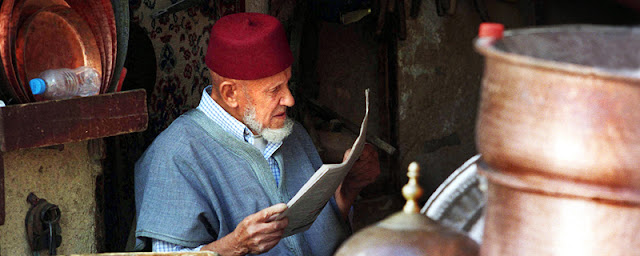
You can buy a cure for any illness, even a guaranteed love potion. The people are a cocktail of Berbers, Arabs, Africans and descendants of slaves. The dress has changed little — hooded djellaba cloaks, red tarboosh hat (the fez) and open-heeled babouche slippers.

Read more from Andrew at The Daily Mail:

Now while I prefer the hard-hitting Ms Bing to the poetry of Mr Trimbee, I have to confess, that no matter what style of journalism is employed to get Moroccan tourism back on its feet - it all helps.

And out in the mystical streets and magical souqs, the mood is optimistic. Si Mohammed, who runs a well known antique store on the Talaa Sghira in Fez is very upbeat. "This is the month of the recovery. On the fifteenth people will start coming back!"

The fifteenth, Huh? That's only five days away. So, there you have it. Your have only a few days to prepare, to roll out the welcome mat, brew the mint tea and dust off your old red fez. The visitors are coming and you can't say that  you haven't been warned.  

Friday, September 09, 2011

La Villa Cafe - Accident - Update


According to the latest reports five people are dead and fifteen remain in hospital after a gas cylinder explosion in a well known cafe in downtown Fez. Two Australian women had a lucky escape this morning when they left La Villa Cafe in the Ville Nouvelle minutes before the massive explosion rocked the cafe.


Others were not so lucky. Twenty-five people were admitted to University Hospital (CHU) following the accidental explosion of a butane gas cylinder, in the well known cafe-bakery in downtown Fez. Among the injured were two pregnant women, eight and nine months respectively, who were poisoned by carbon monoxide, according to a hospital source. Three other people were seriously injured. One woman suffering serious burns was admitted to intensive care. Some victims were released after receiving treatment.. This accident, which caused extensive damage, was followed by a fire quickly controlled by the fire authorities. According to preliminary investigations, a gas leak is the cause of the explosion..

A local resident said, " The explosion at La Villa was five minutes away from the Supermarket Acima. (On Hassan II.)...It's a disaster. It burned like hell....Police everywhere and they don’t won’t us get any closer...I heard that some people died, mostly the staff who worked underground. The oven workers; the pastry makers.; the girls in charge of cleaning. I met a girl there who works in the bakery and she was crying. I barely could understand what she was saying because she was sobbing and she told me that it was the gas, no bomb involved."

The resident asked how the woman knew and she replied that she had seen what the events.
"She said, 'For God's sake, I was there and I saw them changing the gas bottles. .I don’t know what happened to them, but I am sure most of them are gone.”


Tuesday, September 06, 2011

Moroccan Almond Milk Recipes


One of the best things about almond milk is the fact that it contains no cholesterol. In addition, almond milk is a great source of magnesium which is necessary to support everyday activity levels and will also supply the body with manganese, selenium, and vitamin E.


You’ll also receive a good dose of protein from almond milk, not quite as much as you would from cow’s milk, however if you’re a vegetarian or someone who just struggles to get in enough protein, it still can be very beneficial.

Almond Milk Recipe #1

You will need a blender, a metal sieve and some cheesecloth

Ingredients:
1.5 cups whole blanched almonds or whole raw almonds
4 cups water
1 tsp vanilla extract
1.5 tbsp maple syrup or honey
A dash of cinnamon

We suggest you use whole blanched almonds as they taste less bitter and are easier to strain.

Cover the almonds with water and soak them overnight. Then drain and discard the water.

Now put the almonds in a blender and as you blend them slowly add 1.5 cups. After a couple of minutes you should have a smooth creamy paste.

Add either maple syrup or honey and the cinnamon. Blend with the remaining 2.5 cups of water and when frothy, tatse and adjust the flavours. Some people also add a tiny pinch of salt to bring out the other flavours.

Finally, strain the mixture through two or three layers of cheesecloth inside the metal sieve and squeeze out the final few drops of liquid.

You can store almond milk in the fridge for up to four days.

Almond Milk Recipe #2


This recipe produces Laban Al Loz, a-fragrant almond milk with orange flower water

* 1 cup blanched almonds
* 6 cups water,
* 1/2 cup sugar
* 1 teaspoon orange flower water, or to taste

Soak the almonds as in the previous recipe then blend them with two cups of water until very smooth. Pour into a medium saucepan and add the sugar. Bring the mixture to a boil, reduce heat, and simmer for several minutes. Remove from heat.

Add the remaining 4 cups of water. Let cool to room temperature and strain through a fine sieve and add the orange flower water. Chill, covered, in the refrigerator.

Note: Some people prefer to add rose water.

Enjoy!


Print Friendly and PDF
SHARE THIS!


Monday, September 05, 2011

Argan Oil ~"Liquid Gold" ~ at what cost?


Moroccan Argan Oil is touted as "liquid gold" and the "ultimate cosmetic product". Yet, behind the hype and profits, the Argan forests and the people who depend on them are facing threats to their continued growth. Our correspondent, Ibn Warraq reports. 

"Berber women began cultivating Argan oil pre-modern times, for its healing properties, employing it for a variety of uses from cooking, to topical treatment of skin diseases, to cosmetic uses in the protection of the hair and skin against the harsh, dry, climate of the Moroccan desert. In the 1500’s, the legend of the miraculous Argan Tree and it’s precious oil began to reach Europe, with demand for the exotic oil reaching its historical height in 1867 when it debuted at the International Fair in Paris." - cosmetic company

  "Stars will be flashing "liquid gold" on the red carpet like never before. While it has recently seen its popularity increase, Argan oil from Morocco has been a secret among the Hollywood "A-list" for many years. "Essence of Argan" will be exclusively providing selected stars with their product before they arrive on red carpets at movie premiers for this years Toronto International Film Festival." - PR release

 I really like Argan oil. It tastes just great on bread for breakfast. It's not bad on vegetables, and wonderful on fish. I don't usually rub it on my face or in my hair. However, my mother swears by it. In fact we buy some each month down in the souq. In the past I would buy half a litre but recently the price went up again so now I buy a smaller bottle for about 180 dirhams ($22.00).  I blame the "Hollywood A-list" of course. If they continue "flashing" this liquid gold, then my mother and I will be unable to afford it.

We certainly couldn't afford the prices some of these products sell for. It seems incredible, but 15 mil of pure Argan Oil on sale for $35 works out at $2300 a litre. Of course there are all those expenses, freight, packaging, advertising and so on, but it is a long way from the $300 per litre that the  export quality  local product sells for. It may be "liquid gold", but it's not the local women at the end of the rainbow.

The Argan oil industry is now big business and the cosmetic companies are playing hardball, even going so far as to attempt to discredit rivals -"Aside from the mix of Argan oil that can be found within the product, Moroccanoil products also include silicone and other fillers ".  Then there are all those ways to make the product more powerful. Truthfully, who is going to buy simple Argan oil, when you can get...


Oh, and for the record, I believe that the "Superfruit Indian Amla Oil" is Indian gooseberry. Whatever. It might taste nice on bread.  To be honest, I really don't care how much the cosmetic companies can screw out of the pampered rich, as long as the hard working Moroccan women get paid a decent amount and the Argan forests are protected.


Over recent years, the women's co-operatives have been at the forefront of the Argan oil boom that began in the 1990s. However, recently, the men are moving in and there is a growing problem with diluted oil, bogus co-operatives and a lack of accreditation. To make the situation even worse, there are negastive impacts on the actual Argan forests themselves. Local people are calling for action

Khadija Benaiss, chairperson of Amanar co-operative 

"The argan oil sector employs a substantial number of women, who provide for many families that benefit economically and socially from this activity. I would like to take this opportunity to launch an appeal to the Ministry of Agriculture, the argan agency and the High Commission for Water, Forests and Decertification Control to give more attention to this sector, because it needs it." - Khadija Benaiss, chairperson of Amanar co-operative "

And the price? Moroccan Hair Oil, $50 for 100ml. In the USA we came across 50 ml for 369.90 MAD which works out at 7398 MAD a litre... someone is making a lot of money.

The argan tree (Argania spinosa) is endemic to Morocco, where it is second in coverage only to the cork oak tree and is ecologically indispensable. Its deep roots are the most important stabilizing element in the arid ecosystem, providing the final barrier against the encroaching deserts. Despite its uniqueness and indispensability, the argan tree faces a variety of serious threats.

Nearly half of the argan forest disappeared during the 20th century – and average density in the remaining half dropped from 100 to less than 30 trees per hectare. This historical pressure on the forest was driven by demand for high quality charcoal (especially important during the world wars) and, more recently, to conversion to agricultural production of export crops such as tomatoes.

While neither of these pressures emanated from locals in the argan forest, the important contemporary forest threats do. Particularly important among these threats are local intensification of livestock browsing and grazing and encroaching suburban and rural settlements – driven in part by recent European demand for rural real estate near popular tourist destinations such as Essaouira.

Back in 2006, The View from Fez reported about the large scale replanting (see story here Argan Replanting) but it is a long and slow process. The tree resists domestication and remains extremely difficult to transplant or establish on any meaningful scale outside Morocco. In recognition of its ecological value and local economic importance, the argan forest region was declared a UNESCO Biosphere Reserve in 1998.

The man who appears to be most up to date on situation is Travis Lybbert, an associate professor in the UC Davis Department of Agricultural and Resource Economics. According to Travis, the booming demand for Morocco’s argan oil, now the most expensive edible oil in the world, is providing economic and social benefits for rural communities but appears to be threatening the health and future of the native argan forests in southwestern Morocco

"Our research indicates that while the argan oil boom seems to have benefited locals and improved educational opportunities, especially for girls, it has not improved the forests and may actually have led to their degradation,” says Travis Lybbert.

Argan oil, derived from the seeds of the deciduous argan tree fruit, has been an important resource for Morocco’s Berber people for centuries. The oil came to the attention of the outside world in the 1990s and is now highly sought for culinary, cosmetic and medicinal purposes, pushing the price today to roughly $300 per litre

As demand for argan oil has grown since the beginning of the boom around 1999, many people have looked to the argan oil market as a “win-win” way to reduce rural poverty and lessen the environmental threat to the argan forests. Lybbert and his colleagues have been investigating those claims during the past decade, concluding in part that among the households in the argan-growing region, those with access to argan fruit benefited economically and were more likely to send their girls to secondary school.

The researchers saw similar benefits of the argan trade across villages and communes or collections of villages. We conclude that the argan boom has benefited some rural households. Encouragingly, households that stood to benefit from the boom in 1999 increased their weekly consumption spending at souk (market) and goat herd size more than households that did not stand to benefit. These households were also significantly more likely to send their girls to secondary school in subsequent years.

However, the researchers also found evidence of negative effects. For example, as households benefited economically, they often purchased more goats – the primary threat at this time to the argan forests, because the goats climb the trees to graze their leaves. Households also appear to be resorting to more aggressive fruit harvesting techniques, which can damage branches and dislodge buds for the next year’s production. To complement this household-level analysis, the researchers used satellite imagery from 1981 to 2009 to see the impact of the argan oil boom, finding evidence that rapid appreciation of argan oil prices had not helped the argan forests and may even have sped their degradation

The researchers argue that policies and programs that aim for “win-win” benefits to both local households and local biodiversity must be based on empirical evidence and informed by the complex interactions between people and nature, which are often shaped by social norms, institutions and markets.

Along with Lybbert, the research team included Abdellah Aboudrare, a researcher at the École Nationale d’Agriculture in Morocco; researcher Deborah Chaloud and statistician Maliha Nash, both with the U.S. Environmental Protection Agency in Las Vegas; and Nicholas Magnan, a postdoctoral fellow with the International Food Policy Research Institute in Washington, D.C.

You can see a pdf version of their research paper here. Argan Research

You will find more information about Argan oil here:

POST SCRIPT!

Just when you thought that the cosmetic virtues of Argan were the only way of saving the world from wrinkles and fuzzy hair... a new saviour has come along! Yes, make way for a deluge of hype about common old prickly pear. Ooops... the glam name is "Barbary fig oil"... and here is what we can expect to hear a lot more of....

Barbary Fig Oil, celebrated as an effective anti-ageing skin potion, is following argan oil as a great new cosmetic export from Morocco. But the tiny amount of oil extracted from each cactus fruit makes Barbary fig oil the most expensive on the market, about a 1,000 euros ($1,440) a litre.

Beyond its cosmetic virtues, the United Nations is urging Morocco to develop the cactus plant in a country where 80 percent of farming is carried out in arid or semi-arid regions. The push to develop Barbary fig, a cactus fruit well-adapted to extreme weather conditions, comes with a belief that several revenue streams could stem from it.

If successful, the cactus could stand as a business model to other countries looking for cash crops suitable to inhospitably hot climates. Eight tonnes of the Barbary fig fruit -- sometimes known as prickly pear -- are needed to produce a litre (quart) of oil used for cosmetics, said Karim Anegay, head of the cactus programme at the economic promotion office for southern Morocco. "This oil is commercialised by Moroccan companies as its anti-ageing virtues are of excellent quality but it's still early days," he said.

In Casablanca, cosmetics company Azabane uses Barbary fig oil in shampoo and creams. Redouane Stouti, a 27-year-old entrepreneur, owns a farm in the Errhamana region, where he produces 10 litres a month from his vast plantation.


Sunday, September 04, 2011

Mount Zalagh - overlooking and overlooked?


Jebel (Mount) Zalagh is the mountain that looks down on Fez. If you are a regular visitor to Fez, or if you live here, you will be aware of the mountain. But few visitors or locals, make the effort to do an excursion to the top. The mountain not only provides spectacular views night and day and is also a cool escape from the heat during the summer months. It is a superb location for a picnic.

The view at night is stunning (photo; Sandy McCutcheon)
For the more adventurous it is also a fantastic place for mountain biking (see our story here - cycling in Fez).

To give you a sense of the views, here are some photographs by our colleague Gérard Chemit.


Click on images to enlarge


Saturday, September 03, 2011

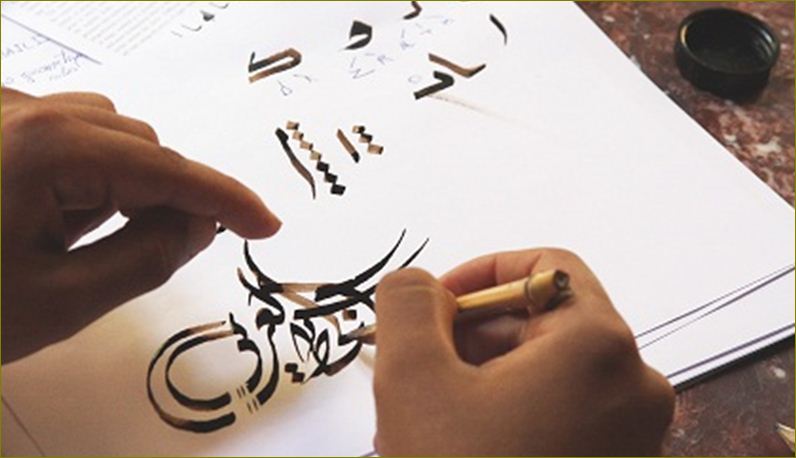
Beginners' Calligraphy Course in Fez


Jess Stephens of Culture Vultures is running a new calligraphy class in early September. The course will be in four parts. The tutor, Abdellah, is a master calligrapher from Fez who has dedicated his career and life to the sacred art of Arabic script writing.


Presented in the splendid surroundings of traditional Moroccan architecture this short course will lead you through some techniques and methods of the art of Calligraphy, that have been practiced by calligraphy masters since the writing of the holy Qoran.

Participants will have the chance to discover the skill, input and state of mind needed to master this spiritual pursuit. Practice with traditional materials is a large part of the course.


DETAILS

• Course – 7th/ 8th /9th and 10th September 2011.
• Sessions are from 9 am. to 10.30am
• Cost of course is 1000 dh in total.
• To a reserve a place a deposit of 250 dh is required. C.V. accepts Paypal payments.

For further information:Contact Jess at culture.vulture1@rocketmail.com or call 06 45 22 32 03


Street Art in the Fez Medina


Visitors to the Fez Medina often spend most of their time exploring only a couple of the main streets and while that can be a lot of fun, there is much more to be discovered if you leave the hussle and bustle of the tourist areas. Take a wander down to where the streets are quiet and  you will find another side of Fez and quite probably a few surprises. The View from Fez team did just this and discovered some beautiful street art in Laayoune and R'cif.
Who is the artist?

At the end of Ramadan in Fez, each of the neighbourhoods takes special pride in cleaning up the streets, washing the pavement and getting rid of every scrap of rubbish. In some places the locals have gone further, whitewashing the walls and decorating them. (Please click on images to enlarge)


We haven't managed to track the artists down yet, but hope to do so in the near future.


Thursday, September 01, 2011

September Weather in Fez


September weather in Fez is set to be right on the average. With daytime maximums varying between 21 and 33 degrees Celsius and  night minimums between 12 and 17, it will feel a lot cooler than August.

Here are the forecast temperatures for the next few days. Click on the image to enlarge.


Oujda's fire-ravaged souk - 10 Million to rebuild


 "The whole is a mass of ingredients marinated in soot and arranged in the geometry of ugliness and horror."

Souk Melilla in Oujda is in ashes after a fire ravaged it in the early morning of August 26. The day before it had been crowded - a teeming bazaar filled with women clutching their offspring, circulating between lanes made too narrow due to the piled items, It was a festive sight, richly arranged, beautifully dressed models and items such as banners hanging above the heads of shoppers who came out in droves to buy or stroll. One day later it was was gone, destroyed by a fire that is believed to have started from a faulty electricity generator used to light some of the shops.


According to witnesses the fire lasted for almost 23 hours and destroyed 1068 shops and over 300 other stalls. The following day the souk had been reduced to  "...just a mixture of black water,of charred wood, ash, hot, acrid smoke, corroded plastic, the remains of items consumed or half consumed, curtains ripped, broken glass and ceramic materials of all kinds in a disorder of the Apocalypse. The whole is a mass of ingredients marinated in soot and arranged in the geometry of ugliness and horror."

The timing of the fire, coming as it did, shortly before Eid Al Fitr and the new school term, could not have been worse. Merchants who had invested their savings in order to satisfy customers' Eid purchases, lost everything. In some cases the situation is desperate, as many traders bought on credit intending to use their profits to repay the loans.

According to oujdacity.net,  even as the fire raged through the first of the shops, the looters were already at work, "as if they had made an appointment". Armed with clubs, knives and swords, they turned on merchants who were trying to save what they could of their goods. And shops whose owners had closed earlier, were opened and ransacked. There were more looters than traders. The latest reports suggest that police have arrested some 70 people accused of looting and theft during the fire.

The  governor of the prefecture of Oujda, M. El Abdelfettah Humam, met with traders on Monday and signed a partnership agreement for the reconstruction of souk. It defines the conditions for reconstruction of the souk and the nature of the contribution of the various signatories to this project in strict compliance with safety standards and hygiene,  in order to allow traders to resume their activities as soon as possible. The cost of the rebuilding is estimated to be around 10 million dirhams

The merchants undertook to respect the topographical map of the souk, to connect their shops to electricity and sanitation, and to complete the reconstruction work within a maximum three months from the date of signature of the Convention.

For its part, the urban municipality commits to conduct the necessary studies for the preparation of plans, and various other works and equipment (boundary wall, gates of the souk, walkways, paving, sanitary dependencies, mosque.) In addition to contributing to the development of sewerage and drinking water and exemption from rental fees for the merchants shops, until July 2012.