Showing posts with label British Tourism. Show all posts

Friday, January 19, 2018

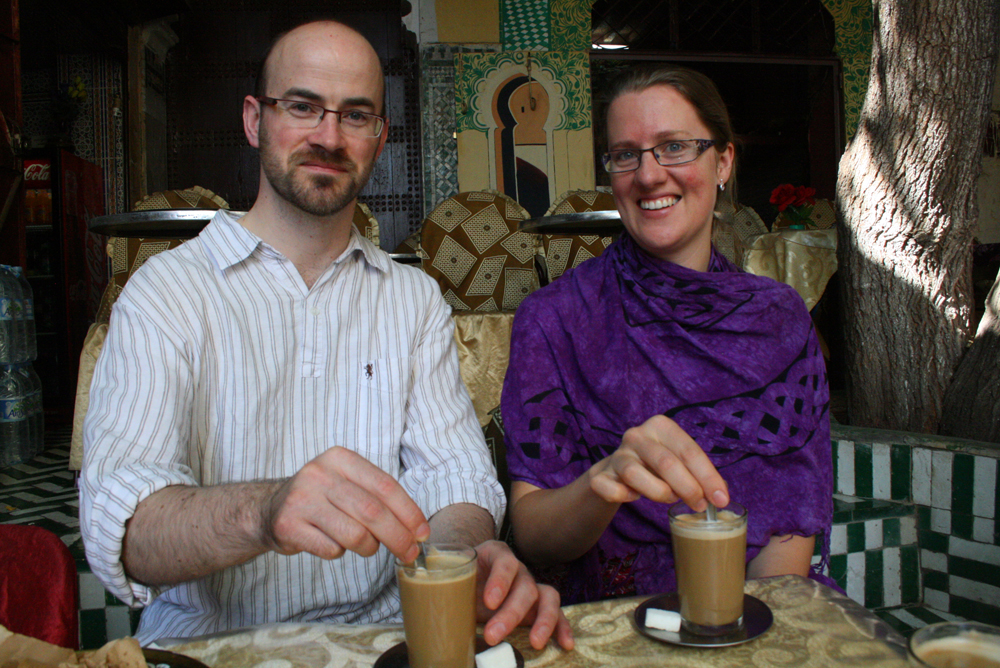
Pedestrian Crossing Law Angers Two British Tourists


In Morocco pedestrians should use pedestrian crossings - or pay a fine. However, some tourists are reacting badly to the new laws in the Highway Code

Two English tourists face up to two years in prison for refusing to pay a fine and assaulting a traffic policeman.

The criminal investigation of Marrakech on Wednesday sent back two English tourists and their Moroccan women to the Attorney General of the King, for "humiliation of a public official during the exercise of his function" and "assaulting a police officer in uniform", reports the daily Akhbar Alyaoum in its edition of January 19th.

The four defendants, who face jail terms of up to four years in prison, initially failed to respect the crosswalks, crossing Hassan II Boulevard in Marrakech. When the policeman explained to them that they must pay a fine of 25 dirhams as provided for in the Highway Code, they reacted violently and assaulted the policeman after refusing to pay the fine.

SHARE THIS!

Saturday, June 25, 2016

A Bumpy Ride for Moroccan Tourism


Morocco's tourist market is particularly volatile at the moment, with drops in arrivals from the normal source countries.  French tourist numbers are down, with experts pointing to a number of causes, including the European football competition, social unrest and perceptions about terrorism


In a recent survey, the number of French citizens planning to travel during the summer holidays is down from 59% to 55%. Of the French who said they would travel, only 19% intended to travel abroad, with 39% saying they would holiday in France.

Those travelling abroad are heading first of all to Spain, Italy and Portugal, in that order, with Morocco in fourth place.  When questioned about their choices only 11% of respondents intended to visit the Magreb.  Morocco was the destination for 7%, with Tunisia on 3% and 1% for Algeria.

The UK market is also suffering a downturn. Travel expert Bob Atkinson, of travelsupermarket.com, has no hesitation in explaining the causes. “We have seen terrorism in Tunisia, Paris and Brussels, bomb attacks in Turkey, and the Russian jet downed at Sharm el Sheik. This has affected demand for Turkey, Egypt, Tunisia, Morocco, Cyprus and Malta,” he says. Atkinson added: “These countries have all had lower demand than you would expect. Tunisia is 100 per cent down, Morocco 90 per cent down and Turkey 70 per cent down.”

French tourist numbers are down

Atkinson is not alone in blaming unrest for the downturn.  Opodo, an online travel agency founded in 2001 by a consortium of European airlines, including Air France, Lufthansa, British Airways, KLM, Iberia, Alitalia, Austrian Airlines, Aer Lingus and Finnair, explains that Morocco is suffering following unrest in Tunisia, the refugee crisis in Turkey and its perceived proximity to the problems in Syria.

The bookings for Tunisia and Turkey, are down respectively by 68% and 72%, and because Morocco is a Muslim country in North Africa, it suffers by association, with bookings down 66% for the summer of 2016.

Another recent market survey revealed the same story. Morocco and Turkey have suddenly dropped in the rankings of the favourite tourist destinations for UK travellers. According to the headline on website of the British newspaper, The Express, "Morocco and Turkey plummet on British holidaymakers' list of must-visit places."

The UK survey indicated that Morocco and its key destination for British tourists, Marrakech, was once a firm favourite but it’s dropped down 11 places to the 35th most searched holiday destination in 2016. The Express reported that is was the same for Turkey, which dropped 11 places to rank 29th overall.

Morocco is a safe destination!

Again this sudden drop in popularity of Morocco Turkey is attributable to negative images of both countries because of their chaotic neighbours. Although perfectly safe, Morocco and Turkey have failed to stand out from their neighbourhoods where rampant terrorism and the refugee crises grab people's attention. The Express points out that the terrorist attacks in Tunisia and Libya and the refugee crisis in the Middle East pushed British tourists towards European destinations such as Spain and Italy.

Interestingly, in the UK it is only Londoners who select Marrakech as their favourite destination. But Londoners take shorter stays, on average 3 days and prefer the luxurious palaces of Marrakech to cheaper accommodation. Inhabitants of other regions of the UK, those who go to Spain or Cyprus, spend longer holidays and usually in less classy hotels. Just for the record, inhabitants of other cities such as Edinburgh and Birmingham prefer Barcelona while the citizens of Plymouth and Brighton prefer the Canary islands.


SHARE THIS!

Sunday, May 19, 2013

Travel Writing About Morocco ~ The UK Independent almost gets it right

Over the years The View from Fez has run an occasional series on travel writing about Morocco. We have given bouquets to the best and brickbats to the worst. It's been a while since our last travel writing story as a majority of travel stories lately have been well researched and written. 

A small part of the massive Fez Medina

However, this week we came across a piece on Fez by Stephen Bayley from the UK Independent. It is certainly well written, however, at times pedantic. Stephen's piece has all the hallmarks of an embedded journalist. His reflections, while sitting with a "large glass of Celliers de Meknes syrah and a view of the kasbah" - are amusing, if not always accurate. He starts off with a bold assertion about the name of the city...

It's Fès, not Fez. The latter is a hat of Turkish production, a dark red truncated cone with a tassel, not much favoured by the locals, despite what some guidebooks tell you. And Fassi is what the citizens of Morocco's fifth city call themselves. The confusion with the name is one of several misunderstandings about this astonishing place. Nineteenth-century orientalists, French expeditionary soldiers, drugged-up Americans of the Beat Generation (who enjoyed a cannabis jam known as majoun, taken internally) all knew Fès, but it has not secured a place in popular imagination in the same way as Marrakech.

For the record, the name of the city is Fes or Fez (Arabic: فاس‎ Moroccan Arabic: [fɛs], Berber: Fas,). If you are French you can write it Fès. The point is that as a transliteration from the Arabic, you can take your pick. As a local photographer put it, "Fes, Fez or Fas, we don't mind - jeeb laz ou l'caz - come for something good, or just leave!"

Access was always a problem: the erratic rail link from Tangier and Casablanca was an impediment to all but the intrepid, then British Airways failed to make a service from Gatwick work. Now a twice-weekly flight by Ryanair from Stansted gives us all the chance to be an explorer.

It is obviously a long time since the intrepid Stephen Bayley travelled by train to Fez. The services between Tangier and Casablanca are inexpensive and go almost hourly. There are also good (CTM) bus services and if you feel like a treat, a trip from Casa to Fez by car is available for around 1,500 dirhams. Ryanair is not the only airline and flights from a number of European cities make coming to Fez, either directly, or via Casablanca a low cost trip.

Part of the huge slipper souk in Fez

This is not a city abandoned to the fey pleasures of frivolous European travellers. Instead, it teems and squirms: urgent but polite, and elegant while often rough. The souk combines filth and mystery with the medieval sense which only a sweating Satanic blacksmith in a carbonised vault and a man next door specialising in severed goats' hoofs can bring. Even lawyers sit in cubbyholes in the souk.

It is this orientalist view where the writing gets carried away. For a start the Medina of Fez contains many souks (markets) - slipper souks, vegetable souks, ceramic souks, leather souks and so on - and "filth and mystery" are in the eye of the beholder. Rubbish collection in Fez is on a daily basis, which few cities in Britain or Europe can claim. And few of the lawyers I know would appreciate their offices being described as "cubbyholes"!

Fès food is an anomaly. There is a weird mismatch between what's abundantly available in the souk and what appears on menus. The souk teems with sellers of herbs, spices, fried fish, lemons, escargots, goat, tripe and artichokes, but restaurant menus are repetitive. Boiled salads – including nerveless cauliflower – are served in miniature tagines they were evidently not cooked in. Insipid grey "chicken in sauce" appears everywhere. I looked in vain for harira (the ethnic soup) or méchoui (a whole cooked lamb) or any sense of freshness and precision in the cooking. Solemnly, our guide said, summoning-up unhappy memories of things ill-digested past: "In Fès, one does not eat fish." Still, smells memorably define the souk. Lemon verbena is an insistent presence, but so too is donkey.

This is perhaps the strangest observation in Stephen's piece. That he couldn't find harira is a mystery as is his failure to find fabulous food. Maybe he needed to escape from his guide and the up-market restaurants and check out the food stalls and street food cafes. While many of the so called "palace restaurants" serve up the kind of tourist fare he mentions for coach loads of package holiday tourists, there are wonderful alternatives both in the Medina and the Ville Nouvelle.

One of the many food souks

That someone actually told him that "In Fès, one does not eat fish", is beyond belief. Not only are the fish markets stocked with wonderful fresh fish, but there are also local treats like the fresh trout from the Atlas mountains, John Dory fillet tagine with saffron and lemon confit, lobster, spider crab and the famous Oualidia oysters.

Fresh fish in Fez

Always there is music half-heard through walls. And the lingering memory of wondering if I have ever felt more clean than after the hammam. We soon learnt that the medina is not as un-navigable as they say. After a day you can find your way and there are no risks, apart from the chance acquisition of a carpet.

But you have doubts. Why, when mint tea is so popular, has no one made a teapot which pours efficiently? Most times, the liquor escapes more readily from the loose-fitting lid than the congested spout. And what is the psychology of a modernising country which insists on making Berber slippers, camel saddles, leather accessories, djellabas and carpets which no one ever willingly buys?
One does feel sorry for Stephen and his loose-fitting teapot, his lack of harira and the fact he didn't understand why people buy djellabas, carpets and slippers. About 90% of the goods produced in the Medina are bought by Moroccans, many of whom (whose teapot lids fit better) do like to wear slippers and djellabas. The Fez Medina is a living, working Medina with thousands of artisans producing goods which are consumed. That a camel saddle might look like an exotic addition to someone's European apartment, does not mean it's not needed on a camel.

You can read the full text of Stephen Bayley's piece here: Keep it under your hat, but Fès is for real

Other travel writing stories
SHARE THIS!
Print Friendly and PDF

Wednesday, March 13, 2013

Change of Ownership for Dar Tassa Eco Lodge

Back in 2009 The View from Fez was fortunate enough to be guests at the wonderful Dar Tassa Eco Lodge located an hour and a half from Marrakech (see our story here). Now we have news that the lodge has been sold to an English tour operator, Specialist Morocco


Dar Tassa, is an eco-friendly mountain lodge tucked away in a superb location on the edge of Toubkal National Park and sleeps a total of 21 people in eight rooms, each furnished in a rustic Berber country style. Rooms are available to rent individually or groups can take over the entire property; ideal for celebrating a special birthday, anniversary, Christmas or New Year.

Dar Tassa has a resident manager, Mohamed Ouarra, who spent much of 2012 looking after the property. Prior to that, he was trained and employed at Riad Africa, also owned by Specialist Morocco and located in central Marrakech in the Medina. Dar Tassa still retains the services of  the highly-skilled, in-house cook, Fatima, who prepares traditional Berber and Moroccan meals.


Nick Anstead, founder of Specialist Morocco says: “Dar Tassa is a wonderful property in a dramatic location. It is completely off the beaten track in a hidden corner of the High Atlas Mountains yet offers superb walking for all levels of ability; from gentle strolls along the valley to more challenging treks from the front door all the way to Mount Toubkal, the highest mountain in North Africa.

“We will be refurbishing some of the rooms and adding a plunge pool and two family suites over the coming months. It is currently a comfortable mountain lodge but we want to put it on a par with our two properties in Marrakech, Riad Africa and Maison Africa, which we consider to be two of the most authentic and best value riads in the Old City. The operating of all three properties will be overseen by British ex-pat Peter Mercer, from our Marrakech office.”


Other facilities at Dar Tassa include a large panoramic terrace surrounded by high peaks with views of the tranquil Azzadene valley and Assif n’Ouissadene river, a Berber tent for afternoon siestas; a traditional Beldi hammam, a lounge and dining room – with open fires for winter evenings, a purpose-built kitchen for cookery classes and even a telescope for star-gazing in the often crystal-clear skies over the mountains.

Activities that can be arranged by Specialist Morocco include private guided day walks (with overnight accommodation for longer High Atlas treks), small group treks, 4x4 discovery tours, buggy adventures, quad and mountain biking.


For those who previously experienced the beauty of Dar Tassa, be aware that prices have climbed somewhat. A three-night ‘Atlas Experience’ costs from £289 pp (based on 4 sharing). This includes three nights’ half-board, private transfers to and from Marrakech, a guided day walk with lunch in Toubkal National Park plus a half-day Berber experience tour.

For further information, visit specialistmorocco.com
All photographs: Sandy McCutcheon 

SHARE THIS!
Print Friendly and PDF

Friday, January 25, 2013

Morocco's Tourism Sector - Is 2013 A Recovery Year?


The economic downturn in Europe and instability in Mali and Algeria are all contributing to the tourism sector's slow recovery in Morocco. While there are some promising developments such as the Ryanair decision to use Marrakech and Fez as bases for their aircraft, there is still a touch of gloom in the tourist industry. Tourism experts say that concentrating on airline services and introducing medical tourism may be the key to a brighter future.

More empty tables than usual 

"We are getting only three or four bookings a week which is just enough to keep our head above water,' one riad owner told The View from Fez. "Hopefully the lull since New year will see a pick-up in March and April."

The situation in Fez is patchy, with some riad owners reporting good numbers of guests with a surprising number of visitors from South American nations such as Argentine, Mexico and Brazil. Those operators who concentrate on the North American and British markets are seemingly those experiencing the worst of the slowdown.

The decline in visitor numbers has caused a number of accommodation businesses to shift their focus and lower their rates to encourage domestic tourism. "As far as we're concerned, we've revised our room rates and also diversified our offer to Moroccan families," one Marrakech hotel manager explained. "We've also improved our internet communications, with a new platform providing information and online booking facilities."

Last year, journalist Rajae El Oufairi was accurate in suggesting that focussing on national tourists, with attractive offers, would be a solution for the sector under current market conditions. "In Morocco today there is a real emergent middle class,and the problem is the absence of tourist offers to match the expectations of the Moroccan middle class."

A quiet time in the souqs of Casablanca  photo Sandy McCutcheon

However, at street level, traders say that business is quiet. Street restaurants and small business owners are generally confident that things will pick up. "It is always quiet in winter,' hanout (small shop) owner Yousef says. "We don't get a lot of business from tourists anyway. They tend to take pictures and move on. But when there are a lot of tourists the guest houses spend more in the souq."

Writing in the online journal Magharebia, Hassan Benmehdi reports that although Morocco is hoping 2013 will be a year of economic recovery for the tourism sector, experts are cautioning the rebound will not be as easy as once thought.

"Tourism in Morocco is crucial to the country's economy, as it represents about 7.1% of the gross domestic product," financial analyst Moussa El Mouritani explained. "The European market represents over 50% of the tourism in Morocco; however that market is still unstable and the economy is having a hard time getting back to its normal pace and normal progression."

Moroccan Tourism Minister Lahcen Haddad has pointed out that efforts have been made on many levels to find ways to minimise the impact of the weak economy, particularly in Europe. Haddad said that the Moroccan government plans to develop and finalise pragmatic methods that would allow several projects to come to life. That would require raising a total of 38 billion dirhams for developing 36,000 additional beds and eventually lead to the creation of over 10,000 jobs.

 Tourism - one of the top five job generating sectors  photo AFP/Fadel Senna

The point, Haddad said, was to invest with people involved in important projects such as the convention centre and the amusement park in Marrakech, the Tama Ouanza resort in Agadir as well as the myriad of resorts in Fez and the Biladi clubs in Martil and Benslimane.

Also on the 2013 agenda, the introduction of medical tourism and sustainable tourism classes.

Tour operators are dissatisfied and feel that the field "is not living up to expectations". For Abdelali Mouktadir, who works in sales at a Marrakech hotel resort, the bad economy makes them less competitive. Another Marrakech hotel operator said that the government should focus efforts mainly in the aviation sector and should work harder on making Morocco a tourist destination. The country's potential is not being correctly showcased, Casablanca restaurant manager Driss Belloufi said.

The National Tourism Federation (FNT) wants to reinforce logistics so that the country's vision for domestic tourism gets some kind of support. The tourism minister also looks to further reinforce training through the establishment of several partnerships with various international institutes. He also asked field professionals to help out and determine their exact needs in terms of expertise and human resources.

On a financial level, Industry and Trade Minister Abdelkader Amara noted that tourism related investments come mainly from domestic sources (64%), while only 36% come from abroad, primarily the US and Saudi Arabia. "Next year we will have investments in the area of 20 to 30 billion dirhams," he said. According to the latest data of the High Commission for Planning (HCP), tourism represents more than 7 per cent of the gross domestic product and is one of the top five job generating fields in Morocco.


SHARE THIS!
Print Friendly and PDF

Sunday, July 22, 2012

Moroccan Charity Trip Turns To Tragedy

According to a report in a British newspaper, a 17-year-old schoolboy died on a school trip to Morocco after passing out in the extreme heat.

Sam Boon was on the second day of a five-day trek with ten friends to help build a school for Moroccan children after he and his fellow pupils spent months raising £12,000.

After Sam, who attended the Business Academy in Bexley, Kent, collapsed, there were failed attempts to revive him and he was pronounced dead after being taken to a medical centre.

The results of a post-mortem examination have not been released yet but it is said that Sam may have suffered heat exhaustion after temperatures in Morocco reached 49C in the past week.

Sam's parents Karen and Kenneth have flown out to Morocco to bring his body home.

His uncle, Dave Boon said: 'He was a lovely child, and he never caused an ounce of a problem for anyone.

'He was just very intelligent and unfailingly polite. He was never in any sort of trouble, and worked hard at everything he put his mind to. He was so excited about the Morocco trip.'

The tragedy, which took place on Tuesday, cut short the school trip and the group flew back to England on Thursday.

An anonymous friend of Sam's said: 'Everyone is really shocked at school. Nobody really knows how it happened. He was a big guy, but he didn't seem unhealthy. It has just knocked everyone for six.'

World Challenge, which provided educational trips in the developing world, organised the expedition and has flown a team to Morocco to help the family.

temperatures in Morocco have soared over the last two weeks


The trip started with a five-day trek for pupils and students in the N'fis valley in the Amizmiz region, 55km south of Marrakech.

A spokesman said: 'He collapsed on the trek and they tried to resuscitate him. He was immediately transferred to a local medical centre where he was pronounced dead shortly afterwards.'

Sam was studying A-levels including physics and maths, and was to turn 18 in three weeks.

Visitors to Morocco are advised to avoid over-exposure to the sun during the hotter months of the year and to always carry plenty of water.


SHARE THIS!

Wednesday, July 04, 2012

The Ryanair Crisis - What's the Real Story?


Back on Thursday June 28th Ryanair announced it was going to cut  a number of flights to Morocco. According to the airline's website the reason was a dispute over airport charges flights in row over charges. The carrier claimed the Moroccan government’s airports authority ONDA had “reneged” on an agreement “by imposing a new monopoly handling company on Ryanair which would have resulted in a massive increase in charges for the airline”.

Ryanair said it would cut a total of 34 weekly flights (adding up to 250,000 passengers per year) from October 1. Routes which will be cancelled include Stansted to Fez and Valencia to Marrakech, while flights between Luton and Marrakech will be reduced to twice weekly.

It is interesting to note that the move comes just days after it emerged that the Association of European Airlines had compiled a report alleging Ryanair has benefited from state subsidies worth hundreds of millions of euros. The AEA document reportedly alleges Ryanair would have lost €305 million (£250 million) in the last financial year without government support.

Ryanair reported a profit of €503 million (£406 million) in the 12 months to the end of March. The budget carrier’s chief executive Michael O’Leary denied the carrier received any state aid.


Ryanair Press Release

RYANAIR ANNOUNCES REDUCTIONS IN SERVICES TO MOROCCO AS ONDA BREAKS AGREEMENT ON COSTS

Ryanair, Europe’s only ultra low cost airline, today (28 June) announced the cancellation of 34 weekly flights (250,000 annual passengers) to/from Morocco because ONDA, the Moroccan Govt’s airports authority, has reneged on its agreement with the airline by imposing a new monopoly handling company on Ryanair which would have resulted in a massive increase in charges for the airline. ONDA has refused to guarantee Ryanair the continuation of the cost levels of its original agreement. Consequently, Ryanair has no alternative but to announce substantial reductions to its flight programme to Moroccan airports which will include reductions of 8 weekly frequencies at Nador, 6 at Fez, 8 at Marrakesh, 4 at Tangier and the complete closure of its operation at Oujda Airport (8 weekly frequencies).

Announcing the reductions, Ryanair’s Deputy Chief Executive, Michael Cawley said;

“Ryanair entered into long term agreements with the Moroccan Tourism Authority and ONDA, as part of the Moroccan Govt’s 5 year plan to grow tourism. Ryanair has spectacularly over-delivered on all its undertakings under these agreements, becoming Morocco’s second largest airline and ensuring the Moroccan Govt achieved its 5 year targets within an earlier timescale. It is regrettable that ONDA has now lost sight of the key to the success of our partnership, offering low fares based on low costs. Ryanair cannot accept cost increases as it seeks to deliver more growth to Morocco. It is completely unacceptable for ONDA to increase the cost of Ryanair’s operation in Morocco and unrealistic for them to expect us to continue to grow our business in that context.

Consequently I regret to announce that we are making these substantial reductions which will result in up to 100,000 less tourists annually and an annual loss in tourism expenditure and job losses for the Moroccan economy of €50m. Ryanair will now allocate this capacity elsewhere to the many markets earnestly seeking Ryanair’s growth and that are offering long term, sustainable cost bases to underpin Ryanair’s guaranteed low fares. ”

Following the Press Release issued Ryanair the Moroccan National Airport countered with a statement they said was a matter of "clarification".

ONDA Press Release

There is no monopoly of handling in Morocco and has been since 2004, when the liberalization process of handling the activity began. In this context, relations ONDA / Handlers are governed by the laws and regulations that set the conditions for providing ground handling services. The exercise of these benefits are provided under market objects international tender launched by ONDA.

The open tender for selection and international operators handling culminated in 2012 with the selection of two operators, reference and international dimension.

The purpose of this strategic restructuring of the handling activity revolves around three main principles:
- The Establishment of competition at all airports: There is indeed today: two handlers in North and South 2 (RAM Handling and Swissport), and 3 handlers in Casablanca (Globalia RAM Handling and Swissport );
- The establishment of an optimum quality of service meets the highest international standards and measured by specific indicators;
- Improving the financial attractiveness, guaranteeing for airlines ground handling services at all price ceilings and very competitive in the concession agreement between the ONDA and handlers;

The pricing of handling services are not the responsibility of the ONDA who has no authority to interfere in trade negotiations between airlines and handlers. As mentioned in the point above, only a price ceiling may be fixed in order to secure the airlines.

ONDA has always been a major player in support of Government policies to assist and encourage airlines to serve Moroccan platforms, through the best quality and cost. Indeed, apart from the incentives granted since 2007 and have been extended until the end of 2013, the latest revision of the grid incentive tariff has increased significantly the attractiveness of Moroccan airports, which measures the low cost airlines are among the main beneficiaries, because of the nature of their traffic.

ONDA invites all airlines continue to be part of the regulatory process initiated by the Moroccan government as part of its policy of liberalization of ground handling activities while improving the quality of service worked with passengers.

Cancelled Routes
The following flights have been cancelled effective October 1st.
Nador - Girona 4 flights
Nador - Madrid 4 flights
Oujda – Marseille 4 flights
Oujda – Brussels Charleroi 4 flights
Fez – London Stansted 4 flights
Marrakesh - Valencia 6 flights

Route Reductions
As of October 1st weekly flights between the following destinations have been reduced to...
Tangier - Madrid 4 per week
Fez-Brussels-Charleroi 2 per week
Marrakech-London Luton 2 per week

Reaction in Morocco
This is not the first time that Ryanair have arm wrestled with the Moroccan authorities over pricing. The last time the flights from Britain were cut the economic impact on tourism was serious. However, this time local tourism operators appear to be more sanguine.  One reason for this appears to because from October on the number of tourist drops naturally due to the low season in Morocco and the ski season in Europe.

Guesthouse owners have been carrying on a lively discussion via Facebook with one contributor saying that the "Moroccan authorities need to do whatever they can to keep Ryanair onboard, legal or non-legal, cos there's nothing to replace them and it will have a devastating affect on the economy of Fes."

Others think that this is a game of brinkmanship and that Morocco will be the first to blink because like it or not, they need Ryanair. As another contributor suggested, "Ryanair won't take off any route thats making a profit..the last time it happened it was reported the dispute was about the cost of landing planes in Fes...And why would the ONDA be extending Fes airport? And also the speculation last year that Ryanair were going to base themselves at the new airport in Fes."

There is a lot of negotiating still to be done and what we see now may only be the first ambit claims in a much longer game. As they say - watch this space.

And a footnote
Sensing an window of opportunity, the airport Montpellier-Méditerranée has announced that the Air Arabia Morocco will increase the frequency of its flights to Casablanca,  Fez and Nador.

This increase is already effective for online bookings from Montpellier - Fez: since May 21, a third flight was added every Friday, in addition to flights on Wednesdays and Saturdays.

From July, Nador benefits from a third flight on Friday in addition to flights already scheduled on Tuesdays and Fridays.

Finally, Casablanca is now connected four times a week, Tuesday, Wednesday, Friday and Saturday.

The fare to these destinations are offered from 69 € one way.


SHARE THIS!
Wednesday, October 05, 2011

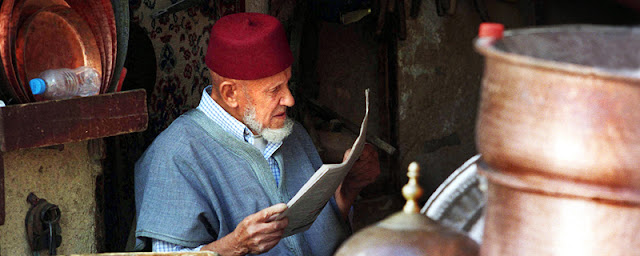
Tourists Flock Back to Fez


After a very quiet Ramadan and September, the shopkeepers in the Medina of Fez are heaving a sigh of relief. Mustapha, a tea-house owner, says, "Al Humdullilah! The tourists are back!"

There are smiles on faces right across the Medina. Even the very slow property market is picking up, with sales to French and English buyers either signed and sealed, or awaiting completion. "It has been slow," one real estate agent told The View from Fez, "but things are picking up again."

Restoration and renovation work is also continuing. While one English couple were complaining of the inevitable delays that are part of the process, Nordeen a London based Algerian, is very happy that the work on his new guesthouse is making progress, "It takes time, but then I expected that," he said.


The return of large tour groups, while causing congestion in some parts of the Medina, is good news for everyone. The trickle-down effect means that many people, other than just the tour companies and riad owners, benefit. Small shops, fruit and vegetable sellers and shoe cleaners are all reporting an upturn in business.

Plenty of liquids in the warm weather!
 The weather has also played a part in the optimistic mood. Autumn has arrived and while the days are still in the high twenties, the evening temperatures are cool and pleasant. This is expected to continue in the next couple of weeks.

Donald and Rebecca enjoying "nus-nus"
 Rebecca Wright, from Australia, was particularly upbeat about Fez as a great place to visit at this time of year. "It is absolutely perfect - not too hot, in fact, just right! " she said. 'This is my second time in the Medina and it certainly won't be my last! It's endlessly fascinating!"

From the colder climes of Scotland, Donald McKay was not complaining about the heat. "The weather is fantastic - slightly hotter than home. And what an experience getting lost in the Medina." Like Rebecca, he says he will be back again.

Popular sites can be conjested - but the locals are happy
 Hopefully the return of large numbers of tourists will continue to grow and may even reach the levels experienced before the uncertainties of the "Arab Spring" and the global financial crisis took effect.


SHARE THIS!


Saturday, September 10, 2011

Moroccan Tourism ~ on the road to recovery


After all the turmoil of the "Arab Spring", the aftermath of the Marrakech bombing and the uncertainty surrounding the global financial crisis, Moroccan tourism went into a slump. The visitor numbers dropped, accommodation bookings were at record low levels and the general economy suffered. Ibn Warraq reports on what may be the beginnings of recovery

The vital signs are good and Moroccan tourism is growing again. No one expects the recovery to be rapid, but bookings in Marrakech and Fez are improving and there have even been tourists spotted in Casablanca. Thankfully, there has also been a revival of interest from the media as well.

Recently Marrakech got a boost from a "city break" article in the UK newspaper, The Telegraph. The story was by well known Marrakech expert and Lonely Planet author, Alison Bing, and gives a very useful snapshot of advice on everything from shopping to hotels and restaurants.

"When navigating narrow Medina alleyways, bear in mind unofficial rights of way: 1) anything with hooves; 2) anything on wheels; 3) anyone with a stick; 4) babies; 5) women shopping." - Alison Bing

Alison Bing's picks of five top things to see is great starting point for first time visitors.

Djemaa el-Fna

Unesco designated it a World Heritage site (1), but this lopsided square isn't a monument: it’s mayhem. Snake charmers, acrobats and potion peddlers are only the opening acts. At sunset, 100 chefs and their portable grills reignite the world’s fiercest barbecue competition. Amid swirls of kebab smoke, the performers arrive.

At the south-west end are cross-dressing belly dancers and (worryingly) amateur boxers; in the north-east corner are animated storytellers and starry-eyed astrologers; between the two are Berber jam sessions, unwinnable carnival games and the odd dentist. Halqa (street theatre) has taken place nightly here for 1,000 years, yet the show never gets old.

Souks and Fondouks

Paris and Milan can’t compete with Marrakesh, where artisans create new designs daily using ancient tools. In northern souks (market streets), modern maalems (master craftsmen) reinvigorate time-honoured trades such as blacksmithing, saddle-making and lute-carving.
Glimpse original works in progress along Rue Dar el-Bacha, inside fondouks (medieval courtyard workshops) where maalems gingerly tap out zellij (puzzlework mosaics) and whittle orangewood into minimalist mashrabiyya (lattice screens).

Ali ben Youssef Medersa

Fez claims credit as Morocco’s spiritual centre, yet at the heart of Marrakesh is a heavenly 14th-century structure that was once North Africa's largest Islamic study centre (Souq el-Fassi, near Place ben Youssef; entry £2.50) (2).
Wood-carved balconies are open to the sky and lined with dorm rooms where up to 900 students pursued higher education. Visitors at a loss for words need only look to the arcaded courtyard – a marvel of calligraphy in zellij, plaster, Atlas cedar, and, in the mihrab (eastern-facing prayer niche), Carrara marble.

Hammam

Misleadingly described in tourist literature as a spa, a true Moroccan hammam is more roughhousing than relaxation. Public bathhouses such as the Hammam el-Bacha offer traditional gommage, a full-body scrub performed by a bossy tabbeya (bath attendant), who restores skin to newborn condition with a rough glove and ruthless efficiency (Rue Fatima Zohra; entry 75p, gommage £2.50).

Visitors prone to shyness or sensitive skin will appreciate the more modern hammams of Marrakesh, with private steam rooms and soothing argan-oil massages. Some guesthouses have in-house hammams; otherwise, book an afternoon appointment to loll around subterranean steam rooms and secluded patios at Le Bain Bleu (3) (00 212 524 426999, www.lebainbleu.com) (3) at 32 Derb Chorfa Lakbir, off Rue Mouassine. Hammam and gommage £11; massage from £26 per hour.

Jardin Majorelle

Cactus meets couture in this garden (4) bequeathed to Marrakesh by Yves Saint Laurent (www.jardinmajorelle.com; open daily, 8am-5.30pm; entry £2.50). Rare flora from five continents thrive in the shadow of a cobalt-blue art deco villa, built in 1931 by painter Jacques Majorelle and preserved for posterity by his partner, the visionary designer Pierre Bergé, and ethno-botanist Touriya Abd. Live like a supermodel: skip lunch in the overpriced café (salad £10, juice £5), admire Majorelle watercolors inside the villa (entry £2.50), and then pay your respects alongside African songbirds at the YSL garden memorial.

Read much more from Alison Bing here: The Telegraph

In this kingdom of the Moors, there’s mysticism, mythology and magic. - Andrew Trimbee
At the same time as Ms Bing was doing her sterling work promoting Marrakech, Andrew Trimbee was waxing lyrical for the Mail on Line about the joys of Fez. While not a writer in the same league as Alison Bing, he did manage to craft a few stunning lines in true Orientalist fashion. Here is a taste...

This medieval walled city, the cultural and spiritual centre of Morocco, sprawling across green hills, is only three hours’ flying time from London, but a world away from Europe.

This is North Africa Islamic, where the clang of coppersmiths in the labyrinthine souk merges with shrill Moroccan pop and the calls to prayer from a skyline of minarets.

Explore the maze of streets that criss-cross the souk, where each craft has its own area, from goldsmiths to herbalists, and you’ll unlock the age-old allure of Fez.

In this kingdom of the Moors, there’s mysticism, mythology and magic. As dusk falls, crowds throng the main squares to watch conjurors, snake-charmers, letter-writers, story-tellers and fortune-tellers.

You can buy a cure for any illness, even a guaranteed love potion. The people are a cocktail of Berbers, Arabs, Africans and descendants of slaves. The dress has changed little — hooded djellaba cloaks, red tarboosh hat (the fez) and open-heeled babouche slippers.

Read more from Andrew at The Daily Mail:

Now while I prefer the hard-hitting Ms Bing to the poetry of Mr Trimbee, I have to confess, that no matter what style of journalism is employed to get Moroccan tourism back on its feet - it all helps.

And out in the mystical streets and magical souqs, the mood is optimistic. Si Mohammed, who runs a well known antique store on the Talaa Sghira in Fez is very upbeat. "This is the month of the recovery. On the fifteenth people will start coming back!"

The fifteenth, Huh? That's only five days away. So, there you have it. Your have only a few days to prepare, to roll out the welcome mat, brew the mint tea and dust off your old red fez. The visitors are coming and you can't say that  you haven't been warned.  

Monday, August 29, 2011

Essaouira Death's Mystery Deepens


On August 26th, The View from Fez reported on the tragic deaths in Essaouira of Roger and Mathilde Lamb. The couple died while on holiday in Essaouira on Morocco's Atlantic coast - leaving their four children orphaned. The first police reports said that Mrs Lamb had died after an accidental fall from a window. The following day, her grief-stricken husband is reported to have jumped from the second floor of the Sofitel Hotel in Essaouira. He was transferred to a specialist hospital 250 miles (402km) away in Marrakesh where he died on Sunday night. Now a war of words has erupted over claims that Mrs Lamb had been fighting with her husband.

Majid Naimi, the owner of the Moroccan holiday apartment where the wife of Christchurch-based engineer Roger Lamb plunged to her death, says the only way out of the window was if she climbed or was pushed.

According to British reports a ''furious argument'' was heard before Mathilde Lamb, 43, from England, was found on the ground.

The Daily Mail was shown around the apartment yesterday and examined the window from where Mathilde fell.

The bottom of the window would have been at waist level when she stood on the floor and a high wooden balustrade would have prevented her from falling, the newspaper reported.

Despite a criminal inquiry, the flat where the family stayed was still being rented out.

Mathilde had booked the apartment for three days. Naimi said she appeared "very relaxed and happy".

"On the second night of their stay I got a phone call in the middle of the night saying there had been a terrible incident, with Mrs Lamb falling head first on to the street below.

"There had been a furious argument heard by neighbours a few minutes beforehand," he said.

Jamal Dabi, a 23-year-old from Essaouira, was walking near the couple's flat the night of Mathilde's death when he heard "terrible screams".

He told the Daily Mail: "The English woman had been involved in an argument and dropped out of the room where she had been with her husband.

"She dropped on to a ledge above a shop and rolled on to the ground. She had no clothes on except underwear.

"A few minutes later the husband appeared to check her pulse on her neck. He quickly made his way back up to the flat."

She and Lamb, 47, who moved to Christchurch about a year ago, were holidaying with their four sons in Essaouira when they died in two separate falls several days apart.

Moroccan police said Mathilde "stumbled and lost her footing" in the early hours of August 17 from a third-floor apartment where they were staying.

But Majid Naimi, told the Daily Mail, "there was no way it was just an accident".

"The only way out of the window is if someone climbs out or is pushed," he said.

But her brother-in-law Mark Rogerson, speaking on behalf of the couple's families, said these claims were "totally untrue" and "deeply hurtful". "There was no argument at all. It was an amicable holiday," he said. "They were discussing the possibility of relocating the family to New Zealand."

He went on to reveal the version of events preceding Mrs Lamb's death as given by one of her sons, who was in the room at the time.

"On the night in question, there was a great deal of noise outside the apartment," Mr Rogerson said. "Somebody started knocking on the ground-floor door of the building. Tilly leaned out to see who it was and to tell them to leave. Because of an awning at first-floor level, she could not see the door below. She leaned out further and fell."


Friday, August 26, 2011

Mysterious Deaths in Essaouira


The UK newspaper, The Times, is reporting a very strange and tragic event in Morocco. According to the story, by Simon de Bruxelles, a man and his wife died just four days apart. Both died from falls. However, there are many unanswered questions.

The couple, Roger and Tilly Lamb were originally from Pershore, Worcestershire and had been on holiday with their sons aged 9 to 16. The now orphaned children have been flown back to Britain and are now being cared for by a relative.

Reports from Morocco suggest that Mrs Lamb, 44, was badly injured in a 60ft (18m) fall from the balcony of their rented apartment in the resort of Essaouira on Wednesday night last week. She died in intensive care at the Sidi Mohamed Ben Abdellah Essaouira provincial hospital on Saturday.

The following day, her grief-stricken husband is reported to have jumped from the second floor of the Sofitel Hotel in Essaouira. He was transferred to a specialist hospital 250 miles (402km) away in Marrakesh where he died on Sunday night.

News of the tragedy has shocked friends and neighbours in Worcestershire and colleagues of Mr Lamb’s in Christchurch, New Zealand, where he had been working for the past year. The circumstances of the death are still being investigated by the Foreign Office as initial reports suggested Mrs Lamb had been injured while hiking with her husband and he had slipped trying to help her.

Friends said Mrs Lamb and the four boys had been planing to join Mr Lamb in New Zealand but were still living in the family home in Pensham near Pershore at the time of their deaths.

Roger Lamb is said to have overwhelmed by grief following his wife's death 
Mr Lamb, a University of Birmingham graduate, had recently been involved in the rebuilding of the New Zealand city of Christchurch after the earthquake in February. In his online CV,he described his interests as ‘’Family, fell running and horses’’. Since moving to New Zealand he had joined a local running club and had been looking for a home for his family.

West Mercia Police said the deaths had been reported to the coroner who had yet to set a date for the inquests. A spokesman said: ‘’West Mercia Police were made aware of this incident this week. Officers from south Worcestershire made some initial inquiries but the matter is now with the coroner for Wiltshire and the Foreign Commonwealth Office.’’


Thursday, July 28, 2011

British Tourists Return to Morocco


In one of the first signs of a turn around in the tourism slump that has hit Morocco following the Marrakesh bomb attack in April 2011,a UK firm reports that holiday bookings to Morocco are returning to a level that is more in keeping with this time of year.

With the explosion taking place at Cafe Argana, located in one of Marrakesh's most popular tourist spots - Jema el-Fna square, it was certainly intended to hit one of Morocco's most important industries – tourism.

Packyourbags.com's Managing Director Mark Kempster who was in Marrakesh at the time of the attack commented, “To see our booking levels to Morocco return to what we are used to at this time of year is really encouraging. Not only do we promote travel to this beautiful country but it's a personal favourite of mine too, and the bomb attack was very sad news for Marrakesh and Morocco. However, recent figures show our bookings are bouncing back which is fantastic news and once again I think this demonstrates just how resilient British holidaymakers are.”

The latest travel advice published by the Foreign & Commonwealth Office is that there are no travel restrictions in place for Morocco. However, for those holidaymakers who are planning on travelling to Morocco it is worth visiting the FCO website to check on their latest advice, plus the site also provides travellers with some excellent guidance regarding travel around the country more generally.

Wednesday, July 20, 2011

New Flights ~ London to Agadir


British Midland International has announced new flights to Agadir commencing on October 29th 2011.


The direct flights to Agadir will operate twice weekly from London Heathrow on Tuesdays and Saturday. Economy return fares start from just £299 including taxes. The launch of the Agadir route follows bmi’s launch to Marrakech and Casablanca earlier this year and the subsequent increase in flights to Marrakech from three to five per week from 1 October 2011.

Joerg Hennemann, Chief Commercial Officer, bmi, commented: “The addition of Agadir will enable us to meet the increasing demand from both corporate and leisure customers. Agadir is a vibrant city on the Atlantic coast renowned for its year round climate, enjoying over 300 days of sunshine per year. Its unspoilt charm and location near the foot of the Atlas Mountains means whether you’re looking for a relaxing beach holiday or something more adventurous the area has something for everyone.”

According to a company press release, bmi will offer a full service Business Class and Economy cabin with conveniently timed schedules for both business and leisure customers. Seating in the Business Class cabin will be in a 2:2 configuration, with the middle seat kept free to offer more space to work or just to relax. A full Business Class service, including hot meals and a fully stocked bar service will be served on all flights.

Customers in Economy will enjoy bmi’s full service benefits such as free checked baggage to a total weight of 20kg and a complimentary food and beverage service, including full bar, throughout the day.

Sunday, May 03, 2009

New low cost flights from the UK to Morocco


A new UK to Morocco low-cost air service with Air Arabia Maroc starts this week and is scheduled to be flying four times a week between Stansted and Casablanca.

Founded by Air Arabia, the new carrier has chosen Stansted as its first destination and will be using Airbus A320 aircraft on the route.

Tags:

Monday, March 30, 2009

Flying Car, Spain to Timbuktu - via Morocco!


A voyage to fabled Timbuktu in a flying car may sound like a magical childhood fantasy. But a British adventurer set off from London on an incredible journey through Europe and Africa in a souped-up sand buggy, travelling by road - and air. With the help of a parachute and a giant fan-motor, Neil Laughton plans to soar over the Pyrenees near Andorra, before taking to the skies again to hop across the 14-km (nine-mile) Straits of Gibraltar. - BBC NEWS

Neil Laughton's daredevil 42-day expedition was intended to cover 4,000 miles (6,400 km) through France, Spain and Morocco, head into the Sahara by way of Mauritania and Mali, before returning home via Senegal.

He had also hoped to make the 22mile (35km) flight across the English Channel, but that plan was vetoed by civil aviation officials.

Other things went wrong and instead of cross in the Mediteranean and landing in Morocco, the flight from Tarifa in Spain started well, but ended up in Ceuta, the Spannish occupied slice of Morocco on the coast of the Med. His intended destination in Morocco was suddenly off-limits because of a Moroccan military exercise in the area. Worse was to come. When he finally arrived in Merzouga, the winds were too strong and he had to continue on-road.


Eventually, Ex-SAS officer Neil Laughton, piloted and drove the Skycar Expedition microlight dune buggy completing the journey from London through Spain to Africa with only the occasional mishap.

The fly-drive included soaring over the Pyrenees, the Atlas Mountains in Morocco and the Sahara Desert. Other notable obstacles included minefields and 100ft sand dunes.

Said Neil: "Despite a few near misses - landing in the sea and on a tree - the highlight for me was an extraordinary 15-minute flight from Europe to North Africa, crossing the Straits of Gibraltar."

The intrepid adventurer, who has also climbed the highest mountains on seven continents and trekked to the North Pole, completed 10 flying missions before arriving in Timbuktu.

Wednesday, March 18, 2009

Morocco Therapy - a fantastic promotion!


With the economic downturn hitting Moroccan tourism, the country has become the first in the world to launch a campaign aimed at reviving its tourism economy. The "therapy" website was launched today and not only is the initiative timely - it is extremely funny!

The Morocco Therapy website is beautifully designed and comes with its own doctor. It is available in English, French and Spanish. After an introduction by the good Doctor Karam, you are invited to take a rather bizarre test to see just what ails you. Then it is on to the diseases.

As you will discover, if you are suffering from any of the following diseases, then Morocco Therapy has the cure. Just click on a disease to see what we mean! 


The associated website (Visit Morocco) has a collection of deals and offers from  around 30 holiday companies that operate in Morocco.  On offer are also some pretty good discounts for example: a week in Agadir for £419, or three nights in a five-star hotel in Marrakesh for £359.


Over recent weeks reports suggest that British tourism has declined by some 15% on the usual numbers. According to the Times Online, Spain is in a worse position and have reported a drop of 20 per cent - or 148,000 - British travellers in the same period.

This year is set to be even worse for overseas travel, prompting the move by Morocco - an initiative sure to be followed by other countries in the next few weeks.

The Moroccan Tourist Board is spending £2m on an advertising campaign in Britain as well as launching the website. "No-one can tell what the future is looking like - it is very hard to predict," said Aziz Mnii, deputy director of the UK office.

"This is a crisis campaign - we want to put Morocco upfront of people thinking of which destination to visit."

Morocco will be boosted by the launch next month of a new airline operating flights from Gatwick, Times Online can reveal. Air Arabia Morocco will start five flights a week to Casablanca, with plans to operate to Marrekesh later this year.

The country's state airline, Royal Air Maroc, will also create a new premium economy class on its flights from Gatwick to Marrakesh next month.

The need for new air services is imperative after the sale of GB Airways to easyJet last year, and a subsequent scaling back of flights.

The crisis is hightened further by the planned opening of a series of new top-end resorts in Morocco in 2009, the first of which open on the Med coast and south of Casablanca in June.


Ali El Kasmi, director of the UK tourist office, said Morocco hoped to pick up British tourists who might otherwise head for long-haul destinations such as the Caribbean or Indian Ocean.

"We will change the offers and deals every week," he told Times Online. "We will start with 15 tour operators but can put up to 300 deals on the website. We plan the site to run for six months but can also extend it if necessary."


You will find the Morocco Therapy website here. Morocco Therapy

Tags:

Monday, December 29, 2008

British tourism set to increase


We suspect they will dress a little more fashionably than these tourists near Tangier in 1965, but more British travellers will be heading to Morocco this year according to travel industry sources.

Abby Alford from the Western Mail reports that travellers are turning their backs on expensive food and accommodation in Spain, France and Greece, where the pound does not go as far as it used to, and turning to alternative resorts in Turkey and Tunisia and Morocco in north Africa.

Independent travel agent Sam Smith, the vice-chairman of Abta in South Wales, said that around 40% more people had booked to visit those destinations next year than in 2008.

“People still want to go on holiday despite the credit crunch, but are spending their money wisely. For instance, you will get a five-star hotel in Tunisia for the price of a three-star hotel in Spain,” he said.

Airlines such as Ryanair and easyJet have increased flights to Morocco and Turkey in the past 18 months, with some tour operators responding to the pressure by cutting the cost of breaks to Spain.

Tags:

Morocco set for increase in British tourism


Tags:


We suspect they will dress a little more fashionably than these tourists near Tangier in 1965, but more British travellers will be heading to Morocco this year according to travel industry sources.

Abby Alford from the Western Mail reports that travellers are turning their backs on expensive food and accommodation in Spain, France and Greece, where the pound does not go as far as it used to, and turning to alternative resorts in Turkey and Tunisia and Morocco in north Africa.

Independent travel agent Sam Smith, the vice-chairman of Abta in South Wales, said that around 40% more people had booked to visit those destinations next year than in 2008.

“People still want to go on holiday despite the credit crunch, but are spending their money wisely. For instance, you will get a five-star hotel in Tunisia for the price of a three-star hotel in Spain,” he said.

Airlines such as Ryanair and easyJet have increased flights to Morocco and Turkey in the past 18 months, with some tour operators responding to the pressure by cutting the cost of breaks to Spain.

http://www.walesonline.co.uk/news/wales-news/2008/12/29/the-weak-pound-is-leading-welsh-sunseekers-to-shun-traditional-european-destinations-for-more-exotic-locations-travel-industry-experts-said-yesterday-91466-22564544/

British visitors to Morocco set to rise

Tags:

Tourism from Britain is expected to increase up to 40% this year, according to travel industry experts.

Abby Alford of the Western Mail reports that the weak pound is leading the British to shun traditional European destinations for more exotic locations for their 2009 holidays.

Parts of North Africa, the Middle East and Turkey have been dubbed by the travel trade as the “Costa del Kasbah”.

Travellers are turning their backs on expensive food and accommodation in Spain, France and Greece, where the pound does not go as far as it used to, and turning to alternative resorts in Turkey and Tunisia and Morocco, said independent travel agent Sam Smith, the vice-chairman of Abta in South Wales.

He said that holiday bookings to those destinations were up this year by around 40% on 2008.

“People still want to go on holiday despite the credit crunch, but are spending their money wisely. For instance, you will get a five-star hotel in Tunisia for the price of a three-star hotel in Spain,” said Mr Smith.

At its all-time low in 2000, the euro was worth 57p on foreign currency markets – today it is worth about 96p.

A spokesman said: “With the position of the currencies unlikely to get much better, we expect people will continue to look farther afield to north Africa and Turkey, which offer much better value for money and where you can still find dinner for two for £20.”

Airlines such as Ryanair and easyJet have increased flights to Morocco and Turkey in the past 18 months, with some tour operators responding to the pressure by cutting the cost of breaks to Spain.