Showing posts with label China. Show all posts

Monday, August 13, 2018

Chinese Tourists Drive Restaurant Growth


During the first five months of the year, nearly 100,000 Chinese tourists visited the kingdom taking advantage of the visa exemption introduced in 2016

According to the representative office of the Moroccan National Office of Tourism (ONMT) in China, 120,000 Chinese nationals visited the kingdom in 2017. But in the first five months of this year, this number has already reached 100,000.

"Since Morocco announced the visa waiver for Chinese citizens in June 2016, the number of Chinese tourists to Morocco has increased rapidly and the boom is far from over," reports Global Times.

Chinese restaurants in Morocco are among the first beneficiaries of the massive influx of Chinese tourists.

Liu Mei, owner of a Chinese restaurant in Rabat, told Xinhua that after the visa waiver for Chinese citizens, the number of Chinese tourists in his restaurant has increased significantly.

In 2017, the turnover of its restaurant has doubled compared to the previous year.

Huang Zhiyong, a restaurateur in Casablanca, said his restaurant was also doing good business. At present, it receives an average of 6,000 clients per month, 70% of which are Chinese tourists and businessmen.

Before the visa exemption for Chinese citizens, the number of Chinese restaurants in Morocco was no more than five. At present, the number has increased to over 20.

A Chinese travel agency in Morocco, AMC Voyages, says it is very optimistic about Morocco's tourism market. Its director, Lin Chaoxin, told Xinhua that since the launch of the visa-free policy in June 2016, Chinese tourists have shown growing interest in visiting Morocco.

He said Morocco has unique tourism resources and that the number of Chinese travelers to the kingdom over the next decade will continue to increase. A trend confirmed by the Chinese ambassador to Morocco, Li Li, who said that since the exemption of Morocco's visa for Chinese citizens, the number of Chinese tourists has increased significantly, ranking first in the growth of foreign tourists in the kingdom.

Li said that 2018 marking the 60th anniversary of the establishment of diplomatic relations, China and Morocco "will seize the opportunity to deepen pragmatic cooperation in various fields, including tourism."


Hundreds of Chinese are employed in the tourism industry in Morocco. Zhang Kai, an Arabic-language graduate from the Beijing Foreign Studies University, who has been working in the sector for two years in Morocco, believes the influx of Chinese tourists will continue.

The People's Daily, a major Chinese newspaper , says that at the moment, in spite of hot weather, one can observe Chinese people everywhere in Morocco, from Tangier to the desert of the Saharan provinces.

The Chinese daily comments that since the abolition of visas for Chinese citizens in June 2016, the number of Chinese tourists in Morocco continues to increase, and this trend is not about to weaken.

It is that Morocco has many attractions, said the Chinese daily quoting, among others, the long coastline, as well as the Sahara desert, snow-capped mountains, ancient cities and other scenic spots and a rich cultural heritage, in short abundant tourist resources.

According to the Chinese newspaper, tourism is one of the main industries of Morocco. By 2020, the Moroccan government hopes to make the country one of the top 20 tourist destinations in the world. As a result, Morocco is paying more and more attention to Chinese tourists, who represent significant potential.

The paper reports that, during the China-Morocco Tourism Forum, held last February in Casablanca, Mohamed Sajid, the Minister of Tourism, said that Morocco attaches great importance to cooperation in the field of tourism. tourism with China. He also pledged to continue to improve infrastructure, hotel standards, transport quality and to strengthen air transport capacity between the two countries. Ultimately, the minister hopes to attract 500,000 Chinese tourists each year by 2020, with the implementation of this policy of openness in this market.

However, some Moroccans question the target of only 500,000, given that there are 400 million Chinese tourists who leave each year on vacation.

SHARE THIS!

Monday, February 05, 2018

Morocco Expects More Than 500,000 Chinese Tourists by 2020


Morocco is expecting the number of Chinese tourist arrivals to reach “at least 500,000” by 2020, against the 100,000 tourists recorded in 2017, said Minister of Tourism, Air Transport, Handicraft and Social Economy, Mohamed Sajid

During a joint press conference on Thursday with Song Yu, Secretary-General of the World Federation of Tourism Cities (WTCF), Sajid revealed that the two countries are seeking to enhance tourism cooperation. The comments were made at a Morocco-China tourism forum in Casablanca.

To achieve this ambitious goal, Morocco is planning to create a direct air link with China by 2020 to accommodate more tourists from that country; a market which remains “largely under-exploited.”

“We must operate all the vectors of growth and the air will be one of our main priority. The creation of a direct line is under study by the National Office of Tourism,” said the minister as quoted by Medias24.

“Without being pretentious, we should very easily reach 500,000 visitors by 2020,” he indicated.

Though the minister is not sure whether this project will be finalized by 2019 or 2020, he affirms that it will be “done quickly,” especially considering that the “Ministry has initiated contacts with Chinese airlines that are willing to accompany and take advantage of the current explosion of this emerging market in Morocco.”

Sajid also revealed that the National Office of Tourism will strengthen its presence at its Beijing office. “Because with this enormous potential, we can no longer be satisfied with only having two employees already present in the office,” he said.

In June 2016, Morocco lifted pre-travel visa requirement for Chinese nationals wishing to enter Morocco.

In 2017, the number of Chinese tourists in Morocco increased by 760 percent, evidence of the broadening global pull of Morocco’s tourism sector.

According to Interbank Payment Center, Chinese tourists had the highest per capita spending of all foreign tourists in Morocco in 2017.
SHARE THIS!

Tuesday, September 19, 2017

Fez Tourism On the Increase Again


Tourism activity in Morocco has maintained the pace of growth that began at the beginning of the year, with an increase of 8% in arrivals of tourists at border posts during the first seven months of 2017. Fez has done particularly well

Chinese tourist numbers have grown by 406%

The Ministry of Tourism reports that the volume of foreign tourist arrivals increased by 13.5% while Moroccans resident abroad increased by 3%.

The main markets of the Kingdom continue to show strong growth, particularly Germany (+ 11%), the Netherlands (7%), Spain (+ 6%) and Italy (+ 6%). Emerging tourism markets also maintained their upward trend with + 406% for China , + 46% for Japan, + 44% for South Korea, + 23% for the United States and + 47% for Brazil.

The same positive trend is reflected in the number of tourist nights spent in classified tourist accommodation establishments which was up 17% compared with the end of July 2016 (+ 21% for non-resident tourists and + 9% for residents). This rise in overnight stays has affected all destinations in the Kingdom.

Fez has done particularly well with an increase of 38%. Tangier tourism showed a growth of 26%. Marrakech and Agadir maintained their development and recorded an increase of + 20% and + 16% respectively.

Similarly, foreign tourism receipts reached DH 34.4 billion at the end of July 2017 , an increase of 4.3% compared with the same period of the previous year.

The  number of Brazilian tourists is set to increase due to exposure on Brazilian television. The GNT channel has just finished filming a documentary in Fez. One of the producers told The View From Fez that it will be shown early next year.

This filming was assisted by the Moroccan National Tourist Office (ONMT) and supervised by the Agency for the Development and Rehabilitation of the City of Fez (ADER), as part of the tourism and cultural promotion of Morocco's spiritual and cultural capital.

The hour long TV programme,  Pedro Pelo Mundo, examines the tourist attractions, culture, traditions, customs and gastronomy of various international destinations. It has an audience of more than 13 million Brazilian homes and more than 32 million viewers.

A Sufi Ceremony was also filmed

The Brazilian television team filmed the Chouara tanneries, the Jnan Sbil gardens, the Mellah, the Al Attarine medersa, the Al Qaraouiyine library, the Mérinides necropolis and Bab Boujloud. In addition they filmed a Sufi performance at Riad Zany. (See story here)

Besides the tourist sites, Brazilian viewers will discover local aspects of the art of living, gastronomy, music and the genius of Fez's master craftsmen.

Presented by a famous Brazilian journalist, Pedro Andrade, the show has already covered a number of international destinations, including Egypt, Iceland, Greece, Denmark, Cuba, Singapore, Oman, Japan, Germany, Portugal.

SHARE THIS!

Monday, August 14, 2017

Chinese Tourists in Morocco - Update

Following the decision in May 2016 by King Mohammed VI to exempted Chinese nationals from visa to visit the Kingdom, the Chinese began to arrive. At the time some tourism operators suggested that Morocco was not well prepared for mass Chinese tourists

In the last half of 2016 more than 40,000 Chinese tourists arrived, 300% more than in 2015. In the first half of this year, nearly 50,000 Chinese nationals visited China Kingdom, traveling mainly to Casablanca, their destination city, then to Fez and (surprisingly)  Ouarzazate.

Chinese tourists in Ouarzazate

The arrival of mass Chinese tourists is not without its problems and the country has to adapt to the demands of Chinese tourists who require, for example, Mandarin-speaking guides - a rarity in the Kingdom.

A number of travel agencies say that Morocco is not sufficiently ready to welcome these tourists in the best conditions. It is not just the lack of Mandarin speaking guides, says Hayat Jabrane, founder of Goal Voyages, and former general secretary of the National Confederation of Tourism (CNT). "Hotels need to offer Chinese menus, have Mandarin speaking staff. Even signage in the airport, and integrate Mandarin on the entry cards in Morocco and police cards in hotels."

Marketing-China claims that the Chinese "they like to discover the foreign kitchen, but prefer to eat Chinese in the morning and the evening ".

Chinese travellers have a preference for rooms equipped with wifi and a system of reception for iPod or iPhone. The quality of the food and drink also counts for the Chinese travellers who, despite their worries, are often tempted by the flavours of the countries they visit.

A hotel operator in Fes, who also asked for anonymity, told Telquel recently, " Chinese tourists are more suspicious than European tourists,  they come from so far away that it is normal that they are more anxious. We are also suspicious when traveling in Asia. They do not eat at the restaurant, sometimes they bring their own sheets, most of the time their program is organised long before they arrive. However, the most important thing is that at the end of their stay, they have the confidence to talk about it and in turn attract other Chinese tourists".

The Great Wall Chinese restaurant in Fez

Chinese businesses quickly saw opportunities and have already opened a genuine Chinese restaurant in Fez.

To identify the needs of the Chinese consumer, it is important for tour operators to understand the expectations of the visitors.  Hayat Jabrane says that " the Chinese tourist is looking for discovery, adventure, promoting heritage, culture, nature and shopping ." The lack of infrastructure around the tourist sites as well as the lack of diversity of Chinese restaurants are also problems that must be remedied. These are small details that are nevertheless very important" .

Morocco's intentions are clear: to welcome the largest number of Chinese tourists in the years to come. Asked by the 2M channel at the beginning of June 2016, Tourism Minister Lahcen Haddad said that " the Chinese market is an important market, it is a market of 130 million tourists. We want, in the long term, 5 to 10 years, to capture a million ".

From June 6 to 16, 2016, a Chinese delegation of senior Chinese travel agency officials and media from Beijing, Shanghai and Guanghzou visited the cities of Casablanca, Rabat, Marrakech, Tangiers, Chefchaouen and Fez, Along with senior officials of the ONMT.

The Chinese channel CCTV, followed by more than 700 million Chinese, has made several documentaries  featuring Morocco. In addition the Chinese news agency Xinhua, contributed greatly to the influence of the city of Ouarzazate by running several reports on the Chinese channel CCTV.

According to Hayat Jabrane, although the promotion of Morocco's destination in China by the ONMT has produced good results, it " remains insufficient compared to the number of provinces in China in which Morocco is not known at all.  Moreover, " a direct airline would be ideal, accompanied by promotions in the form of cultural events in China with significant presence of the local press.

The numbers

For the city of Casablanca, there were nearly 25,000 Chinese arrivals in the first half of 2017, for nearly 35,000 overnight stays. Fez gained more than 6,500 arrivals for more than 10,000 overnight stays, while the city of Ouarzazate totalled more than 15,000 overnight stays for arrivals exceeding 10,000 over the same period.

According to the Observatory of Morocco, 28% of Chinese tourists visit Morocco on the recommendation of relatives, while 56% trust the media.  Of these, 35% travel as a couple, 20% as a group, and 26% as a whole family. 74% of Chinese visitors say they are satisfied or very satisfied with their experience in Morocco.


SHARE THIS!

Monday, May 15, 2017

Video of Zhejiang Wu Opera Troupe (浙江婺剧团)

Courtesy of the Fes Festival - a video of the highlights from the evening of Chinese opera at Bab el Makina in Fez


See our review here: Chinese Opera

SHARE THIS!

Monday, May 01, 2017

Chinese Tourism ~ Great For Morocco


The Chinese market, which has become the world's largest source of tourists,  is proving to be a great benefit to Morocco.  The Moroccan Ministry of Tourism, as part of the Vision 2020 strategy, hopes to attract 100,000 Chinese tourists by 2018. To achieve this, Morocco has entered into partnerships with new airlines linking Morocco with the six largest Chinese cities, via Doha or Abu Dhabi.

According to the Moroccan Tourist Office (ONMT), by 2020, the number of Chinese tourists likely to be interested in visiting Morocco could be between 2.5 and 3.1 million. The number of Chinese visitors to Morocco has increased from 12,000 in 2015 to 42,000 in 2016 and 80% of them visited Marrakech

The announcement by the King of Morocco of his decision to abolish visas for Chinese nationals as from 1 June 2016 has also facilitated the travel of Chinese businessmen and investors in Morocco as well as the development Of tourism between the two countries.

"Before the measure came into effect, we received 800 to 1,000 Chinese tourists a month. Today we are at 6,000 or even 7,000 Chinese per month. So that next year we should be approaching the 100,000 tourists from China, "said Abderrafie Zouiten, Director General of the ONMT. According to him, tourism receipts in foreign currencies recorded a historic peak in 2016, with a rise of 4.1% to reach 59.4 billion dirhams (600 million euros) at the end of November 2016.

The ONMT received the "Best Potential Destination 2016" award at the 6th Global Times Forum held in January 2017 in Beijing. The prize, awarded each year to the most popular destination in China, is awarded according to three criteria: the visa procedure, the rate of increase in tourist flows and the satisfaction rate of Chinese tourists. The Kingdom thus outstripped global destinations such as France, Germany and Thailand.

LeMag media outlet reports that Morocco's tourism co-operation relationship with China is governed by the tourism cooperation agreement signed between the two countries on 6 February 2002 on the occasion of King Mohammed VI's first official visit to Beijing. A Memorandum of Understanding on the inclusion of the Kingdom on the official list of tourist destinations that can be visited by Chinese tourists was also concluded between the two countries on 26 April 2006, on the sidelines of the State visit to Morocco of the President of China.

The two memoranda of understanding signed in November 2014 by the ONMT and the partnership agreement established by the Moroccan Tourism Engineering Company (SMIT) with Chinese partners, were aimed at increasing the flow of tourists from China and Chinese investments in Morocco,  as well as implementing tourism projects in Morocco and a program of cooperation and partnership in the development of tourism products.

According to China's Xinhua News Agency, for China, Morocco is "a natural bridge and an appropriate platform for intensifying investment and trade relations between China and Africa." As the main trading partner of nine Arab countries, China is developing with these countries cooperation in emerging sectors such as finance, aerospace and new energies.

A rapprochement with Morocco also opens markets in Francophone Africa to China, where it is not yet well introduced, unlike the kingdom which controls a significant part of the banks, insurance and telecommunications of West and Central Africa.

The Central Bank of China recently concluded a dirham-yuan exchange agreement of 15 billion dirhams ($ 1.5 billion), with the Chinese group Haite, Morocco-China International and the Moroccan group BMCE. Bank of Africa have launched a Sino-Moroccan investment fund with a target size of one billion dollars.

SHARE THIS!

Sunday, April 02, 2017

Morocco Exports Donkeys - Despite Ethical Issues

SUNDAY FEATURE

A new and emerging market in Morocco is the export of donkeys. Their destination is China, where the need for the animals is growing. Beijing imports nearly 80,000 donkeys annually for the manufacture of products used in traditional Chinese medicine. However, there is a growing international movement against the trade


Donkey-hide gelatin or ass-hide glue (Latin: colla corii asini) is gelatin obtained from the skin of the donkey (equus asinus) by soaking and stewing. It is used as an ingredient in traditional Chinese medicine, where it is called ejiao (simplified Chinese: 阿胶; traditional Chinese: 阿膠; pinyin: ē jiāo)

One of the main uses of donkeys in China is for the manufacture of gelatin, and medicines that promote haemostasis through coagulation. The Chinese also manufacture remedies for anaemia, for the reduction of blood plaque, and a remedy for menstrual problems.

China's annual total consumption is equivalent to 1.8 million tons of donkeys. With this new market looming, the prices of these animals will increase significantly, which will have a negative effect on the livelihoods of rural Moroccan communities who rely on them.


The emergence of the global trade in donkey hide is attributed to the rise of China’s middle class and increased perception of the medicine’s efficacy. Ejiao can sell for up to $375 per kilo.

“It’s what we refer to as a blood tonic. It’s good for building up the body and helps with what is known in Chinese medicine as ‘blood deficiency’, for conditions such as anaemia and heavy periods, as well as irritating dry coughs,” says Emma Farrant, president of the Register of Chinese Herbal Medicine. “It usually comes in blocks of dried pieces which are melted down into a decoction of herbal mixture to drink.”

However, she added: “We condemn the use of any substance that endangers any animal population, and in the UK it is illegal for herbal practitioners to prescribe animal products. Many things associated with Chinese medicine usually have alternatives. With donkey hide, for example, you could use other animal forms of gelatine such as from beef, pork or chicken. For vegetarians, seaweed could be used.”

The demand for donkey hide is outstripping supply. Around 1.8m donkey hides are traded per year, while global demand is estimated between 4 to 10m skins. This has raised the price of donkeys in some countries, making them unaffordable for many people who use them to take goods to market, cultivate land, and fetch water. The cost of a donkey in Burkina Faso, for example, has increased from $75 in 2014 to $135 in 2016.


Countries with large donkey populations also report an increase in their slaughter. Illegal or “bush” slaughter, which frequently involves stolen donkeys, has been reported in Egypt, South Africa and Tanzania, while legal, government-sanctioned slaughterhouses have been found in Kenya and Ethiopia, home to the largest donkey population in Africa.

China, where the donkey population has nearly halved since 1991, is the major importer of donkey skin, and exports from Brazil, Mongolia, Afghanistan and several countries across Africa have been confirmed.

“Communities the world over risk being impoverished or losing their independence,” said Mike Baker, chief executive of The Donkey Sanctuary. “Donkey populations cannot continue to be decimated and communities must not be deprived of their only means of survival.”


Ejiao was once the preserve of Chinese royalty. Since 2010, online and television marketing has increased the medicine’s appeal to a younger, more consumer-driven audience.

The rural backwater of Dong’e, in Shandong province, is the epicentre of the multibillion-dollar industry that is having a devastating effect on donkey numbers worldwide. Four million young animals – 2.2 million of them outside China – are being killed every year for their skins, which are boiled, liquefied and turned into health snacks, powders and face creams that the Chinese believe are the key to long life and lasting beauty.

Fuelled by an affluent new middle class and enthusiastically promoted by the government, the industry has halved China’s donkey population and is now threatening those on every continent.

The value of a donkey within China has rocketed from 500 yuan ($75) a decade ago to 2,600 yuan ($377) today, as customers pay up to 2,000 yuan ($290) a month for ejiao, which is even being sold on claims it preserves women’s beauty, boosts sex drive and makes workers indefatigable.

Farmers have attempted to meet the increased demand for ejiao products by farming donkeys, but this has largely been unsuccessful due to donkeys’ low fertility. Ejiao producers in China have lobbied the government to subsidise donkey breeders to supply the ejiao market and reduce the shortfall in supply. It is also thought that artificial insemination and selective breeding is being used to increase donkeys’ reproduction.

The consumption of donkey meat is a popular tradition in some parts of China, where it is highly expensive. Some groups in Africa eat donkey meat, considered an inexpensive and accessible source of animal protein, but only from the slaughter of donkeys too old or incapacitated to work. In many communities, its consumption is considered taboo.


“The ongoing use of animal products in traditional Chinese medicine (TCM) is something that genuinely no longer needs to occur,” said Philip Mansbridge, UK director of the International Fund for Animal Welfare. “Although only around 3% of TCM materia medica is made up of animal-based ingredients, and domestic and international laws have reduced demand for such products, many unscrupulous traders work to stoke demand, promoting non-essential, unlicensed and even counterfeit products and advertising false claims of the curative powers of such products.”

While Morocco appears to have condoned the trade, five countries have banned exports of donkey hide – Pakistan, Senegal, Mali, Burkina Faso and Niger – but the Donkey Sanctuary warns that more countries need to ban the slaughter and export of donkeys for their skins.

“We are urging a halt to this trade until it can be shown to be both humane and sustainable for the donkeys and the communities that depend on them,” says Baker. “Consumers need to know the impact ejiao has on people’s lives across the world. This is not just an animal welfare issue but a humanitarian crisis and we need to take action now to stop it.”


Hopefully, Morocco will move to block this trade. In the meantime, support the donkeys of Fez by donating to the American Fondouk, who have been assisting donkeys and their owners in the Fez Medina since 1927.

SHARE THIS!

Wednesday, February 15, 2017

China Awards Morocco "Best Potential Destination"


The 6th annual Global Times Forum held recently in Beijing showed that Morocco's wooing of the Chinese tourists is paying dividends.  Morocco has been named “Best Potential Destination” by the influential Chinese daily Global Times, ahead of France or Thailand


欢迎来到摩洛哥

Moroccan tourist authorities hope that the award will attract larger numbers of Chinese tourist to the Kingdom.

According to the Moroccan Office of Tourism (ONMT) the “Best Potential Destination” prize is awarded each year and takes into consideration the ease of  visa procedures, the numbers of tourists and Chinese tourists’ satisfaction, with the destination.

The big factor in the increase in Chinese tourists was the decision by King Mohammed VI to abolish visas between the two countries. As a result 42,000 Chinese tourists visited Morocco in 2016, an increase of 300%.

By the end of November 2016 arrivals from China increased sixfold following the decision to eliminate a visa requirement for Chinese tourists, despite the lack of a direct flight between the two countries.


Morocco World News reports that before the elimination of the visa, Morocco only received between 800 to 1,000 Chinese tourists monthly. In contrast, in 2016, 6,000 to 7,000 Chinese tourists visited Morocco per month, totalling  80,000. Morocco hopes to increase visits from Chinese tourists to 100,000 in 2017.

Chinese visitors to The View From Fez are increasing every month, searching for background information on Morocco. They now (surprisingly) rank in the top ten countries visiting The View From Fez! For their benefit we offer a few basics.

Getting to Morocco

There is no direct flight between China and Morocco. You can fly from Beijing to Doha, Dubai, Paris, Istanbul, Cairo, London, or Amsterdam, then transfer to a flight to Casablanca. There is a small airport in Rabat, which is used for both civil and military operations. Visitors usually get to Rabat from Casablanca, where the country's busiest airport is located, by train, minibus, cars or taxis.

Currency

The dirham is the Moroccan currency which you can purchase with dollars or euros at the local airports or banks. The Chinese yuan cannot be exchanged for dirham at local banks. Dollars and euros are also acceptable at big hotels and restaurants. Remember to convert dirham back to dollars or euros at local banks if you leave the country through Casablanca airport because there is no currency exchange service after you go through airport security.

Language

 French is a very useful language in Morocco and the second most widely spoken language after Arabic. Increasingly, well-educated young people can also speak good English.

安全旅行

SHARE THIS!

Tuesday, February 14, 2017

Fes Festival Highlights #2 - Beijing Opera (京剧)


Having the Peking opera or Beijing opera perform at the Fes Festival of World Sacred music is a major plus for the festival

The Beijing Opera, combines music, vocal performance, mime, dance, and acrobatics. It arose in the late 18th century and became fully developed and recognised by the mid-19th century. The form was extremely popular in the Qing dynasty court and has come to be regarded as one of the cultural treasures of China.

The Beijing Opera features four main types of performers, and four major roles
Sheng (生), Dan (旦), Jing (净), Chou (丑).
Sheng (生): refer to men, divided into Laosheng (老生),Xiaosheng (小生),Wusheng (武生)
Dan (旦): refer to women, divided into Zhengdan (正旦), Laodan (老旦), Huadan (花旦), Wudan (武旦), Daomadan (刀马旦)
Jing (净): refer to painted-face role, know popularly as Hualian, divided into Zhengjing (正净), Fujing (副净), Wujing (武净), Maojing (毛净)
Chou (丑): refer to painted-face role, know popularly as Xiao hualian, divided into Wenchou (文丑), Wuchou (武丑), Nüchou (女丑)

Performing troupes often have several of each variety, as well as numerous secondary and tertiary performers. With their elaborate and colourful costumes, performers are the only focal points on Peking opera's characteristically sparse stage.

Stage settings are usually sparse

Performers use the skills of speech, song, dance, and combat in movements that are symbolic and suggestive, rather than realistic. Above all else, the skill of performers is evaluated according to the beauty of their movements. Performers also adhere to a variety of stylistic conventions that help audiences navigate the plot of the production. The layers of meaning within each movement must be expressed in time with music.


The makeup or masks are traditional and have symbolic meaning


The music of Peking opera can be divided into the Xipi (西皮) and Erhuang (二黄) styles. Melodies include arias, fixed-tune melodies, and percussion patterns. The repertoire of Peking opera includes over 1,400 works, which are based on Chinese history, folklore, and, increasingly, contemporary life.

Peking opera was denounced as 'feudalistic' and 'bourgeois' during the Cultural Revolution of the 1960s, and replaced with the eight revolutionary model operas as a means of propaganda and indoctrination. After the Cultural Revolution, these transformations were largely undone. In recent years, Peking opera has attempted numerous reforms in response to sagging audience numbers. These reforms, which include improving performance quality, adapting new performance elements, and performing new and original plays.


In the last year Morocco has relaxed visa restrictions for Chinese visitors which has resulted in an increasing number of Chinese tourists. This change has also probably been instrumental in the Fes Festival making Chinese involvement a major part of this year's programme.

See also: Fes Festival Highlight #1

The performance of the Beijing Opera will take place at 9pm on Saturday May 13th at Bab al Makina. Tickets are available HERE

Please note that the official site still has no English language programme, but the provisional programme is available here in English.

The View From Fez is a Fes Festival Media Partner


SHARE THIS!

Saturday, December 03, 2016

Morocco's Tourism Numbers - Mixed Results

Moroccan tourism may be making a comeback, but only in certain areas. During the first nine months of 2016, revenues generated by foreign tourists in Morocco amounted to 50.77 billion dirhams. This compares to 47.85 billion dirhams in 2015, an increase of 6.1%
Chinese tourist numbers saw a huge increase

Overnight stays in classified tourist accommodation establishments increased at the end of September, 2% compared to the same period in 2015 (-2% for non-resident tourists and 11% for domestic tourists).

The two major tourist destinations,  Marrakech and Agadir generated 60% of total overnight stays in the first nine months of 2016, registering increases of 2% and 3%.

The other destinations posted mixed results. Fez decreased by 12%, followed by Rabat (-2%), while Casablanca and Tangier experienced increases of 5% and 7% respectively. The occupancy rate until the end of September 2016, stood at 40%, down one point compared to the same period in 2015.

According to statistics the tourism Observatory, a total of 8.1 million tourists visited Morocco in the first nine months of 2016, up slightly by 0.3% compared to the same period in 2015. the number of foreign tourists decreased 3.6%, while arrivals of Moroccans living abroad (MRE) were up 3.8%.

Tourist arrivals from the United Kingdom, Germany and France have seen a 7%, 3% and 2% decline respectively. The number of tourists from the Netherlands, Belgium and Spain rose 2%, 1% and 1% respectively. The bigest increase came from the Chinese and Russian markets which posted 3 digit increases (+ 102% in Russia and + 184% for China).

SHARE THIS!

Thursday, October 06, 2016

Large Numbers of Chinese Tourists Arrive in Fez


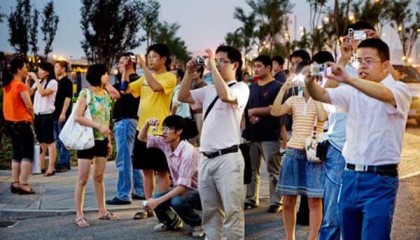
The cooler weather is not the only thing to arrive in Fez in the last few weeks. Along with superb weather has come an influx of thousands of Chinese tourists. Not only are there many large tour groups, there are also couples and individual travellers

And, it is not only Fez, but the entire Kingdom that is benefiting, with the number of Chinese Tourists to Morocco tripling since May. While South Korea, Thailand and Japan continue to be the most popular travel destinations for Chinese tourists, there was a 3500% year-on-year increase in visa applications to Morocco processed by Ctrip, a Nasdaq-listed travel agency based in Shanghai, China.

The major factor behind this boom is the Memorandum of Understanding signed last May which aimed to strengthen bilateral cooperation between Morocco and China, particularly in tourism.

Lahcen Haddad, Minister of Tourism, and Li Jing, the Chinese Director General of the National Tourism Administration, signed the Memorandum of Understanding to strengthen bilateral cooperation in tourism, investment and promotion and to promote the development of tourist flows, including knowledge exchange in the fields of management and training.

Among many things, the MoU has canceled the visa for Chinese tourists to visit Morocco. This resulted in the increased the interest of the Chinese tourist market in the kingdom by 300 percent, as reported by China Tourism Academy.

This rise in interest is the highest in the world in comparison with other touristic destinations that stand at 60 percent increase at best. This is mainly due to the competitiveness of Morocco in regards to travel cost.

According to Moroccan newspaper Hespress, Morocco has become one of the ‘warm’ destinations for Chinese tourists, as the temperature drops in other destinations.

A map posted by the same Academy shows that Chinese tourists are more drawn to Morocco than any other African country, while South Africa is the second most attractive African country.


Earlier this year, during a seminar was co-organised by the Ministry of Tourism, the Moroccan National Tourism Office (ONMT), the National Tourism Confederation, and the Tourism Observatory, where Morocco’s Minister of Tourism reported on Morocco’s plan to attract 100,000 Chinese tourists by 2020.

“The Ministry of Tourism offers an important position to the Chinese market in its vision for the future, which expects to attract 100,000 Chinese tourists by 2020,” said Haddad.

One obstacle that needs to be addressed is that there are no direct flights between China and Morocco, so popular routes with third countries in between are chosen. The packages this year for Chinese tourists include a stop-over in Dubai.

Trips to Morocco are fully booked for this month and September, According to Zheng Lijuan, assistant president, China International Travel Service Co, rips to Morocco in August and September were are fully booked.

China has significant potential as an emerging market for tourists. The country had 98.2 million tourists in 2013 and generated $102 billion in tourism spending in 2012, making it the top country for tourism spending.

Along with the Chinese arrivals Tourism activity rebounded in Agadir during the month of August with a  9.44% increase in arrivals with many coming from the growing  Russian market.

According to statistics of the Regional Council of Tourism (CRT), a total of 140,901 tourists visited Agadir, against 128,744 in the same period of 2015. Moroccans account for more than half of the arrivals - 76,724 against 68,889 a year earlier -  representing an increase of 11.37%. The French came second with 14,549 tourists, a figure down 10.31% compared to the same period of 2015, followed by the English who totalled 7,285 visitors (+ 0.97%).

The Russian market recorded a net increase from 1,188 in August last year o 4089, an increase of 344.19%. This growth confirms the recovery of the Russian market which has already recorded in July an increase of 468%, or 5,180 arrivals against 1,105 in the same period of 2015.

In terms of classification of tourist accommodation unit, classified 4 star hotels come in first with 44,578 tourists, followed by 5-star hotels with 32,386 and tourist villages with 21,248 visitors. The occupancy rate in the various tourist establishments recorded an increase of 4%, or 77.89% against 75.08% in August 2015.

SHARE THIS!

Monday, December 30, 2013

News Briefs # 108


Aid Deal with Gulf States

Qatar and Morocco have signed an aid deal worth US $1.25 billion. It forms part of a package of financial assistance over five years from the wealthy Gulf states to Morocco, with the aim of helping it to weather the Arab Spring protests
The Emir of Qatar and King Mohammed VI have signed an aid deal

Qatar, Saudi Arabia, Kuwait and the United Arab Emirates have agreed to provide aid worth a total 5 billion dollars to Morocco until 2017 to build up its infrastructure, strengthen its economy and foster tourism.

Each of the four countries has committed 1.25 billion dollars to Morocco for the whole five year period.

King Mohammed VI signed an agreement last Friday with Emir of Qatar. The aid will be very welcome in order to reduce social discontent that helped to oust rulers elsewhere in North Africa, including Tunisia and Egypt.

Morocco is under heavy pressure from international lenders to reduce its budget deficit after spending heavily on food and energy subsidies and higher public sector salaries in 2011 and 2012, to help defuse social tensions.

Morocco has budgeted to receive a total 1 billion dollars in aid from the Gulf states for 2014. It hopes to cut its budget deficit to 4.9 percent of gross domestic product next year from an estimated 5.5 percent in 2013.

Qatar was the last of the four Gulf states to sign the aid accord with Morocco.

The Gulf states have agreed a similar package of aid, also worth a total 5 billion dollars over a five-year period, for Jordan.


China Plans Strategic Alliance with Morocco

China is also wooing Morocco - the latest in a line of US allies. Last Tuesday December 23 King Mohammed VI met with Chinese foreign minister Wang Yi, who is on an official visit, at the Royal palace in Rabat
Chinese foreign minister Wang Yi meets King Mohammed VI in Rabat

Officials said China has been planning a summit with Morocco in an effort to establish a strategic alliance. Morocco has found relations with Washington under President Barack Obama less than congenial. There has been tension over the US support for Algeria as well as efforts to undermine Rabat's control of the disputed Western Sahara.

The officials said the alliance could be formally launched during a visit by Moroccan King Mohammed to Beijing. “We welcome this invitation,” a Moroccan official said. The date has not yet been named for the visit.

At least 20 Chinese companies are operating in Morocco, with trade in 2012 reported to be around 300 million euro.


Terrorist Cell Dismantled

Moroccan authorities said on Thursday they had dismantled a “terrorist cell” operating in several cities that included people trained in the use of firearms and explosives

North Africa has been on heightened alert in recent years as regional jihadist groups have grown more powerful and as the turmoil in Libya following Muammar Qaddafi’s 2011 overthrow has left the vast and mostly desert region awash with weapons.

Morocco’s interior ministry said the operation had netted an individual who had been detained in the past on terrorism charges and who was now coordinating nationwide operations, including fundraising and recruiting militants.

The ministry did not specify the number of people arrested nor the cities in which the operation took place.

Morocco has announced the dismantling of several alleged terrorist cells this year, and authorities have expressed concern about the proliferation of extremist groups.

Al-Qaeda in the Islamic Maghreb, the global terror network’s North Africa affiliate, released a video in September calling for jihad in Morocco, which it referred to as a “kingdom of corruption and despotism.”


SHARE THIS!
Print Friendly and PDF

Sunday, July 11, 2010

Fez to be twinned with Wuxi, China


The mayor of Wuxi, China, Mr Mao Xiaoping, met his Fez counterpart, M Hamid Chabat, in Fez this week and exchanged a letter of intent to twin the two cities.


Mr Xiaoping was accompanied by local government and business colleagues from the city of Wuxi to investigate areas of mutual exchange in industry, commerce, human resources, sport and the preservation of cultural heritage.

In the field of trade and industry, discussions were held on new sources of energy. A major push has been made by the Wuxi government recently to become a leader in new energy industries. In 2008 new energy industries were worth 37.8 Billion RMB, with the solar photovoltaic industry accounting for 30.2 Billion RMB of the total.

Wuxi is situated in the central region of the Yangtze River Delta, in Jiangsu province, 128km north of Shanghai. It's one of the top ten most competitive cities in China, and is the birthplace of Wu culture. Wuxi has a rich cultural heritage, and is particularly interested in the experience that Fez medina has as a UNESCO World Heritage Site.

Nanchan Pagoda, Wuxi