Showing posts with label Moroccan Cinema. Show all posts

Thursday, October 04, 2018

Moroccan Cinema In The Spotlight In Scotland

For the third year running, Africa in Motion is collaborating with the Transnational Moroccan Cinema (TMC) project at the University of Exeter. Five of these prize-winning films will be screened and many leading film-makers and commentators will be present at a major symposium (at the University of Edinburgh) on the international impact of Moroccan film.

Africa in Motion (AiM) Film Festival runs from the 26 October – 4 November 2018

Africa in Motion is Scotland’s major annual celebration of African cinema, and is to return for the13th year to bring audiences in Edinburgh and Glasgow a wide variety of creative stories from across the African continent.

Since its inception in 2006, Africa in Motion has introduced nearly 45,000 audience members to the brilliance and diversity of African cinema, screening over 500 films. For the third year running Africa in Motion collaborates with the Transnational Moroccan Cinema (TMC) project at the University of Exeter. AiM has always ensured that North African films are fairly presented at
the festival, recognising the region’s contributions to African cinema as a whole. Contemporary

Moroccan cinema is flourishing and winning prizes locally and internationally. Five of these prize-winning films will be screened at AiM, including Volubilis (Faouzi Bensaidi, 2017), Apatride (Narjiss Nejjar, 2018), House in the Fields (Tala Hadid, 2016) and Burnout (Noureddine Lakhmari, 2017).

This year we are showcasing five outstanding Moroccan feature films and three amazing shorts; a
workshop on experimental documentary making at ECA; and an international symposium at Edinburgh University, Morocco in Motion: The Global Reach of Moroccan Cinema, dedicated to expanding the debates and discussions on the global reach of Moroccan cinema.
“We are really excited to be partnering once again with the TMC project and are thrilled to devote a section of our programme to highlighting the greatness of Moroccan cinema” - Myriam Mouflih, Programming Assistant at Africa in Motion.
Some of the most established filmmakers from Morocco are coming to Scotland, such as Farida Benlyazid, Nour-Eddine Lakhmari, Hakim Belabbes and Ali Essafi, alongside producer extraordinaire Lamia Chraibi.

Experimental and new work by younger filmmakers such as Touda Bouanani, Sofia El Khyari, Nadir Bouhmouch, Meriem Jabi, Lamyâa Achary and Chamiaa Lehnech will go into dialogue with each other, with critics talking about challenges and opportunities for Moroccan film to be seen
globally, on the African continent, in the Arab world and in the West.

La Septieme Porte (Ali Essafi, 2018), an experimental documentary about Moroccan filmmaker Ahmed Bouanani will screen at Edinburgh College of Art alongside Fragments de Memoire, a short film by Bouanani’s daughter, Touda, exploring the remains of her father’s archive.

  The symposium programme is available here:  Programme


SHARE THIS!

Tuesday, September 25, 2018

THE 1ST INTERNATIONAL FILM FESTIVAL OF FES POSTPONED


The first edition of the Fes International Film Festival (FIFF), initially scheduled for November 13-17, has been postponed until February 2019

"The postponement is due to the desire to give ourselves the means and the time necessary to ensure a good preparation for this event," says the association of the International Film Festival of Fez, the main initiator of this cultural event.

It is also to give a "good visibility to the festival, since the initial date coincides with the organisation of major film events at the national level".

The festival aspires to reinforce the cultural animation in Fez and to contribute to the revitalisation of Moroccan film production and the promotion of the national film industry.

The organisers intend to have a number of activities, including the screening of some thirty international films, short and feature films, as well as documentaries, in addition to awarding prizes to the best artistic works.

This festival will constitute a space for exchange and dialogue between different cultures  and a suitable opportunity for the training of students and moviegoers, through workshops supervised by professionals and filmmakers, to help them develop their artistic talents.

This film event also aims to contribute to strengthening the cultural influence of Fez alongside other major cultural and artistic events of the city, including the festival World Sacred Music, the Festival of Sufi Culture and the festival of Amazigh Culture.

SHARE THIS!

Monday, May 02, 2016

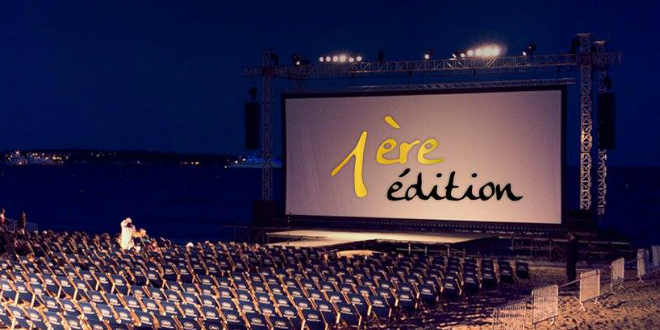
Free Beach Cinema in Morocco

Free films on the beach for a week from July 26th to 30th on Sidi Abed's Harhoura beach


This event, in a natural amphitheatre on the beach at Sidi Abed, will be the first open-air giant screen cinema in Morocco.

This festival is organised by Abdelouahed Mjahed, the president of the Association Marocaine des Arts sans Frontières (AMAF).

Abdelouahed Mjahed says the choice of Harhoura is strategic: "This choice was on its proximity to the capital Rabat and Casablanca, as well as easy access from the highway."


The event, will offer a selection of feature films and short Moroccan films, selected by a committee of experienced film professionals.

In the feature film section, eight films will be shown:
– Atlantic de Jan-Willem van Ewijk
– Dallas de Ali El Mejboud
– L’écharpe rouge de Mohammed Lyounsi
– La Isla de Perejil de Ahmed Boulane
– Les larmes de Satan de Hicham El Jebbari
– La marche verte de Youssef Britel
– A Mile in My Shoes de Saïd Khallaf
– Des… Espoirs de Mohammed Ismaïl

The six short films are:
– Les poissons du désert de Alaa Eddine El Jem
– Frontières de Ali Esmili et Claire Cahen
– Bout à bout d’Asmae El Moudir
– L’esclave du mâle de Mohcine Nadifi
– L’appel de Trung de Hicham Regragui
– Mouchoirs blancs de Farid Regragui

During this event, a jury of film professionals will decide the best short and feature films in competition.

In addition to the  films, the public will be offered master classes of filmmaking and shooting with director Jillali Ferhati, and a writing workshop with Mohamed Arius.


SHARE THIS!
Print Friendly and PDF

Sunday, November 23, 2014

Four Moroccan Films Make it to Mediterranean Film Fest

Four Moroccan films, Adios Carmen, Traitors, The Flour Bag and Fevers were selected for the Brussels Mediterranean Film Festival from the 5th to 12th December
The films tap into the prevailing zeitgeist surrounding children and family relationships. At times confronting, at times harrowing, they are all films to look out for. 


Adios Carmen is directed by Mohamed Amin Benamraoui. Set in 1975 it is the story of 10-year-old Amar who lives in a village in the Rif (northern Morocco) with his violent uncle, waiting for the unlikely return of his mother, who has left for Belgium. He finds a friend in Carmen, his neighbor, who is a Spanish exile and who works as an usher at the village cinema. Carmen helps him discover a world previously unknown to him.

Amar (Benjalil Amanallah) and Carmen (Paulina Gálvez)

Mohamed Amin Benamraoui (born in Morocco) came to Brussels in the mid-1980s and studied cinema under Thierry Zeno. Adios Carmen is his first feature. Benamraoui has produced a number of short films and has also worked as a radio presenter and a programme planner for several Berber festivals. Adios Carmen was produced by Taziri Productions, the soundtrack composed by Khalid Izri. The film won the first prize at the Arab Film Festival in Malmo (October 2014).


Fevers is the third feature film by Hicham Ayouch after Tizaoul (2006) and Cracks (2009). The film is a harrowing vision of the complexity of family relationships. Benjamin, aged 13, is battling against life, against the adults, against himself. Scarred and tormented, he's grown up without a father and with a completely troubled mother. Moving from shelter to shelter since he's five years old, Benjamin can't stand authority nor confinement which causes him to constantly escape.

Eventually, his mother goes to prison revealing to the social services and to Benjamin the identity of his father. To Benjamin the objective is simple: to quit the shelter, so, when given the choice, he decides to go to live with his father.


Karim Zeroubi, his father, is a broken up man on his forties who still lives at his parents at the Parisian suburban ghetto, which he has never left. A warehouseman at a supermarket, he rather waits for death than contents himself with his little life. Benjamin's presence will completely turn upside down the life of his father and his family. His father tries clumsily to bond with him but ends up utterly overwhelmed by this wild, cruel child. Randomly wandering through the suburbs, Benjamin comes across Claude, a cranky poet who lives in a caravan lost in the middle of nowhere. Their relationship is built of surrealistic and poetic exchanges.

Hicham Ayouch is a Moroccan director born in 1976. He is a former journalist, he worked in several French channels before he became a writer and a director. He began with two documentaries The King’s Queens about the status of the women in Morocco and Angel’s Dust about autistic teenagers. He also directed two features, Heart Edges a story of a dead fisherman village and recently Cracks, a love triangle between three misfits in Tangiers.

The third Moroccan film showing of the 14th edition of the Brussels Mediterranean Film Festival is Traitors, the first feature film by American actor residing in Tangier, Sean Gullette. The film, released in 2013, is an 86 minute brush portrait of alienated youth who seek to improve their socio-economic situation.


Malika is the leader of the all-female punk rock band Traitors, with a strong vision of the world, her hometown of Tangier, and her place in it. When she needs money to save her family from eviction, and to realize her dreams for the band, Malika agrees to a fast cash proposition: a smuggling run over the mountains for a dangerous drug dealer. But her companion on the road is Amal, a burnt-out young drug mule, who Malika decides to free from her enslavement to the dangerous drug dealers. The challenge will put Malika's rebel ethos to the test, and to survive she will have to call on all her instincts and nerve.


The Flour Bag by filmmaker Khadija Leclere is the fourth film selected. Again it is a tale of a young person in trouble. Only eight years old, Sarah, who grew up in a Catholic convent school, is abducted by her father to Morocco. A completely different life begins: Sarah now has to find her way in a Muslim extended family and get used to new customs. Nine years later, the little girl has become a self-confident young woman who has only one wish: She wants to Belgium to go back and be a writer. But things do not go as she intended.


SHARE THIS!
Print Friendly and PDF

Tuesday, May 27, 2014

Spotlight on Moroccan Documentaries

Young Moroccan documentary makers are the focus of this year's International Encounters Documentary Festival of Fez, which opens tomorrow, May 28 at the Al Houria Cultural Complex and runs until May 31


This is the 8th edition of the International Encounters Documentary Film Festival, which is organised by the French Institute Fez in partnership with the Moroccan Cinema Centre.

This year the films shown will shed light on the current generation of young Moroccan filmmakers, who have chosen to work in this genre, despite small budgets and distribution opportunities. So this festival offers them the opportunity to show their work.

"We chose films that vary in terms of subject, writing and production, not to mention the background of directors, to increase awareness about what is available," said a statement released by the organisers. "The documentary is where the memory of the society is located; this is why the program we present is bursting with young filmmakers who will present their films and interact with the public. "

The public will be invited to enrich the debate. "We also invited French documentaries which are made in or about Morocco, to provide a fresh perspective and so the Moroccan public can discover these directors."

The program for this event also includes a round table discussion, during which the participants will seek alternatives offering other ways to promote the documentaries. Questions will be asked, such as, why are documentaries presented only at festivals and a few TV channels? Why don't theatres welcome documentary films? Why are professional film makers still not able to find alternatives which facilitate the process of production and distribution?


When: May 29 - 3, 5 pm to 7 pm
Where: Complex Cultural Al Houria
Cost: Free
To download the program: CLICK HERE


SHARE THIS!
Print Friendly and PDF