Showing posts with label Fish. Show all posts

Sunday, October 01, 2017

Agadir's Dolphinarium Project Causes Controversy


A petition on the Internet has been launched as part of the campaign by animal rights activists to stop the construction of a dolphinarium in Agadir
Architect's impression of Agadir Dolphin World

Four Russian contractors are preparing to build the first dolphinarium in Morocco, in the commune of Anza, north of Agadir. The dolphin park is due to open in March 2018.

Four dolphins, a seal and a beluga (white cetacean originating in the North Sea) will be sent from Russia by plane to Agadir to populate the dolphinarium created by the company Agadir Dolfin World and designed by the Moroccan firm KM Architecture. The different marine mammals all come from a dolphinarium in Russia and were born in captivity.

A project that goes, "against the notion of sustainable development", according to the Moroccan branch of the Surfrider Foundation, are petitioning the ministers of Agriculture and Fisheries, and Energy and Sustainable Development to prevent the creation of this dolphinarium that "hides the sad reality of the (poor) living conditions in captivity" of dolphins.

The petition, published on Avaaz, which has collected thousands of signatures, condemns the conditions of captivity of dolphins, "enclosed in shallow basins which they can traverse, while the wild dolphins travel nearly 100 km per day and spend 80% of their time immersed in the depths of the ocean, to socialise and hunt".

Architect's drawing showing the small dolphin enclosure

According to the Surfrider Foundation, an NGO dedicated to the defence of the oceans, coastlines and marine animals, captive dolphins only survive half as long as wild dolphins because of the stress of captive life, and develop a large number of illnesses related to their conditions of detention.

"Seeing dolphins locked, enslaved, sick and stressed, performing acrobatics can in no way help to educate the public about dolphins, the environment and sustainable development," the association writes. "Forcing dolphins into captivity is a form of slavery, maltreatment and cruel unethical treatment."

The project has received all the legal authorisations from the Moroccan authorities for the construction of the dolphinarium, which will also include an aquarium, green areas and playgrounds. Veterinarians and specialists will come from Russia to look after the animals, but the staff for the maintenance of the site and the reception of the visitors will be hired locally.

According to the statutes of the company Agadir Dolfin World, created in March and managed by one of the partners, Aleksei Derii, the four Russian shareholders have contributed 100,000 dirhams of capital for the creation of their company.

Several countries have banned dolphinaria. The United Kingdom closed their last dolphinarium back in 1993. While in Europe, Croatia, Cyprus and Finland have also banned or closed the last existing dolphinariums. Other countries, such as Costa Rica, Chile and India, have banned dolphin parks. France has just prohibited the reproduction of dolphins and killer whales held in captivity.


The petition, published on Avaaz, points out that while Morocco, under the enlightened vision of His Majesty King Mohammed VI, has adopted a National Strategy for Sustainable Development,  the creation of a Dolphinarium cannot be synonymous with sustainable development for the country.

At a time when associations and NGOs in many countries are campaigning for the closure of the dolphinariums on their territory, why would Morocco in 2017 create its first dolphinarium when it has embarked on the path of sustainable development?

SHARE THIS!

Thursday, February 16, 2017

Morocco - Africa's #1 Fish Producer

With its two maritime, Mediterranean and Atlantic seaboards, a coastline stretching over 3,500 kilometres and a maritime area of ​​about 1.2 million square kilometres, reputed to be among the most fish-rich areas in the world, Morocco has a very important fishing heritage

According to a report published recently by the Food and Agriculture Organisation of the United Nations (FAO), Morocco has some 110,000 fishermen and aquaculturists. With $ 1.59 billion of export revenue, Morocco ranks first among fish producers in Africa and 17th worldwide, according to the National Fisheries Board (ONP).

Moroccan fishermen recorded catches of more than 1.35 million tonnes last year. It is the world's top sardine producer and, along with China and Mauritania, one of the top 3 exporters of octopus in the world.

Morocco, is holding the 4th edition of the industry forum, Halieutis Salon, (15-19 February) in Agadir.

The fisheries sector occupies an important place in the economy of Morocco. With catches of over 1 million tonnes, it accounts for between 2 and 3% of GDP, and generates close to 700 000 direct and indirect jobs. Moroccan exports of seafood accounted for nearly $ 1.59 billion, contributing 58% of agri-food exports. The sector's turnover has grown at an average annual rate of 5% since 2001.

Fact File: Production is...
  • 95% by 1,800 inshore fishing vessels and 14,000 small craft boats;
  • 5% by the offshore fleet of 356 vessels;
  • 2% by other activities.
The national production resulting from the landings of the inshore and artisanal fisheries is destined for:
  • 80% to supply the seafood processing industry with 305 units ashore.
  • 20% to the supply of fresh produce to the local market.
The seafood processing and processing industry gives birth to various processed products:
  • The canned goods ;
  • Semi-preserves;
  • Frozen products;
  • Fresh fish;
  • Flour and fish oil.
This industry accounts for 50% of Morocco's agro-food exports, ie 7% of its total exports in value terms.

SHARE THIS!

Friday, August 29, 2014

"National Sardine Day" ~ Morocco is World's Top Producer


On the occasion of the "National Day of the Sardine", Minister of Agriculture, Aziz Akhannouch, said that Morocco is in a noble position, vis-a-vis the sardine. However, others claim it is a shame that the everyday fish of coastal folks is a luxury elsewhere in the country


"With nearly 57% of national fish production, Morocco is the world leader in the production of sardines" - Aziz Akhannouch:

The marine fisheries sector has recently undergone major advances especially with the upgrade of a large number of seaports, noted Aziz Akhannouch as part of the first edition of "Day of the Sardine".


President of the Moroccan Association for Consumer Protection, Dr Bouazza Kherrati, claims that in some regions of the country, particularly in the south, sardines can cost as much as 40 dirhams a kilo. He goes on to say that events such as the "Festival of the Sardine" should be held not only in coastal towns but in the interior as well.

Morocco currently has seven wholesale markets, 22 fishing ports, 22 halls for grading industrial fish (CAPI) and well-established fishing villages 40 km apart across the entire coast of Morocco. The Minister, Aziz Akhannouch, remarked that these facilities are effective in improving the productivity and competitiveness of the fishermen. The minister also noted that nearly 50 per cent of the domestic production of sardines has a development plan that provides a sustainability structure by introducing biological rest periods, quotas and areas closed to fishing, to ensure durability and conditions for reproduction.

Sardines have always held a special place in the food habits of Moroccans in terms of their nutritional value and price that remains accessible to all segments of society, Aziz Akhannouch noted, adding that the importance of the Sardine Festival is that it helps promote the characteristics and benefits of sardines.

The vice president of the Association of Owners of fishing port of Al Hoceima, Fikri Ould Chaib, agreed with the Minister and added that this first edition of the "Festival of the Sardine" is an opportunity to showcase the product fishing in the region characterized by a variety and quality that is renowned nationally and internationally.

Calling the meeting successful event Fikri Ould Chaib added that civil society is willing to work in coordination with the supervisory department for the development of the province.

 Initiated from August 27 to 31 by the National Fisheries Authority (NFA) in the context of the implementation of the strategy to promote seafood, "Day of the Sardine" is organized simultaneously in five beaches in the Kingdom - Al-Hoceima beach (Quemado) Martil beach, Agadir Beach (Taghazout) Dakhla beach, and Mehdia. This event aims to promote domestic consumption of fresh sardines and its value to the Moroccan public as ` flagship of the national fish production and awareness of the benefits of sardines for health.

As our contribution to "Sardine Day" The View from Fez offers a Moroccan Sardine Recipe - Chermoula Sardines

2 kg fresh sardines, double filleted or "butterflied"
1 cup of  Chermoula (see recipe below)
1/2 cup flour
vegetable oil for frying
Prep Time: 20 minutes Cook Time: 25 minutes.


Method

Place the sardine fillets skin-side down and spread the chermoula generously over the fish. Some people also place another sardine on top, skin side up. When sardines are all covered in chermoula set them aside to marinate (in the fridge is the best place.

When you are ready to cook, coat the sardines with a sprinkling of flour and cook in vegetable oil in a pan set on medium to high. Do make sure you have enough oil in the pan to cover the entire surface.

Cook in batches until golden (four to five minutes on each side), and then place on paper towels to absorb excess oil before transferring to a serving plate.

Fried stuffed sardines can be served hot or at room temperature

Chermoula

Chermoula can be used as a great dipping sauce for flatbread, but is traditionally used as a marinade. Superb on fish but fine on any other meat - or even vegetarian tagines.

To make one cup:

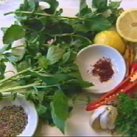
1 well washed bunch of fresh coriander.
3 large cloves of garlic, peeled and squashed.
1 teaspoon each of ground cumin, coriander and paprika.
1 small red chilli (remove the seeds!)
1/2 teaspoon of sea salt.
Juice of 1 large lemon
1/4 cup of olive oil.

Blend to a rough textured paste with a food processor or mortar and pestle.

**For a marinade - add 1/2 a tablespoon of tomato paste, 3 extra tablespoons of olive oil, 2 generous pinches of good quality saffron and 1/3 of a cup of water. After coating fish or chicken in the marinade, assemble in tagine and pour remainder over entire dish.

See more Moroccan Recipes in our Cookbooks Section

SHARE THIS!
Print Friendly and PDF

Thursday, August 04, 2011

Fish Deaths and Pollution in a Moroccan River.


Since mid-June, thousands of dead fish have been rotting along the banks of the Moulouya River, in north-east Morocco. While tests are being carried out to establish the cause of death, environmental activists are blaming a local sugar refinery. The king has insisted that Morocco was going to enforce the international treaties it has signed including Ramsar, the International Convention on Wetlands which came into effect in 1975 and was signed by Morocco in 1981. As FRANCE 24 journalist Peggy Bruguière reports, environmentalists are waiting for the king to intervene under the auspices of the new constitution to save the Moulouya River.

After residents notified local environmental groups of the situation, these groups formed a collective called the “North Moroccan Green Platform” to shed light on the problem. The collective points out that the river’s estuary is classified as a protected site of biological and ecological interest, and that its fauna risks extinction. In Oriental, a north-eastern region of Morocco, dead fish litter the river’s shores for dozens of kilometres.

The environmentalists put the blame on the sugar refinery Sucrafor. The refinery is part of the Moroccan group Cosumar, which has a monopoly on Morocco’s national sugar production. This is not the first time that the company has been blamed for contaminating the Moulouya River. In the 1980s and 1990s, environmentalists said Sucrafor had released more waste water into the river than was legally allowed.

This new scandal comes just one month after the new Moroccan constitution was adopted. Article 35 of the constitution stipulates that the state guarantees all citizens the “right to water, a clean environment and sustainable development.”

The North Moroccan Green Platform’s allegations have not been proven and tests are still in progress to determine the cause of death.

Najib Bachiri, who is the president of the Man and Environment Organization in Berkane,says "Several members of our collective travelled down the river to where it meets the Mediterranean in order to pinpoint the source of the pollution. For dozens of kilometres we saw all sorts of dead fish. After 50km we arrived at the Oued Zebra tributary near to the town of Zaio. The water at this point was hot, black and smelled horrible. Not far from there is Sucrafor, a sugar refinery.

It’s no coincidence that the fish died after the sugar beet production period. Royal Guard officers are carrying out tests in their laboratory in Rabat. We are awaiting the results and if Sucafor is indeed the cause of the catastrophe, we will take the case to court. In the meantime, local residents are very worried, as they don't have any information. They have not irrigated their melons and watermelons with water from the contaminated river. But it is not only the fruit products which are under threat. Farmers have told me that their sheep died after drinking the water from the Moulouya."

Sunday, August 23, 2009

Moroccan fish recipe


In Ramadan, the meal that breaks the fast in the late afternoon, is usually similar every day. Moroccans eat harira, a tomato and chickpea soup (see our recipe here), dates, syrupy cakes called chebakiyya and various breads, and drink fresh fruit juice.

But according to The View from Fez reader, Mahmoud in Marrakech, the evening meal is the one where the women of the house go all out to produce the best meal possible. Mahmoud says his family tends to eat fewer tagines, fewer sauces, more roast meat and more fish.

The day's catch, Essaouira

Here's a Moroccan fish recipe that's perfect for hot summer days.

Dorade dipped in nutty couscous, with tomato and mint salad (for 4)

40g fine couscous
20g blanched almonds, finely chopped
1 spring onion, thinly sliced
4 small dorade (or similar), about 250g each, cleaned and scaled
1 egg, beaten
2 1/2 tbs olive oil
salt and pepper

for the salad:
1 large garlic clove, crushed
1 tsp lime juice
1 tsp white wine vinegar
2 1/2 tbs olive oil
2 large tomatoes, skinned, seeds removed, and chopped
handful of mint, chopped

Make the salad first. Combine the dressing ingredients. Pour over the tomatoes and add half the mint. Toss gently and refrigerate.

Mix the couscous, almonds, spring onion, the rest of the mint, plenty of black pepper and a little salt.

Dip each fish into the beaten egg, then coat with the couscous mixture.

Heat the olive oil in a large, non-stick pan. Add the fish in one layer and fry for about 7 minutes on each side. It's ready when the flesh flakes when tested with the point of a knife. Serve immediately with the tomato and mint salad.

See all our Moroccan recipes here: MOROCCAN MENU!

Wednesday, May 20, 2009

A Moroccan Cooking Lesson in Fez


For a while there were only a few people teaching Moroccan cooking in Fez. Now the competition has well and truly been turned up and there are many places in the Fez Medina where visitors can learn to cook Moroccan dishes. Recently The View from Fez reported on Cafe Clock and Gail of FezFood having joined forces to launch a new Moroccan cooking school called Clock Kitchen and we will report more about that at a later date.

Today we will look at one of the several guest houses and riads that offer visitors to Fez the opportunity to spend a day learning the finer points of Moroccan cookery.

When Bronwen and Glen Edwards from Australia wanted to experience Moroccan cooking first hand they teamed up with Samira from the blog A Moroccan kitchen. Samira works at Riad Laaroussa and has the gift of making everyone feel at home in her amazing kitchen.

What follows is an introduction to our photo-essay of the day that Glen and Bronwen spent with Samira. The full story is on THE PHOTO JOURNAL

Before setting out Samira updates her blog

The food and vegetable souq is crowded

Samira checks the quality of everything

Bronwen and Glen are impressed by the freshness of the vegetables.

At the butcher, Samira not only selects the meat, but insists on how it should be cut.

All through the shopping trip Samira takes time to answer questions and point out things of interest.


The photo essay continues on The View from Fez Photo Journal


For more information about Samira and the cooking classes, please visit Samira and Sabah's blog - A Moroccan Kitchen.


Tags: