Sunday, April 30, 2006

Quranic Art exhibition in Meknes


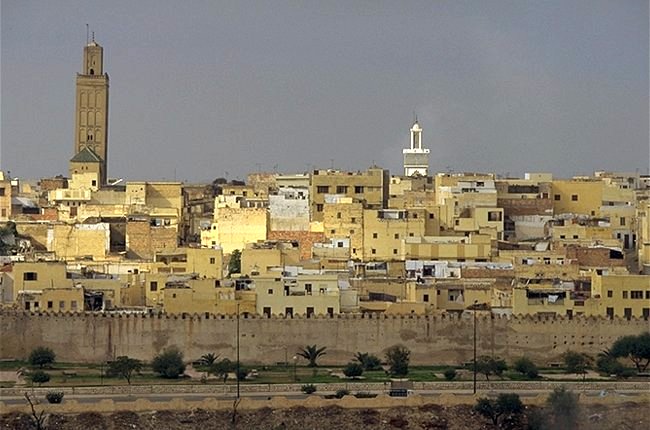
If you are around the Fes area at the moment, take a side trip to Meknes and check out the exhibition entitled “Quranic Art, the Experience of Contemporary Iran” which is currently underway in the historic city. Meknes was the capital of the Alawi dynasty during the reign of Moulay Ismail (1645-1727) and is a place you should visit if you have the opportunity..

Some Iranian officials and Moroccan cultural, scientific, and academic figures attended the opening ceremony on April 28 at Bab el-Mansour, the ancient ruin in Meknes.

The Iranian Embassy in Rabat, in collaboration with Iran’s Quran Museum and the Tareq Ibn Ziad Center in Morocco, organized the five-day exhibition, which is also scheduled to be held in the Moroccan city of Rissani for three days.

The exhibition features 50 Quranic scripts, some rare Qurans, and some examples of Quranic illumination by Fariba Maqsudi, Mahindokht Salek Mahdavi, and five other Iranian artists.

Iranian and Moroccan artists are participating in several workshops on Arabic and Persian scripts as well as scholarly gatherings which are being held on the sidelines of the event.


Tags:

Back in Fez in six days.


In less than a week we will be back in Fes. The length of time away has been excruciating and it will be with a profound sense of relief that we walk through the gate into the Medina next Saturday.

Back in Fes we will continue to post. First up will be regular reports and updates about the Sacred Music Festival and also other events coming to Fes in particular and Morocco in general. As we have mentioned previously, The View from Fez will be setting up a whole new wireless system in our riad and as this will take some time, there may be a few pauses in our usual daily posting. We will try and fill in by using the R'cif internet cafe - but not certain how well that will suit our needs.

If you have specific questions about Fes, houses, accommodation and so on, feel free to email us at fes.riad@gmail.com and we will get back to you as fast as possible.


Tags:

The bloggers target extreme Islamic treatment of women.

In the last few days there have been some fascinating posts from a couple of my favourite bloggers. Both of them have commented on Islamic woman and the absurd nature of some of the dress codes and demeaning treatment. Sabbah has a great post To Dress and Undress! which begins with the picture of a woman who is certainly not about to set any speed records in the pool, and then he moves on to lingerie shops in Saudi having the windows blacked out.


Meanwhile over in Cat in Rabat land the attention is turned to the news that women will be allowed into sporting stadiums. "For the 1st time since 1979, Iranian women will be allowed to attend sporting events in public, in front of men, in stadiums! Women had been barred from sporting events because (at least officially) of the "cramped nature of sporting events as well as the profanities shouted by male spectators"

Read the Cat's post here: He shoots, she scores!


The ban on women attending major matches was imposed in 1979 when the country's newly adopted Islamic code forbade women from watching men play sport.

There were regular protests against the ban, especially when women supporting visiting foreign teams were allowed into stadiums to watch their side.

Meanwhile officials in the capital, Tehran, last week launched a campaign to insist women obey Iran's strict Islamic dress codes.

Hopefully the next Iranian revolution will emancipate women from the bizarre dark-ages time warp they are in now.


Tags:

Saturday, April 29, 2006

Train travel in Morocco


We have had several questions about train travel in Morocco. The simple answer to most questions is "yes" - it is easy, and cheap. If you want a modicum of comfort book a first class ticket. Remember to take some food and water to share with others in your compartment. You will quickly discover that most Moroccans will share their food with you, so be prepared to reciprocate. Simple, bread, fruit, cheese and so on, is fine.

Link to Moroccan train timetable

Tags:

Most viewed posts - week ending April 29


Each week we track the most popular posts so that we can get an idea of what you like to read about. Here are the top posts from the last seven days.

  • A rare Islamic experiment

  • Learn Moroccan cooking in Fes

  • Morocco at a glance - A quick tour.

  • Joujouka - Sufi Trance Masters

  • Fes Festival of World Sacred Music Program

  • Black Widow - A novel on the aftermath of Beslan.


  • And our favourite blog this week is a French language blog.


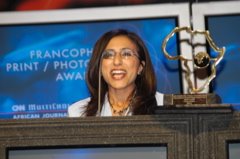
    Moroccan journalist, Nadia Lamlili, won the CNN Francophone General Award, an annual prize in recognition of African journalists. Lamlili's award was for an article on migration to the north shore of the Mediterranean Sea. The piece focused on the intentions of migrants, the difficulties they encounter and the groups that profit from the human tragedy. Nadia's Blog.


    And this week from Global Voices: Moroccan blog roundup


    Tags:

    Entering the spider's house.


    Intrepid traveller Chris Patten, writing in The Financial Times, has an interesting time in Fez. Here is part of his article with a link to the original and full version.

    Fes, which duelled with Marrakech for centuries for primacy in the Arabic Morocco state, is less comfortable than its rival, which is not to say that our stay there was bereft of modest luxury. We put up in a splendid riad called La Maison Bleue in rooms hardly changed since the owner’s grandmother lived in them.

    Dinner was served in the covered courtyard to the accompaniment of live Moroccan music. A dozen dishes of delicious cooked vegetables were typically followed by pastilla (the fish one even better than the pigeon) or couscous and then the ubiquitous tajine.

    The local Moroccan wines were part of the deal: a drinkable Semillon and a better Cabernet du President; which president I never discovered.

    In hotter weather this riad’s sister establishment, Maison Bleue Le Riad, may be a better bet; it has a spa and swimming pool and a great view over the walls of the old city up to the Merenid Tombs.

    It is worth scrambling up to this landmark, or taking a taxi, to get a clear idea of the lie of the land in Fes. The medieval “citadel of fanaticism” (as it was called) is in front of you in the pear-shaped bowl of the Sebou valley; off to the right is the new quarter built by the French and beyond that the road to Casablanca where the young Arab Amar in Bowles’s novel is finally abandoned by the Americans who had discovered him with all his quaint and savage cultural traits.

    Much of The Spider’s House follows Amar through the labyrinthine Fes as he hunts and is, in his turn, hunted.

    That the city has been preserved owes much to the French resident- ­general Louis-Hurbert Lyautey in the last days of colonial rule there and subsequently to Unesco. Fes was saved from the fate of so many cities in developing countries where, in a paradoxical gesture of national independence, so much local architecture is demolished to be replaced by pastiche Western.

    Exploring the narrow streets of Fes leaves lingering memories – the stink of horse and donkey piss, the perfect pyramids of ground spices (yellow, red, orange and blue), the butchers’ shops with lines of sheep heads giving you an understandably doleful look, the tanneries and leather shops with piles of yellow babouches, the occasional visit to a medersa – the colleges of the ancient university – with their intricate wood carvings and blue tiles, and the evening roost of storks and alpine swifts on their rooftops.

    Fes is not dangerous but it does seem alien, and in January the cultural difference is enhanced by the sheep being led into the city to have their throats cut by every family that can afford to buy one for the feast of Aid El Kabir, commemorating Abraham’s willingness to sacrifice Isaac.

    Bowles captures all this in a novel set in the dying days of French colonialism. Gertrude Stein described him as “a manufactured savage”.

    Dwelling himself on the frontier between sophistication and barbarism, Bowles is the perfect eye-witness to the Hobbesian world that he believes we all inhabit whatever our imagined civilised superiority. As Francine Prose observes in her excellent introduction to the edition of The Spider’s House published by Ecco, Bowles’s fiction is “the last place you would go for hope, or even for faint reassurance that the world is anything but a horror show, a barbaric Darwinian battlefield.”

    Bowles is far more relevant to today’s discussions about clashing civilisations and the roots of terrorism than others regularly cited, such as Joseph Conrad. One activist in the novel notes the efficiency of violence in gaining American attention. Amar himself contemplates the difference between political Islam and jihadism – “they saw . . .  factories and power plants rising from the fields . . . he saw skies of flame, the wings of avenging angels, and total destruction”.

    He understands the terrorist’s grim compensations not of accomplishing a specific political aim but “of seeing others undergo the humiliation of suffering and dying . . . If you could not have freedom, you could still have vengeance, and that was all anyone really wanted now”.

    Bowles clearly believed that we all – not just non-Moslems – live in the frail surroundings of a spider’s house and what others may take as his great insights into different cultures he clearly regards as so much nothingness. He presages the first part of his novel with the ‘Song of the Owl’ from The Thousand and One Nights: “I have understood that the world is a vast emptiness built upon emptiness . . . And so they call me the master of wisdom. Alas! Does anyone know what wisdom is?”

    THE FULL STORY: Chronicle of Terrorism foretold.

    Tags:

    Friday, April 28, 2006

    A rare Islamic experiment.

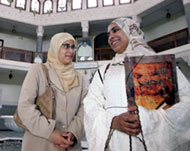
    Muhammad Mahfudh is a happy man. He has just presided over an experiment that, by anyone's standards is a gamble in the world of Islam. In what is seen as a huge step in the right direction by moderate Moslems, Morocco has just graduated its first team of women preachers to be deployed as a vanguard in its fight against any slide towards Islamic extremism.

    "This is a rare experiment in the Muslim world," proudly stated Muhammad Mahfudh, director of the centre attached to the Islamic Affairs Ministry that trained this first class of 50 women.

    According to another Ministry spokesman Hamid Rono, "This is the first of its kind in the Islamic world".

    This pioneer group of Murshidat, or guides, who finished a 12-month course in early April, were trained to "accompany and orient" Muslim faithful, notably in prisons, hospitals and schools and be paid a salary of 5,000 dirhams ($560) a month.

    Samira Marzouk, in her 30s like most of the others, exclaims how "proud" she is to be part of this first group. She sees their mission as one to "fill in the gaps that prevent a solid framework for religion. We are going to teach a tolerant Islam by focussing on the underprivileged classes."

    They graduates will work with women and children in poor ghettoes seen as fertile ground for extremist recruiters.The idea of the Murshidat, spearheaded by HM King Mohammed VI and the government, took off after Islamic extremist attacks in the Casablanca on May 16, 2003 claimed 45 lives and left dozens of others wounded.

    The King who had already started reshaping religious structures to rein in any extremist drift in his North African country, which borders Algeria where violence between government forces and armed Islamic extremists has caused more than 150,000 deaths since 1992.

    But the synchronised suicide bomb attacks that struck Jewish and foreign targets gave new urgency to the initiative. More than 2,000 people were arrested in vast police sweeps after the May bombings as the king pledged that the attacks would be the last to rock Morocco. Investigators concluded that those behind the incident had indeed sought recruits in the teeming slums around Casablanca, the kingdom's biggest city.

    Marzuk, with a diploma in Arab literature who said she knew the Quran by heart, was quick to specify she was "not going to take the place of an imam The imamate in Islam is restricted solely to men who are apt at leading prayers, notably those on Friday," she said. "The Morshidat will be in charge of leading religious discussions, give lessons in Islam, give moral support to people in difficulty and guide the faithful towards a tolerant Islam," she added.


    Another graduate, Laila Faris, a lively young woman who holds a degree in Islamic studies, said she saw the Murshidat's role as promoting "the true face of Islam We will help attenuate any drift towards Islamic extremism," she said, stressing that "an overall approach is needed to dealing with radical Islam".

    During the year-long course, the curriculum ranged from Islamic studies to psychology, sociology, computer skills, economy, law and business management. Sports was the only subject dropped from the women preachers' training because the schedule was just too tight," regretted Mahfudh, who hopes to include it for the second batch of Murshidat trainees, whose applications are now being accepted.

    For the Islamic affairs minister, Ahmed Taoufiq, the Murshidat will also "instruct women on their basis religious duties". He stressed that religious radicalism was not part of Morocco's culture "but you can never prevent evil one hundred percent".

    Sadly there are still some of Morocco's Islamic fundamentalists who are not supportive of the initiative. However, for one Islamist deputy, Mustafa Ramid, with the Islamist Justice and Development party (PJD), the main opposition group with 43 seats in the 325-member parliament, the Murshidat is a "positive" development. "I see nothing more to say about this initiative because in Islam, men and women are equal," he said, pointing to Egypt which has "eminent women scholars of Islam".

    But the head of the youth group in Morocco's most radical Islamic fundamentalist association, Al-Adl Wal-Ihssane (Justice and Welfare), forecast it would have no effect on the ground. "The power behind this initiative is the same as the one that commits acts contrary to Islam, notably degrading moral values," said Hasan Bennajih, whose group is part of an Islamist movement that claims to to preach non-violence and although unrecognized by authorities, is still influential with a radical minority. "This initiative, then, will only have a limited impact on the population," said Hasan Bennajih.

    However, for a majority of Moroccans, this is another step towards tolerance and equality and to be applauded.

    Tags:

    Thursday, April 27, 2006

    The Borj Nord Arms Museum in Fès re-opens


    The Borj Nord Arms Museum in Fès is re-opening this week after it was revamped on the instructions of King Mohammed VI.

    Borj Nord, or northern fortress tower of the old town walls, was built in 1582 by Saadian Sultan Ahmed El Mansour Eddahbi to secure the protection of Fès. The structure is testimony to the evolution of military architecture and warfare. The Tower and walls were constructed to sustain heavy canon balls.

    This XVIth century fortress remains true to its military tradition since it has been transformed into the Arms Museum. The collections have been built up mainly with royal donations and include a number of rare pieces. The restoration was assigned to the Moroccan Military History Commission that asked specialized research offices, in cooperation with the Culture Minister and other relevant departments, for counselling on the new look of the museum.

    The press release said the re-opening of the museum is part of the activities celebrating the FAR (armed forces) 50th anniversary.

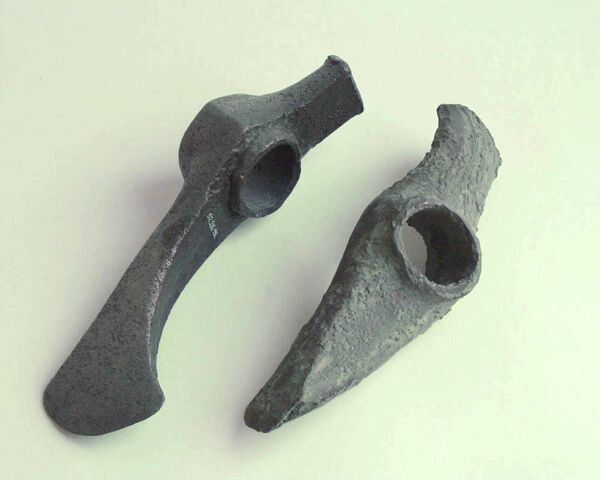
    The museum is displaying in 13 rooms 775 military items out of the 5000 arms collection, which includes weaponry from the pre-historic axe to the modern rifle. Many civilizations are represented: Indian, European and Asian.

    The collection also includes fine Moroccan items: daggers encrusted with stones or rifles and outstandingly, a 5-meter canon weighing 12 tons, used during the Battle of the Three Kings (Battle Of The Wadi Al-makhazin ).

    Tags:

    Brand Morocco?

    Morocco is so much in vogue at the moment that the unwary consumer is likely to buy the latest "Moroccan " design only to discover later that the item has little or nothing to do with Morocco. I was recently interested to search out some Moroccan earrings and necklaces and found that around 75% of the products had little or no Moroccan content.

    A case in point is the work of Carmen Salerno from Rio and her brand "Annbar". According to her advertising, Brazilian designer, Salerno, finds in Morocco the inspiration for creation of her necklaces, earrings, rings and bracelets. Carmen, who lives in the city of Niterói, in the southeastern Brazilian state of Rio de Janeiro, produces semi-jewels that reproduce the Moroccan style and have raw materials imported from the Arab country. The products made by Salermo have clasps and details in Moroccan silver, famous for its pureness. They are sold under brand Annbar. In Arabic, anbar is a perfume essence.

    One of her press releases claims... "The Moroccan style is present in the semi-jewels produced by designer Carmem Salerno, from Rio de Janeiro. The businesswoman makes necklaces, earrings, bracelets and rings under brand Annbar. Some of the products also include Moroccan silver."
    "Moroccan" necklace produced out of Indian bone and Moroccan silver

    It all began with the designer's passion for Oriental culture, especially the Moroccan. "On my wrist I have a moon and a star (tattooed), the sitting room in my house has Moroccan design," stated Carmen. The businesswoman, however, is not Muslim and is not of Arab descent.

    The Moroccan silver used in the products is imported from a trading company in Los Angeles, in the United States. Apart from raw material, the exoticness of Morocco is in the products. The designer travelled to the Arab country around four years ago to learn more about the local culture. "I spent 15 days researching and was enchanted," she said.

    Maybe I am being a little bitchy, but perhaps she needed a few more days in Morocco?


    Tags:

    New debit card scheme for pensioners.

    A lot of ordinary Moroccans, particularly those in rural areas, still work in the cash and barter economy. It is not uncommon to find people who do not have a bank account. For most people this is fine, but there are times when it can be inconvenient, especially when all they want to do is access social security payments. Well, help is on the way in the form of a new cashcard.


    Barid Al Maghrib is a multiple service business with international coverage. Set up in 1998, it provides messaging, postal and financial services. Now the business has joined forces with the Moroccan Social Security Department (CNSS)and signed an agreement on 20 April that will establish a cash card payment procedure to allow CNSS benefits to be paid to claimants who do not have bank accounts. The new product, which will be launched in June, will allow card holders to access funds through the various services run by the CNSS.

    The new card, under the Visa label, will also serve as a debit card for withdrawals from all automatic teller machines run by Barid Al Maghrib and banks affiliated with the Centre Monétique Interbancaire and for electronic payment for goods at retail outlets.

    Saïd Ahmidouche, director general of the CNSS, said that this partnership will strengthen ties between the two institutions, which are firmly committed to a global modernisation process to benefit their customers and users.

    Anas Alami, director general of Barid Al Maghrib, expressed hope a similar process can contribute to the successful implementation of compulsory health insurance.

    Adding that the launch of the card does not contribute to profit-making, he was careful to explain that the project has a social dimension that will benefit most of the Moroccan population now. Alami feels the cards will make the electronic payments available to all Moroccans without any distinction. Barid Al Maghrib has promised to ensure a 95 per cent availability rate across its automatic teller network.

    The card will bear the logos of the CNSS and Barid Al Maghrib and be valid for a period of three years at a price of 20 dirhams annually. Owners will thus have easy access to payments made by the CNSS with the simple-to-use card.

    Created in 1961, the CNSS manages all social security payments for employed individuals. Currently, it covers 163,026 affiliated companies, 1,757,847 contributing workers and 300,501 pensioners.

    Tags:

    Learn Moroccan cooking in Fez.

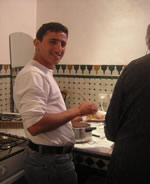
    Here at The View from Fez, we enjoy great Moroccan cooking and although we pride ourselves on making our own preserved lemons and cooking a mean tagine, we certainly don't have the skills of Lahcen Beqqi. Recently he has started running small classes on Moroccan cooking so that you can learn the secrets of the local cuisine.

    As he says, "Moroccan cuisine is said to be one of the most important cuisines in the world and Fes is considered to be the capital of Moroccan cooking. Every visitor to Morocco can savor the delights of its gastronomy when they taste tagines, pastilla, and couscous in the various fine Moroccan restaurants. However, few tourists get the chance to experience the preparation of Moroccan cuisine; something that is essential to understanding the culture. When you take cooking lessons with me, you will experience first-hand the process of food preparation that Moroccans perform every day, from choosing your own fresh ingredients in the open-air market, to cooking in a traditional Moroccan house."

    Lahcen is not only a great chef, but an excellent teacher and his lessons in Moroccan cuisine are more than simply cooking. The lesson starts in the morning, at around 9:30, when he takes you on a trip to the open-air market (or the “souk” in Arabic), where you will buy all of your fresh ingredients. Lahcen will teach you how to pick the freshest goods. You will also be able to pick up a local wine for your meal. After grocery shopping, you will return for your lesson, which will be held at Dar El-Hana, a beautiful traditional Moroccan home restored to be a guest house. In the beginning of the lesson, Lahcen will provide you with typed and printed recipes for the meal that you will be making. He is more than happy to accommodate vegetarian needs, as well. Finally, what is more satisfying than to eat food that you have prepared? You and Lahcen will eat your dish for lunch, when you may choose to try eating “à la Marocaine”, using bread and your right hand, instead of a fork and knife. The length of the lesson depends on the cooking time for the dish, but usually, a lesson will last about 5 hours (from the grocery shopping to eating).

    Lahcen is a Berber from the south of Morocco, in the High Atlas. He grew up in Amellago, a small agricultural village in the Gris Valley. Amellago is situated between Imilchil, where the annual Marriage Festival is held, and Merzouga, the entry to the tallest sand dunes of the Sahara. Lahcen’s father is a shepherd and a farmer, so Lahcen spent his childhood in the mountains, taking care of the herd, and in the field, helping his parents farm the land. When he was 10 years old, his parents sent him to another town for school. This is when Lahcen learned to cook for himself. After he got his baccalaureate and finished high school, Lahcen worked in a small restaurant and he became fascinated by the work of the chef. This is when he decided that he wanted to make cooking his career. He went to hotelier school, but he got his most valuable experience when he worked in Azrou alongside a Moroccan chef named Aziz, who had been trained at the world-renowned cooking school in Laussane, Switzerland. With Aziz, Lahcen learned how to make cooking an art. Since then, he has continued to perfect his art. He is adventuresome in his cooking, yet at the same time remains dedicated to exploring Moroccan cuisine from every region of the country. As well as teaching cooking lessons, Lahcen works at a guest house in Fes as the chef de cuisine.

    Here's one of Lahcen's great recipes:

    Lamb, Prune, and Date Tagine

    This dish is a traditional Moroccan tagine. Because it is sweet and it includes dates, it is often served when a family has company over.

    For 3 people

    * ½ kilo of a shoulder of lamb
    * 250 grams of dried prunes (around 30 prunes)
    * 6 dates (pitted)
    * one big red onion, sliced
    * 200 grams of roasted almonds
    * one cinnamon stick
    * one pinch of ginger
    * one pinch of saffron (pistils)
    * one pinch of salt (or to taste)
    * one pinch of pepper (or to taste)

    Wash the prunes and put them in one liter of water. Let them sit. Put ginger, saffron, and lamb in a big pot. Cook on medium flame. Mix for one minute. Add olive oil and onion. Leave for 5 minutes. Add salt and pepper. Take the prunes out of the water and put them aside. Keep the water! Pour it into the pot with the lamb. Let the meat cook for 1 ½ hours (or however long it takes to cook) on a medium flame. *You can also leave it on a low flame and let it cook longer. Add the prunes and dates in the last 15 minutes.

    Visit Lahcen's website for more details. Moroccan Cooking Lessons

    Samir's fish tagine with preserved lemon and chermoula

    Preserved Lemons Samir Style


    Tags:

    Tuesday, April 25, 2006

    Moroccan News Briefs - #26

    Moroccan News Briefs published in The View From Fez draw on open source material, contributions from readers, as well as material from Maghreb Arabe Presse (MAP), Morocco Times and official Moroccan Government press releases.

  • Chinese president starts official visit to Morocco.

  • Chinese President Hu Jintao began an official visit to Morocco on Monday (24 April). The first visit by a top Chinese leader to Morocco this century will included talks with HM King Mohammed VI and the signing of several agreements concerning co-operation on trade, culture, medicine and health between the two governments.


    HM King Mohammed VI, accompanied by HRH Prince Moulay Rachid and the President of the People's Republic of China, Hu Jintao, chaired the Royal Cabinet in Rabat which included the signing ceremony of seven bilateral cooperation agreements in the fields of tourism, health, culture, economy, public works, scientific research and trade.

    A Moroccan-Chinese memorandum agreement relating to the implementation plan of organised travels for Chinese tourists to Morocco was signed by the Minister of Tourism, Handicraft and Social Economy, Adil Douiri, and the Chinese Minister of Foreign Affairs, Li Zhaoxing.

    A protocol agreement related to sending a Chinese medical mission to Morocco was signed by the Minister of Health, Mohamed Sheikh Biadillah and the Chinese Minister of Foreign Affairs.

    The third agreement, signed by the Minister Delegate to Foreign Affairs and Cooperation, Taib Fassi Fihri, and the Chinese Minister of Foreign Affairs, deals with an application programme of the cultural agreement for the years 2006, 2007 and 2008.

    The fourth agreement touches on the economic and technical cooperation between the two countries, according to which Beijing will grant Rabat 40 million yuans (1 Chinese yuan = 0.124772 US dollars).

    It was signed by the Minister of Finance and Privatisation, Fathallah Oualalou, and the Chinese Minister of Trade, Bo Xilai.

    The fifth agreement, signed by Oualalou and Xilai, concerns the exchange of letters on the supply of public work materials.

    The sixth agreement, which bears on the scientific and technological cooperation, was signed by the Minister of National Education, Higher Education, Staff Training and Scientific Research, Habib El Malki, and the Chinese Vice-Minister of Science and Technology, Li Xueyong.

    The seventh agreement concerns the purchase of phosphoric manures for the year 2007 between the Chinese Corporation SINOCHEM and the Moroccan Cherifian Office of Phosphates (OCP).

    After Morocco, Hu will continue his African tour by visiting Kenya and Nigeria.

  • Morocco, UAE sign judicial co-operation agreement

  • On Friday (21 April), Morocco and the UAE signed a co-operation agreement targeting the judicial and criminal fields. The agreement was signed in Rabat by Moroccan Minister of Justice Mohamed Bouzoubaa and his UAE counterpart Muhammad Nakhira Al-Dhahiri. The agreement provides for the exchange of information on judicial arrangements, legal research papers and publications and legal opinions. The agreement also encourages participation in judicial-related seminars, which will lead to the exchange of expertise between the two countries.

  • Infant mortality drops in Morocco

  • Morocco is among the nine developing countries that recorded a drop in infant mortality rates, according to a world report on the follow-up of the Millennium Development Goals published in Rabat Friday (21 April). According to the 2005 report of the World Health Organisation, the death toll among Moroccan children under five years old was estimated at 3.9 per cent in 2003.

  • Morocco ready to open dialogue with associations supporting Polisario

  • Khalihenna Ould Errachid, chairman of the Moroccan Royal Advisory Council for the Sahara Issues (CORCAS), affirmed that his institution is ready to open a direct dialogue with all the associations supporting the Polisario Front for a fruitful co-operation. "The objective of this dialogue is to contribute together to the current process aiming at finding a definite and peaceful solution to the Sahara conflict," he said in a message to the concerned associations. "We at CORCAS are convinced that dialogue is the best way to resolve conflicts," he added. The message further calls on the Polisario Front to accept negotiations to put an end to the three-decade conflict as quickly as possible.

  • Moroccan king condemns Dahab bombings

  • King Mohammed has condemned the bombings in the Egyptian tourist town of Dahab as "odious criminal aggressions". He sent a condolence message to President Hosni Mubarak, expressing his indignation and condemnation at these "cowardly" and "barbarous" acts, which claimed over 20 lives and injured many more. The monarch also expressed his "brotherly solidarity and compassion" with the Egyptian president and people.

  • Would-be immigrants rescued in Tangier

  • Some 16 illegal immigrants were rescued in the port of Tangier on Monday as they were suffocating inside a trailer that was transporting melon to the European market.

    The customs and port police discovered the illegal passengers, all Moroccans including a minor, hiding between boxes inside the Spanish-registered trailer, heading from the southern city of Agadir to the Spanish port of Algesiras.

    The would-be immigrants, including the Moroccan driver of the trailer, were evacuated to Tangier hospital. They were later handed over to local police for investigations.

    The would-be immigrants confessed they paid from USD150 to USD500 to a person who facilitated their access to the truck in Agadir.

  • Expulsion of Moroccan journalist from Madrid conference

  • Reporters without Borders (known by French acronym: RSF) strongly denounced the Spanish police "manu militari" expulsion of Maghreb Arabe Presse correspondent in Madrid, Said Ida Hassan, from a press conference on the Moroccan Sahara issue.

    "We were astounded by the attitude of the Spanish police forces in this issue," RSF wrote in a press release published on Tuesday. "We do not understand why the police denied access, for a public conference, to an accredited journalist who is perfectly in order."

    This April 21, Ida Hassan was denied access to a conference held in the Madrid Ateneo cultural center on the Moroccan Sahara issue.

    This issue opposes Morocco to the Algerian-backed separatist Polisario, which lays claims to Morocco's southern Sahara provinces.

    The Paris-based organization rejected the treatment as "unacceptable," requesting explanations from "the person in charge of the center, and from the Spanish authorities (...) about these less than democratic practices."

    The NGO deplored that “the journalist, as well as about ten human rights Sahrawi militants, were denied access to the conference venue, and were pushed by the Spanish a hundred meters far from the conference.”

    “Contacted many times by the Reporters, the Madrid Ateneo cultural center refused to give any commentary,” it noted.

  • Morocco one of Africas top internet users

  • Morocco is among the four African countries which count the biggest numbers of internet users in a continent where only 22 million people use the net.

    According to Reed Kramer, one of the founders and director of AllAfrica.com “It is only South Africa, Egypt, Kenya and Morocco which have a large numbers of internet users. However Africa is witnessing the fastest increase in the numbers of users in the world".

    Citing the figures of the institute of research and marketing ‘Internet World State', Kramer underlined that more than 22 million people use the net every hour in Africa, that is 2.5% of the 900 million people living in the continent. But, this number has increased by 400% since 2000.

    Tags:

    The countdown to Fez


    In exactly one week Zany and I head back to Morocco, taking only a short break on the way to catch up with friends in Dubai. So from the May 2 there will be pause in posting until we get the riad wireless and internet connection up and running. There is a good internet cafe in Rcif and we will post from there until we are connected at home.

    Once we arrive we will be plunged into the preparations for the Fes Sacred Music Festival as well as organising the renovations of Riad Zany and the purchase of a small dar for friends to stay in next year.

    If you email us during the first few weeks of May, please be patient, we will answer you as soon as we can, inshallah.


    Tags:

    Monday, April 24, 2006

    Morocco excavates Copper Age remains


    Archaeological excavations in Khemisset (50km east of Rabat) have led to the discovery of archaeological remains that date back to the Copper Age and most particularly to the Campaniform civilization (3000-1800 B.C).

    The discovery of Copper Age housing constructions, graves and furniture remains in the cave of Ifri N'Amer Ou Moussa is a first of the kind in Morocco's archaeological research history. According to the Ministry of Culture, "It gives the ground to enrich our knowledge about the culture of Copper Age period in Morocco." The Ministry added that the exceptional aspect of the cave has gained importance by the discovery of a human skeleton buried in a funerary structure.

    Archaeologists also found several metallic objects notably bony items (a needle eye) and some campaniform fragments of ceramics, in addition to objects that were made by the first civilised men, representatives of the campaniform civilisation, which till now had not been discovered in Morocco.

    The research has been carried out since early April by the Rabat-based National Institute of Science, Archaeology and Heritage (INSAP). Ifri N’Amer ou Moussa is a 20m-wide, 14.50m-deep and 17.50m-long cave. It is located some 100m south of the Souk Sebt cave.


    Tags:

    Moroccan playwright Abdesslam Chraibi dies

    Moroccan theatre has lost one of its most outstanding figures. The playwright and actor Abdeslam Chraibi died on Sunday following a car accident near the northern city of Ksar El-Kebir.

    Chraibi, who was member of the National Committee for Supporting Theatre, was on his way back from Larache where he had paid his last service to the Moroccan drama. He had attended a play performed by a local group.

    The fatal accident dropped the curtain on Chraibi's life as an icon of the Moroccan theatre. Chraibi, who was in his sixties, was one of the intellectuals who marked the Moroccan arts history. He started his career in theatre as an actor and playwright in the 60s in his native city, Marrakech, with the troupe Al Wifak and then with the national groupe Al Maamoura.

    He later co-founded the troupe Al Wafaa al Marrakshia with other emblematic figures of the Moroccan theatre like Abdeljabbar Lawzir and Mohammed Belkas.

    As a playwright, Chraibi is known for his successful plays “Al Harraz”, “Sidi Keddour El Alami”, and “Meksour Ljanah”, which discussed issues related to the Moroccan society, traditions, and culture.

    The artist also wrote scripts for television, including the outstanding serial “Inssane fil Mizane”.

    He collaborated with many theatre leaders, such as Tayeb Seddiki, and worked in Casablanca's municipal theatre.

    Many members of the National Syndicate for Theatre Professionals and officials from the Ministry of Culture went to Larache to supervise the transportation of Chraibi's body to Marrakech where he will be buried.


    Tags:

    Moroccan Football Drug Scandal

    The Moroccan football federation has declared that five players from its Olympic squad have been suspended after failing dope tests.

    The five individuals involved currently play for the clubs, Raja Casablanca, Wydad Casablanca, Moghreb Fes and Ittihad Tanger but were not named. by the federation, but the five tested for a derivative of cannabis resin were named by another source as Hicham Idrissi al Amrani and Zakaria Jouhari of Raja, Yassine Zocho (Wydad), Abderahmane Mssassi (Moghreb Fes) and Mourad Atta (Ittihad Tanger).

    The players took the tests, at the Moroccan training camp in April and they revealed traces of Marijuana in the samples.

    This comes after Morocco's African cup of nations team did not make it out of the group stages of the tournament, earlier this year, much to the nations disappointment.

    Tags:

    Being Berber - a question of cultural identity in Morocco

    Now here is an interesting woman. Michelle Medina is in Morocco on a Fulbright Fellowship studying identity in Moroccan cinema, as well as directing a documentary on the topics of Morrocan subjectivity, her father and love. On top of that she has written a fascinating article on Berber identity. Here is an extract, followed by a link to the original.

    Walking through the streets of Rabat, Morocco, I clearly stood out as a foreigner. Although my features might allow me to “pass” as Moroccan, my blue jeans and running shoes clearly distinguished me from the old men in long robes and young women in sunglasses and high heels. Thus, it confused me when a hannut (storefront) vendor, planted in front of red, orange and yellow mountains of spices, asked me in Darija (the Moroccan language), “Ante Shilha?” (“Are you Berber?”)

    Berbers, or Imazighen, are Morocco’s indigenous people, who populated the country long before the Arab conquest in the late 600s. I wondered if the storekeeper’s question was posed in jest, sincerity, scorn or praise. My initial reaction was defensive. “La,” I replied. (“No.”) “Do I look Berber to you?” At my apparent aversion to being called Berber, the shopkeeper lowered his head. Embarrassed, I asked him if he was Berber, and he smiled and nodded.

    Upon returning to my host family, who self- identify as “Arab,” I asked them what connotations the label, “Berber,” had in the city. My mother, who stood over the kitchen stove sautéing olive-oiled sardines, explained that “Berber” can be something of a disparaging label, as it is aligned with terms like “cheap” or “hard.” She said that Berbers are a people who still have a very rich culture; however, as she spoke, she scrunched up her face and shook her head disapprovingly. My 16-year-old sister explained, “She doesn’t like the Berbers.” Surprised, I asked, “Leematha?” (“Why?)

    “Ohhhhh,” my host sister said. “She says she doesn’t dislike them. She just doesn’t understand them.”

    Puzzled, again I asked, “Leematha?” My sister replied, “Language. She doesn’t understand them.”

    In subsequent conversations with my host mother, I sifted through translation dictionaries as she utilized her French, Spanish, Darija and snippets of Arabic to try and speak to me; I would try out my Arabic and modest knowledge of Spanish. Using our five languages and collective sign language, we spoke about the Berber language, people, culture and identity, which seemed to be integral components of Morocco and yet were acknowledged only quietly. My mother described Berbers as a rural people, known for being hard bargainers, diligent workers and skillful dancers—dancing and music being an important aspect of Moroccan and Berber culture. However, dancing in many of Morocco’s urban centers is believed to be akin to prostitution. Thus, as my mother hinted, Berber women are described both as strong and hard working as well as sexual and loose. I asked her one day, “Oohmi, ante Shilha?” (“Mom, are you Berber?”), to which she responded by opening her eyes wide and shaking her head. Clearly, this was not a label with which my mother wanted to align herself.

    Many people in Rabat seemed reluctant to admit to any Berber origins or family, including professors at the university where I took classes. One teacher with whom I spoke alluded to his origins outside of the city. In time, I gathered enough bits and pieces of his story to discover that he grew up in a rural Berber village speaking Shilha, the Berber language (also referred to as Tamazight). Despite his background, he chose to label himself as “Arab.” He did not admit to being Berber and went so far as to disparage other scholars at the center who supported Berber politics, calling them militants.

    Full article: BEING BERBER

    Another interesting article is by James Pickett - Again, here is an extract and a link.

    What has been termed the “Berber Awakening” was and remains a central issue in Morocco. Demands for cultural and lingual recognition began in the 1960s, and intensified in the 1990s, raising controversial questions. What rights should the Imazighen have? Should they be allowed to teach their languages in the schools? How compatible is Imazighen culture with Islamic culture? Which identities are to take precedence—Moroccan, Islamic or Imazighen?

    LINK:
    Something New. Cultural Consciousness in Morocco

    Tags:

    Sunday, April 23, 2006

    Women's rights - Global Rights


    Promoting Women's Rights:
    A Resource Guide for Litigating International Law in Domestic Courts.


    The NGO, Global Rights, together with a group of Maghreban lawyers have published a 135-page practical guide guide to promoting women's rights throughout the Maghreb.

    The book, whose purpose is to help lawyers use international law to promote women's rights at home, is the latest result of more than six years of collaboration between Global Rights and activists from Algeria, Morocco and Tunisia. The practical guide will be distributed as a book and CD-Rom to lawyers from Morocco, Algeria and Tunisia.

    The first part of the guide considers how lawyers can integrate international human rights standards into their daily litigations and domestic court cases that involve women's rights.
    The second part of the publication presents the results of the research undertaken on the issue in Algeria, Morocco and Tunisia.

    The creators of the guide held intensive interviews with lawyers and other legal professionals, as well as gathering and analysing judicial decisions from a diversity of courts across their respective countries.

    Their final reports suggest a series of “next steps” for local lawyers to take in order to promote women's rights through domestic litigations that use international standards.

    The Global Rights is a human rights advocacy group which aims at challenging injustice and amplifying new voices within the global discource and conducts women's rights advocacy programming through partnerships with local groups in Algeria, Morocco, Tunisia and Yemen. They currently operate an office in Morocco.

    Tags:

    Moroccan Fashion - Faded Jeans Factory.

    Moroccan fashion is hot at the moment. (See our earlier story - Moroccan fashion grows in popularity. ) So what has that to do with faded jeans? Faded Jeans must come from somewhere. Silly me, I thought they faded in the sun. No, seriously now, it is not the Moroccan sun that does it, but a new Moroccan-Italian consortium that will build faded jeans factory to cost three hundred million MAD

    Italian companies Martelli Lavorazioni Tessilli Spa and Eletti SRL and Moroccan group La Financière Hatt have formed a consortium for the construction of a $24.6m industrial unit for faded jeans near Rabat. The factory, to be constructed on six hectares in Ain Aouda, is due to become operational in 12 months and create 500 new jobs. The investment agreement providing was signed by Moroccan Minister of Industry, Trade and Economy Upgrading Salaheddine Mezouar, Martelli Chairman Luigi Martelli and Martelli-Maroc Chairman Badr Eddine Snoussi in a ceremony chaired by Morocco's Prime Minister Driss Jettou on Friday

    Tags:

    Saturday, April 22, 2006

    King pardons remaining Sahrawi prisoners


    "No single prisoner held because of the territory's dispute will be left behind bars. Forty-eight, all of what remained of the prisoners, were pardoned by the king." - Government official

    King Mohammed VI has pardoned a further 48 Sahrawi prisoners as part of a drive to end a 30-year dispute between Morocco and the Algeria-backed Polisario Front over Morocco's Western Sahara. The king pardoned 216 Sahrawi prisoners last month after his six-day visit to the territory where he vowed Western Sahara would remain part of Morocco.

    Morocco has centuries-old rights over the territory rich in phosphates, fisheries and possibly offshore oil, but the Algerian-backed Polisario Front launched a low-level guerrilla war against Morocco's armed forces claiming it was an independent state after Spain withdrew in 1975. While there is little support for the Algerian claims, the two sides have been observing a UN-sponsored ceasefire since 1991.

    The pardoned detainees were jailed late last year for between 10 months and five years for anti-Moroccan riots in Laayoune, the main town in Western Sahara. They were sentenced for offences including sabotage of public property and using weapons against public officials.

    "The pardon by his Majesty King Mohammed underlines that the situation in the territory and in Morocco in general was changing towards a better future of reconciliation, democracy and prosperity," said Khali Henna Ould Errachid, chairman of the Royal Consultative Council for Sahara Affairs.

    "The decision to free the remaining prisoners was meant to signal that we had begun together moving to cement our full reconciliation."

    "All the pardoned prisoners will be released later today," a senior government official said.


    Tags:

    Sufi music master class during Fes Festival


    Ali Alaoui, teacher of oriental percussions at Music'Halle, Toulouse, is organising a master class of rhythmic & polyrhythmic knowledge each day of the week from 2 to 9 June 2006 during the Fes Festival of World Sacred Music.

    The master class is open to all levels of experience and involves complete immersion with the festival.

    Students will see a presentation of traditional and sufi Moroccan style music and will discover the mystic rituals associated with the famous "sufies nights". Students will practice body rhythm and will learn many oriental and maghrebin instruments (def, tarija, derbouka, bendir...) associated to oriental and maghrebin rhythm and polyrhythm. Ali Alaoui will produce at the festival with ensemble Moultaqa Salam the 5th June.


    Master Class languages : French, Maroccan, English
    Price : 300 euros
    See details at the association website : www.assoamal.free.fr
    Contact : giselemv@wanadoo.fr
    Tel : Gisele (master class communication)
    00 33 (0)5 61 40 02 40
    00 33 (0)6 89 77 45 35
    Ali Alaoui (teacher) 00 33 (0)6 73 84 19 26

    Tags:

    Fes Festival - British Airways shock cancellation

    According to Mary Finnigan, the UK Co-ordinator of the Fes Festival of World Sacred Music....

    Without explanation and at very short notice British Airways have cancelled their London Gatwick-Marrakesh-Fes flights between May and September 2006. This means that people from the UK wanting to come to the Fes Festival 2-10 June now have limited choice of travel options. I have enquired about this via the Chairman of GB Airways who operate the flights as BA and will post further information here if/when it arises. Meanwhile I suggest that the best way to get this decision reversed is to write to BA to protest via their web site www. ba.com

    To protest at BA's decision to cancel their flights Gatwick to Fes ending on 29 May --just a few days before the start of the festival -- go to: BA AIRWAYS LINK

    The route is www.ba.com then click on Contact us in buttons above masthead on Home Page. Then click on email us. The more complaints they receive the more likely people are to get their flights back.


    Tags:

    The 12th annual Fes Festival of World Sacred Music


    Updated Provisional Programme 2 – 10 June 2006


    Friday 2 June
    08:30 p.m. Bab Makina

    William Christie and Arts Florissants - (France)
    Rameau, Mondonville, Rigel, Mozart

    Saturday 3 June
    04:30 p.m. - Batha Museum

    Hassan Haffar and Omar Sermini - (Syria)

    08:30 p.m. Bab Makina

    First part : Keyvan Chemirani - Rhythm of Speech (Iran, India, Mali)
    second part : Abida Parveen - (Pakistan)

    Sunday 4 June
    04:30 p.m. - Batha Museum

    Agrupación Música - Missa Criolla - (Argentina)
    17th & 18th century Music of Latin American Cathedrals


    08:30 p.m. Bab Makina

    Za Ondekoza - Taiko Drumming from Tokyo, (Japan)
    « Running, beating, and dancing on the Earth »

    Monday 5 June
    04:30 p.m. - Batha Museum

    Yungchen Lhamo - (Tibet)

    08:30 p.m. Bab Makina

    El Llibre Vermell - Capella de Ministrers and Cor de la Generalitat Valenciana – (Spain)
    Direction : Carles Magraner

    Tuesday 6 June
    04:30 p.m. - Batha Museum

    Jordi Savall and Monserrat Figueras -(Spain)
    Ancient Music of the Cherifian Kingdom (Morocco) and the Kingdom of Spain : Creation

    08:30 p.m. Bab Makina

    Antonella Ruggiero - (Italy)
    Sacrarmonia with the Arké Quartett and Ivan Ceccarelli - percussions

    Wednesday 7 June

    Volubilis :
    - Songs of the Brotherhoods of Morocco, - El Boussairi - (Marocco)

    Thursday 8 June
    04:30 p.m. - Batha Museum

    Black Voices –« Spiritual Journey » Sacred songs A capella (England)

    08:30 p.m. Bab Makina

    Enrico Macias and Lotfi Bouchnak - (France and Tunisia)

    Friday 9 June
    04:30 p.m. - Batha Museum

    Aygun Baylar - (Aïzerbadjan)
    – Mugam from Azerbaïdjan - Mystical songs

    08:30 p.m. Bab Makina

    Saber Rebaï - (Tunisia)
    Songs of Abou al Hassan ash-Shusturi

    Saturday 10 June
    04:30 p.m. - Batha Museum

    Mystical songs of the Women of the Maghreb - (Morocco, Algeria and Tunisia)

    08:30 p.m. Bab Makina

    First part: Cantates pour la Mare Nostrum – Mômeludies : Children Chœur with Romain Didier and Enzo Enzo (France)

    Salif Keita - « M’bemba » (Mali)

    Tags:

    Bhiri - Malek majiti ya rajel

    Have just been listening to some music I have never heard before - Bhiri - Malek majiti ya rajel - anyone know anything about it?

    Tags:

    Friday, April 21, 2006

    Moroccans win top places in Arabic calligraphy.

    When 150 participants from 35 Arab and Islamic countries lined up in Sharjah in the UAE for a contest in Arabic calligraphy, the pressure was on and, brushes and nibs at the ready, they waited for the starting pistol... Or maybe not. Actually I have no idea how they run a calligraphy contest. Maybe it is judged on neatness? Spelling? Content? Anyway, what I do know is that as the contestants bent over their scrolls, the organisers had set up a display of more than 700 Arabic calligraphies.


    At the end of the contest Moroccans Hakim Ghazali and Abdellah Hariri, emerged with the 1st and 2nd prizes. As I am in the UAE next week I will try and find time to check it out. If you are passing through Sharjah, the exhibition will run until June 11. Among scheduled activities there is an Arab calligraphy International conference and a number of workshops on this subject

    According to experts, the Moroccans were awarded the prizes for their particular and unique handwriting, as well as innovation and modernism, The international jury believe the value of the this year's contest is high as this is the first Arab competition in the calligraphy field.

    The sponsors of the contest organised the ceremony in "Borj Al Arab" in Dubai to congratulate first prize winner Ghazali, who just came back with the first prize of the international calligraphy contest in Hamburg (Germany).

    Tags:

    Marrakech-Menara airport upgrades to 3.8 million passengers a year


    The Marrakech-Menara airport has opened a new terminal that will boost the airport capacity to upwards of 3.8 million passengers a year. The new 4,600 sq. metre terminal was inaugurated by equipment and transport minister, Karim Ghellab. It will be operated by the Atlas-Blue company, subsidiary of Morocco's airliner Royal Air Maroc (RAM), and able to receive up to 800,000 passengers a year.

    Atlas Blue, which started operating in October 2004 and has to date carried over 820,000 passengers, also received a new Airbus A 321 plane to reinforce its fleet and raise the number of aircraft to seven. RAM CEO, Driss Benhima said the low fare airliner is considering the introduction of another two aircraft by 2013.

    Minister Ghellab hailed the airport extension, pointing out that it raises the reception capacity of the Marrakech-Menara airport to 3.8 million passengers a year, adding the construction of the third terminal one will be begun in 2007.


    Tags:

    Ten things to do in Fez

    Sadly many tourists only schedule a couple of days in Fez. They leave knowing they could have spent at least a couple of weeks exploring the Medina and taking trips to Volubilis and Meknes. So for those who have limited time, here is a quick check list. There are, of course, a dozen other places that could be added, but this will do as a starting point.

  • Merinid Tombs.

  • This is a fascinating area north of the medina where the ruins of the once magnificent palace and necropolis dating back to the 16th century are perched on the hillside overlooking Fes, offering a good view of the city below. Once magnificently clad in marble they have been looted by thieves over the centuries, leaving only the bare shells behind.

    Below the tombs are the old remains of the city's wall dating back to the 12th century, built as a defence against marauding tribes and incorporating the leper quarters that were there at that time.


  • The Souks

  • Also known as the markets, a wonderful area with all kinds of wares and crafts on display, each in its own allocated area or street which probably has remained unchanged for hundreds of years. Everything you need for a magical Aladin theme, from slippers and spices to carpets and genie lamps to be found here. The whole area is saturated with history and interesting stalls, nooks and crannies. Right in the centre of the Souks is the kissaria, where luxury items and export specialities of the area such as colourful, rich brocades and silks or intricate jewellery are sold. Take a taxi to Fez el-Bali near the Ech Cherabliyine Mosque and explored the area on foot.

  • Musee des Armes

  • This is a 16th century fortress was commissioned by the Saadian sultan Ahmed El -Mansour and stands on a raised area overlooking the city. The building houses an amazing collection of weapons (at least 8000 pieces) from all over the world and date back to prehistoric times. Intricately decorated silver daggers and other priceless pieces are on display in chronological order in 16 different rooms in the building. Many of these were donated by various Alaouite sultans, one of whom being the Moulay Hassan I.

  • Fondouk el-Nejjarine

  • This is probably the most well known building in Fes and was declared a national monument in 1916 and a World Heritage Site. Built as a stopover for trading caravans in the 18th century it currently holds a privately run Museum of Wood which has beautiful displays of the unique wood carving skills that the Moroccans are famous for. The elegant fountain and delicate arches on the interior are prime examples of the craftsmanship and love of beauty that is so typically Moroccan. The building is near to the Henna Souk area of Fes el-Bali.

  • Bou Inania Medersa

  • A medersa is an institute which serves as a blend of cultural, religious and eductional upliftment and those in Morocco were of top quality and held in high regard. This lovely building, built in 1350, has much worth admiring and has served as a combination of student residence, mosque and school. The central courtyard is paved with onyx and marble and is enclosed by a cloister on three sides. Beautiful friezes, stuccowork and stained glass windows in a Moorish architectural setting blend together forming the uniqueness and richness that is typical of Moroccan style and craftsmanship. This is one of the few Islamic religious buildings open to non muslims and is well worth the visit.

  • Sofitel Palais Jamai

  • Spoil yourself rotten! This 19th century hotel which is located above the medina (which is on UNESCO's World Heritage List). The hotel was originally built in 1879 for the Grand Vizir of Jamaïa and is surrounded by superb gardens and the architecture is truly gorgeous. So don your jellaba (loose traditional tunic) or silken kaftan robes and float around like royalty for a night. With the reputation of being the most beautiful hotel in the country, it would be easy to play the role of Berber princess or swashbuckling sultan in this 101 Arabian Nights setting.

    Sample Moroccan specialities and pots of mint tea or international and French cuisine at their 3 restaurants. Very pricey but worth it for those who are used to being treated like royalty.

  • Musee Dar el-Batha

  • This museum is a few minutes walk from Bab Boujeloud and is housed in a palace built in 1873 by Moulay el-Hassan. There is a impressive tiled courtyard with a fountain and a beautiful Andalusian garden encompassing the area. You may need some time to properly take in all the displays that are spread over 12 rooms in the building. 11th century gold embossed leatherbound books, Andalusian manuscripts dating back to the 8th and examples of illuminated calligraphy will be of interest to bookworms, historians and scholars.

    Fine old specimens of Moroccan craftsmanship such as Berber jewellery, ceramics, embroidery and calendabras and other everyday articles used hundreds of years ago can be seen in rooms 2 to 5 of the museum. Woodwork has always been a highly esteemed craft in Morocco with exotic woods such as cedar, thuya and citron used for beautifully designed chests and furniture examples of which are on display. Zellij tilework adorns most mosques and fine buildings in the country and the display of this colourful art is not to be missed.

  • Le Palais de Fes

  • 15 Rue Makhfia. Take in the stunning view of the medina of Fes from the terrace while enjoying authentic Moroccan cuisine at this restaurant. The building was an old residence and has been adapted to accommodate group bookings and even has a carpet shop on one floor. All you need to complete the picture is an obliging genie and you could be away on a magic carpet ride over the city.

  • Dar el- Makhzen

  • This is a palatial complex in the centre of Fes el-Jedid which still serves as residence to the King of Morocco when he is in the area. Surrounded by high walls and guarded by huge bronze doors set in an imposing Moorish gateway which remains permanently shut are palaces (yes, more than one) and official government buildings. Until 1912 Fes el-Jedid was the administrative centre of the country.

    The brass and bronzed doors are richly decorated with intricate engravings and are particularly impressive. Apart from the palaces and offices there are gardens, a zoo, mosque and medersa (Koranic school).

  • Sefrou - A side trip

  • Take a bus trip to the nearby town of Sefrou if you are in the area in June. This is when the locals celebrate the harvest of the cherries. Join in the festivities and the procession to the tomb of the prophet Daniel, which is in the Kef el-Moumen Caves up the river. The festival continues for several days and culminates in a colourful procession and the coronation of the Cherry Queen.

    Experience the folklore of the area through the folk dancing and singing. If you are lucky a fantasia may be held. This is a colourful display of horsemanship where the riders get to show off their riding skills, beautiful steeds and elaborate saddles.

    Tags:

    Moroccan fashion grows in popularity


    The influence of Moroccan fashion is spreading worldwide. According to fashion expert, Rachida Alaoui (Medina Shop Online) , it comes from a long tradition and an ancient heritage.

    The burnous, the caftan, the jellaba, the haÃk and other garments are signs of how Moroccan urban clothes have spread throughout time. The blooming of dress traditions from their Andalusian heritage and the Moorish and Spanish fashions long interested the western travelers and ambassadors from the 16th to 18th centuries, and "oriental" fashions conquered the 19th century Romantics, as well as Matisse in the 20th century.

    Traditional garments have constantly evolved, with new fabrics, colors and patterns, integrating foreign influences - oriental, Andalusian, Ottoman, and finally European - but have always maintained their predominant position and social meaning, in spite of modernity and the appearance of western clothes. This special vitality has been noticed by French fashion designers, such as Mariano Fortuny, Paul Poiret and Yves Saint Laurent, who, with bright and original designs, have used Moroccan patterns, styles and ornaments in their creations, and have been irresistibly influenced by the enchanting splendor of Moroccan garments.


    Not everyone can make the trip to Morocco to explore the wonderful souqs of Fez or Marrakech, but there is certainly no lack of opportunity to find Moroccan fashion online. A quick search will reveal thousands of enterprises selling Moroccan goods.

    In the UK one of the most well established is Moroccan Bazaar. Established in 1970, the firm has been at the forefront of the supply of fine Moroccan artifacts for over three decades. Situated in Park Royal North West London, they also run a worldwide service through their website.

    In the USA one of the major importers who sells via the web is Just Morocco.

    At the end of the day, buying online is not the same as purchasing something from deep in the medina, where, exhausted but exhilarated by the bargaining, you can at least refresh yourself with a cup of mint tea and the thought that your purchase comes with some great memories of Morocco.


    Tags:

    Thursday, April 20, 2006

    The Russians Rock Rabat!


    An interesting report in the Maghreb Arabe Presse (MAP) describes what must have been a very entertaining evening in Rabat when the legendary Red Army Ensemble came to town.

    Prince Moulay Rachid, younger brother of king Mohammed VI, attended, Wednesday in the Rabat Mohammed V Theater, the concert of the academic ensemble of chorus of the Alexandrov red army, in its first show outside Russia.

    But hold it right there. "...in its first show outside Russia" ?? Not quite true. At last count the ensemble has toured more than 70 countries in Europe, Asia, Africa, and America. One of the most famous tours, and one of which I have wonderful memories, was the outrageous teaming up with the Finish punk rock band, the Leningrad Cowboys.


    In June 1993 the Leningrad Cowboys pulled off the most amazing production: "Total Balalaika Show", a joint concert with the full 160-member Russian Red Army Ensemble. The event was described by Variety magazine as "the most incongruous - and inspired – crosscultural pairing since Nureyev danced with Miss Piggy".


    The setting for this sensational show was grandiose: the biggest stage ever built in Finland, in the Senate Square in Helsinki and witnessed by an enthusiastic audience of 70.000 people!

    The Helsinki concert was followed in 1994 with a second Balalaika-joint-concert of the Leningrad Cowboys and the Red Army Ensemble. The "NOKIA Balalaika Show" took place at Berlin’s Lustgarten, where 60.000 people enjoyed the concert, which witnessed the farewell march of the allied troops. The show started with Beethoven, was followed by familiar hits like “Let’s work together” & "Gimme all your lovin" --- ending up in spectacular fireworks. All together, the Berlin concert received fantastic global media coverage and highly positive response.

    The Red Army Choir have a long and interesting history. During the Great Patriotic War of 1941 - 1945, the Ensemble performed around fifteen hundred concerts for the Red Army fighters.

    Back in Russia, the Ensemble concert teams perform at military unit locations, military academies, military hospitals, Moscow squares, and the Moscow region towns as well as "hot beds", remote military bases, Russian towns and abroad, maintaining and developing best traditions set by its founder Major General A.V. Alexandrov, the People's Artist of the USSR. In the last couple of years the Alexandrov followers visited the Dniester Republic, Tajikistan and Chechnya regions.

    The Ensemble repertoire consists of above two thousand musical and vocal compositions, among them: the Russian folk song Kalinka (arrow-wood), military song Zemlyanka (trench shelter), Den' Pobedy (the Victory Day) "full with tears in the eyes", the Russian and World classics, folklore songs, gypsy romances, spiritual music and around 15 dancing compositions. But I digress... back to Rabat and the report from MAP.


    In his welcome address, culture minister, Mohamed Achaari, deemed that the presence of Prince Moulay Rachid evidences the excellence of relations between Morocco and Russia. He underlined that the excellence of these relations is not only serving bilateral cooperation, but also the promotion of peace, justice and equity worldwide.

    For his part, Russian ambassador in Morocco, Alexandre Tokovinine said such events contribute to the consolidation of cultural links between the two countries.

    The chorus, which was orchestrated by Lev Koulikov, charmed the audience with the choreographic shows titled "Invitation to Dance," "Marine Dance," "Cossack Dance," and "The Palech Box."

    It also played Morocco’s national anthem.


    Tags:

    Asphyxia deaths in Morocco blamed on gas heaters.


    Over the last year there have been a surprising number of asphyxiation deaths in Morocco and although gas leakage was suspected it had never been tested. Now the proof is in. Research on the incidents show that a majority are caused by gas water-heaters and that inappropriate installation is the main culprit. This was confirmed today by the Minister of Industry and Trade, Salahddine Mezouar (pictured left).


    The Minister explained that usually the incidents take place because of a lack of suitable ventilation. He pointed out an example of a recent incident in El Jadida where the tragedy happened because of gas leaking from a water-heater, which was installedin a kitchen without a gas evacuation pipe.

    According to Mezouar, about 31 water-heater types have been checked since the beginning of the year and of that number only one model has been banned from sale as it does not conform to safety standards.

    Mezouar also stressed the need to increase the control of gas water-heater importation as their use has soared owing to their very low price (around USD 40). The number of families that used water-heaters, he underlined, has quadrupled during last three years.


    In order to avoid similar incidents, the minister recommended against the use of water-heaters. He also called for checking the quality of attachments such as gas regulators and rubber pipes.

    Tags:

    Wednesday, April 19, 2006

    Most read posts - Week ending April 21


    Each week we track the most popular posts so that we can get an idea of what you like to read about. Here are the top posts from the last seven days.

  • "Lose the burka or lose the dole" - Dutch Alderman

  • The fascination with Haifa Wahbi

  • Morocco at a glance - A quick tour.

  • Walking the Fez Medina

  • Fes Festival of World Sacred Music Program

  • Black Widow - A novel on the aftermath of Beslan.


  • No blog roundup from Farah Kinani this week, but rather an interview with Moroccan blogger, Manal (pictured left) Manal; the bold and the beautiful


    And our favourite blog this week: Cat in Rabat.


    Tags:

    What is the fascination with Haifa Wahbi?


    Sometime ago, when we first posted about the supposed "ban" on Haifa Wahbi performing in Morocco, we were inundated with emails from people supporting her. Then when the "ban" was overturned and we commented on it, we had emails from those who thought she was the embodiment of "sin" and should be thrown out of the country. Obviously the Lebanese singer is very popular and I will try and find a cd at some stage to see what all the fuss is about. Hopefully it is not simply that she has a pretty face.


    So, for all of you for whom too much Haifa Wahbi is never enough, here is the latest news.

    Haifa has announced that she will not return to her former production company ‘Rotana,’ and that she will instead finance the production of her upcoming album.

    She explained the decision as a need to try something new away from the guidelines of production companies. Haifa added that her current situation, with her rising popularity, does not allow for her music to be the property of one single company that forces exclusivity. She stated that she intends on distributing her music to a variety of music channels.

    However, if you are hanging out for the release of Haifa’s upcoming album, you will have a bit of a wait as it will be postponed due to her first leading role in a major motion picture.

    Lebanese director Randa Alshihal revealed that Haifa plays the role of a fight club owner who becomes involved with a French boxer named Ibrahim Saloum, of Arab origin. She gets drawn into a scheme crafted by the boxer and his friends to kidnap three of Ibrahim’s rivals. Sounds .... um... interesting?

    The film, produced by Tunisian Tareq Bin Amar features a number of musical and dance performances. The director is currently negotiating with American star Harvey Kettle to possibly join the cast. Filming of the scenes is scheduled to begin in April on location in Tunisia.

    Haifa recently filmed the new music video for the song ‘Rajab’ with director Hadi Al Bajouri. In the clip Haifa plays the role of a gypsy who ends up at a coffee house near the sea packed with fishermen where she meets a man named ‘Rajab.’ She seeks Rajab’s assistance to win the love of his handsome friend. Haifa Wahbi obviously has an eye for a complex storyline.

    In the midst of all this hectic work Haifa, in front of the cameras of the Moroccan media, gave blood samples for a test for HIV. The test was given by the African Organization to fight Aids in Rabat. Haifa was tested in front of the public to create awareness of the seriousness of the disease and how people must be tested.

    Haifa’s business manager revealed that Haifa was not banned from performing in Morocco; the singer was given permission to enter and is currently there. It was rumored that Moroccan officials rejected a request by Haifa to hold a charity concert for HIV research.

    So I hope that clears up the mystery. I know how you were just dying to know.

    Our earlier stories:

  • Haifa Wahbi in Morocco

  • Morocco rejects Haifa Wahbi

  • Tags:

    More than 40 Airlines now fly to Morocco

    The airline sector in Morocco is a critical component of the nation’s economy. Without an improving airline industry, the country’s goal to attract some 10 million tourists in 2010 may be a big ask, but the deregulation of the sector means that such goal will likely be reached. For now, 40 airlines serve the Moroccan market and planners hope to triple both frequencies and capacity by 2010.


    Most major airlines fly to into Morocco including Royal Air Maroc, Emirates, British Airways, Lufthansa, KLM, Air France, Alitalia, Sabena and Swissair. There are also several budget and charter airlines operating from Europe to Morocco including Atlas Blue North Africa's first low cost airline.

    Other low cost airlines include Jet4U, Ryan Air, Thomsonfly, Easyjet, Air Berlin, Ltu, Jetonly, Star Arlines and Aigle Azur, just to name a few. See also our earlier story on the latest entrants in the cheap flights to Morocco stakes.

    If you want to fly direct from the US to Morocco your only option is Royal Air Moroc which has daily flights between New York and Casablanca. From far away destinations like Australia the cheapest and best value is Emirates with flights via Dubai to Casablanca. The View from Fez team fly Emirates!

    Tags:

    Moroccan media reform under the spotlight.

    At a time when major reforms of the media and press freedoms are underway, a Moroccan court has upheld a defamation fine that has been the cause of much dispute throughout the country. Sadly, this can seen as a case of the government attempting to intimidate the media, rather than a hangover from the old system - a system that is under review. An example of how this is being reported comes from Scheherezade Faramarzi writing in the Washington Post.

    Here is part of her article:


    An appeals court on Tuesday upheld record damages imposed on a weekly newsmagazine in a defamation suit that some rights groups say the government is using to intimidate independent media.

    A lower court ruled in February that Le Journal Hebdomadaire must pay damages of 3 million dirhams, or about $327,000, to the head of the European Strategic Intelligence and Security Center, a think tank in Brussels, Belgium. The court also fined the magazine $10,900.

    The head of the think tank, Claude Moniquet, argued the magazine defamed him and the institute by running an article that he said questioned the integrity of a study done by the center.

    Its study said the United Nations should drop efforts to hold an independence referendum for Western Sahara, a mineral-rich former Spanish territory seized by Morocco in 1974. The rebel Polisario Front waged a long desert war seeking to end the annexation and gain independence.

    The magazine said in December that the findings were so similar to official Morocco's views that it raised questions about whether the study was "guided by" and possibly paid for by the Moroccan government.

    The punitive damages against the weekly's publisher, Aboubakr Jamai, and writer Fahd Iraqi were the biggest ever given journalists in Morocco, leading rights groups to question whether the courts were trying to curb media from taking independent stances on important matters.

    "With this disproportionate sentence ... the judges are clearly trying to silence the journal," Reporters Without Borders said in a statement.

    The group said the magazine wasn't allowed to mount a proper defense. During the trial, the judge barred Le Journal Hebdomadaire from introducing an expert witness, prompting the magazine to withdraw from the proceedings in protest.

    The case was the latest example of often prickly relations between Morocco's journalists and officialdom that have arisen as the press has grown more vibrant since the ascent of King Mohammed VI to the throne in 1999.

    Full article here: Washington Post

    Another example of a commentator ignoring the progress being made is the article by Rashi Khilnani ( studied political science at McGill University, Canada, and international journalism at City University, London) READ IT HERE

    Tags:

    Tuesday, April 18, 2006

    Meknès housing receives major upgrade.


    Morocco has been putting a huge effort into slum clearance in recent years and the work is continuing. On Tuesday, HRH King Mohammed VI was briefed on details of the new urban upgrading program of the central town of Meknès that has been allotted close to MAD 415Mn (about USD 46Mn) to fight unhealthy housing.

    The program will provide housing to 48,000 people, including 40,000 living in slums. It consists in building new housing resorts to be called Yasmine, Ryad and Ouisslane (to relocate shantytowns inhabitants) and Al Bassatine, Amin and Ryad Zitoune.

    In a move to speed up the implementation of Meknès development project, a series of measures were taken, including the signing of an agreement with the Agency for Military Housing and Equipment to build houses for 1,703 families living in Army owned land. Some 625 Royal Armed Forces families have already been relocated part of the project.


    The Meknès urban development program revolve around three main axes, namely urban rehabilitation, unhealthy housing eradication and the building of new housing. The actions are also targeting the restoration of historical monuments, the creation of green spaces, road construction and the revamping of older houses.

    The 48,000 people to benefit from these housing projects represent 9% of Meknès population that counts some 600,000 inhabitants.

    Tags:

    Film industry project to boost Moroccan cinema

    Moroccan communication Minister, Nabil Benabdellah, announced on Tuesday that Morocco has made a new step toward having a new cinema and audio-visual industry through a project dubbed "Film Industry."

    The project will allow producing 30 films in 2006/07 by the national radio and TV company (SNRT) and Ali'n Production, with the aim of producing high quality movies at a low cost.

    Director of SNRT-SOREAD 2M, Faïçal Laâraïchi, said the project, worth MAD 36 million (USD 4mn), is a "qualitative progress in the audio-visual sector and cinema" and will allow having a genuine cinema industry in Morocco.

    The project, aimed partly at backing the national production, will also help fighting piracy since the films will be sold in VCD and DVD at a low cost, said Laâraïchi.

    Ali’n Production director, Nabil Ayouch, said "Film Industry" is not only a cinema project but it is also aimed at highlighting the Moroccan identity by drawing on the diversity of the Moroccan culture.

    The project also aspires to discover new talents (producers and actors) and to train youngsters in cinema-related jobs.

    OTHER FILM NEWS

    MEDA Films Development (MFD), a project initiated by Ali n' Productions in partnership with the Marrakech Film Festival Foundation, has selected 10 film projects for their 2006 film developing programme. MFD received 29 applications from all MEDA countries, except Syria.


    Nabil Ayouch (L), director of Ali n' Productions


    MFD, which is funded by the European Union-funded Euromed Audiovisual II programme, aims at promoting synergies between producers and scriptwriters of the MEDA countries (Algeria, Egypt, Israel, Jordan, Lebanon, Morocco, Palestine, Syria, Tunisia, and Turkey) and between MEDA and European producers.

    It also aims to boost cinematographic projects of the South Mediterranean countries.

    Nabil Ayouch, director of Ali n' Productions said earlier in a press conference that “in the MEDA countries, professionals of motion pictures face common problems in the development of cinematographic projects.”

    “These problems are essentially linked to the lack of training in both scriptwriting and film production. Therefore, training these professionals will eventually improve filmmaking projects in the MEDA countries.”

    The producers and scriptwriters who are selected will attend three workshop sessions a year, which will take place in April, July and October 2006 in Marrakech (Morocco).

    During the three sessions, the participants will have the opportunity to follow a number of rich and adapted activities fitting their specific needs.

    The major themes of the workshops will include scriptwriting, rights and contracts between the scriptwriters and producers, the producer's role, the artistic features of the filmmaking process, the marketing and communication aspect of the film, and the film distribution.

    The selected films included: Au bout du tunnel by Adlane Khodja and Anis Djaad (Algeria), Sense of Will by Nizar Yunès and Shady Srour (Israel),Temporarely Unsignified by Baher Agbaria and Juna Suleiman (Israel), Le Testament by Pierre Sarraf and Nadim Tabet (Lebanon), Un homme d'honneur by Michel Ghosn and Jean-Claude Codsi (Lebanon), Oum by Olga Nakkas (Lebanon), Dancing At The Check Point by Karma Abu Sharif and Ismaël Habbash (Palestine), Azrayl by Mohieddine Temimi and Semy El Haj (Tunisia), Revolutionist Youth Bridge by Selda Salman and Bahriye Kabadayi (Turkey), Elif by Devici Sadik and Voskay Sibel (Turkey)

    The Euromed Audiovisual II is a three year programme launched in January 2006 to contribute to mutual understanding between the peoples of the European Union and the South of the Mediterranean by underlining their common values and the cultural diversity of the Mediterranean region.

    The programme has been designed to constitute a process of experiences and know-how, to develop a better understanding through a higher diffusion of audiovisual productions between the two shores of the Mediterranean and to support the development of Mediterranean film projects

    Tags:

    Free choice in marriage gains support.

    While girls' marriages are still often arranged for her, attitudes are changing rapidly and now most Moroccans favour free choice by both partners. Other more traditional beliefs are still held, for example, marriage is highly valued and very much associated with procreation, so that marriage without children is almost unthinkable. The decision not to have children, that is becoming more common in other societies, has yet to take hold in Morocco and may be decades off.

    A total of 1,000 people, representing all the Moroccan regions, were questioned recently for a survey that looked at Moroccans attitudes to marriage. The research was carried out by a group from the Hassan II University of Mohammedia. The criteria for choosing the population surveyed were based on the place of residence (urban/rural), gender, age, marital status, educational level and profession.

    This national survey on Moroccan society's values concluded that more than 90% of Moroccans, men and women, favour marriage. Eighty five percent of them say it is preferable to marry before 25.

    Early marriage is associated with women and the late one with men. Most of the population said that over 25 is the ideal age for men to marry.

    By and large, the researchers reached a number of important conclusions concerning marriage, marital relations, and parental relations.

    They found that both men and women felt that the most desirable quality in the spouse is the “Maâqoul” (seriousness) and obedience counts a lot in marital relations.

    They also concluded that family solidarity enjoys a central position in Moroccans' lives. It is felt that old parents should be taken care of by their children and not by the state or charities.

    The survey was designed to come up with a general idea about Moroccan society's values, concerning mainly family, tradition, religion, politics, work and leisure.

    Earlier this year, Minister of Justice Mohamed Bouzoubaâ said that marriage rate increased by 3.48% between 2004 and 2005.

    In January 2004, the kingdom introduced important amendments to the family code with view to enhancing women and children rights, and reinforcing family ties.


    Tags:

    "Lose the burka or lose the dole" - Dutch Alderman.


    When a Dutch Alderman on the Amsterdam Council makes the suggestion that women who wear the burka women should lose unemployment benefit, we might well be outraged. On the other hand we might just put it down to the rising tide of Islamophobia in the Netherlands ,as we reported recently when commenting on the so-called "Civic Integration Test". The test, the first of its kind in the world and part of a broader policy on immigration, came into effect last month and includes the compulsary viewing of a film with scenes featuring gay men kissing and a topless sunbathing woman. See our earlier story here: Islamophobia Netherlands Style).

    More astonishing is the discovery that Amsterdam's Social Affairs Alderman is not some redneck rightwing racist, but a left wing Moroccan.


    Alderman Ahmed Aboutaleb, who was born in Beni Sidel in Morocco in 1961, claims that women who choose to wear the face-covering garment are hindering their ability to get work. Therefore they should not be automatically eligible for welfare payments.

    A member of Amsterdam's Labour Party , Aboutaleb said he did not object to the burka on principle, but that the government had a right to expect citizens take responsibility. "Nobody wants a an employee in a burka. In that case, I say: off with the burka and apply for work. If you don't want to do that, that's fine, but then you don't get a benefit payment".

    He was responding to the example of a ruling by the Equality Commission that backed a Muslim woman who refused to shake hands with men while working in education.

    Aboutaleb questioned whether such a woman was in the right line of work. "She has to realise her behaviour is building enormous obstacles for her in almost every situation. This woman must recognise that she is sidelining herself and that she runs the risk of being turned down for a job more often".

    Tags:

    Near East Foundation assists Morocco.


    Firewood ranks as the second largest source of fuel in Morocco. Despite harsh climates and other dangers, Moroccan girls as young as eight and women as old as 60 spend hours each day finding, collecting, and transporting firewood for cooking and heating. It's a time consuming and burdensome chore, particularly in rural areas where the land around villages gets picked clean. So the task takes ever more time, the distances to walk become longer, and the amount collected progressively less.

    According to a recent study covering the south of Ouarzazate Province where Near East Foundation works, women typically collect wood from 4 to 10 a.m., six months per year, traversing on average 15 kms per day, carrying between 20 and 30 kg of wood each, including young girls. Moreover, smoke from cook stoves causes illnesses, particularly eye disorders and respiratory problems. In addition, there are the obvious environmental problems for area woodlands.

    In short, daily collection of firewood constitutes the likely prime activity preventing young girls from attending school, diminishing the energy and enthusiasm of young mothers and girls for continuing education and self-improvement, and leading to their premature aging.

    FEMALE EDUCATION & LEADERSHIP

    It is in these same Berber villagers in the High Atlas Mountains of Morocco that NEF, in collaboration with the U.S. State Department's Middle East Partnership Initiative (MEPI), is promoting the value of education and encouraging school attendance, particularly for girls. To meet objectives NEF has organized local parent-teacher associations, adult literacy classes, and associated groups of rural women leaders actively encouraged to be involved in their communities.

    Naturally the NEF project also focuses attention on what inhibits female education and leadership, since the NEF program's success depends not only on changing people's perception of the importance of education, but also on identifying obstacles--like firewood collecting.

    AN ALTERNATIVE

    Based on previous NEF work with appropriate technologies for household use, fuel-efficient cook stoves and baking ovens have been tried and passed testing. Made from clay by trained local women, these simple appliances can significantly decrease wood consumption--by 50 to 60 percent; reduce the labor required to collect and transport wood fuel; and cut smoke emissions creating unhealthy conditions within the home. A win-win situation, fuel-efficient cook stoves safeguard the environment, reduce distances traveled to collect fuel, and prepare for sustainable forests in the future.

    NEF's interest in this and similar issues goes back to 1993 when we created an Appropriate Technology Training Center in partnership with the Ouarzazate Regional Agricultural Development Authority. The aim was development and promotion of technical solutions to the problems of poor village women in rural areas of southern Morocco--household energy/natural resource management, sustainable agriculture/food processing, water/health, and income-generation.

    By 1997 the center had moved beyond simple technical assistance into a more comprehensive program of support for local village associations, helping rural families to take control of their lives and change their communities for the better. NEF's current emphasis on female education and leadership is but the latest effort.

    Given our experience, NEF decided last year to provide fuel efficient cook stoves and baking ovens to interested villages within the education project area. To date 28 improved cook stoves and 28 baking ovens have been introduced in the seven villages where NEF is now working. They were made available to rural women leaders collaborating with our project, who were nominated by their peers, and trained to install and use these new technologies, collect data, and promote expanded use.

    FACTS & FIGURES

    According to NEF estimates, as much as 30,000-plus tons of wood can be saved each year in these seven villages alone and individual women and girls spared as much as 120 hours a year collecting firewood. Also, their kitchens will be cleaner, smoke free, and related health problems significantly reduced.

    Local women are excited about the new stoves, "I'm so happy that now my daughters will be able to protect their eyes. They need to be able to see if they want to learn how to have a better life," commented one, a sentiment echoed by many others.

    NEF now plans on working with these same women to expand the use of fuel efficient cook stoves in other project villages, which have increased from the original seven to 15 in the program's second year. While appliances are provided free to participating women leaders, individual householders purchase their stoves from the market with women leaders providing training based on their own experience. For its part, NEF will continue with follow-up and support.

    Next NEF hopes to establish income-generating projects with one or more PTAs within these communities. The plan is to have the PTAs distribute stoves through the network of women leaders, who also will promote the idea and train purchasers. Profits made from the sale of stoves will support local education, scholarships for secondary school attendance, adult literacy, and the repair and maintenance of local schools. Actualizing this plan will depend on funding availability.

    BIG SAVING FOR SMALL INVESTMENT

    Cook stoves sell for as little as $30 each and baking ovens for as little as $50. The $600 which provided most of the funding for them came from a North Carolina chef named Debrah Lovan, not incidentally, the sister of Roger Hardister, NEF's Regional Director for the Middle East, North Africa, and the Horn of Africa. She accompanied her brother on a project evaluation trip to Morocco, and this enterprise fit right in with her particular interests in food and women's issues, making her donation to Near East Foundation a very personal expression. When asked by a group of village women about gathering firewood for her own household, Ms. Lovan had to admit, the closest she had come to carrying firewood was using a wooden match to light her oven.

    YOU CAN HELP NOW!

    Please donate to support this work in MOROCCO and around the world at NEAR EAST FOUNDATION


    Tags:

    Princess Lalla Salma returns from visit to Libya


    Princess Lalla Salma, wife of King Mohammed VI of Morocco (pictured above), left Libya yesterday at the end of a visit where she attended the wedding ceremonies of Aicha Mouammar Kadhafi, (pictured left) daughter of the Libyan leader.

    Princess Lalla Salma was seen off at the airport by spouse of the Libyan leader, Secretary general of Women Affairs of the Libyan People General Congress, Mrs Amal Nouri Abdellah, and Moroccan ambassador to Libya, Mehdi Alaoui.

    On Sunday, Libyan leader, Colonel Mouammar Kadhafi received Princess Lalla Salma, in the presence of Moroccan Minister Delegate in charge of the Moroccan Community abroad, Mrs Nouzha Chekrouni and ambassador Alaoui.

    Tags:

    Monday, April 17, 2006

    A boost for online information about Morocco


    The "maroc.ma" portal was launched on Monday at the Moroccan Communication Ministry to provide Internet users quick, reliable and quality access to information on Morocco on the web.

    The portal, which was launched by Prime Minister, Driss Jettou, is, according to the initiators, to mirror "an authentic and complete image of our country" and provide Internet users all data about Morocco.

    Users can find through the portal political, economic, social and cultural data and information, 700 administrative procedures, most used by citizens and enterprises. The procedures are sorted out by themes, types and ministerial departments.

    Another move to help young Moroccans and the populations living in remote areas access information through the web is the "Public Reading Network" (RPL), created by the Culture Ministry.

    Culture Minister, Mohamed Achaari, told "Libération" daily the web site is meant to face the challenges of the Moroccan society in acquiring knowledge, adding the project on multimedia libraries using some sixty satellites offers for reading some 100,000 books and 15,000 media outlets.

    The Moroccan-French project is training scores of Moroccan senior officers for running and managing the site, said Achaari adding a first multimedia library has already been created in the southern town of Ouerzazate and two others are scheduled in the coming days in a first stage of the project, notably in Larache, north, and Tiznit, south.

    The second and third stages of the installation of the electronic library network are to be implemented in September and October in Beni-Mellal, El Jadida, Fès, Khouribga, Meknès, Oujda and Taza.

    The library network has been earmarked a total of MAD 117.15Mn, Achaari said adding the Moroccan side is contributing MAD 84.15Mn and the French side the rest.


    Tags:

    Moroccan Bookshops in Strife?


    Hassan Benmehdi, writing from Casablanca for the online Magharebia, has a gloomy feeling about the state of bookshops. It is not really clear to me that this situation applies to all of Morocco, but the article makes interesting reading.

    In Morocco, bookshops used to be desirable locations as intellectuals, students and avid readers would spend hours rooting through well-stocked shelves searching for a new publication or a masterpiece which had impacted the world of literature or universal thought.

    Today, the sector seems to have been plunged into an endemic crisis. Despite the organisation of shows and fairs in several towns across the country, the market is still struggling to organise itself and make its presence felt. Apart from a few bestsellers or didactic works, sales are becoming more seasonal and only reach prosperous levels at the start of each school year.

    However, most people still see bookshops as appropriate means of accessing information, ideas and fictional works. In the face of a reading crisis, publishers have reacted by increasing the number of titles, shortening print runs, reducing display times for books on the shelves, and increasing prices.

    "We're producing more and more books, but for fewer and fewer readers," Seddik Z, an expert on the subject, said.


    Read the full story here: Moroccan Bookshops


    Tags:

    Morocco's growing road toll

    The statistics tell a grim story. In the last week in Morocco 14 people were killed in road accidents. But the death toll does not tell the full story. There were a further 939 others injured, including 61 suffering serious injuries, in 756 road accidents from April 3 to 9.

    Driving breaches registered at a staggering 25,040 in the same week.

    Authorities generally blame road accidents on speed, lack of respect for road and driving regulations and what the authorities term "pedestrians inadvertence".

    Morocco needs to face up to the horrific cost in human and financial terms caused by the carnage on the roads. During the last ten years, road accidents increased at a yearly basis of 3%, and cost the State about USD 1.2 billion a year, that is 2.5% of the GDP.


    Tags:

    Mâwazine festival attracts top stars


    International stars including Cape Verde diva, Cesaria Evora, and Senegalese Youssou N'Dour, will participate in Mâwazine "World Rhythms" festival scheduled on May 18-24 in Rabat.

    The festival will offer a week-long cocktail of concerts and new cultural experiences featuring artists representing over 20 countries from Africa, Europe, and America, said organizers on Wednesday at a press conference.

    Renowned Moroccan groups Nass El Ghiwane and the Batma Brothers will make a special appearance in the festival that will give this year a particular highlight of Moroccan and Arab music.

    The 2006 edition offers a new version dubbed "Mâwazine Generation" that will allow new talents to perform before a large public.

    Virtuoso Nasser Chemma will open this year’s edition with a concert grouping over thirty lutenists.


    Tags:

    Ahansal wins Marathon des Sables


    Moroccan Lahcen Ahansal won his eighth consecutive Marathon des Sables on Saturday (15 April) by finishing first in the last six stages. Jordan's Salameh Al Aqra finished second, while another Moroccan Moulay Abderrahmane Maliki was third. In the women's race, Frenchwoman Geraldine Courdèsse finished first, followed by Italians Lorina Dibito and Alicia Bertolino.

    This victory marks a decade-long dominion of the Ahansal brothers (Lahcen and Mahamad) over this race. Lahcen won the competition nine times, including eight in a row (1997, 1999, 2000, 2001, 2002, 2003, 2004, 2005 and 2006), while his brother won the 1998 edition.

    "Although victory was practically in my hands since yesterday (Friday), but I had to be prudent anyway because anything can happen," the nine-medal man said.

    According to organizers, the race, which was kicked off on Sunday April 9, was marked by a high rate of drop-outs owing mainly to the exceptionally harsh weather conditions that lasted all along the race.

    A similar ultra marathon started in Algeria since last Thursday (12 April). About 200 Algerian, French, Spanish, and German runners are partaking in Marathon Hoggar 2006. The distance of 168.5 km was split into five parts; respectively Peak Laperrine to Atakor region (35km), Tizouiag (31.7km), Mount Asskrem (8km), and Tihernanet (43.8km) to reach the finish in Tamanrasset (50 km).

    Tags:

    Thursday, April 13, 2006

    This week's Moroccan blog roundup


    Plenty of choice!


    There's lots of great blogs mentioned in Farah Kinani's latest roundup from the Moroccan blogosphere. Thanks again to Farah and to Global Voices.

    LINK: GLOBAL VOICES BLOG ROUNDUP


    Tags:

    Wednesday, April 12, 2006

    Cat in Rabat visits the Menara!


    Cat in Rabat is one of my favourite blogspots. This woman can write and then some. Her latest offering is a pure Cat in Rabat gem and worth a read. She takes us on a guided tour of the Menara in Marrakech and after this episode I am going to suggest to her that she writes a guide book - Cat's Guide to Morocco - it might get you lost and confused, but it will certainly be very, very funny. Think Bill Bryson in a jellabir, but prettier.

    Read it here: CAT IN RABAT DOES THE MENARA

    Tags:

    An Oasis of music - Festival date under the palms


    Figuig, drowned in an sea of sand, is a world of its own. Hidden at the centre of the surrounding red mountains, the little city looks like an ocean of palms.


    The image is not surprising as Figuig is the largest date palm oasis in Morocco with over 200,000 trees extending over 650 ha.

    The first Festival of Oases will be held in Figuig on April 15-16. The event will bring together music bands from several regions in Morocco and other Arab countries.

    Organised under auspices of the Minister of Culture, Mohammed Achaari, and the president of the municipal council of Figuig, the opening of the first International Festival of Oases will take place at Annahda show room.

    The Saharan city will welcome music bands from Kuwait and Saudi Arabia, as part of a cultural exchange.

    Bands from Zagora, Tata and Figuig will also participate to highlight the cultural heritage of the regions they represent.

    The opening of the festival schedules the screening of a video of traditional arts in Saudi Arabia, the exhibition of pictures of the Moroccan south eastern city entitled “Figuig: the oasis and the architecture.”

    An exhibition of the arts and traditions of Figuig area as well as manuscripts and handicrafts is also scheduled on April 15.


    The second day of the event will be marked by a conference on “The Agriculture of the Oases.” The conference is organised by the Ministry of Agriculture and Rural Development and the municipality of Figuig.

    The event will be closed by music shows performed by the bands from Kuwait, Figuig, Bouarfa and Tata.

    While you are in the area have a good look around the area. There are many ksour off the main road, each one within its own palm oasis and enclosed with walls. Each ksour was fiercely independent, fighting each other over limited water and other family feuds, until the 20th century. For the best panoramic view, go to the platform above the Zenaga ksar where you can see most of the palm oasis and the surrounding mountains. The prettiest ksour is called El Maiz. Until 1960, there was a large Jewish population. Now the population is predominately Berber.

    Tags:

    Abbas hails King Mohammed VI's role in favour of Palestinian cause


    King Mohammed VI has held private talks in the royal palace in Casablanca with President of the Palestinian national authority, Mahmoud Abbas (Abou Mazen), who is in Morocco for a working visit.

    Abbas stressed the Sovereign's strenuous efforts to settle the problems related to the Arab nation, recalling that king Mohammed VI is the chairman of Al-Quds Committee, an OIC body that strongly supports the Palestinian cause, especially the Holy City.

    "Mohammed VI's role in the Palestinian cause is in continuity with late king Hassan II's effective role," he stressed.

    Abbas underlined that “the only solution to the Palestinian crisis is to put an end to the illogical and illegal blockade imposed on the Palestinian people.”

    At the same time, King Mohammed VI, chairman of Al-Quds Committee, has appointed Abdelkbir Alaoui M'Daghri, director general of "Bayt Mal Al-Quds" agency, replacing Abou Marouane, former Palestinian ambassador to Morocco. Professor Abdelkbir Alaoui M'Daghri, former Habous and Islamic Affairs minister (1984 – 2002), is a researcher, lawyer and author of several writing.

    The new appointment conforms to the Palestinian authority desire to see a Moroccan continue at the head of the Agency set up in 1997 by late king Hassan II.

    The Agency, an offshoot of the Organization of the Islamic Conference (OIC), works to mobilize material and financial resources in defence of Palestinian rights over the city of Al-Quds Acharif as capital of Palestine, and to safeguard its civilizational, religious, cultural and architectural heritage.

    The Casablanca-based Agency is run by a board of directors and a committee grouping 16 Arab and Islamic countries.

    Tags:

    New cheap flights to Morocco.

    For those in Europe, the opportunities for cheap flights to Morocco, has just taken a boost with two airlines offering discount flights to Fez and Marrakech.


    UK based Thomsonfly has announced new flights to Marrakech and have launched a sale on their Winter 2006/07 routes, with one-way tickets starting from £19.99. Marrakech is sure to be popular with holidaymakers this winter with its bustling bazaars, bargain-filled souks and stunning palaces.


    At the same time Ryanair have announced nine new routes from its Frankfurt Hahn base.

    The new flights will go to Granada and Murcia in Spain, Trieste and Verona in Italy, Krakow and Wroclaw in Poland, Kaunus in Lithuania and Fez and Marrakech in Morocco.

    They will operate at least three times weekly from October 25, 2006 and bring the total number of destinations served by Ryanair from Frankfurt Hahn to 36.

    European praise for Morocco.

    The European Commission's vice-president, Jacques Barrot, speaking in Paris, has hailed Morocco as the first Mediterranean partner committed to a comprehensive air agreement with the European Union.

    Speaking at an international colloquium, Barrot, also EU transport Commissioner, said "the Moroccan example proves that we can go further in our cooperation and practically have a united Euro-Mediterranean sky."

    The EU open sky experience has been "extremely beneficial" for the air companies, he said, noting that a common Euro-Mediterranean airspace is "our objective."

    "We are already very committed in this regulatory and technical cooperation in the fields of safety and security and the management of air traffic," said Barrot.

    Evoking the North-South networks interconnection, he added that "we are examining the fixed link over the Gibraltar Straits, which could, in the long run, connect Europe to the Maghreb and offer a new outlet to traffic flows in the Mediterranean."

    Initiated within the framework of the French Economic and Social Council auditorium (CES), this colloquium brought together several political and economic personalities inncluding King Mohammed VI's advisor, André Azoulay, Moroccan ambassador-at-large, Hassan Abouyoub, Algerian Foreign minister, Mohamed Bedjaoui, former French minister and CES dean, Philippe Dechartre, former Tunisian Minister of State, Mohamed Sayah and European Investment Bank vice-president, Philippe de Fontaine Sharp.

    Tags:

    Will Smith & Greenback - set in Morocco

    Our spies tell us that there is a whisper around that Will Smith will star in a movie set in Morocco. The movie is a new action thriller called 'Greenback' and follows the adventures of an American expatriate who discovers a plot to sabotage the world economy by mass-producing counterfeit dollars.

    Smith will also produce the film through his company, Overbook Entertainment.

    The script for the film has been written by David Weisberg and Douglas Cook, whose credits include 'The Rock' and 'Double Jeopardy'. We're not certain if it will be shot in Morocco, but it seems a pretty good guess. We'll keep you posted.

    Tags:

    Tuesday, April 11, 2006

    Plan to "manipulate" Arab press turned down.

    The US Middle East Partnership Initiative (MEPI) is failing in Morocco and Bahrain, where not only government authorities but also publishers and journalists associations have rejected any attempt by the US administration to provide financial aid to independent newspapers.

    Moroccan Federation of Newspapers Publishers and the Moroccan Journalists Union have turned down the MEPI grants program. According to the Moroccan French Language daily Aujourd’hui Le Maroc, the Journalists Union considers this initiative an action plan to manipulate the Arab press in the name freedom of the press and democracy. Morocco approved in 2005 a 4,5 million euros annual plan to modernize the press sector. The plan was reached between the government, journalists and publishers.

    The Middle East Partnership Initiative , the Bush Administration's response to calls for change in the Middle East, recently closed the deadline of a program offering seven grants up to 1 million USD for independent media in the Arab countries.

    Moroccan Minister of Information Nabil Benabdallah (pictured left) told US Ambassador to Rabat, Thomas Riley, on 20 March that the American offer contradicts Moroccan laws that prevent local media from receiving direct or indirect subsidies from foreign parties. The same argument was presented by the Bahrain Journalists Association to reject the US initiative and to condemn any newspaper that accepted such support.

    In Bahrain. Issa Al Shaiji, President of the Bahrain Journalists Association and editor-in-Chief of the “semi-official” newspaper Al Ayyam, met MEPI’s Regional Director, Hans Wechsel on 5 April to express his reject of the initiative. During the meeting, Wechsel explained that the aid is limited to technical and material support, and that it does not offer direct funding.

    Al Shaiji said the program contradicts Bahraini laws and that it could lead to a lose of independence among newspapers. Anyone journalist accepting direct or indirect financial support from a foreign body can be fined up to BD 1,000 (USD 2,650) according to Bahraini laws.

    Wechsel, has attempted to assure critics that the US does not want to control the media in the Middle East through its MEPI program, said that hundreds of journalists in the region have already benefit from training programs financed by his country and others, and that Arab media outlets continue to be interested in these programs. He added that MEPI has been asked by media outlets in the region to enlarge its fields of support.

    The Arab press remains unconvinced.

    This story is available on AGORAVOX for the sight impaired.

    Tags:

    Almost 900 Royal Pardons

    Traditionally Morocco's King Mohammed VI grants royal pardons on religious and national feasts. So on Tuesday the king signed a decree freeing 879 prisoners to celebrate the anniversary of the Prophet Mohammed's (PBUH) birth in 570 AD. Among those released are several Islamist militants arrested by Moroccan police for allegedly having planned suicide bomb attacks in the country.

    A further 170 detainees may have their sentences cut, according to Moroccan security sources in the capital, Rabat. Some 30 prisoners have been linked to Islamic extremist groups. These include several people accused of membership of the al-Qaeda linked cell that carried out the 2003 Casablanca bombings which killed 45 people.

    According to a communiqué from the ministry of justice, 114 inmates benefited from total pardon for the remaining period of their prison terms, while jail terms were commuted for 423 detainees.

    Some 44 persons benefited from total pardon for the remaining period of their prison term, said the document, adding that 13 prisoners condemned to life imprisonment had their sentences reduced to a limited prison term.

    The pardon also concerned 102 persons, while maintaining their fines. 170 people benefited from annulling the payment of their fines.

    The prisoners' release may quell controversy over alleged human rights violations of Islamic terror suspects perpetrated by Moroccan security services, according to observers.

    Tags:

    Reform progress in Morocco

    Recently we published a critique of the spate of opinion pieces (read it here ) that seemed designed to undermine the substantial reforms that Morocco has embarked on and that have made the country the brightest light in the Arab sphere as far as modernisation is concerned. Thankfully the attacks on Morocco's reforms were not taken too seriously and more responsible newspapers have returnedtro gently encouraging Morocco. The latest pat on the back comes from an editorial the Boston Globe. Here is part of the article with a link to the full story below.

    Morocco is not a democracy as we know it, but there are political parties, a Parliament, and elections, and more importantly the country seems firmly on a road to reform. But it will be a race against time. Morocco still has low literacy and high poverty rates. And while it was thought here that the passions and political poisons of the Middle East might not reach this far west to the ''farthest land of the setting sun," as it was known to Arabs in ancient times, the bombings in Casablanca in 2003 by home-grown Islamic militants ended the dream of Moroccan exceptionalism.

    America and Europe have a great deal riding on Morocco's success, and both know it. Both are looking at ways to ease trade restrictions and bring Morocco more into a Western economic orbit. Morocco's brand of tolerant, moderate Islam, not at war with modernity, is the West's best hope. And since the king, as a descendant of the Prophet Mohammed, is ''both president and pope here," as one diplomat put it, the best chance for democratic reform will come from the throne.

    Ideologues in the Bush administration held that democracy would come to the Middle East as it did in Eastern Europe -- all of a sudden if only obsolete kings, emirs, authoritarian rulers, and traditional societies could be removed in a great collapse similar to that of the Soviet Union. Iraq was to provide the shove for freedom.

    But America's intervention in Iraq has only made matters insufferably worse, and its spectacular failure has given radical Islam a boost everywhere. If democracy, stability, and modernity are ever to take hold in this part of the world it will be through the slow and guided progress that Morocco is attempting, not through the radical and naive exhortations of the Bush administration that only make the task of reformers more difficult.

    Full story: Reform in Morocco
    Our earlier story: Why kick Moroccan Reforms?

    Tags:

    New thriller with a Moroccan twist!


    Coming in September, The Cobbler's Apprentice is a political thriller that will take you on a journey from the refugee camps in Palestine via Cuba and Morocco to Washington DC.

    Tags:

    Monday, April 10, 2006

    Moroccan News Briefs - #25

    Moroccan News Briefs published in The View From Fez draw on open source material, contributions from readers, as well as material from Maghreb Arabe Presse (MAP), Morocco Times and official Moroccan Government press releases.


  • Prize for Islamic Thought and Studies.

  • On Monday, King Mohammed VI (commander of the faithful) handed the Mohammed VI Prize for Islamic Thought and Studies to professors Hassan Benseddik and Said El Guerouani. The awards were handed during a religious ceremony chaired by the sovereign at Hassan II mosque on the occasion of Aid Al-Mawlid (prophet's birthday), celebrated on Tuesday in Morocco.


    Hassan Benseddik and Said El Guerouani were rewarded for their pertinent contribution in the field of Islamic thought and studies and their efforts in the Sharia teaching and predication.

    During the ceremony, Koranic verses and panegyrics of the Prophet Mohammed (PBUH) were read out, before the Al-Isha prayer.

    On the same occasion, the sovereign sent congratulations messages to Arab and Islamic leaders.

  • Spanish NGO donates a thousand books


  • In Rabat on Saturday the Spanish NGO Solidarios para el Desarrallo donated on Saturday a thousand books to the library of Hispanic and Portuguese Studies Institute (IEHL).

    IEHL conducts studies and research on the civilizations and cultures of Spain, Portugal, and Latin America.

    President of the Spanish NGO, José Carlos Garcia Fajardo, said Solidarios para el Desarrallo donation, made on the occasion of a visit of 54 Spanish students to Morocco, comprises books dealing with a wide range of issues.

    He said Spanish students' visit to the north African country will allow them to discover Moroccan culture and traditions and the links binding Rabat and Madrid.


  • Holiday tragedy in Kénitra

  • A man and a teenager died on Monday morning, at Al Idrissi hospital of the town of Kénitra (40 km northern Rabat), following the collapse on Sunday of the ceiling of the town's youth centre.

    Despite the quick intervention of physicians, the two persons perished, said a hospital official, adding that the injured, twenty-three children, will leave the hospital today, except for one person.

    The children were participating in an entertainment and training children's matinee in the youth centre part of the spring holiday camp organized by the State secretariat in charge of the youth. Some 18,000 Moroccan girls and boys attend spring camps organized by the Youth State Secretariat in cooperation with the National Children Camps Body.

    The 4th session of the national "holidays for all" program schedules many activities during the camps for 15 to 17-year olds, who belong to youth organisations and associations.

    The State secretariat closed the centre and said that an administrative and technical investigation commission will be dispatched to the centre to open a probe about the circumstances and the causes of the deadly incident.


  • Renewable energy boost for rural Morocco

  • Spanish international top ten photo-voltaic cell manufacturer, Isofoton, will install 34,500 solar cells in thirteen Moroccan provinces.

    Isofoton has recently won a call for tenders of the national electricity office (ONE) to provide electricity to several rural areas having difficulty to access the national electricity web. ONE project is part of a policy aiming at raising the rate of renewable energies in energetic production from 4 to 10% by 2012, and to increase the contribution of these energies to the satisfaction of electric demand

  • German tourist sentenced to six years

  • On Monday, Agadir's first instance court sentenced a German tourist to six months in prison and issued a fine of USD 1,100 for sexual harassment against a German minor.

    The incident dates back to March 31 when the 63-year old tourist attempted twice to incite the minor boy to sexual acts in Agadir.

    The victim's father had lodged a complaint against the accused, who confessed before the court that he is currently sued by the German justice for reprehensible acts, which has pushed the claimant to give up the trial.

  • Iran calls for closer ties with Morocco

  • The Iranian Foreign Minister, Manouchehr Mottaki (pictured left), has called for coordination and cooperation among Muslim states to neutralize assaults targeting Islam.

    Having received a copy of the credentials of Mohammad al-Wafa, the new Moroccan ambassador to Tehran, the Iranian foreign minister told the envoy that the Organization of the Islamic Conference can serve as a center to offer necessary guidelines for the member states in that connection.

    Mottaki called for expansion of Iran's ties with Morocco, saying Tehran sees no limits for ties and cooperation with Rabat. He said formation of joint political and economic commissions will help broaden the ties. He invited his Moroccan counterpart to pay an official visit to Tehran.

    Al-Wafa said his government is interested in having ties with Iran, which he termed as an "important state in the region." He called on Iran to share experience with Morocco in promotion of women's social status and role.

    Both states share common goals and can have stronger coordination and consultations to take common stances and tactics, he added.

  • Cartoon of the Day from the Morocco Times


  • Tags:

    Sunday, April 09, 2006

    Morocco & NATO - "agreement in principal"

    According to NATO Deputy Secretary General, Alessandro Minuto Rizzo, the North Atlantic Treaty Organization gave its "agreement in principal" to Morocco to take part in the "Active Endeavour" operation in the Mediterranean.

    Active Endeavour is an operation launched by NATO in the Mediterranean and the Straits of Gibraltar after the 9/11 terror attack against the United States.

    NATO also gave its green light for the participation of Algeria and Israel in the Mediterranean operation, added Rizzo at the end of what he called an "historical event" in allusion to the first ever "26+7" political consultation meeting in a Mediterranean Dialogue country.

    The seven countries of Mediterranean dialogue include Algeria, Egypt, Jordan, Israel, Mauritania, Morocco and Tunisia.

    NATO's official also hailed Morocco's contribution to peace operations led under NATO's auspices, notably in Kosovo (KFOR) and Bosnia-Herzegovina (SFOR).

    The 26+7 political consultation meeting also suggested the setting a financial fund which was, according to Rizzo, a Spanish-Norwegian proposal. A meeting in Rabat also decided to set up a partnership committee to facilitate cooperation between NATO and southern Mediterranean countries.

    Tags:

    Friday, April 07, 2006

    20,000 women to run for pleasure and AIDS awareness

    On May 21st Casablanca will hold the 8th edition of an all women race "course féminine" expected to draw about 20,000 female runners.

    The all women "La Parisienne" race is sending a delegation to Morocco to take part in the Casablanca competition.

    Moroccan Olympic champion, Nawal El Moutawakel has been chosen to be the 2006 honor guest of La Parisienne, on the occasion of the celebration of its 10th anniversary (September 17).

    The Casablanca sport event held under the theme "run for pleasure" is sponsored by the Moroccan Sports and Development Association (AMDS), headed by Nawal El Moutawakel.

    The race, open for women of all ages, will be preceded on April 13 by the signing in Paris of a partnership convention between La Parisienne and "course feminine" in the presence of Paris mayor, Bertrand Delanoë and Casablanca Town Hall Council, Mohamed Sajid, La Parisienne organizer Patrick Aknane and Nawal El Moutawakel.

    Organizers said the convention is meant to enhance the international dimension of the Casablanca women race through benefiting from La Parisienne experience, as well as to energize the twinning agreement between Paris and Casablanca.

    The 8th edition of the Casablanca women race comes in the wake of the signing of a convention between the AMDS and the Moroccan Association for Fighting AIDS and will be the occasion to launch an awareness raising campaign on the pandemic.

    Tags:

    Ibn Khaldun commemorated in Fez.


    As the cultural and spiritual capital of Morocco, Fez has been selected to host an exhibition highlighting the period when the Arab historian Ibn Khaldun (1332-1406) spent six years in the kingdom. This is part of an initiative by the Moroccan Ministry of culture to dedicate 2006 to celebrating the 600th anniversary of the death of Ibn Khaldun.

    Ibn Khaldun was well known for the various offices he held under the rulers of Tunis and Morocco. In 1363, he served as ambassador of the Moorish king of Granada to Peter the Cruel of Castile. In 1382, he went to Cairo where he spent the rest of his life as a teacher and lecturer. He also served as a judge in Egypt. In his work, Kitab Al-Ibar (Universal History), he attempted to treat history as a science and outlined a philosophy of history, setting forth principles of sociology and political economy.

    To further commemorate the great achievements of Ibn Khaldun in terms of sociology and history, the Moroccan ministry will organise two series of conferences.. The first one will take place from April 5 to May 19 and the second from Sep. 13 to Nov. 8, in Rabat, Casablanca, Marrakech, Tetouan, Fez and Meknès.

    A number of Moroccan historians and thinkers will attend the conferences, including Ali Idrissi, Bennacer Baâzati, Bensalem Himmich, Mounira Chaboutou, Abdeslam Cheddadi and Mohammed Naciri.

    As part of the same celebration, the re-publication of Ibn Khaldun's book is also scheduled.

    Interestingly, a cultural meeting was organised last weekend in Burbank (California) under the theme: “To build a bridge between nations and cultures.”

    Initiated jointly by the Moroccan American Association of South California and the Grove of Hope Foundation, the commemorating event brought together about 500 members of the Arab and American communities.

    The meeting aimed to pay tribute to the eminent Maghreban sociologist and first theorist of civilisations' history, Ibn Khaldun.

    The director of history at the University of California in Los Angeles (UCLA), Professor Mahmmod Ibrahim, talked about the life and work of this researcher and philosopher of history who had left an important heritage to the Arab world, namely The Muqaddima "Prolegomena". This talked about Berber, Arab and Persian history and scientifically analysed the troubled politics of the Maghreb at that time.

    Ibrahim also spotlighted the important achievements of the Arab thinker in the human sciences and his openness to other western cultures and civilisations. He underlined that Ibn Khaldun made a science of history, governed by social laws with all their political, cultural, economic, demographic and sociological aspects.

    “I have seen in this Arab thinker, Ibn Khaldun, a message of Maghreban union,” said the Professor.


    Tags:

    Culinary Arts Festival in Fes!


    The Spirit of Fes Foundation is busy putting everything in place for the upcoming Fes Sacred Music Festival. Just to get you in the mood, on the 28, 29 and 30 of April in the medina, the Foundation along with the ‘Conseil Regional du Tourisme de Fes’ have organised the 3rd Culinary Arts Festival. The theme is La Cuisine du lien (Cooking Connections) and will celebrate the gastronomic arts, savoir-faire and ritual and in particular, traditional Moroccan cuisine.

    La Cuisine du lien is an invitation to trace the connections between the two sides of the Mediterranean that lead us back into history to explore Moroccan roots and traditions as well as looking at the latest discoveries and new culinary experiments.

    These three days will be devoted to awakening the senses, to creativity, to thought and debate, and to the opportunity to meet top-name chefs from various cultural backgrounds during talks and workshops.

    The event will be putting Moroccan cuisine under the spotlight, asking questions of the great masters of western, traditional or experimental cuisine, so that they can show you all that’s new in this field.

    There will be lots of Festival activities taking place in various parts of the Fes medina. Local people, businesses and artisans will rub shoulders with authors, participants and the great stars of traditional Moroccan cuisine. Both Moroccan professionals and visitors will be able to discover the great Fassi art of living.

    The Program.

    Friday 28 April 2006

    0900-1000 Festival Opening
    Welcome speeches and Festival presentation

    1000-1030 Talk on Traditional Moroccan Cuisines
    by Saoud Tazi, historian

    Question time

    1030-1100 Fes Cuisine: Berber and Arab-Andalous Heritage by Abderrahim Bargach

    Question time

    1100-1145 Jewish Cuisine: Claudia Roden, historian and writer & Jewish Cuisine in Fes by Danielle Mamane

    Question time

    1145-1215 The Specifics of Fes Cuisine with Omar Lebbar

    Question time

    1215-1245 Cuisine and the Media in Morocco with Mme Choumicha

    Question time

    1245-1315 The History of a Unique Oil: Argane Oil by Zoubida Charrouf

    Question time

    1315-1430 Lunch: Tastings of the great specialities of Fes . Dishes from an ancestral cuisine

    1430-1500 The History of Wine by Béatrice Cointreau

    Question time

    1500-1530 Training and Apprenticeship: Hotel School Programmes by Fatéma Hal

    Question time

    1545-1615 Talk: Art and Gastronomy by Bénédict Beauge

    Question time

    1615-1645 : The Art of Living in Fes by Abdelhai Ben Ghazi

    1645-1715 : The History of Porcelain by Hélène Huret of the Fondation Bernardaud

    17h15-17h45 : Kitchen Design and Innovation
    by Sylvie Amar

    Question time

    1745-1945 : The Story of the Tea Ceremony - told by a comedienne - Text by Fatéma Hal

    The Tea Ceremony in Russia by Christine Datner. Tasting: break for tea and Japanese patisserie
    prepared by Keiko Nagae.

    Tasting: break for tea and Moroccan patisserie

    2100 Traditional Moroccan Dinner. Held in the riads and restaurants of the Fes Medina, with a gastronomic theme


    Saturday 29 April 2006
    Demonstrations by Great World Chefs and Moroccan Cooks

    0900-0945 France: Demonstration of traditional French techniques
    The famous cookery school LE CORDON BLEU

    Question time

    0945-1030 France: Presentation by Pascal Barbot and a Moroccan cook followed by a demonstration

    1030-1115 Spain: Presentation by Christian Escriba. Screening of a phenomenal work

    1115-1200 Mauritius: Presentation by Antoine Heerah and a Moroccan cook followed by a demonstration

    1200-1245 Brazil: Presentation by Alex Atala and a Moroccan chef followed by a demonstration

    1245-1500 Tasting of Moroccan Cuisine interpreted by the Great Chefs

    1500-1545 Greece: Presentation by Dina Nikolaou and a Moroccan cook followed by a demonstration

    1545-1645 France: Presentation by the 3 Scotto Sisters: Elisabeth Scotto, Michèle Carles and Marianne Comolli. Followed by a demonstration

    1645-1730 France: Presentation by Jacques Pourcel and Meryem Cherkaoui. Followed by a demonstration

    1745-1845 France: Demonstration by Hervé This
    Molecular Cookery or Molecular Gastronomy: Is there a link with the emotions?

    1845-1915 Japan: Kyoto Cuisine by two great Japanese chefs

    1915-2000 United States of America: Presentation by Marcus Samuelson and a Moroccan cook

    2000-2030 Question time with the Great Chefs

    2130 Gala Dinner at the Merinides Hotel
    Traditional Moroccan cuisine by five of the great restaurants of Fes.
    Music and dance

    Sunday 30 April 2006

    0930-1030 Moroccan Cookery Course: The Challenge. Learn to make 'warka', also known as 'brik' pastry

    1030-1100 Presentation by Jacques Chibois and a Moroccan cook. Followed by a demonstration

    1100-1330 Visit to the Fes Medina

    1330-1800 Nzaha Picnic Lunch under canvas on Mount Zalagh. The riches and diversity of Moroccan cuisine.

    Doesn't that make your mouth water? As the Spirit of Fes Foundation Team say in their latest newsletter, "See you soon! … down some little street in the famous Rcif market … in a medina shop … or in one of those riads straight out of a thousand and one nights."

    The Culinary Festival website
    The Sacred Music Festival program.

    Tags:

    Why kick Moroccan reforms?


    Moves towards more open democratic government in Morocco have been underway for some time. As have the changes to media and freedom of speech. All of which should be welcomed. Yet it seems some people are not happy. Maybe it is time to remind them that democracy is a fragile thing, something to be nurtured and steps in the right direction should be encouraged - not put down.

    After months of good press reports on the reforms in Morocco, it seems that some of the country's detractors are raising their heads. Most noticeable was the British Economist which published a rather shoddy piece of writing that skipped over the facts and seemed aimed at simply needling King Mohammed VI with an unflattering photograph. One can forgive criticism, but shoddy journalism, not properly researched, is another story.

    A case in point was the Economist's take on Nadia Yassine. The description so whitewashed her as to make her sound benign. Any writer worth their salt would have quickly discovered her platform is a recipe for returning Morocco to the Dark Ages. Yet the Economist blandly states... Nadia Yassine is so the most egregious example of this judicial revanchisme is the case against Nadia Yassine, daughter of the leader of a banned Islamist group, Adl Wal Ihsane (Justice and Charity). She is on trial for insulting the monarchy after making an off-the-cuff comment to a magazine asserting that Moroccans “would not die if we didn't have a king”. The media-savvy Ms Yassine is now using the trial to publicise her fierce criticism of the regime, denouncing its “superficial democratic reforms” and advocating her Sufi-inspired brand of Islam “as an antidote to violence”. She is demanding the abolition of Article 19 of the constitution enshrining the king's role as Commander of the Faithful.

    You can read our take on Ms Yassine here: What to do about Yassine?

    Another entrant in this kick Morocco flurry was headed " New Gender Law Upsets Everyone." The writer was Abderrahim El Ouali from the Inter Press Service News Agency, and who opines: A new family law intended to promote the rights of women seems to have pleased neither men nor women.The new family law, which has been in effect two years now, has given women several new rights, particularly with alimony, but less than those provided for under an earlier plan.On the other hand, many men say they do not have the means to pay alimonies being granted under the new provision.

    It may come as a surprise to Mr El Ouali - but not every new law is perfect and that massive and brave change does not come overnight. Many of the people I know think the new family law is very much a step in the right direction. Certainly more can be done. But we will progress better working together rather than grumbling from the sidelines.


    Tags:

    Thursday, April 06, 2006

    Laymun bel-Qerfa (Orange and Cinnamon Salad)


    Following on from our post about the state of the orange industry in Morocco, we thought it our patriotic duty to urge you to consume more oranges. There are many great recipes ranging from chicken tagine with caramelized oranges through to simple sweets.

    So here is our favourite orange recipe. It makes enough for 4 people.

    Laymun bel-Qerfa (Orange and Cinnamon Salad)


    Juice of one large orange.
    Six large oranges.
    Two tablespoons of orange-flower water.
    Two tablespoons of caster sugar
    Two or three cinnamon sticks.
    One teaspoon of icing sugar.
    One teaspoon of ground cinnamon.
    Four sprigs of fresh mint.

    Add the orange juice, caster sugar, orange-flower water and cinnamon sticks to a pan and bring it to the boil. Reduce by boiling for five minutes before allowing it to cool and then removing the cinnamon sticks.

    While the syrup is cooling use a very sharp knife to peel the oranges, making sure you remove all the white pith. Slice the oranges into rings and arrange in small bowls.

    Poor the cool syrup over the oranges and then dust with a mixture of the icing sugar and ground cinnamon. Top you creation with a decorative sprig of mint.

    Enjoy!


    Tags:

    Reporters Without Borders discuss press freedoms


    Nabil Benabdallah, The Minister of Communication Spokesperson of the Government, on Wednesday met the secretary general of Reporters Without Borders, Robert Ménard (pictured below) - the organisation's official in charge of the Middle East and North Africa.


    According to a report carried by the official Maghreb Arabe Press, they discussed freedom of speech and press, as well as pluralism. Benabdallah described the positive evolution of communication in Morocco - which has led to audiovisual liberalisation, the conclusion of a programme contract between public authorities and Moroccan newspaper editors, and a press code overhaul. Talks also touched on recent trials involving the press. The meeting was also attended by other officials of the Ministry of Communication.

    During the meeting the minister touched on the different advances in the communication field.

    He highlighted the liberation of the audiovisual sector, the signature of a contract programme between the authorities and the Moroccan Federation of Newspaper's Publishers (FMEJ), and the revision, underway, of the press code which is being undertaken in partnership with the different actor in the domain.

    Tags:

    Islamophobia - Netherlands style.


    Aljazeera have a revealing article about the new entrance test for would-be immigrants to the Netherlands. But not all Dutch citizens agree with it and have condemned it as not only Islamophobic but also detrimental to the economy. The link to the Aljazeera article follows this post.

    The "civic integration" test - the first of its kind in the world and part of a broader policy on immigration - came into effect last month.

    It includes the compulsary viewing of a film with scenes featuring gay men kissing and a topless sunbathing woman.

    Critics say the film, which forms part of a study pack, is designed to discourage applicants from Muslim countries who may be offended by its content.

    Arzu Merali, spokeswoman for the London-based Islamic Human Rights Commission, says the move indicates that Muslims are not welcome.

    "Sadly the Dutch authorities are now openly exhibiting the type of Islamophobia that sends a very clear message to wider society.

    "Muslims are not only unwelcome ... but those that are already there do not conform to a uniform idea of what should be a citizen."

    But, Maud Bredero, spokeswoman for the Dutch Ministry of Justice for Integration Policy, denies such a notion. "No, this is, of course, not the case," she told Aljazeera.net.

    "Everyone is welcome."

    Some 54% of all non-Western foreigners living in the Netherlands are Muslim, with 95% of them originating from Turkey, Africa, Latin America and Asia, according to the Dutch Central Bureau of Statistics (CBS).

    The controversial film has been made available at 138 Dutch embassies in the Middle East and Asia.

    Adding to concerns that the test is not friendly towards Muslims, is the fact those seeking entrance from other EU countries, the US, Canada, Australia, New Zealand and Japan do not have to take the test.

    The full Aljazeera article: Dutch Immigration Test in Dispute


    Tags:

    Most viewed posts - week ending April 7


    We track the most popular posts so that we can make the content of The View From Fez more applicable to your needs. Here are the top posts from the last seven days.

  • Returning to Fez

  • Morocco at a glance - A quick tour.

  • Walking the Fez Medina

  • Fes Festival of World Sacred Music Program

  • Black Widow - A novel on the aftermath of Beslan.

  • Also worth a look: On Global Voices: Farah Kinani's Morrocan Blog roundup for this week


  • Tags:

    Wednesday, April 05, 2006

    Cherratine Madrasa in Fez to be restored


    Back in January we posted the story of how two famous madrasas in Fez were to be restored - the Sahrij and Sbaiyn - now there is more good news. Minister of Culture Mohamed Achaari and Minister Delegate to the Prime Minister in charge of Housing and Urbanism Ahmed Taoufik Hjira this week signed a partnership convention to restore Cherratine Madrasa in Fez, in order to integrate it in the cultural activity and the development process of the region.

    The restoration project has been allocated MAD 5,500,000. According to the convention, the ministry will restore and use part of the school as a workshop dedicated to the students of the National School of Architecture and Urbanism.


    During the signing ceremony of the convention, Achaari recalled that the medersa represents not only one of the architectural characteristics of Fes, but also reflects the interest granted to the students and the soufi movement in the imperial city.

    "By signing this convention we seek to improve the living conditions in Fez," said Achaari, adding that the restoration of the Cherratine School is not the only project, but there are others, particularly in small cities such as Chefchaouen.

    For his part, Hjira affirmed that the partnership convention will have a positive impact on the school, and is part of the Sovereign's orientations that give a particular interest to the protection of the architectural patrimony of the Kingdom.

    However, Hjira regretted the absence of architects specialised in restoring old buildings and stressed the need for collaboration between different state departments and other concerned parties in order to succeed in safeguarding the national patrimony.


    Tags:

    Internet cafes in Morocco reach 8000


    In a follow up to our story on the high cost of mobile phone roaming in Africa and the Arab world, comes some good news from the telephony sector in Morocco.
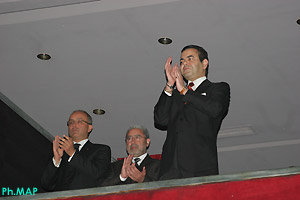

    According to the Minister of Economic and General Affairs, Rachid Talbi El Alami, the telephony penetration rate in Morocco reached 45.83 per cent in 2005 an increase of 25 per cent since 2002. Speaking at the opening of the international telecommunication fair Telecom-Maroc-2006, Alami said the telecom market growth was very significant since 2002 in terms of subscribers and sales figures. The telecommunications services market has doubled since 2002, reaching $224m, he added.

    In late 2005, Internet subscriptions reached 263,000, an 131.8 per cent increase from December 2004, adding that the number of Internet users increased to around 4,000,000 thanks to the growth of Internet cafes, which stand today at around 8000.

    Tags:

    Morocco's trade deficit expands

    I had just completed posting about the gloomy state of the orange industry a few minutes ago, when the latest trade figures for Morocco landed on my desktop.

    Morocco's external trade deficit rose 15.4 percent in the first two months compared with the same period of last year, according to the Office of Changes.

    It posted the imports at the value of 27,338 billion dirhams (3,038 billion U.S. dollars), up 10,8 percent from last year's 24,685 billion dirhams (2,743 billion dollars).

    Total exports for January and February hit 15,247 billion dirhams (1,694 billion dollars), representing a rise of 7.3 percent from 14,204 billion dirhams (1,578 billion dollars) for the two months in 2005.

    A major booster of imports was crude oil, hitting 2,905 billion dirhams (323 billion dollars), up from 2,221 billion dirhams (247 billion dollars) registered for the first two months of last year.

    On the good news side, the most important exports included olive oil, which totaled 325.9 million dirhams (36.2 million dollars) against 81.9 million dirhams (9.1 million dollars) reported for the same months of 2005.
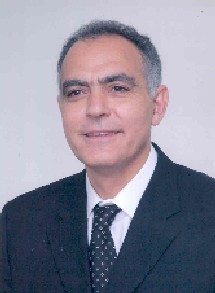
    Tags:

    Moroccan Orange Growers 10-year Plan


    Back in December we posted a good news story about Moroccan Oranges Now it appears that things are not quite as rosy.

    Back in 1998 the Moroccan Citrus Growers Association (ASPAM) launched a 12-year plan. According to our sources, that plan is well off track but Moroccan growers are set to develop plans to relaunch their sector. At their AGM on April 4th, members of ASPAM developed a plan with the government and the whole chain of supply to relaunch and start a recovery in terms of production and export volumes.

    The 12-year plan was a target for exports of some 850,000 tonnes yet Morocco is exporting only some 450,000 in a good year. In fact, exports have been experiencing a chronic decline in the past five years as, according to ASPAM, alternatives for its members are running out as competition intensifies, especially from Spain, Egypt, Turkey and even Greece.

    ASPAM hopes that a new 10-year recovery strategy will be accepted by the ministry of agriculture.

    The new plan will be better adapted to the sector’s existing production needs as well as the demands and developments of external markets.

    According to ASPAM one of the biggest problems to tackle is that apart from a few groups that are well equipped in terms of both human and technical resources, the majority of citrus growers are under-resourced which helps neither product quality nor traceability.

    “If we don’t do anything for these growers, they risk being excluded from exporting,” said Ahmed Derrab, president of Aspam.


    The organisation is also hoping for better state aid and reduction in the burden of bureaucracy on producers. The priorities for the sector should be micro-irrigation, the use of certification systems and new plantings of export varieties.

    Irrigation is a major issue since the Souss region which accounts for half of all citrus production is suffering from a serious lack of water resources.

    The citrus sector’s new strategy will also look at integrating right through the chain, from producers to packers and exporters, and in partnership with the ministry of agriculture. Draft legal documents to this effect were presented at the AGM.

    Tags:

    Returning to Fez


    In exactly one month we will be back in Fez. It seems we have been away for such a long time and the sense of relief at coming home will be fantastic. The notion of making our way through the lanes to our riad and simply sitting in the peace and quiet away from radio, newspapers and television is sheer bliss. To wake to the call to prayer and look out into the courtyard at the light through the leaves of the lemon and orange trees...


    Riad Zany is going to be undergoing some much needed restoration so there will be a couple of months of dirt and dust - but we will happily distract ourselves with a trip to the Essaouira Gnaoua Music Festival and then the fabulous Fez Sacred Music Festival with the added pleasure of Bono being around for the opening.

    It is hard to explain how much we have missed the bustle of the Fez Medina, the sights, sounds and smells of the souqs - spices, food cooking, the dyeing pits, freshly cut cedar, mint - the taste or real mint tea, of proper couscous and tagines, of oranges that taste like oranges. After all the processed food and stale vegetables of the last few months, it will be wonderful to buy fresh herbs, fruit and produce from the souq just three minutes walk from the house.

    And then there is the exploring to look forward to. So much of the old city awaits discovery. Steep steps, narrow tunnels and shafts where competing with overloaded donkeys is a risky buisiness. Architecture to take your breath away. Arches, bulging walls, filigree work... and as one observant visitor wrote "strategically placed logs that had been cemented into opposing walls to discourage mounted riders hundreds of years ago, it looks the way they tried but failed to make it look in a hundred movies."

    Over on the corner of Derb el Hora, the snail seller will still be there, offering me a safetypin to spear the snails with... and down the street, Mohammed in his tiny little coffee shop with hot besarra and great coffee. In the food souqs, everything you ever dreamed of: photogenic piles of spices and herbs, counters of fresh cheese, leaf-wrapped wheels of goat cheese, tubs of curds, olives — every hue and type of olive filling barrel after barrel — dried fruit and produce, preserved lemons, grains, nuts, figs, dates. Delicious.


    And, best of all, will be to to see our friends who we have missed so much and to know that walking around the medina we will be met by the smiles and greetings that make Fez such a special place. Fez. Soon. Inshallah!


    Tags:

    Tuesday, April 04, 2006

    "Synthetic" sheep delivers six lambs.


    We are not usually given to cute animal stories - but this one did attract our attention. In what must be some kind of a record, a ewe gave birth to six lambs in a State-owned SOGETA farm at Ain Dick, 20 km from Rabat. The first reports surfaced on on Tuesday in the daily Le Matin du Sahara et du Maghreb.

    The six-year old ewe had a normal pregnancy and had not been given any hormonal treatment.

    The lambs included two males and four females. However, one lamb was still-born and the fifth died five days after birth. We are happy to report that the four others are faring well.

    The fecund mama sheep is of "DS" race, a synthetic race created in the late nineties from genes of the "D' man" and Sardi races. We couldn't help wondering if this makes it a SarDine?

    Researcher Ismaïl Boujenane, teacher at the Rabat-based Hassan II Agronomy and Veterinary Institute, had the idea of combining the two races genes. Boujenane won in 2005 the Grand Prix Hassan II for invention and research in agriculture.

    The lambs are very similar with a white hide and a black snout. Cute, huh?

    Tags:

    Film costumes on display in Fez


    Did you ever wonder what happened to that fabulous dress Monica Bellucci wore in Asterix and Obelix: Mission Cleopatra or the shield Russell Crow brandished in Gladiator, or Brad Pitt's costume in Troy? Well, if you are in Fez, you can find the answer at an exhibition showing costumes and accessories designed for international movies filmed in the Moroccan southern city of Ouarzazate. In addition there is a rich collection of Roman and Pharaonic costumes, tools, and arms.

    The exhibition, organised on the fringes of the Festival of Moroccan Cinema held from March 31 to April 6 in Fes, is located in the city's Al Houria Cultural Complex.


    “These costumes and accessories were made by Moroccan craftsmen of Ouarzazate,” said Rachid Lahlali, the president of the Association of Ouarzazate's Cinema Artisans and Technicians, stressing that the exhibition aims to highlight the kingdom's cinematographic assets.

    The exhibition will go on until April 6, the date of the closure of the festival.


    Tags:

    Nine al-Qaeda suspects arrested in Morocco

    Security forces in Morocco are holding nine suspected al-Qaeda activists who were part of a ring that plotted bomb attacks in France, Italy and Morocco, the state news agency MAP has said quoting local newspapers.

    Newspapers in Rabat said the nine suspects planned to participate in a larger plot to blow up a church in Bologna and a commuter train station in Milan, the headquarters of French intelligence services in Paris and the US consulate in Rabat.

    "The nine suspects, arrested and brought before Rabat appeals court recently, are accused of setting up a criminal gang in view of preparing and carrying out terrorist attacks within the framework of collective plot," MAP said on Monday, quoting an unnamed judiciary source.

    MAP did not give more details. Government officials were not immediately available for comment. However police sources said the nine were arrested early last week and that they were being held after appearing for questioning before an investigating judge at Rabat appeals court.

    Pro-government daily Al Alam, one of the dailies that had reported extensively on the case, said a Tunisian, named as Mohamed Benhedi Msahel, travelled from Italy, where he lived, to Algeria and Morocco to recruit bombers for the plots.

    Al Alam said al-Qaeda network leader Osama bin Laden endorsed the planned attacks.

    Al Alam said the attacks in Italy were modelled on the Madrid train bombings on March 11, 2003, in which 191 people were killed and more than 2,000 injured. The blasts hit the Spanish capital just four days before a general election.

    In Algeria, Msahel met a leader of the country's largest outlawed Muslim organisation, the Salafist Group for Preaching and Combat (GSPC), which is aligned with al-Qaeda, to review details of the planned attacks before returning to Morocco. He had planned to return to Italy, but was arrested before he could leave the country.

    A European Muslim convert was due to join five jihadi bombers recruited in Italy, the daily added but gave no details about who was due to carry out the four attacks in France.

    Morocco has been on alert since 2003 when suicide bombers killed 45 people in Casablanca, the country's financial capital. More than 3,000 people have been arrested since on suspicion of having terrorist connections. Many have been released but hundreds have been jailed after trials.

    Tags:

    Monday, April 03, 2006

    The high cost of roaming in Africa - rip off.

    Not every Moslem who makes the Hajj to Mecca is a well-heeled international traveller but a majority of the millions of pilgrims come from all walks of life and have one thing in common - they want to phone home. The prices being charged across the Arab world appear to have no basis in anything other than greed. So is it time for a pan-Arab SIM card - or a pan-African one?


    Last week the European Commission announced that it will force mobile companies to lower their excessively high international roaming charges and scrap all roaming charges for receiving calls abroad. A fortnight ago the annual meeting of the Arab ICT Regulators Network heard a presentation of a study of Middle East roaming charges that covered parts of North Africa.

    It also concluded that in the field of roaming that there was an absence of real competition and this was a strong disincentive to operators to negotiate lower prices. Sub-Saharan Africa’s solution? An expensive African Telecommunications Study to develop a single SIM card that can be used across the continent. Here is part of an article by Russell Southwood that takes a long hard look at the problem. The orginal article is linked below.

    If we take Egypt as an example, there is no clear rhyme or reason to the pattern of charging. One mobile operator Mobinil charges across a very broad range: just below US50 cents a minute to phone Tunisia via Tunicell; about US$1.65 a minute to phone Algeria via Djezzy; and almost US$2 a minute to phone Morocco via Meditel.

    Vodafone Egypt has a similarly wide range of charges, again without any clear rationale to the pattern: the lowest is about US60 cents a minute to Morocco via Maroc Telecom; US70 cents a minute to Tunisia on Tunicell; about US$1.70 per minute to Morocco on Meditel; and about US$2.40 to Algeria via Djezzy. Just to show what is really possible MTC from Kuwait will charge you only about 10 cents a minute to call Mauritel in Mauritania.

    The study also looked at the high costs of making local calls while roaming: a local roamed call is a call made by a subscriber roaming on a visited network to another person in the country of the visited network. For example, let’s say you phone someone with you have an appointment to say you’re going to be late from your roaming phone to either a fixed or mobile subscriber.

    So if you were dialling a local call in Morocco using Maroc Telecom, it would be US18 cents a minute. But if you’re a visiting Egyptian on either the Mobinil or Vodafone network, the charge is a staggering 50 cents a minute. But really pity the poor Kuwaiti visiting Egypt using the Wataniya Kuwait network who would be paying US$1.10 a minute. Indeed Wataniya Kuwait is the most expensive network for local roamed calls in almost all of the countries surveyed, with prices way above those of its competitors.

    Mobitel Sudan charges US8 cents a minute for local calls. But if you are a visting Egyptian and you’re on the Mobinil network you will pay US50 cents a minute and US55 cents a minute if you’re on the Vodafone network. The highest charge in that country would be US63 cents a minute for a visiting Lebanese using Alpha Lebanon.

    How are these charges made up? At the retail level, prices are composed of what is called the Inter-Operator Tariff plus some level of handling charge. In most instances, the caller pays but there are operators who also charge the called party for the roaming part of the call. It is this practice that has stoked up the high levels of resentment felt against roaming charges in Europe: someone is on holiday and decides only to answer his or her phone but discovers that they have accumulated a substantial phone bill subsequently simply by accepting a call when they return home.

    The Egyptian regulators study found that from the consumers’ perspective, roaming charges are also annoying because no-one really knows what they are and information is often hard to obtain. Furthermore operators change roaming tariffs frequently. The price differences between different networks are vast, even within the same country. It concluded that there was a real absence of competition that means that there is no incentive to lower prices and that it is hard for new entrants to do other than follow existing practices.

    So what were the solutions?


    The study suggested a variety of different approaches based on a steadily increasing slope of implementation difficulty. At the bottom of the slope was the suggestion that a consumer awareness campaign could be run on the ARNET website, providing pricing information to consumers. Each regulator could review their national Inter Operator Tariffs (IOTs) “to ensure fairness and consumer welfare”.

    However its main solutions were three carefully weighted but different approaches:

    Regulation-driven: Arab regulators could use price controls to set an inter-Arab IOT rate.

    Competition-driven: Through creating Volume-Rate trade-off deals using the OTA technology.

    Fairness-driven: Enabling the Optimized Routing and billing users accordingly

    Discussion of the study provided the most animated debate of the whole Arab Regulators Network event. Many of the Arab regulators present seemed reluctant to address the issue through price controls: one even said that it was not possible to regulate the operators in this way. The speaker from the Arab Telecoms Forum, representing telco operators in the region said that the loss of this revenue would impact on the economies of the countries affected because operators would stop investing at current levels. In any other circumstance, this could probably be described as a threat. If roaming rates come down, usage will almost certainly go up but then the question is whether income will rise as well?

    The more thoughtful speakers pointed to the existence of the European Commission investigation and that it was about to issue guidelines to companies. One said that any initiative to address the issue would need to be internationally co-ordinated to prevent market distortions. What is more likely is that the pattern will follow what happened with international wholesale rates when competition was introduced. European roaming rates will become cheaper and this will exert a downward pressure on those parts of the world where European countries exchange large mobile call volumes. Remember the call-back arbitrage?

    How operators will react can probably best be seen by the launch of a Vodafone scheme for calling in Europe called Passport. Aimed at post-paid users, the subscriber pays a flat fee of US1.30 per call and then can use their inclusive minutes that they are already paying for in their country of origin. The price offered may still be high but it could easily be moved downwards.

    Unfortunately this is not an issue on which Sub-Saharan regulators and policy-makers have covered themselves in glory. We all smirk knowingly when we buy local SIM cards to avoid roaming charges when visiting countries in Africa but this surely cannot be a sensible way to organise things. (Any more than having 2-3 mobile phones because interconnect prices have not been properly sorted out.) Some mobile operators are now offering both pre- and post-paid roaming but rates remain high so take-up does not yet show any sign of displacing the “buy-a-local SIM” workaround.


    The HOLY GRAIL?

    For seekers after the holy grail, there is the African Telecommunications Union project to develop a single SIM-card usable “usable right across the African continent”. Announced in February 2005 and costing US$800,000, this study was meant to be delivered in 12 months but no outcomes have yet been announced. Indeed the ATU went to the recent ITU Doha meeting with a document calling for further studies on the subject.

    A simpler approach would surely be for the regulators’ associations of the continent to approach the EU and work with it on reducing roaming rates between Europe and Africa. Also following the excellent example set by the Arab Regulators Network and Egypt’s NTRA, a country regulator in a key region like Southern Africa could take on the task of compiling some data. With information available in the clear light of day, it would then be possible to start the discussion about dismantling this example of legal daylight robbery.

    If you think roaming charges are justified or have had a bad experience with roaming charges, write an e-mail to: info@balancingact-africa.com

    To read the full article by Russell Southwood: Broadband.co.za

    Tags:

    19 Moroccan Poets featured.

    NOW AVAILABLE: Aufgabe #5
    Featuring "19 Moroccan Poets" guest edited by Guy Bennett & Jalal El Hakmaoui

    The well regarded American magazine Aufgarbe has been around since 2001 and has built its reputation on publishing experimental and innovative poetry. While much of the content has been new American poetry, essays, reviews and talks, it has also featured the translation of worldwide poetry, namely French, German, Mexican and Japanese poetry.

    For this edition, Aufgabe proposes various poems written by little known Moroccan poets to give a glimpse of the breadth and richness of contemporary Moroccan poetry and encourage further exploration.

    The featured poems were translated from Arabic by the Moroccan translator Hassan Hilmy and from French by Guy Bennett, in collaboration with the Moroccan poet Jalal El Hakmaoui, who works to make the Moroccan culture and poetry known worldwide.

    In so doing, El Hakmaoui gave this edition a historical overview about the contemporary Moroccan poetry, presenting to the American readership the contemporary Moroccan literature which is far from being well known in the US.

    The Moroccan participants in this issue are Mahmoud Abdelghani, Mehdi Akhrif, Ahmed Barakat, Ahmed Belbdaoui, Rajae Benchemsi, Mohammed Bentalha, Omar Berrada, Jalal El Hakmaoui and Mohamed Hmoudane.

    Wafaa Lamrani, Mohamed Loakira, Rachida Madani, Zohra Mansouri, Mohamed Meimouni, Hassan Najmi, Mostafa Nissabouri, Abdel-Illah Salhi, Abdelkarim Tabbal and Mubarak Wassat are also among the Moroccan guests of this edition.

    Commenting on the old friendship relations between Morocco and the US, Bennett wished that by shedding light on the Moroccan poetry, the already existing friendship would extend into the literary arena.

    Aufgabe aims at fostering poetic interaction and dialogue not only in the States but also, through translation, across international boundaries.

    Translation in this field plays a vital role in spreading knowledge and culture specificities worldwide. Though the difficulties faced by translators to convert the same meaning and image into another language, the challenge is arisen to make of poetry a universal pleasure shared by people from different culture and speaking different languages.

    In other literary news:

    Moroccan Abdelkader Fassi Fihri received, jointly with Egyptian Tammam Hassan Omar, the King Faisal International Prize in the section concerning the Arabic language and literature "The Arabic Language in Modern Linguistics."

    Secretary general of the prize, Abdallah As-Saleh Al-Othaymin, said the award was granted to Fihri "in recognition of his detailed pursuit of modern linguistic theories, and efforts to reconstruct the classical Arabic linguistic theory in the light of modern linguistic concepts."

    As to Hassan Omar, he was compensated for "his distinguished efforts - over the past fifty years - to establish modern Arabic linguistics," said Al-Othaymin.

    The Fès-born Moroccan linguist, 62, is now director of the Institute for Study and Research of Arabization and professor of Arabic and Comparative Linguistics, in Mohammed V University, Rabat.

    King Faisal International Prize was created in 1977. It is awarded to those who deploy considerable efforts to serve Islam and Muslims.


    Tags:

    New funding source for Moroccan tourism projects?

    Morocco's ambitious tourism strategy known as VISION 2010 aims to create up to fifteen thousand hotel beds every year. Such a project needs a massive investment with some analysts putting the figure needed at around fifty billion dirhams. Well, help may be on the way, with discussions starting on the creation of a special tourism investment fund.

    The suggestion by banking institutions to establish such a fund to help carry out tourism projects in Morocco was one of the ideas discussed during the 6th Meeting on International Tourism, held last week in Tangier Friday. Attijari Wafabank, managing director of Khalid Oudghiri, said that the fund suggestion was discussed by several banking institutions, and his bank and La Banque Populaire are ready to contribute five hundred million dirhams to its creation and running.

    The two-day meeting also discussed the redrawing the Moroccan tourism map through the creation of new destinations, especially in rural zones and the upgrading of old ones, such as Fez, Marrakech and Agadir.

    Tags:

    Listen to The View From Fez!


    Every now and then technological advances take me by surprise. Today it was because of AGORAVOX - On this site I found I could actually listen to the posts on the View From Fez! The electronic voice was a step ahead of what I have experienced before - so worth a listen, especially if you are sight impaired. I am still to work out how to update the posts on the site, but will investigate. At the moment they are several days behind.

    Listen here: AGORAVOX

    Tags:

    Sunday, April 02, 2006

    Morrocan News Briefs - #24

    Moroccan News Briefs published in The View From Fez draw on open source material, contributions from readers, as well as material from Maghreb Arabe Presse (MAP), Morocco Times and official Moroccan Government press releases.


  • Convention on school integration of disabled children signed.

  • A convention on school integration of disabled children was signed on Saturday (1 April) during the 4th National Festival of Children with Special Needs. The convention aims at establishing a co-operation framework between relevant departments, following the studies and recommendations made by NGOs in the field. The document provides for the construction each year of 200 integrated classrooms, the upgrading of educational spaces, training of relevant staff, outfitting medical structures, supporting related associations and providing teaching material and equipment. Out of the 230,000 children with special needs in the country, only 30 per cent have access to schools and specialised institutions.


  • Restoration of Tetouan Medina

  • The Municipal Councils of Tetouan and Cordoba agreed on Saturday (1 April) to collaborate to rehabilitate the old medina of Tetouan by setting up training workshops in Morocco. The deputy mayors of Tetouan, Mohamed Charkawi and Mohamed Al Bouazzaoui, are currently on a visit to Cordoba to get acquainted with the functioning and contribution of the rehabilitating workshops of the Andalusian heritage in the region and with Cordoba's experience in safeguarding historical heritage. The Moroccan officials held meetings with regional officials in charge of developing tourism and housing and with representatives of Cordoba University.


  • The Millennium Challenge & Morocco

  • With hundreds of millions of dollars becoming available for Morocco through the new US foreign aid initiative, Millennium Challenge Account (MCA), millions of Moroccans can potentially be engaged in a development process that generates significant socio-economic benefits for them and their communities.

    In May 2005, Morocco's King Mohammed VI launched the National Initiative for Human Development to promote decentralized development projects. Fortunately, MCA's commitment to the National Initiative provides a framework to advance the kind of flexible strategy that is needed.

    The National Initiative and MCA should together pursue a two-pronged strategy that will advance their shared goals and the goals of Morocco's communities: first, train rural teachers, government officials, NGO personnel and citizens in facilitating group activities that help community members determine priority projects and develop plans of action to achieve them; and second, fund the projects catalyzed by the newly trained facilitators in the field.

    The National Initiative already recognizes the importance of such training; it now needs to be broadly implemented.

    Since communities across Morocco face different sets of challenges and opportunities, the projects the regionally diverse communities come to express as their priorities will span a broad range of areas.

    There is, however, consistency among the projects Morocco's rural communities determine for themselves; these include irrigation, drinking water, education, women's cooperatives, tree planting and fisheries. MCA is already intending to support some of these areas.

    Full story: Morocco Times


  • Year of the Holy Koran

  • Titled “The Prophet and the Message”, the year of the Holy Koran in Morocco was inaugurated on Saturday in Rabat, with the aim of arousing the religious feeling in the rising generations, through memorisation and recitation.

    On the sidelines of this cultural event, which coincides with the 1440 anniversary of the beginning of the Holy Koran revelation, Mohamed Belbachir Elhassni , head of the Moroccan Commission for the Coordination of Islamic studies sections said that “this initiative, jointly organised by Islamic Studies sections and Al Qarawiyyin University, in collaboration with the Councils of Oulama in Rabat, Salé, Kenitra and Casablanca, will be crowned by an international seminar on the Holy Koran.

    For his part, Mohammed Elkattani, an official in charge of mission in the royal cabinet, has pointed out that “the regular organisation of such cultural events confirms the great awareness from the part of the officials of these institutions.

    El kattani has equally highlighted the importance of the Islamic studies sections in “the preservation of equilibrium between the different cultural components in Morocco,” adding that “to understand Islam, it's mandatory to grasp the historical context of its apparition”.

    The inaugural session of “The Holy Koran Year in Morocco” witnessed the holding of the Constitutive Assembly of the Scientific High Instance for coordination between Islamic Studies sections in Moroccan universities, with the participation of the heads of these departments.


  • Democratic reforms in Morocco stressed

  • The Moroccan Human Rights Organisation (MHRO) has underlined the desperate need for accelerating the drive towards reforms to ensure democratic transition and strengthen the basic political and civilian rights.

    MHRO president Abdullah Al Waladi called during a symposium on democratic transition and human rights, for taking measures to develop the economic sector. ''We seek to address and tackle human rights concerns through a practical approach that respects human dignity,'' he maintained.

    In a paper presented at the symposium, it was noted that the democratic transition could open up unprecedented opportunities to consolidate the human rights culture in both theory and practice, but it could, at the same time, sustain a setback at any time.

    The paper recalled that history of democratic transition course showed that the movement took different bumpy roads and was characterised by chronic complications. At a time when enhanced measures on human rights are being taken, some malpractices, which were viewed as things of the past, have been brought to the fore again.

    ''Any progress on the democratic path entails that more attention should be lent to phenomena like marginalisation, elimination and expulsion that pose real threats to the democratic transition,'' the paper remarked.


  • 18,000 Teenagers head to spring camps

  • Some 18,000 Moroccan girls and boys are set to attend spring camps organized by the Youth State Secretariat in cooperation with the National Children Camps Body. The camps begin on April 7

    The 4th session of the national "holidays for all" program schedules many activities during the camps for 15 to 17-year olds, who belong to youth organisations and associations.

    The gatherings are meant to instruct and implant the spirit of civics, responsibility, mutual help and commitment to the youth, as well as teach them skills in arts, sports, literature, a communiqué of the Youth Secretariat said.

    The teens will be carrying out these activities in 63 camps located either on the seaside or on mountains under the supervision of associations officers, writers, sportspeople, artists and others.

    The spring camps are also the opportunity to hold training sessions, workshops and other activities to train children supervisors and camp counsellors. Some 55 training sessions are to take place in 33 camps for 2,900 counsellors and other staff.

    The Youth Secretariat said training sessions were held last January and February attended by 2105 counsellors and overall more than 15,640 counsellors and other related personnel were trained since the beginning of the program.


    Tags:

    Morocco to return 6,000 Illegal Migrants

    After much discussion between the Nigerian and Moroccan governments and as a continuation of her efforts to halt migration of her workforce to Spain through North African countries, Nigeria has concluded plans to effect the deportation of about 6,000 of her nationals illegally residing in Morocco.

    The country has also instigated a move to collaborate with Morocco and Spain to rehabilitate the illegal migrants.

    Last year, the Federal Government working in tandem with the Moroccan authorities, successfully brought back 250 voluntary returnees. Many would-be migrants die on the coast and inside countries like Libya or attempting to cross the Mediterranean on rafts to Italy.

    The Moroccan Ambassador to Nigeria, Mustapha Cherqaoui, said in agreeing to the tripartite arrangement in which France is also now involved, the countries were merely trying to stay on top of the human drift before it became totally uncontrollable.

    Last October when the illegal influx of humans from Nigeria reached a head and worsened the image problem of the country, the countries decided to adopt a global approach towards solving the problem after reaching an agreement to the effect that a multilateral framework of interception, rehabilitation and dignified return would work best.

    Nigeria is a member of the steering committee of the Euro-African. The global approach developed now to fix this enigmatic human problem involves the European commission, Spain, France, Belgium, Germany, Italy, UK, Finland, Portugal and Austria-all receiving countries.

    On the African side, the countries in the collaborative partnership are Nigeria, Morocco, Tunisia, Libya, Mauritania, Algeria, Mali, Niger, Cote D'Ivoire and Congo. Algeria withdrew from the steering committee meeting at the last moment without offering any explanation.

    Morocco occupies a strategic position in the battle against illegal immigrants who most often prefer the strait of Gibraltar as their conduit into Europe. The country is both a source of origin of migrants, a transit point and also a destination, the ambassador disclosed in Abuja.

    Ambassador Cherqaoui said: "The new effort now is meant to fashion out concrete solutions to the problem and help the transit countries to face the peculiar challenge, help integrate the migrants who are there (Morocco) already. It's a dynamic that we are developing right now. By virtue of our position in the transit map, we are in a special dilemma but the important thing is that with the cooperation of Nigeria, we want to help those who seek to come back."

    On the things the Nigerian government must do to stem the tide and insulate the country from international embarrassment, he said "it is not up to only one government. There needs to be enough developmental projects that will bring out the best in the youth in your country. Then good governance and jobs. Once their standard of living is commensurably high, your people will prefer to stay at home with their families rather than face risks abroad."

    Tags:

    A step in the right direction.

    For some time Morocco has been at the epicentre of improvement in human rights in the Arab world - now its influence is spreading across the Maghreb with human rights groups establising a joint body.

    The news today that human rights organisations from the five-nation Arab Maghreb Union have for the first time established a body to coordinate support for victims of government repression, is another step in the right direction.

    Fourteen groups from Algeria, Libya, Mauritania, Morocco and Tunisia formed the Maghreb Coordination for Human Rights Organisation to expand "respect of human rights in Maghreb". According to Sihame Bensedrine, a leading Tunisian rights activist... "We see the Coordination as part of a drive to build an actual solidarity between rights activists in Maghreb and achieve a dream of living in a region where the rights of citizens are fully respected."

    The groups said it was time for them to join forces, arguing that a home-grown movement with local support might be more effective in bringing pressure on Maghreb governments than Western organisations with international support. It is the first time Maghreb rights activists have set up such a broad-based effort to organise their joint struggle.

    They noted respect of human rights was improving in Algeria, Mauritania and Morocco. But they cited problems in Libya and Tunisia where, unlike Morocco, human rights activists were harassed and press freedoms stifled.

    Tags:

    Saturday, April 01, 2006

    More drama in Spanish occupied Melilla

    Eleven sub-Saharans were arrested on Friday night at the Beni Ensar border checkpoint trying to cross illegally into Melilla, the northern Moroccan city still occupied by Spain.

    According to some witnesses, the migrants were crammed into a Mercedes car bearing a false number plate,and were arrested by Moroccan law agents who succeeded in stopping the car as it got stuck onn spike barriers. The people, including a woman, were transferred to relevant security authorities to probe into the incident.

    The illegal migrants usually use northern Morocco to cross into Melilla or Sebta, another Moroccan town still under Spanish occupation, or directly sail on dinghies to the Spanish south-east coast.

    Moroccan-Spanish joint patrol surveillance and the use of radar devices to track illegal migrants forced the latter to try to cross from Morocco to the Canary Islands, in the south. Recent trends show the Moroccan-Spanish cooperation is forcing the illegals use Mauritania as a transit to the Islands.

    Tags:

    World's biggest painting?


    In Casablanca on April 20-30th a Moroccan NGO will exhibit the world largest painting in order to raise awareness of AIDS in Morocco.

    Young people will be invited to take brushes and paint to express themselves on a 250-square meter-long canvas, which will be exhibited in a public square. Th NGO is "Association marocaine des jeunes contre le Sida".

    The new concept project is designed as a way to underline that AIDS is the concern of all and to spread the solidarity message and African teenage commitment to fight this plague.

    The campaign coincides with the international conference against AIDS scheduled this year in Toronto (Canada).


    Tags:

    The sun never shines ...

    "The sun never shines on the poor..." British Folksinger Richard Thompson. Meanwhile across the channel in France...


    Thanks to Morocco Times!


    Tags: