Showing posts with label Spain. Show all posts

Friday, September 21, 2018

Trump Advises Spain on Stopping Migrants


Just when you think the world couldn't get any weirder, the online news site L'Observateur reports on President Trump's incredible advice to the Spanish on how to stop illegal migrants

US President Donald Trump recently suggested to Spanish Foreign Minister Josep Borrell that Spain should building a "wall along the Sahara" to curb illegal immigration.

However, Josep Borrell was not convinced and told a public luncheon in  Madrid this week,"Closing ports is not a solution and building a wall along the Sahara, as President Trump recently suggested to me, is not a solution either".

The former president of the European Parliament went on to say that the US president had told him "make a wall along the Sahara".

"But do you know how big the Sahara is?" the Spanish minister said in response to Trump.

The wall that Donald Trump wants to build on the Mexican border to prevent the entry of illegal immigrants in the United States would measure him 3,200 kilometres and would cost up to 20 billion dollars (17 billion euros), according to some estimates.

SHARE THIS!

Tuesday, August 21, 2018

The Cervantes is Dying


The Cervantes Theatre of Tangier was founded in 1913, before becoming the biggest stage in North Africa. Despite its current alarming situation, Morocco and Spain have still not agreed to save this magnificent art nouveau building

Created by a couple of emigrants from Cadiz to Tangier, the Gran Teatro Cervantes has long represented the relationship between Morocco and Spain. After hosting the Italian tenor Caruso, the French actress Cécile Sorel, or the Egyptian star Youssef Wahbi, then the biggest Spanish stars, the prestigious theatre become a cinema and wrestling room.

It was in 1903 that Manuel Peña Rodríguez arrived on North African soil. This former fisherman from Cadiz emigrated to Tangier in search of fortune. The destination was not chosen at random because he joined the rich uncle of his wife, Antonio Núñez Reina. He then continued his activity at sea on the other side of the Mediterranean, and launched some time later in the sale of medicinal leeches. They were harvested in a well located in his kitchen garden nicknamed "the Huerta del Señor Frasquito el Sevillano". On the death of Esperanza Orellana's uncle, the couple acquired all the properties as sole heirs. An idea then germinated in the mind of Manuel Peña Rodríguez. He would set up a theatre in Tangier. To please his wife passion about theatre and to put Spanish culture in the heart of the city of Tangier, he began work on the garden. The former fisherman, who has become a wealthy merchant, sought to influence his country's culture in a city also occupied by the French and the British.


Laying of the first stone of the theatre on April 2, 1911, Manuel Peña paid 650,000 pesetas and commissioned the Spanish architect Diego Jiménez Armstrong to build this theatre. The architect was a well known Tangierois. Born in the city in 1844, he studied in Paris. He built a very large number of buildings in Tangier, especially for the Jewish bourgeoisie.

Diego Jiménez Armstrong imported all the materials from Spain. The blue frescoes of the dome are the work of the Spanish painter Federico Ribera Bussato. The exterior sculptures were made by the Sevillian artist Cándido Mata Cañamaque. Diego Jiménez Armstrong also installed ten thousand light bulbs inspired by the Teatro Real de Madrid. The theatre is named Cervantes in reference to the great Spanish novelist Miguel de Cervantes.

The Gran Teatro Cervantes was inaugurated on December 11, 1913 and became the essential place of life of the Spanish exiles and the rest of the Tangier community. With 919 seats (although some sources speak of 1,400 seats), it is at this time the largest theatre in North Africa and a very important place for promotion of the artists of the peninsula adjoining the strait.

From the beginning, the place played a key cultural role in Morocco. But despite its success, the theatre was too big and not profitable. Manuel Peña Rodríguez and Esperanza Orellana Noguera decided to give it to the Spanish state in 1928 for 450,000 pesetas. The theatre offered a varied program with operas (including the voices of Adelina Patti and Enrico Caruso), plays (with María Guerrero, Margarita Xirgu, the French Cécile Sorel and the Egyptian stars Youssef Wahbi and Fatma Ruchdi ). The local theatre troupe "Al Hilal" presented several plays, including Othello , in Arabic, in 1929.

The biggest stars came to the Cervantes to meet the Spanish-Moroccan audience - singers Carmen Sevilla, Imperio Argentina, Juanita Reina, Lola Flores, Antonio Molina, flamenco singer Manolo Caracol and Cuban Antonio Machín. Juanito Valderrama came to play Tangier in 1947 and meet the Spanish who fled the Franco regime. In Tangier Juanito Valderrama composed his greatest song, "El Emigrante" (the emigrant). Valderrama later said he wrote the song as soon as he went to his hotel after the performance.


The theatre prospered in the first half of the 20th century with operas, zarzuelas (Spanish comic opera) and concerts. But from the 50s, this cultural centre begins to experience slack periods. To attract the population, its managers rely on another type of event. The Gran Teatro Cervantes became a wrestling room! Catholics, Jews, Muslims ... all came to see the show, halfway between sport and theatre. Many wrestlers were Spanish. They come from the other side of the Mediterranean because they have had their day in Spain. They are looking for a second wind in the international city of Tangier. But soon enough, the spectators tired of seeing only Spaniards. Jews and Muslims wanted to identify with a character, a fighter. So after failing to find a Jew from Casablanca, the organisers decide to bring back a new Spaniard they posed as a Muslim.

After independence, in 1956, the theatre experienced new troubles. The Spaniards were gradually leaving Tangier. The government was abandoning the place. The theatre reinvented itself for a while as a movie theatre but the conditions were really bad and the building was getting worse. During the war in Algeria, the proceeds of some performances are donated to the FLN. Gradually, events were spaced out and rare. The Cervantes was abandoned and closed definitively in 1962. Between 1972 and 1992, it was rented, without reopening, by the Spanish state to the city of Tangier for a symbolic dirham. Until today, nobody has maintained the theatre which falls every day a little more in ruins.

Since Mohamed VI came to power in 1999, the city has aroused more interest with the construction of a large port, a connection to a high-speed train ... Unfortunately, this emblematic place is still deserted , although it is still possible to visit for some coins. Many people have gone to the wall to raise funds and rehabilitate the theater. In 1994, the architect Mariano Vázquez Espí proposed a project to the Spanish government to preserve the Cervantes. In 2004, the Cervantes Association of Cultural Action and Hispano-Moroccan Friendship was created. This association seeks to avoid the disappearance of the Cervantes. In 2006, the association managed to raise 200,000 euros from the Director of Cultural and Scientific Relations of the Spanish Ministry of Foreign Affairs. Half of the budget was spent on emergency interventions. The Spanish authorities have estimated the works at 5 million euros. Founding member and current active committee of this association, Rachid Taferssiti said that the Cervantes was ranked in 2007 national heritage, but "the solution to really save it is new activities".

Despite the many calls for help, the theatre celebrated a sad centenary in 2013. Artists have written and sang to revive it, petition in support, but the Cervantes is still there, abandoned in front of the port of Tangier. The yellow and blue ceramic on the front shows the past and the decrepitude of the Spanish settlement in the Straits. In the entrance hall you can still see ceramics by Don Quixote and Sancho Panza.

Morocco and Spain, who both wanted to reach an agreement to save the place, took a very long time to negotiate. Spain refusing to pay for a place outside their lands preferred to leave the Cervantes in 2015. But this decision, it was necessary to agree on the terms of the project, Spain wishing to keep an eye on the programming.

While the work was to begin in 2018, a UNESCO commission, according to the site Le360, stopped the renovation because the plans would not respect the original construction. After all these imbroglios, the situation is at a standstill and a big question mark still weighs on the Cervantes.


Morocco and Spain, because of their geographical proximity, have always had a special relationship. Separated only by the 14 kilometre Strait of Gibraltar, the two countries have influenced each other. The presence of Spaniards in Morocco dates back to the signing of the Spanish-Moroccan peace and trade treaty of 1767. But at the time, their number was still very small. It was in the nineteenth century that the Iberian presence really grew, especially after the Second Moroccan War (1859-1860), which Spain emerged victorious. At the beginning of the twentieth century, in 1912, the French and the Spanish took possession of the Moroccan power by the establishment of a protectorate. The Spaniards inherit a strip of land in the North and one in the South of the country.  A large number of traders settled there, seeing that economic relations between the two countries are intensifying. But in 1923, Tangier inherited a special status. The city became an international zone under the joint administration of 9 different countries. The city then had a great cultural mix. The Spanish diaspora continued to grow in Morocco until the declaration of independence in 1956.

SHARE THIS!

Friday, March 16, 2018

Morocco Sees Increase in Spanish Tourists


Morocco is the number one destination for Spanish tourists when it comes to travel outside Europe, according to the delegate of the Moroccan National Office of Tourism (ONMT) in Madrid, Mohamed Sofi

"For the previous year, there are more than 2,350,000 Spanish tourists who visited Morocco, an increase of 8% compared to 2016," Mohamed Sofi said in a statement on the sidelines of the Technical Days of the Spanish Confederation of Travel Agencies (CEAV), which was held in Marrakech from March 15 to 18 with the participation of representatives of more than 86 travel agencies from Spain.

The Spanish market is the 2nd largest tourist market for Morocco just after France.

SHARE THIS!

Friday, February 16, 2018

New Ryanair Flights To Fez


The low-cost airline Ryanair has announced that it will soon launch two new lines linking Valencia to Fez and Tangiers and two other new routes between Seville, Rabat and Tangier

These new lines will each have a frequency of two flights per week and are part of 29 new lines scheduled in the 2018 winter calendar of the company, which will link several Spanish airports to various destinations in Europe and Morocco, said the company on its website.

The winter timetable of the Irish carrier will also provide for the increase of flight frequencies on 35 existing lines, with the aim of carrying 41.5 million passengers a year via 26 Spanish airports, which would represent a 9% increase in operations from Ryanair in Spain.

SHARE THIS!

Thursday, May 18, 2017

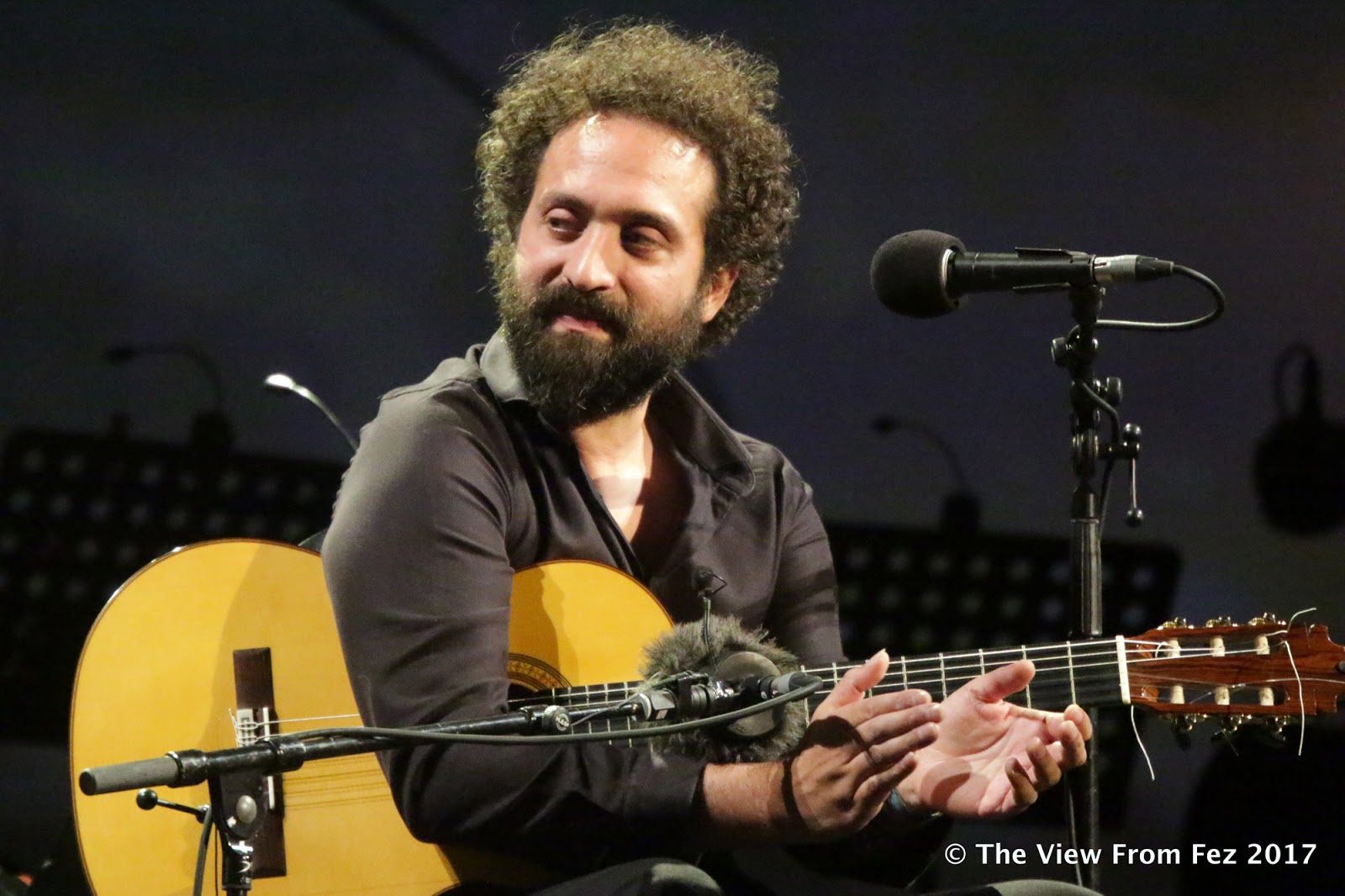
Vincente Amigo - Flamenco - Review


To borrow a phrase from a very different Spanish passion, the concert by flamenco virtuoso Vicente Amigo was a game of two halves.
Tonight's spectacle at Bab al Makina was almost sold out and the audience included flamenco fans from across the generations. It opened with a solo by Amigo, alone on the vast stage but commanding it completely with his presence. Much of the piece sounded improvised and audiences members shouted, gasped and clapped at his inventiveness.

Vincente Amigo

Amigo was joined on stage by a further guitarist, a flamenco vocalist and palmista and an exceptional percussionist. Together, they presented an hour of flamenco excellence. The music was occasionally jazzy, often lamenting and bluesy, and frequently spontaneous and improvised. The success of the performance lay in the constant communication between all four artists and the evident joy with which they played together to bring their craft to others. Their energy was reciprocated by the audience, with several groups joining in with the flamenco clapping.


For the second part of the show, Vicente and co. were joined by a symphony orchestra of over 25 members conducted by Aziz al Achhab, Director of the Festival dans la Ville for the Fes Sacred Music Festival. The orchestral pieces were very string-based and, rather than complementing the flamenco artists, the arrangement turned something that had been spontaneous and visceral into a blander, diluted version of itself. The whole thing ended up sounding like the soundtrack to a cheesy 1970s romantic film.


Neither did the Spaniards appear to enamoured with the attempted fusion. Although the capacity audience seemed to like the whole event and were on their feet at the end, this was perhaps another example of where too much fusion can be a bad thing. A full-length concert of the flamenco artists alone, in particular Vicente Amigo, would have done them better justice and would have been enabled the magic created in the first half to continue throughout.

The addition of the orchestra failed to impress

Review: Lynn Houmdi. Photographs: Suzanna Clarke. 


SHARE THIS!

Monday, October 03, 2016

Spain and Morocco May Allow Visa-Free Access to Sebta and Melilla


Spain hopes to boost the economy of of its two occupied areas in Morocco - Sebta (Ceuta) and Melilla - by allowing Moroccans visa-free access. The proposal will be studied and (hopefully) applied in principle in a few months


Talks between the Spanish and Moroccan governments on the abolition of visas for entry to Sebta began several months ago. Morocco has been studying a Spanish proposal on access to the territory for all Moroccans without needing of a Schengen visa.

This proposal came as no surprise to the Moroccan authorities, since several Spanish officials, including the governor of Ceuta, have been pushing for the central government in Madrid to take an initiative in this direction. The call from officials became more insistent in view of the sluggish economy in Sebta and Melilla, following the financial crisis which has hit Spain.

The building by Morocco of the Mediterranean port of Tangiers has also contributed to lower economic activity in the two cities, despite their status as tax-free markets.

Morocco, after careful consideration, accepted the Spanish proposal and it only remains for Morocco to study all its aspects, particularly on the security front, which is considered essential due to the radicalisation of a number of inhabitants from these two occupied areas. There is also the issue of hundreds of African migrants who await the opportunity to reach the two cities that are part of the European Union. Free movement of people across the border post of Tarajal will be confirmed when the new government emerges after the elections of 7 October.

"mule women" of Melilla Photo: Fernando Del Berro

Another pressing issue is the thousands of small smugglers and "mule women" who continue to operate in both cities. This commerce takes place daily at Barrio Chino - a border crossing from Melilla to Morocco for pedestrians only. As long as a porteadora can physically carry her load, it is classed as personal luggage, so Morocco lets it in duty-free. The women have the right to visit Melilla because they live in the Moroccan province of Nador. But they are not allowed to reside in the Spanish territory.

Access in future will be granted only to holders of identity cards indicating residence in the Tetouan region. At the same time there is talk of opening another crossing point at Tarajal 2 to reduce the pressure on the first.

SHARE THIS!

Thursday, June 09, 2016

Spain Offers Morocco the Cervantes Theatre

According to the Spanish daily newspaper El Mundo, Spain will donate the Cervantes theatre in Tangier to Morocco, in order to restore and manage it


The Cervantes Theatre in Tangier, built by the Spanish couple Manuel Pena and Esperanza Orellana, opened December 11, 1913.  It was acquired by the Spanish government in 1928.

The Cervantes Theatre was described by he coordinator of Cervantes centres in Morocco, Javier Galvan Guijo, as one of the "architectural jewels" of Moroccan heritage.

Thirty years after shutting down the theatre, Spain has decided to transform the historical building into a cultural centre.  The Secretary General of the Ministry of Culture told Telquel magazine,  “We made an arrangement with the Spanish state through a convention, now, the adjustment process depends on Spain.”

The Ministry of Culture has already started the first studies on this project: “We have been working on it for a week and hope that the project’s budget will be included in the budget of 2017,” he said.

Restoring the legendary theatre and changing it into a cultural centre is a challenging goal for Morocco.

The theatre is accessible via the Avenue Pasteur and Rue du Prince Moulay Abdallah

The Cervantes Theatre has 1400 seats and was considered the biggest theatre in North Africa until it was shut down in 1974.

Despite its cultural value, the Cervantes Theatre was closed because of the expensive costs of restoration and management.

SHARE THIS!

Tuesday, May 31, 2016

An Unofficial Russian ‘base’ in the Med?


A group of eleven members of the European Parliament have complained to the EU’s foreign policy chief, Federica Mogherini, about the presence of Russian vessels in the Spanish occupied enclave of Ceuta (Sebta)


 Since 2011 around 60 Russian warships have stopped in Ceuta to resupply and give their crews a rest. The vessels have included an attack submarine, frigates, destroyers, amphibious assault ships and auxiliary vessels.

The European parliamentarians say that the frequency with which Russian navy ships call into the port – at least 10 times a year – has turned the Spanish exclave into the main base of the Russian fleet in the western Mediterranean.

The Russian submarine ‘Novorossiysk’ in Ceuta

The Europeans are not alone in raising objections to the use of Ceuta by the Russians.  This month Republican Congressman Joe Pitts tabled a motion in the US Congress urging Spain to stop allowing Russian Navy warships to refuel in Ceuta.

The motion, earlier this month, coincided with the arrival of another Russian vessel, the frigate Ladny, which stopped at the port to refuel and two days after two British Royal Navy ships escorted another Russian frigate, the Admiral Grigorovich, through UK waters.

“The presence of the Russian Navy close to British territorial waters in Gibraltar presents significant intelligence and security risks for the United States, the United Kingdom, and the NATO alliance,” the Pitts' motion states.

The frigate Ladny

Spain rejects all criticism and points out that the Russian visits typically last around three days and generate revenue for a city. According to the Ceuta Port Authority, around 2,300 Russian sailors spent leave in the city in 2014, each changing around €450 of foreign currency. That adds up to over €1 million a year, with most of it going on local dining and shopping. In addition Ceuta gains income from resupplying. An amphibious ship needs around 300 tons of diesel fuel and 150 tons of water; an oil tanker might need as much as 3,750 tons of fuel.

The Russian embassy in Madrid expressed surprise at the fact that “such a common practice as calling into foreign ports” could be the subject of controversy.

The Heritage Foundation, a conservative US think tank says that “Spain’s policy of allowing the Russian navy to use Ceuta is hypocritical in relation to its reluctance to allow NATO to make direct visits between Gibraltar and Spanish ports.”

“The US government should make it clear at the highest levels that it views any support of the Russian navy as completely unacceptable in light of Russian aggression,” adds a Heritage policy brief.

Russia's destroyer Vice Admiral Kulakov 

The brief points out that some of the visits by the Russian Navy have curious timing. For example, during the same week in April 2014 that the EU announced a new round of sanctions against Russia, Spain made a mockery out of the sanctions by hosting at Ceuta the Russian destroyer Vice Admiral Kulakov, and two Russian navy tankers, the Dubna and the Sergey Osipov.

The most recent visit was made by the Russian submarine Novorossiysk en route to its base in the Black Sea. The Novorossiysk, commissioned in August 2014, is one of Russia’s newest submarines and one of the quietest diesel-powered submarines in the world.

SHARE THIS!

Monday, January 11, 2016

New Ferry Service From Granada to Tangier


The German FRS shipping company has announced that it will launch a new service between Motril (Granada, southern Spain) and the port of Tangier


This connection, which will focus mainly on the transport of goods, will be operational during the second half of January at a rate of seven weekly crossings.  The head of FRS, José Carlos Delgado said, "This service is a new opportunity for our customers, who can now reduce the transport distance, which will help reduce transportation costs".

The German company is one of the main companies in the field of passenger and freight transport in the Strait of Gibraltar with over 1.7 million passengers and 400,000 vehicles transported per year.

The new route is in addition to services linking the port of Motril with the Moroccan cities of Nador and Al Hoceima.

SHARE THIS!

Print Friendly and PDF

Wednesday, October 07, 2015

Winning the War Against ISIS


Morocco's security forces have established a strong reputation for acting swiftly to break up extremist cells and arresting those involved in recruiting for Daesh (ISIS)

Morocco and Spain are working closely together on security issues

The Moroccans are also working closely with security forces in Europe including in France, Belgium, Holland and Spain.

On Sunday Spanish and Moroccan authorities arrested 10 suspects with links to the radical group of Islamic State (ISIS).

Jorge Fernandez Diaz, the Spanish Interior Minister, said this network was especially focused on recruiting women. Four of the arrests, two men and two women, took place in Spain, while the remaining six detentions were in Casablanca.

The women arrested in Spain were both Moroccans, while one of the men was a Spanish national of Moroccan ancestry and the other a Portuguese citizen converted to Islam. The group is notorious for its brutality and many human rights violations, as well as for recruiting people from all over the world via social networks.

According to the mayor of Xeraco in Valencia, where police operations lasted from 5.30-9 a.m. local time [0330-0700 GMT] Sunday, one of those detained is a girl around 20 years old, who is believed to have been living with her parents.

Investigators seized documents from the suspects and will be analysing them, Fernandez Diaz said. By the end of September, Spain had been involved in the arrest of 71 suspected Islamist militants at home and abroad, up from 46 in the whole of 2014, according to interior ministry figures.


Morocco’s Central Bureau of Judicial Investigation (BCIJ) is credited with being at the front line in the campaign against extremism and has been praised for its intelligence gathering and swift operations. The BCIJ was only set up in March 2015 but within days had been making major arrests (See story here).

Back in September the BCIJ displayed weapons, ammunition, tasers, swords and bomb-making materials seized from the jihadists.

BCIJ Director Abdelhak Khiame

“The weapons came to Morocco through the eastern borders with Algeria,” BCIJ director Abdelhak Khiame said. The jihadists had pledged allegiance to ISIL and planned to call their affiliate the Caliphate Soldiers in Morocco, Khiame said.

Officials said the five-member terror cell, one of a number recently dismantled in Morocco, was operating in the southern city of Essaouira and the central town of Sidi Allal al-Bahraoui.

At the same time Morocco is said to be assisting the French in air strikes against Daesh is Syria. On September 27th, one year after the launch of the international coalition, France launched strikes against a training camp for fighters of the terrorist organisation in the Syrian city of Deir Ezzor, in the east of the country.

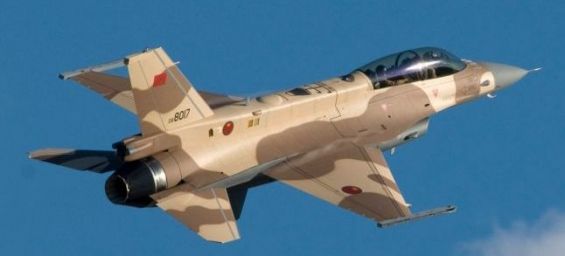
Moroccan fighter jets may be assisting the French

Almost two weeks later, the Moroccan weekly Al Ousboue Assahafi, citing a "Western source", suggested that F-16 combat aircraft of the Moroccan air force based in the UAE had provided support in the bombing. The Moroccan media does not specify the nature of the assistance provided by the Moroccan forces but it is accepted that a military cooperation agreement was sealed in Tangier on 19 and 20 September, on the occasion of discussions between the French president and King Mohammed VI.

The Moroccan newspaper says that this alliance between Rabat and Paris is a reaction to Daesh consolidating its Moroccan and French fighters in a single unit whose members train in a camp in Raqqa. The large number of jihadists from the two countries is thought to be between 800 and 1000 for the French and 1200-1400 for Moroccans.

SHARE THIS!
Print Friendly and PDF

Tuesday, January 27, 2015

New Directions for Moroccan Investment and Tourism


Morocco's Ministry of Tourism, Dr. Lahcen Haddad, recently wrote about the future directions for Moroccan tourism and the fact that the country is aiming to diversify the origin of its investors and aiming to work together with Spain to offer a combined destination for tourists from Asia and America


Cosmopolitanism finds its purpose in a country where modernity and Arab, African and Berber traditions form an exceptional mixture. Last border of Africa or gateway to Europe, Morocco is a multifaceted country awaiting discovery. However the sector is experiencing a somewhat delicate moment, largely due to ignorance, putting all the countries of the Maghreb on the same footing. Can you talk to us about security in Morocco and the profound transformation that the country has undergone since 2011, a key factor contributing to its economic growth and social stability?

Morocco has a certain approach that it has undertaken for a long time. These are political reforms, reforms in the economic sphere as well as social reforms. Reforms also in the religious sphere: it is a country that is a model in Africa and a model in the Middle East in terms of management of the religious field. This enabled the country to gain some significant strength allowing it to make the transition without any violence. For us the Arab Spring was a social blessing, a collective boon in one sense, because it freed a lot of energy but there were reforms that were already under way, on the ground. Through the release of these energies we have taken a quantum leap with the Constitution of 2011. We were already prepared. Morocco is culturally and historically known to be a country of tolerance, a country of moderation, a country that is a plethora of different cultures and different visions, but at the same time there were reforms that were initiated, especially with King Mohammed VI after his enthronement in 1999.

So there is the security of Morocco. It is an intellectual, cultural, political security and it is something that exists in the genes of Moroccans, in their culture, in their way of doing things. So that’s the basics. But there is also a lot of professional groundwork that must be recognized as the security service in Morocco.

That said, of course there's the context that should not be ignored, the amalgam that is done. For example there is an amalgam which is very easily made in Europe. Morocco is a Muslim country so it's not like other countries. Communication must be carried out at all times to say: we are a country where all investors and tourists are going to have security. Thus that’s why we are also in touch with tour operators, with tourists, to communicate, to say that Morocco is a country that should be visited; that when we visit it, we cannot fear anything: there is good mobilization, there is an important plan to ensure security.

However I believe that terrorism is a global phenomenon. No country is immune, but if there is an approach, it should be a joint, international approach and a response to such a phenomenon from all nations that cherish freedom. If we take into consideration several issues - and that‘s what we also want to say - the first issue of a person against terrorism is development, human development too. Reducing marginalization and youth disenchantment is very important. The second thing is better management of the religious field. This is where Morocco can also be a model. There could be a lot of work to be done that we can already do. The third thing is all effort that must be made on the issue of the financing of terrorism, because that’s where a big part of the problem originates too.

Morocco has become a pole of attraction for foreign investors and a reference in Africa. Morocco is also a gateway for Europe to invest in Sub-Saharan Africa. Morocco began a trend which was to invest in Sub-Saharan Africa and it also gave stability to the entire region. What is your opinion on the subject where companies like RAM play a key role?

For investors it is very important. And the reason for which there is an interest on the part of investors is because Morocco has worked on improving the business climate. I believe that we are moving up in the ranks to become a much more attractive country for investment and funding resources. Secondly, Morocco is a responsible country, which protects investors. And thirdly, the dynamics that Morocco is experiencing gives investment opportunities that are very important. And the fact that we say “Morocco, a platform for Africa” is not just rhetoric. Morocco has always had in this sense, since the Middle Ages, a cultural, historical and political relationship with Africa, but now it is the second largest investor in Africa.

Moroccan banks exist in about 25 African countries. RAM flies to 33 airports. All major Moroccan groups are very present in Africa, and are out there creating value, making investments and creating employment. And there is a possibility to make this kind of investment in a triangular manner. I believe that the future is Africa. And if Europe, the West and industrialized countries are serious with respect to Africa, the number one ally to really go to Africa will be Morocco.

Tourism plays a very important role because it is also a factor for development in the interest of all the inhabitants of the country and all regions. I would like to know your vision. What role will tourism play for the economic and social development of Morocco?

We started Vision 2020 in 2010. There was a two-year shift due to the Arab Spring and the change experienced in Morocco. So the realization of the vision really began in 2012-2013 with a two-year delay. But we are on the right track because every year we produce about 10,000 to 12,000 additional beds, which is no small feat. The second thing: we're bringing to the foreground certain regions. If you look at the area of Casablanca-Rabat, there are a multitude of hotels, convention centers and products that appear. This region will emerge in 3-4 years as a destination of great potential for investors. We have already started with the new port of Casablanca or the second phase of development of the “Vallée de Bouregreg” with the Moroccan Tourism Development Fund (FMDT); and in the Tangiers-Tetouan region. So maybe in 4 years we will have 4 regions that are truly competitive and mature. They are the regions of Marrakech, of Agadir, of Casablanca-Rabat, and of Tangiers-Tetouan. And we're working hard to bring out other regions like Fez, Meknes, the Atlas and the valleys, Ouarzazate.

Another thing that is being done is that we are improving the quality of our services, be it: hotels, cities, or airports. I believe that we are advancing at the right pace with regard to Vision 2020, and we are doing all this within the context of a vision that is sustainable, that is protective of the environment, of human resources, of natural resources as well. It has a positive impact on the community. And this is the most important factor of all; that tourism is a means of economic development because it is a sector that creates employment. We have created around 50,000 jobs in tourism in the last three years; but not only that: we are also creating an economic dynamic where small and medium enterprises emerge in the tourism sector. As an example: 150 travel agencies have been created in recent years.

What is the role of foreign investors in tourism in Morocco and what mechanisms have been established to channel the interest of investors and financial agents?

The role of Moroccan investors had become much more important for tourism during those years. But now we are witnessing a new expansion, a new craze of foreign investors who come from China, who come from the United States, who come from other countries, from Russia, but also from the traditional investment markets for Morocco which are France, Spain, Germany, the UK and Italy. We are diversifying the origin of investors. We are dealing with Asia, with Europe, with America, with the Middle East which is very important. So we are diversifying investors. And we are also diversifying the tools. For example Sovereign Funds which are important, that’s the Middle East with Wessal Capital and the FMDT. China also, where there are Sovereign Funds that are important. But there are also private investments from other countries.

If we look at Spain, 10% of GDP is tourism. And there are a lot of Spanish hotels like the Melia group, which are present in many countries worldwide. I think that it is also a field to work together in both countries, because Spain can also be a platform to attract tourists and investors to Morocco.

We work with a lot of Spanish groups and also with Spanish brands. We work for example with Sol Meliá, Iberostar, Barceló, Hotusa, Husa Riu. These are important groups that are in Morocco, that know Morocco well.

Morocco is the first tourist destination of Spain after Europe and you have a strategy to attract a million more Spaniards by 2015.

We already have two million but we count Moroccans who are in Spain and also Spaniards. But we get around a million Spaniards.

So what can be done to attract Spanish tourists? We will tell them to take their cars and come! Despite the economic crisis in Spain, the flow of Spanish tourists has not decreased. Now we're a little better connected from Madrid, from Valencia, from Barcelona; even from Malaga now, which is very close to Morocco, we are well served. That will continue improving. There is reason to think about San Sebastian and perhaps Galicia and Asturias for further connectivity. There are a lot of airlines that are interested.

Our three major markets in Spain are Madrid, Barcelona and Andalusia. But we are looking elsewhere too. I believe that the Basque country is important and we can have a greater flow from the Basque country and we are working on the airline possibilities. I believe that Galicia is very important for us as well, and that we can have air traffic flows from there.

We are also working on combined tourism with Spain. For distant destinations such as Brazil, we would like people to come to Spain and Morocco. For China we would like them to come to Morocco and Spain. Therefore this combination is important because someone who might travel for 12-14 hours would want to visit more than a country, like the Chinese for instance. But even for Brazilians: Brazilians want to come to Morocco, but they want to go and see Spain and Portugal which are important to them. We are working on that and it’s important for us to work on that; and especially Latin America: for us there are important markets in Latin America that we want to do either directly or through Spain.

Spain is a destination for Moroccan tourism. There are between 300,000 and 500,000 Moroccans who travel each year to Spain, with substantial purchasing power, who spend more than two weeks, families who go especially to the Costa del Sol. So with Spain it’s a win-win tourism: there are Spaniards who come to Morocco and Moroccans who go to Spain.

Whenever you go to a country you keep an image of the country. For example many people who have been to Spain keep the image of paella and bullfights, etc. What image do you want people to keep when they come here to Morocco?

I would like them to remember this image: snow-capped mountains, oasis as in Marrakech and nearby beaches. You can see it all in one day: you can go from the top of the mountains and two hours later be in the desert and again two hours later be at the beach in Essaouira where you can swim. It is this Morocco which I would like people to remember.


SHARE THIS!

Print Friendly and PDF

Saturday, January 24, 2015

African Blue ~ A New Niche Market for Morocco


Moroccan berry growers have begun developing Australian blueberry varieties in order to fill a gap in global production.  The two month window between the end of Chilean production and the commencement of Spanish berries gives Morocco a unique opportunity to enter the European market

The Australian blueberry varieties developed for plantings in Morocco have shown that the interaction between the fruit and the Moroccan soil and climate produces a high quality yield.

“Moroccan blueberry production is well-positioned and can offer fruit during a unique window,” explained Jean Cesar, supply chain manager for African Blue. “Chile finishes its season by February, and the next country that can supply blueberries in the Northern Hemisphere is Spain, which starts around mid-April. From February 15 to April 15 no other country can offer quality Kirra blueberries during this period.”

Kirra blueberries are African Blue exclusivity, they have excellent size, colour, sugar and texture, noted Jean Cesar, making them an attractive option for consumers. While local consumption skews toward strawberries, demand for blueberries abroad has been robust.


“Demand is very high, and it will continue to grow as more consumers become aware of the healthy benefits of blueberries,” said Jean Cesar. “African blue will offer 3000 tons of berries this season, and we should reach 7,000 tons by 2017.”

SHARE THIS!
Print Friendly and PDF

Sunday, December 14, 2014

Saving an Architectural Jewel of Moroccan Heritage


The Cervantes Theatre in Tangier, built by the Spanish couple Manuel Pena and Esperanza Orellana opened December 11, 1913. It was acquired by the Spanish government in 1928. The Cervantes Theatre was described by he coordinator of Cervantes centres in Morocco, Javier Galvan Guijo, as one of the  "architectural jewels" of Moroccan heritage. Now, after years of indecision, Moroccan and Spanish architects are calling for its restoration.


Back in February of this year, The View from Fez wrote about the state of the theatre and the need for renovation (see story here). At the time, Cecilia Fernandez Suzor, director of the Cervantes Institute in Tangier said, "Its current state is a bit pathetic, to be honest."

Writer Rachid Taferssiti, president of the Al Boughaz Association for the Safeguarding of Tangier, also had something to say. "It looks like a shadow of a theatre, "he said,  "I find it sad that a multicultural space like that is degraded as it is."

On Tuesday in Fez  Moroccan and Spanish architects launched a call for the "Safeguarding of great Cervantes Theatre in Tangier".

At a round table on "rehabilitation and implementation of heritage: the case of large Cervantes Theatre in Tangier," participants from various backgrounds have called stakeholders, theatre professionals and civil society to "mobilise to rehabilitate this emblematic monument and restore its its former luster and radiance."

This Tangier coliseum with a capacity of more than a thousand spectators once served as a place of amusement and entertainment, debate of ideas and a meeting the Moroccan nationalist movement.

The building has been closed to the public since the early 90s.

Visiting the site photographer Gerard Chemit found it surrounded by rubbish and in a dilapidated state. Hopefully the words spoken about the theatre will finally result in some action.

  The theatre is accessible via the Avenue Pasteur and
Rue du Prince Moulay Abdallah  - Photo Gerard Chemit

SHARE THIS!
Print Friendly and PDF

Thursday, September 04, 2014

Tanger Med Port Experiences Massive Passenger Numbers


Recently The View from Fez reported on the long delays experienced by passengers travelling between Spain and Morocco from the Tanger Med Port (see story here).  Now the statistics are available and shed light on what is always a seasonal problem at the end of the August holidays


Between the 23rd and 31st of August some 187,500 passengers and 47,200 vehicles embarked at Tanger Med heading to Algeciras.

According to figures released by the Tanger Med Port Authority the peak was recorded on August 29 with the arrival of 32 000 passengers and 153 coaches in a single day.

As we reported, waiting times were up to 12 hours. However, the Authority did act to alleviate the situation and managed to achieve 38 sailings thanks to the arrival of two ships as reinforcements. The fleet plan had not initially included the extra ships which allowed for four additional rotations on the day of the peak.

Total traffic recorded from 05 June to 31 August increased of 17% for passengers and 11% for vehicles as compared to the same period of 2013. Bus traffic has shown a marked increase, growing by 66% over the same period in 2013.


SHARE THIS!
Print Friendly and PDF

Monday, September 01, 2014

Ferry Crossings Between Spain and Tangier ~ Passengers Experience Long Delays


The Tangier Med Port Authority has announced that following the massive influx of passengers arriving at the port, it has now exceeded its capacity, particularly on the ferry service to Algeciras

Waiting times for embarkation this last weekend were around 12 hours. Authorities say that the problem is due to the massive number of passengers returning from holidays.

Last year the waiting times were even worse with passengers experiencing delays of between 14 and 18 hours.


The problem is expected last until today (September 1st). The Tanger Med Port Authority asked travelers to make suitable arrangements and, if possible, extend their holidays for a couple of days.


SHARE THIS!
Print Friendly and PDF

Thursday, August 28, 2014

Ronda and the Legacy of Islam in Spain


The links between the Medina of Ronda and that of Fez go back a long way. From the 13th to the 15th century Ronda was the most resplendent medina in the Kingdom of Granada. It was the last Islamic stronghold in the region and, though much has faded from historical memory, there is a street in the Fez Medina that carries the name Derb Ronda and where refugees from the brutal last struggles on the Iberian Peninsula began to rebuild their lives in Morocco

Ronda ~ the sunset of Moorish Spain

The city of Ronda (Izna Rand Onda in Arabic), about 100 kilometres west of the city of Malaga in Andalusia, is now home to a population of around 35,000. The Islamic influence can still be seen in the narrow winding streets of the medina-like historic city, and in several significant buildings. These include the Arab baths, or Banõs Arabes, at the base of the hill.

The "New Bridge" links the city of Ronda

The baths or hammam are the Muslim adaptation of Roman baths. Those in Ronda were constructed between the 13th and 14th centuries. As is typical of Islamic baths, they have three main rooms - hot, temperate and cold. Whereas the Romans traditionally immersed themselves in pools, the Muslim baths were steam rooms with small pools for collecting water for washing.

The preserved remains of the once fabulous hammam of Ronda

Traditional waterwheel

The baths were often in close proximity to the city gates, as they served both a social and religious function. Visitors to the city would normally wash before entering the main city. In the case of Ronda the baths were next to the Bridge Gate (which no longer exists).

The other reason for the siting of the baths was the need for a supply of water. Being situated beside a river was of primary importance, but it was also necessary to be able to distribute the water. To do this a huge water-wheel was constructed that raised the water to the level of the baths, from where it went to a wood-fired boiler and to a tank for storing cold water. Under floor heating in the room next to the boiler kept the paving hot enough to produce steam for the baths.

Lighting was achieved by small holes in the domed ceiling supported by cruciform pillars and arches.

Ronda ~ a short history


After the disintegration of the caliphate of Córdoba, Ronda became the capital of a small kingdom ruled by the Berber Banu Ifran, the taifa of Ronda. During this period Ronda received most of its Islamic architectural heritage. In 1065 Ronda was conquered by the taifa of Seville led by Abbad II al-Mu'tadid. Both the poet Salih ben Sharif al-Rundi (1204–1285) and the Sufi scholar Ibn Abbad al-Rundi (1333–1390) were born in Ronda.

The Islamic domination of Ronda ended in 1485, when it was conquered by the Marquis of Cádiz after a brief siege. Subsequently, most of the city's old edifices were renewed or adapted to Christian roles.

The cliffs of Ronda were ideally suited to defence 

The Spanish Inquisitions affected the Muslims living in Spain greatly. Shortly after 1492, when the last outpost of Muslim presence in the Iberian Peninsula, Granada, was conquered, the Spanish decreed that all Muslims and Jews must either vacate the peninsula without their belongings or convert to Christianity. Many people overtly converted to keep their possessions, while secretly practised their religion. Muslims who converted only overtly were called Moriscos. Moriscos were required to wear upon their caps and turbans a blue crescent, which brought upon them taunts and violence of a fanatical population. Traveling without a permit meant a death sentence. This systematic suppression forced the Muslims to seek refuge in mountainous regions of southern Andalusia; Ronda was one such refuge.

On May 25, 1566 Philip II decreed the use of the Arabic language (written or spoken) illegal, doors to homes to remain open on Fridays to verify that no Muslim Friday prayers were conducted, and heavy taxation on Moriscos trades. This led to several rebellions, one of them in Ronda under the leadership of Al-Fihrey.


After a bloody and vicious battle, the Spanish forces advanced, while the Moriscos forces retreated. While the Spanish forces were busy with collecting loot left behind from the retreating army, the Moriscos army launched a surprise counterattack. This forced the Spanish forces to flee, except for Alfonso a few soldiers he was able to gather around him. Alfonso, badly wounded, was able to escape with two-hundred of his soldiers to an area shielded with two large rocky areas. Al-Fihrey and his men followed Alfonso until they found him. At this point both leaders prepared for a head-to-head combat. Their almost insane stubbornness, strength, and will-power is shown by their war of words. As Al-Fihrey approach, Alfonso shouted to him: “If you thought that you found an easy prey, know that I am Don Alfonso de Aguilar.” Al-Fihrey answered him: “If you are Don Alfonso, know that I am Al-Fihrey.” A few minutes later Al-Fihrey struck down Alfonso.

Al-Fihrey’s soldiers continued to hunt down Alfonso’s soldiers until the next morning. Every Spanish solider found was killed and no prisoners were taken. After a ferocious battle, Al-Fihrey's insurgent army was able to defeat the Spanish army sent to suppress them under the leadership of Alfonso de Aguilar. So violent was the retribution that no Spanish soldier captured was spared his life, including Alfonso himself. This prompted Phillip II to order the massacre of all Moriscos in Ronda. Those few who survived were sold into slavery.

The streets of the historic city resemble those in a medina

This systematic method of ethnic cleansing continued until 1609. It is estimated that this exodus led to the expulsion of half million people. From 1492 to 1609, it is estimated that a three million people have been expelled from Andalucia and an unknown number of people have been killed in Inquisitions and battles of 1499 and Rebellion of Alpujarras of 1568. As for the rebellion`s leader, Muhammad ibn Abouh, he was caught and his head was left hanging on one of Granada`s doors for 30 years.

Ronda continued to decline economically and politically until the 19th century. In the 19th century, the New Bridge was built which connected the old city of Ronda and the new Christian city, which were previously separated by a large valley. A new bullring was also built.

Today, Ronda is a popular tourist site. Some of the older Muslim sites still stand, including the Arab Public baths, Palace of the Arabian King, Arab Walls and City Gates, and St. Sebastian's Minaret. This last site, St. Sebastian`s Minaret, was formerly a small tower belonging to one of the mosques in Ronda and later was used as a bell tower for the church of St. Sebastian, which no longer exists. The foundations of the tower date back to the 14th century. It was declared a historical monument in 1931.

For further information on Ronda CLICK HERE

Story: Sandy McCutcheon  Photos: Suzanna Clarke

SHARE THIS!
Print Friendly and PDF