Showing posts with label Lonely Planet. Show all posts

Wednesday, May 14, 2014

Fes Festival Makes the Top Ten Festival List - in Europe


The respected Lonely Planet guide books have just published a list of Europe's top ten festivals. To our surprise the Fes Festival of World Sacred Music was included.  A worthwhile inclusion... but in "Europe"? Here is what they had to say...

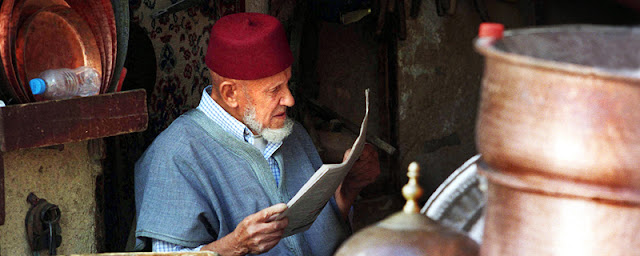
Festival magic in Fez - Photo: Vanessa Bonnin (The View from Fez)

Fez Festival of World Sacred Music, Morocco

Ok, ok, we know Morocco isn’t in Europe, but we don’t want you to miss out on this one since it really is one heck of a music fest. ‘Sacred’ is a loose description of the music on the bill at this nine-day event, as it’s definitely not just for the religious. Instead it’s a massive feel-good get-together, featuring shows from all sorts of traditions. French gypsy songs, Chicago blues and nightly Moroccan Sufi performances are all on the bill this year, as is a Youssou N’Dour tribute to Nelson Mandela. You can’t top the setting either - concerts are held at atmospheric sites throughout the city, such as the 14th century Bab Al Makina, medina riads and the Batha Museum’s gardens.

When: 13-21 June 2014
Getting there: Fez Airport is about 15km away from the city centre - take a taxi or grab a shuttle bus into town.
Learn more: fesfestival.com

Read more: http://www.lonelyplanet.com/europe/travel-tips-and-articles/europes-best-summer-festivals-for-2014#ixzz31fm8QxE6

"90% of people The View from Fez photographed in a one hour period in the Talaa Sghira in Fez were carrying Lonely Planet - the other 10% were lost." - David Margan Australian TV journalist

SHARE THIS!
Print Friendly and PDF

Tuesday, March 05, 2013

BBC to Sell Lonely Planet?


Only a week ago, The View from Fez posted on Twitter about an opinion piece on the great blog  The Longest Way Home about Lonely Planet losing its way. Now comes news that the iconic guidebooks may be sold off by the present owners, the BBC. As Lonely Planet is the guide book most often used in Morocco, we are following this story with some interest


Dave, the author of the piece on The Longest Way Home, was making the valid point that Lonely Planet had lost its way and that the extremely useful travel forum, Thorn Tree was in melt down after being shut, reopened and then gutted. The wonderful Lonely Planet travel books, built up so lovingly over the years since the founding in 1972 by Tom and Maureen Wheeler, were sold to the BBC and that was the start of a slow deterioration. There had, as Dave pointed out, always been plenty of room to improve, but compared to other guide books Lonely Planet was still the best there was.

"When in 2007 the BBC Worldwide bought 75% of Lonely Planet I thought things were bound to get better. However things remained pretty much the same. Then in 2011 they bought the remaining 25% and things actually spiraled quite dramatically downwards."- Dave - The Longest Way Home

Yesterday travel bloggers and travel writers were reacting to a story that a Kentucky billionaire will buy a controlling stake in LP while BBC Worldwide will retain enough of a stake to maintain editorial control. It is expected that, barring any last minute glitches, the deal will be finalised sometime next week.

"We have been exploring strategic options for Lonely Planet for some time now but no deal has been done and we are not going to comment on speculation about its future" - BBC spokesman Philip Fleming

The potential buyer is said to be Kentucky billionaire Brad Kelley (pictured below in a screen shot from a WSJ documentary). Kelley made a fortune selling discount cigarettes before selling his company in 2001 for around $1 billion and is now one of the largest land owners and conservationists in United States.


Travel blog Skift reports that Mr Kelley is prepared to pay about $US100 million for a controlling stake in Lonely Planet.

BBC Worldwide's purchase of a majority stake in Lonely Planet in 2007 cost 88.5 million pounds. The deal proved controversial as critics argued it went far beyond any connection with the BBC's programming. In early 2011, BBC Worldwide handed over another 42.1 million pounds to take complete ownership of the group.

It is not clear what Mr Kelley intends to do with Lonely Planet if he secures a majority stake. The acquisition would add to an investment that the American businessman has in OutwildTV, a site that promotes video documentaries by travel writers, Skift reported.

The sale could have implications for Lonely Planet staff and for freelance travel writers. In the Melbourne offices of Lonely Planet rumours of a relocation had been circulating for weeks. ‘‘We're all terrified it's going to see LP move headquarters to the US.’’ A spokesperson for Lonely Planet in Melbourne would not discuss speculation of a sale of the business, but confirmed 12 jobs in the company’s cartography department would be cut in an unrelated restructuring process, due to ‘‘improved efficiencies in the way we prepare maps for publication’’.
‘‘These changes are part of Lonely Planet’s ongoing evolution from traditional publishing to multi-format publishing,’’ spokesman Adam Bennett said. ‘‘This process is still in train, and 12 members of the team are currently assessing their options, including redeployment opportunities where appropriate.’’


"90% of people The View from Fez photographed in a one hour period in the Talaa Sghira in Fez were carrying Lonely Planet - the other 10% were lost." - David Margan Australian TV journalist


SHARE THIS!
Print Friendly and PDF

Sunday, October 28, 2012

Moroccan News Briefs #76


Easyjet announces Stansted - Marrakech flights

EASYJET has announced it will begin flying to Marrakech as part of its new 2013 route launches from London Stansted Airport.

EasyJet will fly year-round flights to Marrakech three times a week on a Monday, Wednesday and Friday with the inaugural flight taking off on February 15 2013.

The airline will also move their larger A320 aircraft to Stansted which will have 180 seats onboard.

Welcoming the news, Nick Barton, Stansted’s Managing Director, said:“Today’s announcement is fantastic news for both easyJet and Stansted Airport and will provide passengers with even greater choice and more exciting destinations.

“We’re delighted to be seeing a welcome return of Marrakesh as we believe there is a real and significant demand for flights to this destination".


14 migrants drown trying to reach Spain

At least 14 people died when a boat carrying some 70 undocumented migrants capsized in the Mediterranean after setting off from Morocco bound for Spain
.
Seventeen people were pulled from the water alive off the coast of Alhucemas, Morocco, Spain's Maritime Rescue service said, adding that some of the survivors were in need of "urgent medical assistance." Maritime Rescue took the survivors to Alhucemas.

One of the survivors said 71 people were aboard the flimsy craft when it left Morocco.

Authorities from both countries began searching for the boat on Wednesday after a tip from someone who feared for the safety of a family member aboard the craft. The boat was located by a Maritime Rescue surveillance plane, which lowered a raft to pick up some of those in the water and summoned vessels from both Spain and Morocco to aid in rescue and recovery efforts.


Morocco's inflation on the rise

Morocco's consumer price inflation edged up to an annual 1.2 percent in September from 1 percent in August, the High Planning Authority said on Sunday.

Food prices rose 1.4 percent in the 12 months to the end of September, against 1.5 percent in August. Transport costs went up 5.1 percent year on year in September, the authority said, without elaborating. Fuel prices in Morocco jumped in June.

On a monthly basis, consumer price inflation was 0.2 percent in September, compared with 0.7 percent the previous month.


Morocco in the path of locusts

According to a report carried by Morocco World News, Morocco is threatened with the arrival of locusts from the Sahel in West Africa in a few weeks.

The FAO, the Food and Agriculture Organization of the United Nations, has urged Morocco to be prepared for the arrival of desert locusts and take steps protect agricultural fields.

Currently, swarms of locusts are feeding in Chad, Mali and Niger. Locust populations have increased an estimated 250-fold as a result of good summer rains. Such numbers can be a real threat to the region.

Keith Cressman, the FAO’s Senior Locust Forecasting Officer pointed out that “Prevailing winds and historical precedents make it likely the swarms, once formed, will fly to Algeria, Libya, southern Morocco and northwestern Mauritania.”

Female locusts, which can lay 300 eggs throughout their lifetime, have, so far, given birth to swarms of tens of millions of locusts, according to the statistics released by FAO.

Lacking the equipment to fight the spread of locusts, the FAO is appealing to Morocco to allow field operations in its fields, thus helping alleviate the damage desert locust will cause.

Cressman added that not having access to some locust breeding grounds can worsen the situation.


The Eiffel Tower continues to embarrass Fez

The construction of an Eiffel Tower 20 meters high in Fez which we reported on in our last News Briefs, continues to cause embarrassment for the citizens of Fez. The issue has been picked up by major news sources and reported with a strong sense of indignation. The tower, being constructed by the mayor, Hamid Chabat, still has some five metres of metal to be added, but the media are scathing, calling it a "pile of steel". Why the mayer should want to raise a monument to the former colonisers, is still a mystery, but Bladi.net suggests it is just a step towards having his own name 'written in golden letters in the history of the city". To be clear, local people are adamant that such a monument does not belong at the heart of Morocco's spiritual capital.

As Bladi.net comments, "In Fez, where unemployment and poverty is one of the highest in Morocco, one wonders how a representative of the people can afford to spend public money to build unnecessary symbols that do not reflect in any way the identity of the ancient city."


Meanwhile... in another country

Prince Ali bin Taj walked into a branch of Arab Bank to cash a cheque. As he approached the cashier he said, "Good morning, could you please cash this cheque for me?"

Jallalludin, the bank's cashier was in attendance: "It would be my pleasure Sir. Could you please show me your ID?"

Sheikh Ali bin Taj: "Well I didn't bring my ID with me as I didn't think there was any need to. I am Sheikh Ali bin Taj, the Prince of all of this fiefdom"

Jallalludin: "I'm sorry, but with all the regulations, monitoring of the banks because of impostors, fraud and forgers, etc. I must insist on proof of identity."

Sheikh Ali bin Taj: "Just ask anyone here at the bank who I am and they will tell you. Everybody knows who I am."

Jallalludin: "I am sorry Prince but these are the bank rules and I must follow them."

Sheikh Ali bin Taj: "I need this cheque cashed."

Jallalludin: "Perhaps there's another way: One day Mohammed Ali came into the bank without ID. To prove he was Mohammed Ali he pulled out his gloves and did the Ali shuffle. With those moves we knew him to be Mohammed Ali and cashed his cheque. And, another time, Mo Farah came in without ID. He pulled out his Olympic medals and ran around the block a hundred times. With the speed with which he finished his run we cashed his cheque. So sir, what can you do to prove that it is you, and only you, the Prince?"

Sheikh Ali bin Taj stood there thinking and finally says: "Honestly, I can't think of a single thing I'm good at."

Jallalludin: "Will that be large or small notes?"


Editorial Note:

For several years The View from Fez  has been a featured Lonely Planet blog and a strong supporter of their Moroccan guide books. Recently the Lonely Planet site encountered a problem and some 1600 stories from The View from Fez vanished. Lonely Planet has apologised and informed us that they are working on the problem. We will let our readers know when the issue is resolved.   


SHARE THIS!

Monday, September 19, 2011

Ethical Travel and Food Writing ~ update


Following our popular story on unethical travel writing (see story here) we have this timely advice from the highly respected Alison Bing from Lonely Planet.

 Don’t act like a food critic

At New York’s Momofuku Noodle Bar, I observed a food blogger photographing dishes, taking notes at the table and loudly drawing comparisons to dishes by other chefs. This is a rookie mistake, guaranteeing a strained dining experience for everyone involved. Staff hover over your shoulders, with shaky hands and false cheer – forget getting a straight answer about which dishes are better than others. Dinner conversation is peppered with interruptions, introductions and quasi-interviews, and over-salted with interrogations about why you didn’t finish your garnish … or maybe that’s just the nervous chef, sweating into your food. Reviewing restaurants anonymously for Lonely Planet ensures I get treated like any other customer, which means I occasionally get hot dishes served cold, microwaved until molten or deep-fried twice (ouch) – but it sure beats the awkward alternative. And when that freshly baked moment of joy arrives on a platter, it’s a sincere expression of the cooks’ talent, the farmers’ diligence, your hosts’ generosity and a shared love of food that gathers us around tables, around the world.

Sunday, September 18, 2011

Travel Writers Beware ~ a cautionary tale from Morocco


It is standard practise for reviewers to not reveal to a restaurant or hotel that they are doing a review. To do so negates the purpose of seeing the business as the clients they are writing for would. It is considered unethical - even more so if the motivation is to get a free meal, service or accommodation.

If a reviewer is a well known identity, then they often book under an assumed name and there are cases where they have even adopted disguises so a business does not know they are being reviewed.

It is the same story for the publishers of the better travel guides. They have clear ethical guidlines.

"They (our authors) don't take freebies in exchange for positive coverage so you can be sure that the advice you're given is impartial" - Lonely Planet

We will leave it to you to imagine our reaction when we came across the following quote in an article by a person purporting to be a travel writer. To compound matters, the article was syndicated on the website of a major guidebook company - and one that has very high ethical standards.

We will not shame the writer by disclosing his identity. Here is what he wrote about a hotel in Morocco...

Breakfast (a simple one I was told) was 17 Euros per person – which is roughly triple what a great breakfast costs at the cafe down the street. Even when I told them I was doing a review for a third party, their reaction was stolid – which on one hand I admire, but on the other was just such incredibly mercenary bad business practice that I’m certain my jaw dropped. Frankly, if someone tells me they are reviewing me – I would at least offer to provide them with complimentary breakfast so they could write about it (and a complimentary dinner for that matter) but these guys – no way.

If reviewers all acted like this, then the public's faith in reviewers would be lost. With the current controversy over fake reviews on Trip Advisor it is even more important that would-be reviewers maintain the highest standards.


Monday, September 12, 2011

New Edition of Lonely Planet Morocco


The release of a new guide book is aways good news for any tourist destination. It is doubly so when that destination is Morocco and the guide book is the Lonely Planet. Not only is Morocco one of Lonely Planet's top destinations, but over the years Lonely Planet has been the most popular guide book on the market (see our story here). The View from Fez team has been evaluating the new edition.


The tenth edition of Lonely Planet Morocco could not have come at a better time. As Ibn Warraq reported yesterday, (see story here) the tourism market is recovering. In addition the past couple of years have seen a great number of developments in Morocco and much has changed since previous editions.

Tony Wheeler, who founded Lonely Planet with his wife Maureen believed that "a great guide book should do three things: inform, educate and amuse". Happily, we can report that this latest edition does just that.

Those familiar with Lonely Planet will notice some changes in style and format. Gone is the rather plain "quick reference" section on the inside cover. In its place is a double page spread with essential sections of the book: "plan your trip", "on the road", "understand Morocco" and "survival guide". Each of the sections lists page numbers for its major contents. These sections are also colour coded so that flicking to each section is easier than in previous editions.

Plan your trip

This first section covers such things as the "18 top experiences". In the previous edition the reader was offered 25 highlights. One suspects that this reduction was brought about by budgetary constraints. In an odd twist the previous number one, the Fez Medina, has been relegated to number two behind Marrakesh's "Djemaa el-Fna street theatre".


There are other changes that appear to be a result of cost-cutting. The quality of the paper and the matt instead of glossy photographs are just two examples. However, the layout and basic information is all precise and quickly found. The "month by month" rundown is well thought out and the "suggested itineraries" are a good guide for first time visitors to Morocco and superior to those in the 9th edition.

Another change is the placement of general information for travellers. In the previous edition there were around sixty pages at the front of the book, covering a variety of topics from the environment through to advice for women travellers. In addition there was a "directory" at the end of the book. In the 10th edition most of this is now at the back of the book in the "survival section". In some cases the advice is in a more concise form.

On the road

This section contains all the essential information on various major destinations, starting with Marrakesh and Central Morocco rather than the previous entry point of Casablanca and the Central Coast.

The Marrakesh and Central Morocco entry was written by Alison Bing, who returns to the areas she has written about in the ninth edition. Bing knows her area extremely well and writes with authority and not a little wit. Her introduction to this chapter, however, is a rewrite of the previous edition. It is probably not such a bad thing, as her previous introduction was (and still is) well written!

An annoying thing about the new format are the lists of "five best" this or that. Our feeling is that it must have been restricting for the writers and there were may have been "words" exchanged with those back at Melbourne HQ.

The updated map of Central Morocco is a vast improvement and, like the map of Marrakesh, is much easier to read. There is also the welcome inclusion of a pull-out map of Marrakesh, but disappointingly, none for Tangier, Fez, Casablanca or Rabat.The writing about Marrakesh itself also contains much of the previous text, but thankfully refreshed in parts.

When it comes to riads and hotels the list appears more exhaustive and, as one would expect, there are some notable inclusions and omissions. Overall, it is a good snapshot of where to sleep and where to eat. One change is the dropping of the classification of hotels into budget, mid-range and top end. The new edition has a simple code beside each hotel with the number of Euro signs (€) denoting the price range.

The Atlantic Coast section of the book has had a major make-over. This is probably due to the fact that it has been researched and written by a new author - Helen Ranger - writer of the much in demand Fez Encounter. Ms Ranger is an experienced travel writer and it shows in the sections she has authored.

The information about the walking tour of Central Casablanca has been expanded and the maps have been improved.

One strange anomaly is the confusion over railway stations. Casablanca is served by two rail stations run by the national rail service, the ONCF. The main long haul station is Casa-Voyageurs, from which trains run south to Marrakech or El Jadida and north to Mohammedia and Rabat, and then on either to Tangier or Meknes, Fes, Taza and Oujda. A dedicated airport shuttle service to Mohammed V International Airport also has its primary in-city stop at this station, for connections on to further destinations. However none of the maps show Casa Voyageurs railway station. Casa Port train station - of less interest to travellers - while on the map, is not numbered with other transport services.

The Atlantic Coast coverage of this latest edition is more extensive and the attention to small details is impressive. For example,the bus to catch to get to Lixus is no longer numbers 4 or 5, but number 9. A small detail, but one that could make your trip to Lixus a little easier!

This section of the book includes Essaouira and again the updating of information is thorough. It is also pleasing to see that Ms Ranger has exploded the myths about Jimi Hendrix and his brief stay in Essaouira.

The Mediterranean and the Rif section was also authored by Helen Ranger and out of date information is gone and the coverage of the region much improved. The layout and information on trekking is well done, as is the attention to detail. The section on Tangier has captured the spirit of a city shrugging off its past and becoming an appealing destination for tourists.

Well known travel writer Paul Clammer, who was coordinating author of the 9th edition, returns to update the Imperial Cities, Middle Atlas and the East. Given the tourist boom in Fez and the range of new accommodation and restaurants, this update was much needed.  Clammer has done a good job on this, but because of the time lapse between research and publication, some details have already changed.

The Coordinating Author of this 10th edition  is James Bainbridge, who also contributed the Southern Morocco and Western Sahara update.  Again, all well done.

Understand Morocco &The Survival Guide

These two shorter sections not only have some valuable information, but have been set out in a way that makes them easy to read. One small lapse is in the language section where, unlike previous editions, the Moroccan numbers are missing the numerals between 10 and 20! Maybe the publishers are encouraging people to purchase the Lonely Planet Moroccan Phrase Book?

Our Verdict

There will always be those who like the older style of Lonely Planet guide book and for them, the changes in format and style will not be welcome. There is also the perennial problem alluded to earlier - that by the time any guide book reaches publication, it is already out of date.

Those quibbles aside, we think that Lonely Planet Morocco does its job well. It is easy to read; the maps are vastly better and the research in almost every region is impressive. The style of language retains that earthy flavour Lonely Planet is renowned for, ( which other guide book describes something as grotty?) but the general approach is a more mature one. If this is a recognition that not every traveller is a backpacker, then it is a step in the right direction.

Let's hope that those in Lonely Plant HQ will follow this with updated Encounter books for Fez and Marrakesh.


You can purchase by clicking image

Sunday, August 07, 2011

Lonely Planet - a must have guide book for Morocco


Lonely Planet is the the most popular guide book for Morocco and now there is a new Moroccan edition available in the better book shops. The care and attention to detail that the authors have delivered means that this is once again the "must have" guide book for Morocco. The View from Fez team will do a full review of the book in the near future.

CLICK IMAGE TO ORDER


In addition the Lonely Planet website is a valuable source of information and articles on Morocco. A recent article by Stefanie Di Trocchio, for example, gives the following very handy hints to prepare the first-time visitor for a wonderful time in the country.


Moroccans are famously hospitable and love showing visitors their country. You’ll meet plenty of friendly folk who’ll ease your path, but these tips will make your trip even easier.
  •   Go in spring when lots of Morocco is lush and green. Don’t underestimate the extremes of summer and winter – they can be brutal. Ramadan is an interesting time to travel, but be aware that many restaurants and cafes will be shut during the day. In 2011, Ramadan begins on 1 August and finishes on 30 August. The dates change from year to year, so check it out online (www.when-is.com/ramadan.asp) before you go.
  •   A few words of basic Arabic will take you a long way. Try es salaam alaykum(hello, literally ‘peace be upon you’), ‘afak (please – it has a glottal stop before it, like the sound between the vowels in ‘uh-oh’. If you’re talking to a woman it’s ‘afik; to a group, say ‘afakum) and shukran bezzef (thank you very much) for starters.
  •   Stay in a riad – a traditional Moroccan house built around an internal garden.Marrakesh, Fes and Essaouria are classic riad destinations.  Check out Lonely Planet Hotels & Hostels for recommendations.
  •  Load up your pockets with small change. Tipping is an integral part of Moroccan life, and a few dirham for a service willingly rendered can make life a lot easier. Tipping between 5% and 10% of a restaurant bill is appropriate. Also tip taxis, guides and small boys who help you find your way out of the complex maze of streets in the old parts of town.
  •   Don’t engage a faux guide (false guide) for the day. They’re illegal. Engage an official tourist guide through a tourist office instead.
  •   Petit and grand taxis are a great way to get around, but be prepared to wait – grand taxis won’t leave until all six cramped places are full. If you’re a woman travelling alone in a grand taxi, it’s a good idea to buy the two places in front for yourself.
  •   Treat bargaining in souks as a friendly game. It’s an intrinsic part of the culture and is always expected of you, so just ignore the first price a merchant puts forward.
  •   If you’re offered a mint tea by a local, sit down to enjoy. Mint tea is the hallmark of Moroccan hospitality, and it’s impolite to refuse it. A sit-down tea session takes about half an hour.
  •   If you’re a woman travelling alone, try to ignore unwanted attention. You’ll hear cries of gazelle! and perhaps even get the odd marriage proposal, but the best thing to do is to avoid eye contact. If it persists, threaten police involvement. It’s surprisingly effective.

Thursday, December 09, 2010

Lonely Planet's Best in Travel 2011: Tangier hits the mark


Lonely Planet's new publication, Best in Travel 2011, features Tangier as one of its top ten cities to visit next year.
'A stylish new Tangier is being created with a dynamic arts community, renovated buildings, great shopping and chic new restaurants', says The View from Fez writer Helen Ranger and author of the piece.

Other cities recommended are New York, ten years after 9/11, Tel Aviv, Wellington, Valencia, Iquitos, Ghent, Delhi, Chang Mai and Newcastle (the one in Australia, that is).

The book has some exciting suggestions including Lonely Planet's list of the top 10 countries to explore (from Albania to Vanuatu), top 10 regions (think anywhere between Patagonia, the Shetland Isles and the Sinai), and the top travel experiences. In this category, you'll find where to find the world's greatest bookshops, the best vampire-spotting locales, the most super-luxe travel, and plenty of other ideas. Of the top 10 places to learn the local cuisine, Lahcen Beqqi of Fez is right up there along with Vietnamese, Mexican, Turkish and more.

For some armchair travelling and inspiration for your next holiday, this is a great book to have. Iceland, anyone?

Wednesday, August 11, 2010

Marrakech on your iPhone


For the last few months, The View from Fez has been road-testing the various city guides available as apps for the iPhone. There are several on the market and one clear leader. The Marrakech Travel GuideBy Etips is okay, but a little clunky. However, although slightly more expensive, top of the list is the Lonely Planet app for Marrakesh.
Unfortunately there is still no digital version of the great Fez Encounter, however Marrakech has been available for a while. Apart from a rather serious glich with the telephone numbers not being updated after Morocco changed its phone system, the guide is a superb companion for a trip to the 'kech. If you are confused by the phone number issue, see our easy to follow guide here: Morocco Phone Numbers

We have used the guide extensively and found:

(1) It is very easy to use – swipe to scroll through a full table of contents, dip into sections, and turn pages with a flick of your finger.

(2) With good offline maps there’s no need to go online to access our detailed street maps, fully retooled for the iPhone with location awareness, multi-touch controls, full-colour styling and six-level zoom.

(3) There are scores of geo-coded points-of-interest (POIs)arranged by proximity, category, preferences or favourites. You simply tap to visit the website, or place a direct call (having checked the number!).

(4) text search – whether you’re into ‘live music' or ‘fine dining’, every article and POI in your guidebook is text-searchable.

(5) location-based navigation – plot your location in real time on our interactive maps, exploring back streets and hidden treasures with no danger of losing your way.

(6) personalisation – tailor your City Guide to your tastes by tagging the best POIs as ‘favourites’.

(7) money saving – forget roaming costs, the app is designed for offline use, and only take up the room of an average album on your iPod.


Overall, we were very happy with this app and found it easy to use and good value for money. To purchase the app, go to "App Store" on your phone and select "search" then type in "Lonely Planet Marrakesh City Guide". Too easy!

Now, dear Lonely Planet.... we would like a city guide app for Fez.


Saturday, July 10, 2010

A Guide to Moroccan Cuisine


It is not very often that The View from Fez takes issue with Lonely Planet. Our survey of tourists showed that the LP Morocco Guide and city guides such as Fez Encounter are the favoured guide books of most travellers. However, a recent online article featured on Lonely Planet’s website did raise some eyebrows and generated several emails asking about the odd tone, inaccurate information and glaring omissions. The article was headed “Top 10 tips for devouring Moroccan cuisine”. Ibn Warraq delves deeper:

Some people just love to make lists; “ten of this”, “the best twenty of that”. However, this list is rather confused and desperately in need of a revamp. The article suggested it was offering “the top ten things that foodies should know to get the most out of culinary Morocco.” At first glance the focus appeared to be on Marrakech – “ Even atheists find foodie religion in Marrakesh, where the dishes keep coming until you protest ’Alhamdulillah‘, or ‘Praise be to God’. “

But then the article talked about b’stilla which is not a Marrakech specialty, but probably the most famous dish from Fez. The Marrakech specialty using the special b'stilla pastry is trid (layers of soft waraka pastry with lamb and spices ) which has its origins in an ancient Amazigh (Berber) recipe found in many remote villages. You can get some of the best trid at Dar Zellij but it is wise to order it in advance when you make your booking.

CULINARY HISTORY

The article carries a bold claim that Moroccans have “hand-picked Spain’s favourite ingredients”. This is a myth that is far from the truth. Many people think that due to the fact Morocco was in French and Spanish possession for periods in the 19th and 20th centuries, Moroccan cuisine has been heavily influenced by the French and the Spanish. While some ideas have been shared, its culinary culture traces its roots firmly to the indigenous Berbers and Arabs, who invaded the land in the 7th century CE.

Fruits and vegetables have always been grown and fish and seafood are plentiful due to the long coastline, while Morocco's inland environment has always been perfect for the raising of large flocks of sheep and goats. Many spices such as cumin, paprika and turmeric were introduced by the Arabs as was their tradition of cooking meat with fruit such as dates, raisins and figs.

This is a region marked by geographic, political, social, economic and cultural diversity, and the cuisine and the culinary style and art of North Africa are also as diverse as the land, its people and its history. The roots to North African cuisine can be traced back over 2000 years, with that of ancient Egypt covering a span of over three thousand years.

Over several centuries traders, travellers, invaders, slaves, migrants and immigrants all have influenced the cuisine of North Africa. The Phoenicians of the 1st century brought sausages, the Carthaginians introduced wheat and its by product, semolina. The Berbers adapted this into couscous, one of the main staples. Olives and olive oil were introduced before the arrival of the Romans. From the 7th century onwards, the Arabs introduced a variety of spices like saffron, nutmeg, cinnamon, ginger and cloves, which contributed to and influenced the culinary culture of North Africa. The Ottoman Turks brought sweet pastries and other bakery products, and from the New World, North Africa got potatoes, tomatoes, zucchini and chili peppers.

The cuisine of the Maghreb is primarily a mixture of Berber and Arab culinary traditions, with some European and Jewish influences and, contrary to the Lonely Planet article, I would say there is a good case that Moroccan cuisine made its way to Spain rather than the other way around.

VEGETARIANS

Vegetarians, as the article notes, are well catered for, but far more than is suggested. Think, loubia (spiced beans) fuul (spiced broadbeans), lentils, fried aubergines/peppers, all of which add to vegetarian options. And for dessert, the traditional sliced oranges with cinnamon is a good choice. A walk through the souq will amaze the visitor with the fabulous array of vegetables, fruit, dried fruit and nuts and soft white cheese for self-caterers or for snacking vegetarians. Because the produce is so fresh and seasonal, the varieties on offer can and do change week by week.

FISH

There is no mention at all in the article of another important Moroccan traditional food group – fish. Not only is Morocco the world’s major producer of sardines, the fresh seafood is superb and varied (I suggest you try some rolled in chermoula and fried). And of course there are the famous oysters from Oualidia. Essaouira is renowned for its portside fish barbeques and in its restaurants (I suggest you check out Taros in Place Moulay Hassan), cold seafood salads drizzled with argan oil.

WINES

Then there are the Moroccan wines. While the article mentions some of the better labels, it omits the more recent labels such as Volubilis, Eclipse and Halana. The famous Moroccan gris wines are not even mentioned! Other favourites include Médaillon, Les Coteaux de L’Atlas and the sometimes hard to find Mogador wines. If you are in Marrakech or Essaouira I suggest you visit the producers of Gazelle de Mogador, the Domaines Du Val D’Argan. This winery is just 30k from Essaouira and produces some of the best wines in Morocco. It was established in 1994 by the current owner, Charles Mélia. He and his employees only speak French. They have over 900 hectolitres of wine, which is equal to about 120,000 bottles.

STREET FOOD

One word of caution about the street food: yes, it is safer and better than almost any of the tourist “palace restaurants”, but with the svenge (fried doughnuts) and mekouda (potato fritters), it is wise to check out that the oil used for cooking is fresh.

COOKING LESSONS

The article mentions my friend Lahcen Beqqi, but do take note, Lahcen is in Fez, not Marrakech. Also in Fez there is now a fierce competition in culinary tours and cooking lessons. Fez Foods has become very popular with their gastronomic tours to olive and wine producers, their hands-on couscous rolling, as well a remarkable experience where you get to make a tangia at the butcher's on the street, take it to the ferran (bakery) to slow-cook for 6 hours and then eat!

Of course, if you get invited to eat with a family, you can be in for anything from superb to woeful because, as is true in all parts of the world, not all cooks are equal! That said, I am not a great couscous fan (you can get too much of a good thing), but one of the best meals I ever had was a couscous with chilli and a little bit of meat, with fresh (unpasteurised) buttermilk poured over it, in a family gite high in the Valley of the Roses.

B’saha – Ibn Warraq

PS If you are looking for fine food in Fez, take a look at our updated guide here.

Thursday, July 08, 2010

The View from Fez Twitter Competition !


As part of our fifth birthday celebrations, The View from Fez is running a Twitter competition! It is dead easy to enter.

Send your suggested caption

If you are already on Twitter, visit "The View from Fez Twitter Competition:" at http://bit.ly/ciGZfg. Take a look at the photograph and all the entries then send a caption suggestion for the photograph. Send your tweet reply with the hash tag: #feztwitter and we will announce the winner during our birthday celebrations.

The winner will receive a copy of the essential guide to Fez; Fez Encounter and the Lonely Planet Morocco guide.

If you don't have a free twitter account, go to http://twitter.com/theviewfromfez and sign up.

Remember, you don't have to send it to us @theviewfromfez. Simply write your caption and add the hash tag #feztwitter.


Friday, April 02, 2010

Yesterday, being April 1...


Yesterday across the internet a series of very strange stories were posted by various organisations and bloggers. It took some people a long time to wake up to the fact it was the first of April - April Fools Day!

For example: Lonely Planet in the Uk lead with this amazing story:

Passenger Strike at Heathrow

London’s central airport, notorious for its delays and recently hit by a British Airways strike, has ground to a halt for a whole new reason: a passenger strike. As officials struggled to contain the mass movement, started seemingly by a single act of recalcitrance at a baggage checkpoint, the entire airport became choked by passengers refusing to open laptops for inspection, taking off only one shoe, loading their pockets with change, and dancing backwards and forwards over security lines.


‘We’d been in the line for two hours,’ said Velma Wheelycase of Basingstoke, who had intended to fly to Thailand for a resort holiday. ‘My husband and I saw a young man who insisted on going through the x-ray machine with his baggage. He just lay down on the conveyer belt and went right through. There was a bit of an uproar, a bit of a kerfuffle, then all the people in the queue behind him followed suit. Then we saw the line next to us seize the stick detectory thing they run over your body. And they started frisking the guards.’

With a single ‘Wheeeeeeeee!’, Mrs Wheelycase took her turn on the x-ray conveyer belt and disappeared into the interior of the machine.

The strike spread in a wave-like movement throughout the airport. Passengers laid down on travellators and in jetways and flooded the food halls, where there was mockery of serving sizes and sharp criticism of the coffee.

In an age where the airline queue has become akin to the breadlines of Soviet Russia, it would appear there is a new revolution in town. Heathrow officials were unavailable for comment.

Thorn Tree lays down the law on spelling "Traveller"

The customarily cool-as-ice moderators on Thorn Tree travel forum have erupted into an uncharacteristic flame war, leaving the Lonely Planet on-line community confused, anxious, and uncertain about the future.

Showing an unusual disregard for the company’s own Community Guidelines, the row appears to have erupted over the spelling of the word "Traveller". At 10:15am (GMT) on 1 April 2010, US-based Thorn Tree moderator posted a message intended to calm the turbulent waters of the forum’s volatile Scandinavia branch. The post was modified at 10:27am by an Australia-based moderator who tweaked the spelling of the word ‘traveler’ to the Commonwealth-preferred ‘traveller’.

And then there was that cable car story...

Yes, The View from Fez had its little prank. The story on the cable car up Jebel Zalagh fooled a surprising number of people, including a certain author of a guide book on Morocco. His name shall be withheld as he is suffering a certain amount of red face over the incident.
For those who missed it, after reading the article the readers were invited to see more technical details and were offered this link: Technical Info

"Poisson d'Avril!" Thankfully it will be another year before we feel the urge to dream up another story like that.


Sunday, January 31, 2010

Calling all travellers


The View from Fez has heard that Lonely Planet is on the lookout for travellers to join their Travelers’ Pulse Panel - here are the details.


Our panel is a discussion forum where we engage travelers and listen to what you have to say about travel – where to go, how to plan, and other creative travel ideas. We’ve always got interesting topics up for you to comment on, like our current survey on what you’re looking for when you take a trip to a theme park.

Joining the panel is free and if you’re accepted to be a panelist, we’ll send you a free Lonely Planet 2010 calendar as a gift to welcome you on board! Not only will you get to talk about travel, but we regularly run promotions exclusively for panelists where you can win prizes like Lonely Planet products and Amazon gift cards.

If you’d like to join this panel (numbers are limited) all you need to do is click the link below and take a short survey to register. We’ll look at your responses and depending on your age, travel experience and country of residence you might be one of the people we’re looking for! The type of people we need on the panel changes from time to time, so if you aren’t suitable for our panel this time we may contact you to participate in future.

https://www.travellerspulse.com/R.aspx?a=56&Source=BLOG


Thursday, December 24, 2009

Lonely Planet's top 10 countries for 2010


Recently Lonely Planet released its top ten countries for 2010. To our delight, Morocco was once again included. The destinations were arranged alphabetically, so there was no special ranking, but here is the list: El Salvador, Germany, Greece, Malaysia, Morocco, Nepal, New Zealand, Portugal, Suriname, USA.

Predictably, Lonely Planet got a strong reaction from around the world of those who liked the list and others who thought it was a little on the tame side. A couple of commentators even criticised Morocco being included because of bad experiences that they had suffered. One, not so happy camper, detailed her objection... I completely DISAGREE with Morocco. My passport was stolen TWICE before I even left the airport. The airport personnel were very unwilling to explain directions on getting through the screen machine. All of the Americans on the flight were herded into a corner. It was VERY uncomfortable. After leaving the airport and by the time two hours had passed, I was chased by a man with a monkey, chased by a man with snakes, hit by a donkey cart, and hit by a motorcyle. Being a girl, I was once offered 500 camels for my ownership and another time I was just straight-up asked how much I cost. I was very modestly dressed although it was blazing hot outside. Not surprisingly, I left Marrakesh, Morocco the very next day.

Lost her passport twice? With that much bad karma, maybe she should have stayed home? Seriously though, as one Australian woman recently told us "I feel safer and more relaxed in Morocco than I do in Melbourne."

"Every path, every corner, a new delight"

Here's what Lonely Planet had to say about Morocco:

‘Hello, bonjour, salaam alaykum, labes?’ Street greetings sum up everything you need to know about Morocco in a word: it’s Berber and Arab, Muslim and secular, Mediterranean and African, worldly wise and welcoming. Morocco sees how the Middle East is portrayed via satellite news and the internet, and is as concerned with violent threats and abuses of power as anyone else in the modern world. But as you’ll see, most Moroccans are plenty busy working to get by, get their kids through school and greet the king’s planned 10 million visitors by 2010 with the utmost hospitality. Every visitor helps Moroccans realise these goals by creating new economic opportunities, and can make a Moroccan’s day by returning the greeting: ‘Hello, good day, may peace be upon you, are you happy?’

You can read more about Lonely Planet's thoughts about Morocco here: Lonely Planet, Morocco

Sunday, August 09, 2009

The View from Fez on Lonely Planet


The View from Fez blog is enjoying huge success. The team is delighted to announce that our posts now appear on the Lonely Planet website as one of the well-known guidebook company's favourite blogs. That's pretty good news for our hard-working team and for Moroccan tourism!


You can visit us at Lonely Planet here.

As we mentioned in our article in April 2007, LP remains the most popular guidebook to Morocco and Fez - most tourists seem to be carrying one! (See story here: Lonely Planet's Morocco)


But it's not only LP. We've also just been invited to be part of Globalpost, which is a relatively new (launched in January) international news organisation that's getting around 300 000 visitors per month, and around 1.1 million page views. And we're on Toot, the Arabic news organisation. You can follow The View from Fez on Twitter, too.

Friday, March 06, 2009

Lonely Planet's new Morocco Guide


At the end of January, The View from Fez talked to Paul Clammer, co-ordinating author of Lonely Planet's new Morocco guidebook (see here). The book has now been launched.


Graced with a particularly striking cover photograph of the Royal Palace doors in Fez, the guidebook is now available. It costs £15.99 and can be ordered from LP's website shop.

"Morocco is sensory overload at its most intoxicating," runs the LP blurb, "from the scents and sounds of the medinas of Fes and Marrakesh to the astonishing Saharan landscapes. Roam its labyrinthine souqs, scrunch your toes into the sunset sand and let our guide take you to the cafes and hammams only the locals know."

Paul points out that the map of the Fes medina is much improved in comparison with the map in the last edition. The guidebooks are updated every two years and this is the 9th edition. Paul was aided and abetted by Paul Stiles, Marrakech expert Alison Bing (who also wrote LP's Marrakesh Encounter), and acclaimed travel writer, Anthony Sattin.


Tags:

Saturday, February 28, 2009

Ten confusing "facts" about Fez!


Recently we checked out a large number of travel websites offering "inside information" about Fez. What worried us most was the lack of understanding about the Medina and what it has to offer. The list of "facts" below occur on more than one site, but have one thing in common - they are all wrong!

The medina, or “Old Town”, of Fez is perhaps the best preserved medieval city in the world. It was built in the 14th century, and aside from the introduction of electric lighting, little seems to have changed in the six hundred years. Traditional craftsmen still make and ply their wares in one room workshops, and overburdened donkeys are still the only form of transport that can be used in the Medina. The narrow winding streets are a maze for the unwary, and taking a half or full day guided tour may be the best way to see all the sights the Fez medina has to offer on your holiday in Morocco.

There are many statements like the one quoted above. Here are just some of the "facts" we discovered.

#1: "Apart from electricity there is nothing modern in Fez."

#2: "There are no cell (mobile) phones."

#3: "There is no sense of community because everyone is behind windowless walls."

#4: "Women are not allowed out in the streets. If they do they must be in a burqa".

#5: "The narrow winding streets are a maze for the unwary, and taking a half or full day guided tour may be the best way to see all the sights the Fez medina has to offer."

#6: "Fez is a tour town and once you have experienced the filth and stench of the medina and the few Mosques which you cannot enter the trip is effectively over."

#7: "For safety and drinkable water you must stay in a modern hotel outside the Medina."

#8: "There are also many discos and pubs providing entertainment to all those entire people visiting Fez. Thus come and be a part of the world of entertainment here in Fez."

#9: "Taxi drivers never turn the meters on so be careful when they try to rip you off."

#10: "If you need to use the internet you will have to go to the Sheraton Hotel."


Once you have stopped laughing and decide you are after factual information, shop around. Read as much as you can before visiting. You can also search The View from Fez using the search box at the left of the top bar. We recommend the following sites for accurate information:

Fez Information.
Things to do in Fez.
List of further resources.
Top guidebook.


Tags:

Wednesday, January 28, 2009

Leading travel writer returns to Fez


Paul Clammer, lead author of the forthcoming 9th edition of Lonely Planet's Morocco guidebook, returned to Fez this week.


"Getting lost in the medina as a young backpacker in 1994 was a formative experience", says Paul. Fez remains his favourite Moroccan city, which is why he's so pleased to see a photograph of Fez on the front cover of the new Lonely Planet guidebook, out in February.

"After all the weeks of rain you've endured, I'm happy to have brought some sunny weather with me in time for the launch of the book", said Paul.

Paul was in Rabat applying for a visa for his upcoming research trip to Mauritania, and what better way to wait for it than spend a couple of days in Fez, seeing old friends? Paul has already stopped in at Cafe Clock a couple of times, and is staying with fellow LP author, Helen Ranger. But he also can't resist checking up on what's new in Fez in advance of his next research trip to Morocco in 2010.

The View from Fez wishes Paul happy researching in Mauritania.


Tags:

Monday, November 10, 2008

Shnoo?


The View from Fez reported a few days ago (Confounding the Guidebooks) that our favourite medina restaurant owner, Thami, had confused everyone by painting a new sign above his restaurant that read 'Tohami'.

Once we'd pointed it out to him (and helped some Dutch tourists who were trying to follow directions in their Lonely Planet guide), Thami promised to change the spelling. He did - and had the whole street laughing:


Sandy is definitely Thami's favourite customer, but we're sure the sign will be changed soon so that everyone can find the restaurant.

Reporting: Helen Ranger.
Photograph: Helen Ranger.


Tags:

Friday, April 04, 2008

Encounter Fez with Lonely Planet


Lonely Planet's Fez Encounter 1 is hot off the press and is already proving a hit with visitors, discovered Lumen, who caught up with Steph and Tim Newton at Cafe Clock.

The Newtons of Ipswich arrived in Morocco well equipped with a copy of Fez Encounter 1, just launched at the end of March. They'd come all the way from their home town by train, an interesting (and environmentally friendly) way to travel. Staying at Dar el Hana, they had already visited Seffarine Square, the Nejjarine Museum and the snail stall on the corner of Derb el Horra on their first full day in Fez. Tim and Steph loved the pocket-size book, saying that the maps are excellent, especially the pull-out one that's a convenient size. They found the ideas for itineraries very helpful and manageable. And of course, they'd been following The View from Fez before their holiday.

The Fez Encounter guide covers four neighbourhoods in the city: the Medina, the Andalous Quarter, Fes el-Jdid (incluiding the Mellah, the former Jewish Quarter), and the Ville Nouvelle. Each section has its own map, and entries cover where to eat, drink, shop, sight-see and play. A larger pull-out map can be found at the back of the book that's the perfect size for unfolding in the medina. There's an interview with a local personality in each of the neighbourhood sections and great photos. Excursions are covered to Meknes, Volubilis and Moulay Idriss. It's written by Virginia Maxwell and Fez resident, Helen Ranger. Copies can be ordered from Fez Riads or shop online at shop@lonelyplanet.com. The book costs £6.99.


Tags:
