Showing posts with label Corruption. Show all posts

Thursday, May 17, 2018

Fighting Corruption in Morocco


This week the Moroccan prosecutor's office launched a hotline dedicated to exposing acts of corruption  The public can now call a toll-free number - 0537718888 - and make complaints about acts of corruption

The implementation of this phone service is part of the national strategy to fight against corruption, which aims to promote the values ​​of integrity and transparency, to ensure the effectiveness of interventions of government departments in the field linked to the fight against corruption, in accordance with the principles of good governance as stipulated by the Constitution and Moroccan law.

The phone line reinforces the other mechanisms for denouncing acts of corruption, which are placed at the disposal of the citizens, the aim being to denounce these acts at the precise moment and with the necessary efficiency to control the cases of corruption or blackmail and inform the public prosecutor and the judicial police of the facts.

To this end, a call center under the authority of the Public Prosecutor's Office, which oversees the online processing of all calls, has been equipped with all the technological means of handling citizens' calls for transmission to the judge in charge, after have made sure that they relate to a crime of corruption. The judges in charge of these cases have the task of coordinating with the public prosecutor and the whistle-blower of these acts in order to arrest the suspect, in "flagrante delicto".

In an address delivered on the occasion of the launch of this new service, the Prosecutor of the King at the Court of Cassation, President of the Public Ministry, Mohamed Abdennabaoui, stressed that this new service is dedicated to the denunciation of acts of corruption or blackmail to which citizens may be exposed in public administrations and public services, aims to encourage citizens to denounce such acts.

Given the important role of citizens in the fight against corruption, Mr. Abdennabaoui said that the whistleblowing procedure will be conducted in anonymity to preserve the identity of the whistleblower, explaining that the independence of the judiciary ensures the perfect coordination between government departments and public services.

The Minister Delegate to the Head of Government in charge of Reform of the Administration and Civil Service, Mohamed Benabdelkader, for his part, noted that the launch of this hotline to denounce corruption is an "important step" in the process of building the rule of law and transparency and as a key mechanism in the implementation of the national anti-corruption strategy.

In parallel with the launch of this issue to denounce corruption in its various forms, an advertisement of about 48 seconds has been aired to publicise this new service to the public.

In its first two days, the direct telephone line dedicated to the denunciation of acts of corruption was quick to bear fruit, allowing the arrest in the flagrante delicto, of several individuals in three different cities.

Since its launch on Monday, the hotline has received some 355 calls, and allowed arrests in three cases of corruption in Fez, Sidi Bennour and Inezgane.


SHARE THIS!

Saturday, August 24, 2013

Morocco and the Question of Corruption


It is quite normal to hear both Moroccans and ex-pats complaining about corruption in Morocco. Indeed, listening to the stories, one could be forgiven for thinking that Morocco was the home of corruption. This is far from the truth. Almost every country in the world suffers from corruption of one form or another


What constitutes corruption is often disguised in so-called developed countries under different names - lobbying, white-collar crime, insider-trading, but is corruption nevertheless.

More than half of people surveyed by Transparency International believe the level of corruption in their countries has increased over the past two years, according to the world's largest public opinion survey on the subject.

The 2013 global corruption barometer surveyed 114,270 people in 107 countries. Unlike the better-known corruption perceptions index, which relies on expert opinion, this project surveys the public on their views and experiences of corruption.

More than one in four respondents (27%) said they paid a bribe over the past 12 months when accessing key public institutions and services. Of those who reported paying a bribe, 40% said they did so "to speed things up"; 27% said "it was the only way to obtain a service", while 21% said they paid a bribe "as a gift, or to express gratitude". The remaining 12% of respondents said it was "to get a cheaper service".

Corruption is, by definition, difficult to measure. Transparency International's surveys are among the few sources of data on the subject, though they focus largely on perception. Now in its eighth edition, this year's survey is the largest of its kind and includes some countries, such as Libya and Tunisia, for the first time.


Other key findings from the survey:

• Political parties are considered the most corrupt institution, followed by the police and the judiciary. Globally, religious institutions are seen as least corrupt. In Israel, Japan, Sudan and South Sudan, however, religious bodies were seen to be highly corrupt.

• Nearly two-thirds of respondents said they believe personal contacts and relationships help get things done in the public sector in their country. In 10 countries, including Israel, Italy, Malawi, Russia and Vanuatu, this figure was more than 80%.

• In 2008, 31% of respondents said their government's efforts to fight corruption were effective. This year that figure fell to 22%.

• In the UK, the media and political parties were rated most corrupt and 5% of people surveyed reported paying a bribe.

• Wealthier respondents reported paying bribes more often than their poorer counterparts. Of those with income above their country's average, 31% said they paid a bribe last year, compared with 26% of respondents with below average income.

• Globally, 28% of men reported paying a bribe, compared with 25% of women. In some countries, such as Nepal and Pakistan, many more men reported paying bribes than women. In Colombia, meanwhile, 27% of women reported paying bribes compared with only 16% of men.


Denmark, Finland, Japan, Australia were tied for the least bribe-ridden country, with only 1 percent of respondents in each country admitting to paying bribes.

In the United States, roughly 1 in 14 people said they paid off officials. Of those, 7 percent said they bribed the police, 11 percent said they bribed educators and 15 percent said they bribed judges. Americans also said they saw political parties as the most corrupt public institution, with 76% of respondents stating that parties were affected by corruption.

In 36 countries, respondents named the police the most corrupt institution.

And some good news...

Samir Bennis, writing for Morocco World News was able to report sone good news when a Police Chief of Safi ordered the arrest of his own son

Due to the deep-rooted corruption of some officials in Morocco and the limp state of the judicial system, people are used to hear stories of the ‘sons of’ who escape prosecution following the crimes they commit against other underprivileged Moroccans.  Morocco World News has reported several such stories of power abuse to the detriment of the image of Morocco. However, the image is not that dim since there remains honorable officials who are unconditionally dedicated to the people, justice and the common good.

In a rare incident, the police chief of the city of Safi gave orders to his services to place his son under custody and begin a preliminary investigation before introducing him to the office of the Public Prosecutor. The unprecedented decision of the father came after his son caused a traffic accident while driving his sister’s car along with a girl. The reckless son, inattentive where he steers, crushed a young man causing serious injuries and the amputation of both legs.

According to Al Massae daily newspaper, which reported the news in its issue of Friday, August 23, the case caused great embarrassment to the police of Safi because it involved the son of their chief. However, the later was exemplary when he gave his strict orders in favor of justice against his own son, reminding us of ideal characters in Bollywood films.

In custody with other defendants at the police cell, the son will be presented to the court for charges of breaching the traffic code and inflicting injuries on others and causing a permanent disability.

SHARE THIS!
Print Friendly and PDF

Monday, March 04, 2013

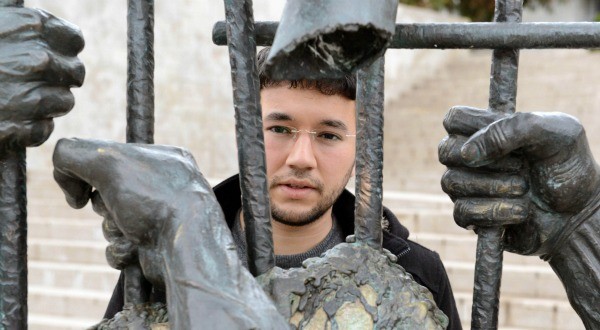
The Moroccan Zorro - Unmasked


The Moroccan Zorro has removed his mask. Mounir Agueznay, the young man who has been nicknamed "the sniper of Targuist" has spent time over the last six years recording the actions of corrupt police. Hidden on a hillside above a road junction, "the sniper" used his small camera to great effect and along the way become something of a national hero

"It is time to have a face, but I will
continue to expose corruption openly," 


Targuist is a town in Al Hoceïma Province, in the north of Morocco and at last count had a little over 12,000 inhabitants none of whom were prepared to unmask their local hero.

Because Morocco is waging a war against corruption, Mounir Agueznay has become something of a national folk hero. His first video showing motorists, bus drivers and motorcyclists handing money to police was picked up and shown around the world on both Arabic and Western media. Yet his identity was not discovered. At the time the local police tried hard to discover his identity but the community protected him.


"With friends from the neighborhood, we were invited by the local authorities and the police. They questioned us at length and I had to deny everything," said Mounir Agueznay.  The authorities in Targuist strongly suspected Agueznay of shooting the videos, but after failing to catch him he says they turned on his family instead. "To get their revenge, they arrested my brother Radouane last October and accused him of drug dealing. He was sentenced to one year in prison," Agueznay said.


Targuist - the locals kept "the sniper's" identity secret

He has spent the last six years "underground" and during that time produced dozens of other videos showing police and officials in the act of corruption. He first agreed to give interviews openly to the Moroccan press last week, because "the character of the sniper became very well known, but had no face.  It is time to have a face, but I will continue to expose corruption openly," says Agueznay.

In December, Transparency International dropped Morocco eight places, in its annual Corruption Perceptions Index for 2012, to 88 out of 176 countries rated, below Burkina Faso and Liberia. According to the Berlin-based NGO, 55 percent of Moroccan business leaders polled said corruption was "standard," while 53 percent said the government's policy was "ineffective."

The Islamist Party of Justice and Development (PJD), came to power after winning historic November 2011 elections on the back of pledges to tackle endemic corruption in Morocco. PJD officials say strides have been taken, with lists published last year of those benefiting from privilege, through the awarding of government contracts, and most recently with a new law that protects corruption whistleblowers.

"Disappointed" 

The "sniper of Targuist" says he is disappointed by the government of Islamist Prime Minister Abdelilah Benkirane, who heads the PJD.  He ran as a PJD candidate in his village during the November 2011 elections, which followed constitutional reforms introduced by the king in response to Arab Spring protests, but despite the Islamists' sweeping victory, he was not elected.

"I really didn't believe it. I thought that after the electoral slogans of the PJD against corruption and in favour of real transparency, things would change... Unfortunately the government has still not taken any concrete measures on that," he said.

Benkirane, in an interview with French news channel France 24 last October, stressed that the battle against corruption needed time.

"Corruption exists in Morocco. It exists in lots of countries... but to different degrees," the prime minister said.  He said it was "a major issue, because there is a feeling of injustice among our people, who see people getting rich quickly without apparently having worked for it."

SHARE THIS!
Print Friendly and PDF