Showing posts with label Olympics. Show all posts

Monday, February 19, 2018

The Couscous Rocket - Samir Azzimani's Olympic Result


Samir Azzimani, the "couscous rocket", realised his dream while fulfilling his sporting goals. At the Alpensia resort he crossed the finish line of the 15 km cross-country skiing in a modest 111th place, more than 13 minutes behind the winner

Samir managed to complete a race in this most demanding sporting discipline at the age of forty and was then involved in what has been a defining image of this year's Winter Olympics.

Mexico’s German Madrazo was heroically skiing in last place to the line, proudly brandishing the flag of his country and smiling jubilantly. After crossing the finish after 15 kilometres of gruelling freestyle cross-country racing on Friday, he was lifted high into the air and onto the shoulders of Tonga’s Pita Taufatofua, who finished 114th, and Samir Azzimani, for whom just getting to the end was an achievement in itself.

The 43-year-old Madrazo came 116th out of the 116 who made it home, fully 25 minutes 51.5 seconds behind the winner Dario Cologna of Switzerland.

Tonga's Pita Taufatofua (L) and Samir Azzimani (R) lift Mexico's Madrazo onto their shoulders at the finish line

Azzimani made history by becoming the Arab world’s first dual-sport Olympian after competing in the alpine skiing event at the 2010 Winter Olympics in Vancouver. In addition to his desire not to finish last, in reality, his main goal was to represent Morocco at the Winter Olympics for the second time in his career, after those of Vancouver, in 2010, in which he finished 44th in slalom and 74th in giant slalom.

At the end of last November, he was forced, with a pair of skis on wheels, to cross Morocco from north to south in five weeks. At the price of unimaginable suffering, those 1700 km forged attitude to long races.

SHARE THIS!

Tuesday, February 13, 2018

Morocco's Olympic Team at Opening Ceremony


The Olympic opening ceremony saw the lifting of the Moroccan flag with the sounds of the national anthem, in the presence of the Moroccan ambassador to South Korea, Chafik Rachadi, Nawal El Moutawakil, member of the International Olympic Committee and Majd Chaqroun, president of the Moroccan delegation.

The mayor of the village Olympic, Ryu Seung-min welcomed the Moroccan delegation. The the Moroccan team is composed of the athletes Adam Lamhamedi (alpine skiing) and Samir Azzimani (cross-country skiing), and coaches Noureddine Bouchaal and Denis Boissière and technician Sami Latif. They are accompanied by the vice-president of the Moroccan National Olympic Committee, Kamal Lahlou, the director of sports at the Ministry of Youth and Sports, Mustapha Azeroual, and the director of the Moroccan National Olympic Committee, Amine Kouam.

SHARE THIS!

Wednesday, February 07, 2018

Morocco's Olympic Competitors

The two Moroccan skiers Adam Lamhamedi and Samir Azzimani will defend Morocco's national colours at the Olympic Winter Games scheduled for February 9-25 in Pyeongchang
Lamhamedi is registered in alpine skiing, while Azzimani will compete in the cross-country skiing event. A first in the history of the Moroccan Olympics.

Samir Azzimani

The Moroccan flag will be flown for the eighth time under the Olympic banner, during the 23rd Olympic Winter Games. Adam Lamhamedi will compete in the slalom and giant slalom events in downhill skiing. Lamhamedi will be assisted by his younger brother, Sami and Noureddine Bouchaal, in his quest for an Olympic medal, similar to the one he won at the Youth Olympics in Innsbruck in 2012. Lamhamedi also took part in 2014 Sochi Olympic Games. An honour that was subsequently marked by the IOC, who decided to exhibit his suit and helmet, flocked with the Moroccan flag, at the Olympic Museum in Lausanne.

Samir Azzimani, he will take part in the 15 km free cross-country skiing event. Azzimani will be accompanied by Denis Boissière. After competing at the Winter Olympic Games in Vancouver in 2010 in the alpine ski event, Azzimani is back in another event - the 15 km cross-country skiing.

To prepare for it, the Moroccan followed a long program, which led him to the Moroccan desert, where he perfected his resistance to extreme conditions. Both athletes received financial support from the Moroccan National Olympic Committee and the Ministry of Youth and Sports.

In Pyeongchang, there are no less than 3,000 athletes from 93 countries, who are expected in the capital of Gangwon Province. 102 events in 15 different disciplines are on the program. Eventually, a hundred medals will be distributed to the winners. A first in the history of the Winter Olympics.

SHARE THIS!

Tuesday, August 14, 2012

Moroccan News Briefs #67 - (Updated)


Morocco Sends Water Bombers to Assist Spain


On Tuesday Morocco sent two water-bombing planes to help Spain battle a stubborn 10-day-old wildfire that has scorched nearly 10 per cent of the land on the Canary Island of La Gomera, including internationally renowned ancient woodlands.

The wildfires are the latest blazes in a summer forest fire season that has been one of the worst in recent memory for Spain and Portugal.

Drought-like conditions and high temperatures have made it extremely difficult for authorities to extinguish the fires. But Canary Island regional government spokeswoman Candelaria Ceballos said the extra planes and a drop in temperatures were raising hopes that firefighters might finally control the blazes that have burned 30 square kilometres inside and outside the Garajonay National Park, a UNESCO world heritage site.


August 14 - Oued Eddahab - Allegiance Day

Since August 14, 1979, this day has been a national holiday, symbolising the unity of the country and crown after the long struggle for the perfection of Morocco's territorial integrity. On that day, at the Riad palace in Rabat, a 360 person-­strong delegation was dispatched by the population of the region to renew before King Hassan II the oath of allegiance and their attachment to the Alaouite throne. The sovereign then delivered a historic speech in which he vowed to guarantee their defence and security and endeavour for their well­being.


Morocco's Budget Deficit On The Rise

If it was an Olympic final, the Moroccan budget would win gold in the high jump. Morocco's budget deficit jumped almost five-fold in the 12 months to end-July. Analysts put the result down to the impact of higher wages and pensions for the public sector.

The budget deficit stood at 23.6 billion dirhams during the January-July, 2012 period up from 4.2 billion dirhams a year earlier, finance ministry data showed.

The public sector wage bill rose 13.4 percent to 55.9 billion dirhams by end-July while spending on subsidies stood at 31.9 billion dirhams, which is 57.5 percent above its level in January-July, 2011, the data showed.


HM King Opens New Coastal Highway

King Mohammed VI on Saturday (August 11th) inaugurated the final segment of a new 700 million-euro Moroccan coastal motorway.

The 507-km road, which began construction in 2007, will reduce travel time between Saidia and Tangier by three hours. It also aims to help boost employment and tourism revenues and employment in the northern region.

With the new highway, some 120 km of beaches that had been hard to access could now "become attractive for both nationals and foreign tourists", Transport Minister Rebbah Aziz said.

According to Aziz, tenders will be launched for the creation of marinas and various sports tourism projects.


Arab Oil Does Not Translate To Olympic Gold

Abdalaati Iguider - one bronze for Morocco

Those who thought that the Arab Spring would give the Arab countries a boost in the Olympics were sadly disappointed. Although the oil-rich countries could afford superb training facilities, it did not result in the medals expected.

Morocco's performance has been described as "quite a flop".  Amidst doping scandals and controversy over the failure to have their uniforms bear the name of their country, Morocco emerged with only a single bronze. Not good enough for a team that consisted of  72 athletes in 12 sports. This was probably the greatest Olympic Arab disappointment, given a country relatively rich in past Olympic success.

According to Morocco World News, there has been a strong negative reaction to the lack of Morocco's name on the athletes' jerseys.


“This is a huge mistake. It is disappointing to see that Morocco is the only exception of the rule,” a Moroccan sports fan told MWN. “This shows the amateurish and incompetent manner in which officials deal with international competitions; they have to be held responsible,” he added.

“It is simply a lack of responsibility and professionalism from the Track and Field Federation,” said Reda Benazzouz, a student at the University of Ottawa and Canadian junior champion in the 400m relay and bronze medalist in the 800m. “I was watching the 3000m steeple chase and couldn’t retrieve the Moroccan runner among competitors; I had to wait for the final results to see what rank he had,” he added.

Moroccans labeled the participation of Morocco in the ongoing games as the session of “Golden scandals.”

Mariem Alaoui Selsouli, one of the favorites for the 1500m gold medal, was banned from participating, following her positive dope test.

Marathon runner Abderrahim Goumri was also suspended on the same grounds.

Amine Laalou, the Olympic hopeful for the 1500m also missed the games after the IAAF alerted the International Olympic Committee that he tested positive to a banned substance.

It remains to be seen whether the officials at the helm of the Moroccan Olympic Committee as well as the Track and Field Federation will take responsibility for this disappointing participation as well as for damaging Morocco’s reputation.

The Arab Medal Haul

Notable medal gaps came from the Levant who were under-represented in the award ceremony, and also the well- sponsored UAE who failed to live up to expectations of making a significant mark in the Games.

Still, other Gulf states had something to celebrate: Bahrain, who had 12 athletes entered in 3 sporting categories, landed a bronze medal, which was the first in their history.

Kuwait the tiny oil rich kingdom managed just a bronze medal out of 4 sport events and 11 contenders.

Egypt had many more athletes competing, but still only cobbled together a couple of silvers. Not quite enough for the populous nation who put forward 119 athlete in 19 sports.

KSA: The Land of the two Holy Mosques landed itself a single bronze medal, which was arguably a decent enough performance for the less expectant Desert Kingdom. 19 athletes in 5 sports also had between them their first female athletes to race for Saudi.

Tunisia: the Jasmine pioneer that was first to the post in the Arab Spring race did itself proud, nabbing a gold and bronze. Though with 71 athletes playing 17 sports, some said the North African nation could have done better.

Algeria: 39 athletes in 12 sports came out with a gold which they could not be faulted for. Again, their sporting history indicated that they should have scored more medals.

Qatar: A couple of bronzes between 12 sports players in 4 events for the Gulf emirate saw the Qataris quite pleased with themselves.This national pride did not stop one Al Jazeera news-anchor came down harshly on the nation's revelries, saying that modest bronze medals did not merit a party.


Study Claims Morocco is Becoming Less Religious

According to an article by Hassan Al-Ashraf in Al Arabiya, Moroccans are becoming less religious. The article is based on a study conducted by the Pew Forum on Religion and Public Life, a U.S.-based think-tank. The study related the change to apprehensions over the current rise of political Islam.


According to the report the level of religiosity in the Middle East and North Africa has receded to 60 percent, particularly in Morocco, Tunisia, and Egypt.

According to Moroccan expert on Islamic affairs Montaser Hamada, Moroccans are in the middle when it comes to the degree of religiosity.

“In Morocco, 60 percent of the people are religious while in Sub-Saharan Africa and South East Asia the percentage rises to 80 percent and in former Communist countries drops to 50 percent,” he told Al Arabiya.

Hamada, however, admitted to a remarkable change in the degree of Moroccans’ piety owing to a variety of reasons.

“The emergence of groups that call for a secular state as well as others that promote deviating away from religious practices has increased; much like a group in Morocco that called for breaking fasts in public during the day in Ramadan Add to that those gay rights groups that have been active lately,” said Hamada.

Another factor, Hamada added, is the rise of political Islam in the region as well as in, Morocco and which has made people more apprehensive of anything religious.

“The rise of Islamists to power in Morocco made people worry about restrictions that would be imposed on their freedoms especially in the light of the already negative impression people have about political Islam and Islamist rule,” Hamada said.

Mohamed Musbah, researcher at the Moroccan Center for Contemporary Studies and Research, argued that despite the change, religion still occupies an important place for Moroccans.

“The study does not show the Moroccans no longer believe in basic religious principles like the existence of God, the afterlife, etc., but they rather differ on the way they interpret religion and apply it to their daily lives,” he told Al Arabiya.

The Pew Forum study, he added, was in line with several other studies conducted about the same issue since 2001.

“All those studies proved that the Islamic faith comprises an integral part of the Moroccan identity and most Moroccans still practice Islamic rituals,” Musbah said.

Musbah pointed out that the position of Sufis and Shiites in Morocco is also quite confusing when it comes to conducting such studies.

“Around 1 percent of Moroccans identify themselves as Sufis while for many Shiites are not considered Muslims.”

The marginalization of Shiites, he noted, comes down to several government decisions, such as closing the Iranian embassy in 2009 and an Iraqi school suspected of promoting the Shiite faith.

“There is also a problem in schools, since different sects are not taught. This makes Moroccans unexposed to religious differences,” said Musbah.

Comment: religion or superstition? 

Whatever the difference, while 40% of Moroccans may not consider themselves religious, we are not surprised by the figure that 86% of Moroccans believe in the existence of djinns (spirits). 78% believe in witchcraft and 80% believe in the "evil-eye".

SHARE THIS!
Saturday, August 04, 2012

Morocco's Olympics - The First Week


Despite the fact that Morocco has won more Olympic medals (21) in previous games than any other Arab nation, the 2012 games have had a very slow start. In addition two doping incidents have tarnished the country's reputation and, to make matters worse, a French judge has asked British police to arrest the head of Morocco’s Olympic committee in relation to the 1965 disappearance of Moroccan opposition leader Mehdi Ben Barka.

In this year's Olympics Morocco has 67 athletes participating in 12 sports.

Abdalaati Iguider, who won the 2011 World Indoor Championships over 1,500m is probably Morocco's best chance for a medal. In the men's athletics 1500m first round results, Iguider qualified in second place with a time of 3:41.08.

The 3000m steeplechase first round saw Moroccans Hamid Ezzine and Brahim Taleb qualify.

Hicham Sigueni failed to qualify.

The next round qualifiers in the 3000m steeplechase

1. Mahiedine Mekhissi-Benabbad (France) 8:16.23
2. Evan Jager (U.S.) 8:16.61
3. Abel Kiprop Mutai (Kenya) 8:17.70
4. Tarik Langat Akdag (Turkey) 8:17.85
5. Nahom Mesfin (Ethiopia) 8:18.16
6. Benjamin Kiplagat (Uganda) 8:18.44
7. Roba Gari (Ethiopia) 8:20.68
8. Ezekiel Kemboi (Kenya) 8:20.97
9. Hamid Ezzine (Morocco) 8:21.25
10. Donald Cabral (U.S.) 8:21.46
11. Ion Luchianov (Moldova) 8:22.09
18. Brimin Kiprop Kipruto (Kenya) 8:28.62
19. Yuri Floriani (Italy) 8:29.01
20. Brahim Taleb (Morocco) 8:29.02
21. Jukka Keskisalo (Finland) 8:29.13


Abdalaati Iguider

In soccer both Spain and Morocco are heading home after playing to a scoreless draw in the final game of Group D.

The score was not indicative of the frenetic pace that both teams put on display, but what people will remember most is that Spain left London with one point and no goals to its credit.

In order to move on, Morocco needed a win over the Spanish and for Japan to beat Honduras, but the other Group D match of the day also ended in a 0-0 tie.

Sara El Bekri qualified for the women's swimming 200m breaststroke semi-final where she came in a very credible 5th place.

In the light flyweight boxing, Thomas Essomba of Cameroon beat Abdelali Darra of Morocco 13-10 on Wednesday.

Good news in the boxing Morocco's Mohammed Arjaoui has advanced to the next round of the Olympic super heavyweight competition with victory over Cameroon's Blaise Yemou Mendouo.

Arjaoui took the upper hand in the first round, opening up a 6-2 lead over his opponent before extending it by four points after the second.

The Moroccan was not troubled as he sailed through 15-6.


Two Moroccans suspected of doping offences

Unfortunately, as Morocco World News, reported, Amine Laalou will miss the London Games after the IAAF alerted the International Olympic Committee (IOC) to a report he may have returned a positive dope test.

An informed source told AFP that Laalou had taken a “banned substance” at a meeting in Monaco on July 20, where he came in fourth in a time of 3:30.54.

“The Moroccan athlete has not been authorised to enter Great Britain – English police expelled him at the airport in London,” Moroccan sports radio MARS reported.

“Amine Laalou is suspected of doping – he will not line up for the 1500m,” a member of the Moroccan delegation at the Games said.

Moroccan Minister of Sport Mohamed Ouzine told AFP: “If this doping case is confirmed then it is a catastrophe.

“Should it prove to be true then it is unacceptable.”

Noting that Morocco has been waging a campaign to ensure sport is clean, Ouzine promised “a strong reaction.”

Laalou is the second Moroccan to be denied a place at the Games after 1500m racer Mariem Alaoui Selsouli tested positive for a diuretic in Paris last month.

Morocco's Medal History

In the 2008 Beijing Olympics Morocco came away with two medals; a silver to Jaouad Gharib in the men's marathon and and a bronze to Hasna Benhassi in the women's 800m.

Morocco had a better games in Athens in 2004 when they sent 55 competitors, 47 men and 8 women. They took part in 28 events in 9 sports. The star was runner Hicham El Guerrouj who won two gold medals. One was for the men's 1500 metres and the second for men's 5000 metres. Hasna Benhassi won silver in the women's 800 metres.

Hicham El Guerrouj in 2004 
"Its amazing to think that in Sydney I was crying tears of sadness and here I am crying tears of joy. I'm like a five year-old with a toy." ~ Hicham El Guerrouj, on winning the 1,500 meters gold medal in 2004

Sydney 2000 saw Morocco gather 5 medals; 4 bronze and a silver.

Atlanta in 1996 produced 2 bronze, both for Moroccan runners.

At the 1992 Olympics in Barcelona Morocco won 3 medals - a gold and silver in athletics and a bronze in the bantamweight boxing.

In the 1988 Summer Olympics in Seoul, Morocco came away with 3 medals. A gold in the men's 10,000 metres and 2 bronze - one in the men's 800 metres and one in the featherweight boxing.

Morocco competed at the 1984 Summer Olympics in Los Angeles. The nation returned to the Summer Games after participating in the American-led boycott of the 1980 Summer Olympics. The games produced 2 gold medals - the men's 5000 metres and the famous victory of Nawal El Moutawakel in the women's 400 metre hurdles. Nawal El Moutawakel who, in her own words, became "the first Muslim, Arab, African woman to win a gold medal at the Olympic Games".

Nawal El Moutawakel

Morocco competed in the Olympic Games for the first time at the 1960 Summer Olympics in Rome, with 47 competitors, all men, who took part in 45 events in 10 sports. They came away with their first ever Olympic medal, a silver to Rhadi Ben Abdesselam from Fez, in the the men's marathon.


Morocco's Olympic chief leaves London

French judge, Patrick Ramael, has asked British police to arrest Housni Benslimane, the head of Morocco’s Olympic committee, in relation to the 1965 disappearance of Moroccan opposition leader Mehdi Ben Barka. Judge Patrick Ramael has tried to have Housni Benslimane arrested since 2007.

The judge wants to question him, along with three other ex-soldiers, about the kidnapping of Mr Ben Barka in Paris. However, the Moroccan embassy in London says Mr Benslimane was in the city last week for the Olympics, but has now left.

Although Mr Ramael issued a warrant for his arrest five years ago, it is no longer in force, as neither French prosecutors nor Interpol have endorsed it, AFP news agency says.

Mr Benslimane is not known to have commented on the case.

Mr Ben Barka was an outspoken critic of Morocco’s late King Hassan II. The exact circumstances of his disappearance are not known and his body has never been found.

In 2001 former members of the Moroccan secret service alleged an ex-interior minister had been involved in a plan to assassinate him. Mr Benslimane, who is now 77, was an army captain in 1965.
He is also head of the Moroccan Football Federation.

SHARE THIS!

Tuesday, July 24, 2012

Official ~ Moroccan Olympic Team Exempt from fasting


As The View from Fez reported earlier, the Moroccan Olympic team have been officially exempted from fasting during the games. Hassan Benmehdi for Magharebia in Casablanca takes a closer look at the issue.


With Ramadan falling at the same time as the Olympic Games, many have been wondering whether Maghreb athletes should observe the fast.

In Morocco, the High Council of Ulemas issued a statement allowing participants in the London Olympics not to fast during the two weeks of July 27th-August 12th.

"After the matter was raised with the iftaa (legal opinions) authority, the council responded by permitting these athletes not to fast during the competitions, provided that they make up for the days when they do not fast after Ramadan is over and before the next holy month," the statement read.

The decision is the first of its kind in Morocco since the supreme religious authority has never intervened in sports affairs before.

Moroccan ulemas had to take action in advance by giving a unanimous religious opinion on the matter, sports analyst Mokhtar L'Madani told Magharebia.

"If the council does nothing, you can expect that interpretations will often be radical, and that could have a negative impact on the performance and morale of our athletes, who are supposed to be at the peak of their form so that they can achieve convincing results," he said.

It is important to ensure that Moroccan athletes are not subject to radical fatwas which are often unscientific, L'Madani added.

"Fasting for a limited number of days. So whoever among you is ill or on a journey [during them] - then an equal number of days [are to be made up].  - Qur'anic verse Suraat al-Baqarah (2:184)"

In 1999, Tangier preacher Abdelbarii Zemzemi issued a religious opinion that authorised Raja Casablanca players not to fast during the Champions Cup final on the grounds that they were travelling.

The Mufti of Egypt, Ali Jomaa, shared the view. He issued a similar fatwa for Egyptian Olympic athletes, though he added that the exemption could not have been granted had the event been held in Egypt.

He argued that it is the travel aspect that justifies the interruption of fasting, not the sporting aspect or the physical effort.

Nutritionists say that an undernourished body making strenuous physical effort will become distressed after about 40 minutes.

Sara El Bekri, the Moroccan swimmer who won African championships in the 50m and 100m breaststroke and has qualified for the 2012 Olympics, is among those who decided not to fast. In a press statement, she underlined that athletes may be allowed to eat during competitions and make up for the missed fast days later in the year.

Others think it is possible to compete while fasting and insist on strict observance of Ramadan. Some 3,000 participants, who make up a quarter of the competitors, will be affected during the London Olympics.

The Islamic Human Rights Commission contested the dates chosen for the 2012 Olympics back in 2006. Several countries, including Turkey, Egypt and Morocco, requested that the games be rescheduled so that Muslim athletes would not be disadvantaged.

In its reply, the International Olympic Committee (IOC) stressed the secular nature of the Olympics, which bring together people from virtually all religions, civilisations and faiths.

And in breaking news...

According to the French Daily L'Equipe, the 2012 world leader in the women's 1,500 Mariem Alaoui Selsouli of Morocco has tested positive for the diuretic furosemide. Selsouli, who was the 1,500 favorite for the Olympics and apparently was also going to run the 5,000, will now not compete in London and faces a possible lifetime ban from the sport, having just last year returned from a two-year doping ban for an EPO positive.

Mariem Alaoui Selsouli celebrates winning the women's 1,500 at the Stade de France Stadium July 6, 2012

The Nike-sponsored Selsouli was the world leader in both the 3,000 (8:34.47 at Pre) and 1,500 (3:56.15 at Paris). Her positive test came from a July 6th test in Paris.

SHARE THIS!

More Comment on Olympic Fasting in Ramadan

Should top-level athletes fast or not during Ramadan? The Islamic month of fasting falls at the same time as the Olympic games, and a quarter of the participants in the London Games are struggling with this question. If they fast, they might diminish their chances of winning an Olympic medal. Radio Netherlands had this to say...

Moroccan swimmer Sara El Bekri and rower Mohamed Sbihi

Fasting athletes have caused controversy during a number of European football championships. A few years ago, Moroccan football player Oulaid Mokhtari clashed with his German club when he wanted to observe Islamic religious customs and not eat or drink from sunrise to sunset. His club alleged that this could have negative consequences on his sporting achievements. Besides, they said, his contract barred him from following a specific diet.

To prevent similar problems in the future, the club contacted the German Central Muslim Council which in turn got in touch with the Al Azhar Mosque. It issued a fatwa that permitted professional football players to eat and drink during Ramadan. It was a practical solution, but it came too late for Mokhtari. The following season he transferred to another club.

With the Olympic Games about to kick off in the middle of Ramadan, the issue is being widely discussed again. It’s estimated that a quarter of the participants in the London Games are of Muslim origin. The question arises: is fasting an individual choice or do national interests prevail over athletes’ personal interests? The issue is causing considerable discussion in the Muslim world.

Oarsman Mohamed Sbihi, who has an English mother and a Moroccan father, is Muslim and will be representing the United Kingdom at the Games. A few weeks ago, he revealed that he would not fast during the Olympics. “I’m convinced that I can perform well if I fast,” Sbihi said, “but I don’t want my teammates to have any doubts about that. It could have a negative impact on our performance.”After consulting with Islamic clerics, Sbihi decided to observe the obligations of Muslims who are unable to fast during Ramadan. He will provide food for 60 poor Moroccans during the holy month.

The news about Sbihi’s decision not to fast sparked off a heated debate among readers on the Moroccan news site, Hespress. “Is he taking part in a sports competition,” asked some readers, “or is he going to free Palestine? Only people engaged in a holy war are exempted from fasting.”Some people even called him a kafir, a nonbeliever or apostate. One reader thought the condemnation and insults went too far. “The only thing I regret about Sbihi is that he made his decision public,” wrote the reader. “It’s a personal issue between God and himself which has nothing to do with anyone else.”

Since the Olympics are so prestigious, everyone is getting involved in the religious and sporting dilemma facing the Muslim participants: Sports Ministry officials, coaches, Islamic scholars and popular imams. A few months ago, Moroccan sheikh Zemzmi issued a fatwa exempting the Olympic football team from fasting during the Olympic Games. Zemzmi is well known for his controversial fatwas, and they’re not taken seriously by everyone. That’s why the Moroccan Sports Ministry has urged the Ministry of Religious Affairs to issue an official fatwa. A week before the Games, and two days before Ramadan began, the Council issued its ruling: the Moroccan participants don’t have to fast during the Olympic Games. The Islamic scholars issued the fatwa based on a verse in the Koran that exempts travellers from fasting.

Even before the official fatwa was announced, Moroccan swimmer Sara El Bekri disclosed that she would not fast during the Games. Unlike oarsman Sbihi, she thinks that fasting would have a negative impact on her performance. “Your physical capacities are irrefutably affected by fasting. Muslim athletes are being torn between respecting the basic principles of Islam and their desire to achieve top-level performances during the Games.

SHARE THIS!

Friday, November 11, 2011

Casablanca's bid for Olympic Glory

Casablanca often gets overlooked by travel writers and journalists. Ibn Warraq has been trawling through the Internet and has discovered an article that takes an interesting angle on Casa.

Journalism about Morocco is often a mixed bag. The travel writing tends to lapse into Orientalism and the political analysis is usually shallow or poorly informed.

Most ill-served by journalists is the wonderful city of Ad Dar al-Bayḍa or Casablanca. Often painted as the tired old business hub, or the shabby elderly aunt to the rakish Marrakech or the ugly sister to the alluring and mysterious Fez - Casa can feel a little left out.

So, it was with some trepidation that I followed a link to a Casablanca story and found myself on the pages of Bloomberg Businessweek. 

What I discovered was an article by Peter Savodnik, in which he takes a look at the Moroccan Minister of Youth and Sports, Moncef Belkhayat's, seemingly quixotic bid for Casablanca to become the first African city to host the Olympic Games, in summer 2028. It is an intriguing prospect; but is it for real?

Yes, it is for real. But of course, the story is not new. Back in March, The View from Fez reported similar  remarks by the Minister, who at that time he was unwilling to say which year Morocco would bid for.

 "Morocco has committed itself to becoming a great sport nation that stages great sporting events," Belkhayat said, "Casablanca has a very good chance of positioning itself as a great sports city and organising the Olympic Games and one day Casablanca will be organising the Olympic Games."

Back in March, Belkhayat refused to commit Morocco to a bid for the 2020 Games but left the possibility very much open."We will bid for the Olympics soon - whether that it is 2020, 2024 or 2028," he said.

Grand Stade de Casablanca
Work has already started on a new $300 million (£185 million) state-of-the-art stadium in Casablanca (pictured above) to host the final of the 2015 African Nations Cup, which Morocco was awarded earlier this year.

The Grand Stade de Casablanca is being built in an old quarry and will feature passive solar design with concrete fin-like blades that promote natural ventilation.  Construction on the 80,000 seat stadium is expected to begin shortly and then be completed some time in 2013. The new stadium is due to replace the Stade Mohamed V, which hosted the 1983 Mediterranean Games.

Belkhayat, a former senior executive with Olympic sponsors Proctor & Gamble before entering politics, wants Morocco to try to host more major events.. Belkhayat, who replaced International Olympic Committee member Nawal El Moutawakel as Morocco's Sports Minister in July 2009, has a big vision for Morocco. "The sky is the limit," he said.

One of the issues that has always bugged Casa is the confusion over the film Casablanca and the way the city can never live up to the Hollywood image. However, as we have reported in the past, Rick's Cafe, run by the indomitable Kathy Kriger, has enchantingly re-created the image cinema goers are familiar with.

In his Bloomberg article, Savodnik makes a good point about the yawning gap between Casablanca the movie and Casablanca the city. Yet, as he writes...Casablanca’s leaders are hoping the city can claim the Hollywood glory it never had. 

They will be aided in that effort by the millions of global cinephiles who know the city only as Michael Curtiz shot it. “We call it the Casablanca Effect,” says Jean Abi Nader, the chief operating officer of the Moroccan government’s lobby-shop in Washington, the Moroccan-American Center. “I’ve worked for a lot of Arab countries and generally, when you say ‘Arab,’ the first thing people think of is camels or sand. So if you say ‘Casablanca,’ and the first thing people think of is the movie, that’s great.” Abi Nader is untroubled by the disconnect between Casablanca and Casablanca. The association “provides a point of departure,” he says. “It’s an opportunity to rebrand.” Local businesses have seized on the association, selling Casablanca-themed tissue boxes or refrigerator magnets and emulating the film’s aesthetic.

The year 2028 is a long way off and, while in the intervening years one could sell a lot of fridge magnets, the future is uncertain. Given the changes under-way in the so-called "Arab Spring" and the many more Arab Springs and Winters between now and 2028; a bid so far out is a brave call indeed.

But Savodnik is on the money when he writes ... This is indeed a propitious moment for Morocco, which is poised to act as a bridge between the West and a tumultuous, changing Arab world, much as Bogie’s gin joint served as a nexus for Vichy officials, Resistance fighters, fez-wearing power brokers, and Nazis. In ancient souks, vestiges of the country’s French colonial past merge with Arab, Berber, and African influences. Waiters at Parisian-style cafés read Le Monde, all while serving traditional Moroccan mint tea with lamb couscous.

While the Bloomberg story points out that much American business is now investing in Morocco, things are never that simple.

Some worry Casablanca will have trouble keeping its eye on the Olympic prize. If Casablanca got anything right about Casablanca, it may be the systemic corruption and Byzantine bureaucracy that many in the country lament. Kriger, who accuses local officials of “cartelism” and a “short-term mentality,” is pessimistic about Casablanca’s efforts at renovation and reform. “This is a city that could never get it done,” she says. Even Ahmed Chami, Morocco’s UCLA-educated minister of industry, commerce, and new technologies acknowledges that Morocco’s forward-looking leaders must contend with old timers who do not embrace 21st-century capitalism. “There are two different speeds in Morocco—slow and corporate,” he says.

So, while we await developments, it is important to ponder the thought that, as the winning city is announced seven years before the Games, Casablanca has a decade to get ready. Much can happen in that time; some of the athletes who could compete in the hypothetical Casablanca games haven’t even been born. So, head down to Rick's Cafe, pull up a chair at the bar and relax as Issam plays As Time Goes By.


You will find Peter Savodnik's full story HERE

Find Rick's Cafe  at 248 Boulevard Sour Jdid in Casablanca's Medina. Ph 0522 27 42 07/08
Rick's Cafe Website

SHARE THIS!

Monday, March 21, 2011

Casablanca could bid for 2020 Olympics !


Casablanca could be set to launch a bid for the 2020 Olympics and Paralympics, Morocco's Sports Minister Moncef Belkhayat has revealed. This report, by Duncan Mackay in Marrakech, was first posted on Inside the Games and is reposted with permission.

The country's largest city, with a population of three million, has long been touted as a possible candidate to be the first in Africa to host the Games.

Belkhayat has now confirmed that serious planning has already taken place about a possible bid.

"Morocco has committed itself to becoming a great sport nation that stages great sporting events," Belkhayat said during the Africa International Sports Convention (CISA) here.

"Casablanca has a very good chance of positioning itself as a great sports city and organising the Olympic Games.

"One day Casablanca will be organising the Olympic Games."

Belkhayat refused to commit Morocco to a bid for the 2020 Games but left the possibility very much open.

"We will bid for the Olympics soon - whether that it is 2020, 2024 or 2028," he said.

National Olympic Committees (NOCs) have until May 16 to let the International Olympic Committee (IOC) if they are interested in bidding with a final deadline of September 1 to name an applicant city.


Work has already started on a new $300 million (£185 million) state-of-the-art stadium in Casablanca (pictured above) to host the final of the 2015 African Nations Cup, which Morocco was awarded earlier this year.

The Grand Stade de Casablanca is being built in an old quarry and will feature passive solar design with concrete fin-like blades that promote natural ventilation.

Construction on the 80,000 seat stadium is expected to begin shortly and then be completed some time in 2013.

The new stadium is due to replace the Stade Mohamed V, which hosted the 1983 Mediterranean Games.

Belkhayat, a former senior executive with Olympic sponsors Proctor & Gamble before entering politics, wants Morocco to try to host more major events.

They bid for the 2010 FIFA World Cup, losing by only four votes to South Africa.

If Morocco does decide to put forward Casablanca, which is located on the Atlantic Ocean, for the 2020 Olympics then South Africa could again pose an obstacle.

Durban are widely expected to put in a bid but Sam Ramsamy, the South African who is a member of the IOC's ruling Executive Board, said here that if Africa decides to bid for 2020 then the whole continent should get behind one candidate.

Belkhayat, who replaced International Olympic Committee member Nawal El Moutawakel as Morocco's Sports Minister in July 2009, has a big vision for Morocco.

"The sky is the limit," he said.

Tuesday, February 09, 2010

Lone Moroccan at Winter Olympics.


Samir Azzimani has plenty of reasons to be proud. Not only has he qualified for the Winter Olympics but he is the only Moroccan to do so. His chances of getting a medal are very small, but a natural optomist, Samir said in a recent interview that "There will be a guy from Ghana and also one from Senegal and if I beat them, I'll be the champion of Africa."

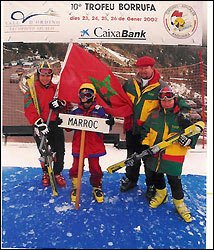
Samir Azzimani was born in Levallois (France) in October 22nd, 1977. Placed in a foster home for family reasons, Samir had the opportunity to go to a holiday camp at La Chapelle d’Abondance in the French Alpes. There, he discovered his passion for skiing. He was only 6 years old, but a dream was already growing in his mind: taking part in the Olympics.


Now his dream is a reality and it is a dream he has decided to share. He is travelling to Canada with eight secondary school children from Woippy, a depressed suburb of eastern French town Metz that made headlines for riots last month when youths torched cars and clashed with police after a young man died while trying to flee police on a scooter.

The View from Fez wishes Samir the best of luck in the Men's Downhill and Giant Slalom.


Wednesday, August 20, 2008

Moroccan Olympics - update #6


The Tale of an ex-Moroccan.

Rashid Ramzi was a young Moroccan athlete struggling for recognition in his home country, so he moved to Bahrain, joined their armed forces, and later took out citizenship.

Six years later he's won them their first Olympic medal on the track - and it happens to be one of the most coveted of all.

It wasn't one of the great 1500-metre finals. Not that Ramzi could care less. In fact the field simply played into his hands, particularly the Kenyans, doing all the work early on, and allowing Ramzi deliver his turbo-charged finish to claim the title in 3:32.94.

Morocco will still play some part in the celebration. He still trains there, and if anyone had to claim the title from their previous champion, Hicham El Guerrouj, then Ramzi was surely the man. Ramzi was quick to say that there was no ill-feeling over his departure from Morocco. "This is a huge achievement for a small country, but I think Moroccans would also be happy," Ramzi said. "A group of Moroccan journalists have also congratulated me."

The 1500 metres was a pretty rough affair with a lot of pushing and shoving and so the clean run of Moroccan 21 year old Abdalaati Iguider was a fabulous effort he came in 6th in 3:34.66.

Asbel Kipruto Kiprop from Kenya won the silver medal and a result to make our kiwi readers smile - Nicholas Willis from New Zealand picked up the bronze medal.

Olympic Updates.

Update One
Update Two
Update Three
Update Four
Update Five
Update Six
Moroccan woman joins IOC


Tags:

Thursday, August 07, 2008

Follow Morocco's Olympic campaign.


Less than 24 hours before the opening of the 29th Olympic games of Beijing (August 8-24), Moroccan sportsmen and women are gearing up to forge a path to the Olympic podium.

Morocco, which has partaken in the games since 1960, aspires to add up more medals to its collection of 16 in athletics and 3 in boxing.

This year Morocco will compete in seven sports: athletics, boxing, Tae kwon do, judo, fencing, archery and swimming. This year, 47 sportsmen, including 4 Judokas, 3 Tae-Kwon-Do athletes, 2 fencers, a swimmer and an archer will be flying the flag for the Kingdom

Athletics and boxing have always been Morocco's big hopes in Olympic Games. Morocco reaped its first Olympic medal in Rome thanks to Marathon runner Abdeslam Radi who gave the country a silver medal in 1960. Twenty-four years later in Los Angeles, Said Aouita and Nawal El Moutawakil were crowned Olympic champions in the 5,000m men race and 400m women hurdles race respectively.

In 2004, Hicham El Guerrouj achieved what many consider a miracle when he harvested the gold medals of 1,500m and 5,000m events. His countrywoman Hasna Benhassi sealed the Moroccan celebration with a silver medal in the 800m event.

The View from Fez wishes the Moroccan sportsmen and women all the best in the Olympics.

Olympic Updates.

Update One
Update Two
Update Three
Update Four
Update Five
Update Six
Moroccan woman joins IOC


Tags:

Saturday, November 19, 2005

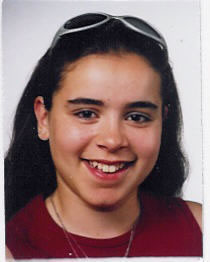
Sarah skis for Morocco!


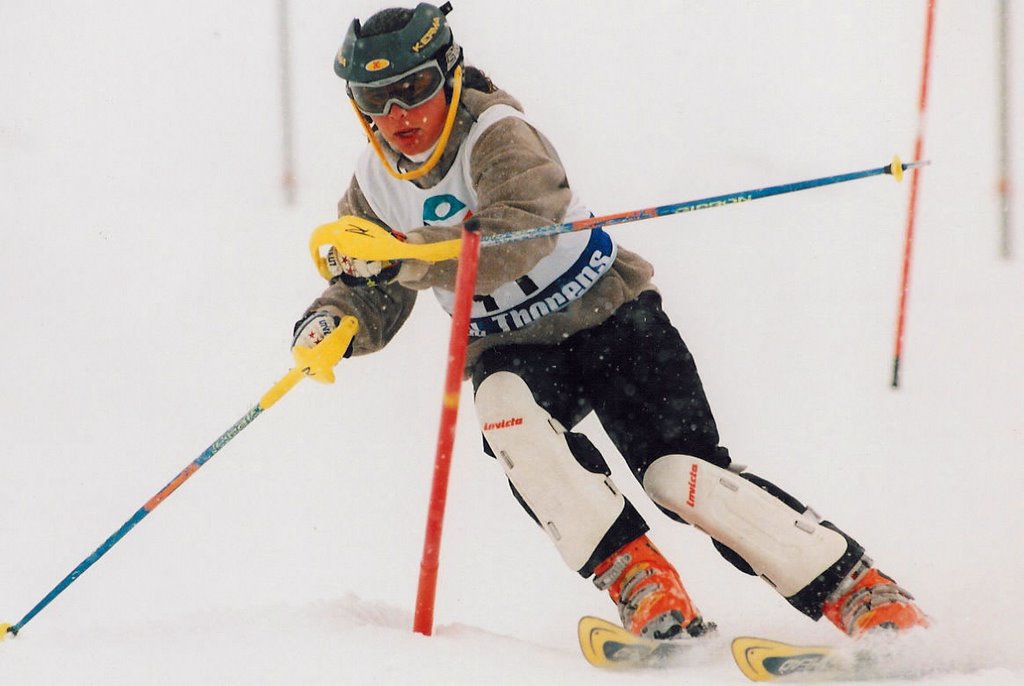
When it comes to Alpine skiing, Morocco's Sarah Ben Mansour

trains on little more than a mound. In February, though, she will be amid the Italian peaks, hoping to become the first African woman to ski at the Olympics.

In the flattest of fields in Flanders stands a tiny artificial slope where the Belgian-born Ben Mansour swishes down for 10 seconds before she has to brake sharply and be pulled up again - 100 metres to the top of the hill, ready for another frustratingly short run.

At 18, she can only dream about training on real snow, real slopes. Yet she also knows many talented European and American skiers will never make it to the Olympics because their qualifying standards and competition are much tougher.

"I do realize I am lucky," she said.

The daughter of a Moroccan mother and Belgian father, she was born just outside the international port of Antwerp but always held the Moroccan nationality and family name of her mother, belying the clear Antwerp twang in her soft-spoken Dutch.

Despite the possibilities it has given her at the Winter Games, her nationality has taken away opportunities. While promising Belgian athletes can be given a sports-oriented education at special schools, she cannot. Instead, she has left school and is studying on her own to get a high school degree, adding that lonely pursuit to her daily training regimen.

>In that sense, she shares some of the identity problems of millions of youngsters of African heritage in Europe and she, too, complains of the uneasy feeling of never fully fitting in.

"For the Belgians, I am Moroccan. For the Moroccans, I am Belgian," she said.

At home, she speaks Arabic with her mother and enjoys Muslim traditions and celebrations. When she is in full training though, she applies the Ramadan rules liberally, arguing the religion does not force you to go against your body. On the streets, she looks like any other western European teenager.

"It is always different. People in skiing consider me Belgian because I live there, even though I tell them I ski for Morocco," she said.

Skiing for Morocco, alas, is no badge of honour.

At the Albertville Winter Games in 1992, a Moroccan skier was so inept during the super G that he fell several times, but got up each time, determined to complete his Olympic run. It was a national embarrassment.

"It caused a scandal. Even now he is still shown on 'funniest video' shows in Europe," said Derek Giroulle, her father and coach. His performance helped persuade the IOC to toughen the entry requirements for athletes, seeking to keep "Eddie the Eagle" lookalikes at home.

Ben Mansour had to pass tougher requirements before qualifying for Turin last year, but feels a skiing stigma still sticks to her country.

"I know how it goes - they see 'Morocco' and they already start giggling. People look at you and they don't say anything, but you can see what they are thinking," she said.

One thing is clear: She will not be going for medals in the slalom and giant slalom - an honourable finish will do.

"I have to project a better image for Morocco. If I crash, I will not climb back up. It can happen to everyone, even Bode Miller. I won't be able to keep up with the best, but I will not look like a fool," she said.

Watching her swoosh down the tiny training slope, sometimes running gates to prepare for her slalom competitions, she looks anything but foolish. She started skiing as a kid when her parents went on a winter holiday, and was smitten.

Belgium is a country where it almost never snows and where the highest point stands at less than 690 metres (2,300 feet). The closest place for real skiing is in France's Vosges region, almost 480 kilometres (300 miles) away. Nevertheless, she made her way through the youth ranks and last season finished 35th in the slalom at the world junior championships.

Her African skiing experience is limited to two outings in the Moroccan Atlas mountains, where she gave demonstrations to local skiers.

Money is in short supply, and she sometimes has had to skip races to save money. Even now, Giroulle is negotiating with the Moroccan federation for subsidies to send Ben Mansour to the French Alps just ahead of the Olympics. The Moroccan team also will include a Paris-based male skier.

Her training now is done on the 100-metre hill at the Casablanca ski centre - the name is purely coincidental, and has nothing to do with the Moroccan seaport - where the Olympic rings are painted against a white background. The black ring, symbolizing Africa, holds all of Ben Mansour's attention.

There's even the chance Ben Mansour will not be the first African woman to ski in an Olympics. Algeria, too, might send a woman skier to Turin. The International Skiing Federation said it knows of no African woman in Olympic Alpine skiing up to now.

"After all these years of having no one, somebody will be there," Ben Mansour said. "It fills me with pride."

See our update: THE VIEW FROM FEZ: Sarah Ben Mansour Injured


Tags: