Showing posts with label Pakistan. Show all posts

Friday, June 17, 2011

Fez Sacred Music Festival ~ Another Perspective


Peter Culshaw is a Fez Festival veteran and much respected music journalist. This year Peter Culshaw recorded his thoughts about the Fez festival of World Sacred Music on The Arts Desk - a highly regarded online arts site. With his permission, we reprint an edited version of his article. (A link to the complete article is at the bottom of the story.)

The Festival and the Moroccan Spring
Written by Peter Culshaw


Strange portents – the weather is always dry and baking hot this time of year in Fes. This time it was like winter, with lashing rain and thunder for the first few days of the Fes Festival. But then things are strange in general here; events are moving fast throughout the Maghreb. The first day I was there saw a demonstration of thousands in Rabat, and a smaller one in Fes. By the last day a new constitution had been posted online, with the King renouncing some of his powers. The energy in the city seems slightly giddy with expectation and a certain optimism.

Fes was always a fascinating city, but just as Morocco itself is at a central point between the Maghreb, sub-Saharan Africa and Europe, Fes itself is the centre and heart of Morocco, one of the three great spiritual cities of Islam, with a university started three centuries before Oxford, by a woman. So is it really changing?

The Festival of World Sacred Music, to give it its full title, is now in its 17th year, and was set up initially as a response to the first Gulf War. The idea of music being performed by musicians of different faiths in an Islamic country was a powerful one as a symbol of tolerance, and even more so since 9/11.

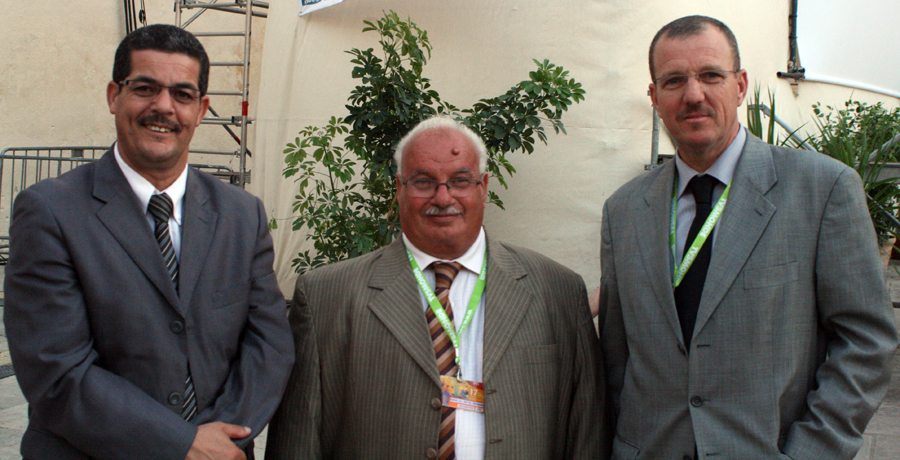
A strong part of the festival is the Fes Forum, a colloquium which tended to be rather nebulous and well-meaning for more pragmatic Anglo-Saxon tastes but still valuable (one of the main benefits is the connections made in the down time). This time it was dealing with some grittier matters like corruption and the Arab Spring. Nothing overly controversial was said – but at least such subjects were being discussed. At the Forum I met two members of Transparency Morocco – an anti-corruption outfit still taking baby steps, raising awareness of the issue and lobbying for the rights of whistle-blowers. No bad guys have been arrested yet. But at least it is a start.

Fes still is a religious powerhouse with the city the centre of some of the biggest Sufi brotherhoods in the world – such as Tijani who have millions of followers in many countries. I met Ibrahim Tijani, the grandson of the Sheikh (the leader of the Tijanis), who runs the internet part of the operation. He’s one of the super-bright Moroccans who are likely to end up in leadership positions as Morocco pivots into the future.

Peter Culshaw with Ibrahim Tijani - photo Daily Telegraph
Ibrahim, like most Moroccans, feels that the country is more united than others in the region despite the mix of Arab, Berber, Sarahawi and other peoples who have histories of conflict, and while “birth and death can be violent”, they all hope Morocco will have a relatively painless transition. The King is a revered figure by the majority as a unifying force, and Tijani and others estimate the hard-core Islamist element to be less than 20%. “Evolution not revolution”, as Mohammed Kabbaj put it; he is the former mayor of Casablanca, adviser to the King and one of the powers behind the festival - the others being music director Alain Weber and Faouzi Skali whose idea the festival was initially and who is now back at the helm after a few years running his own rival Sufi festival in Fes.

Youssou N’Dour is one of the followers of the Tijani, who are particularly popular in his native Senegal. When the programme describes him as “a veritable icon of west African music”, they do not exaggerate. Now 51, Youssou’s music is fabulously grown-up and mature these days rather than the eternal adolescence of most long-established rock bands.Youssou does rock, but also takes us on a journey as a kind of musical magus. I’ve never heard him and his band, the Super Etoiles de Dakar, in such yearning, bluesy form. The trip takes us from despair to joy, lifted up by his impeccable musicians and, if things got a bit slow, some amazing acrobatics (although not from Youssou who is a bit long in the tooth for somersaults). He also did a couple of numbers from his more spiritual album Egypt, an innovative and beautiful recording he debuted here in Fes with an Egyptian orchestra in 2004 – one of the most memorable concerts of the last decade. Youssou’s voice remains, as I called it the last time he was in London, one of the seven wonders of the world.

One of the great things about Fes is the showcasing of stars in other parts of the world that are not known much in the Anglo-Saxon world - such as Abd Al Malik, a “rappeur, slammeur and compositeur” who lived in Brazzaville, Congo and who is now a big figure in France. Unlike most rappers, he surrounds himself with a great band of jazzy musicians and his lyrics reflect the fact that he is a follower of the Boutchichiyya, an important Sufi group, also with millions of followers with its HQ in the east of Morocco – in other words, no songs about guns and bitches.

The biggest star of the week, though, was Kadem Al-Sahir, an Iraqi heart-throb who had scalpers wanting large amounts of dirhams for tickets. Le tout Fes turned up in their finery, men in suits and women glammed up in dresses and high-heels. With a swooning orchestra under the moon outside the gates of the King’s Palace at the Bab Makina (and an old weapons armoury on the other side), he thrilled the crowd. He told me that he would sprinkle his set with a few spiritual numbers as he was in Fes, which he did, but the fans wanted to hear songs like "The School of Love".

Born in northern Iraq, Al-Sahir dismayed his parents when at the age of 12 he sold his bicycle and bought a guitar, saying he wanted to pursue the precarious career of a musician. He studied hard and was accepted for the prestigious Baghdad Music Academy after being in a rock band: "I had long hair and listened to The Beatles as well as Arabic music and composers like Beethoven." Drafted into the army at 21, he remained in Baghdad, although his best friend and many others he knew perished in the war with Iran.

Generally, although, for musical enlightenment the biggest treasures were smaller events like the showing of Franz Osten’s extraordinary classic silent movie from 1929, The Light of Asia, about the life of the Buddha, accompanied by a wonderful group of Muslim and Hindi musicians from Rajasthan.

There’s also a magical underground in Fes, as in the rest of Morocco. One night a Moroccan kept me up late with stories which sounded as though they came from One Thousand and One Nights. An educated, modern guy living in Casablanca, he said he had no time for the old superstitions. Then his uncle began displaying strange symptoms: his eyes were staring and he spoke in a different voice. Being modern, they thought he had some neurological illness. But then he began to say he was possessed by a genie (or d'jinn as they say in these parts) that was able to live in two humans and that his story would be proved if he went to Larache, on the coast. His son decided to go. Walking along the quayside a legless sailor beckoned to him and said, “I am the genie who is also living in your father.”

What Fes has is a striking balance of the ancient and the modern. The Medina, where the so-called New Town dates from the 13th century, doesn’t give up its secrets easily. It's next to the French colonial Ville Nouvelle. (Ben Harper, who headlined the last night on Sunday with his gospel-tinged music, said that he was embarrassed to admit that this was his first visit to Africa and after a 10km walk in the Medina his life would never be the same again). Faouzi Skali talks of "the nostalgia of Andalusia" in Fes, a more or less accurate image of a golden age where Islam was at the forefront of science and where different faiths lived more or less harmoniously. When the Muslims and Jews were ejected many came to Fes. The hope is for a 21st-century Andalusia, for a birth that is not violent, for a transformation into a modern society, with more democracy and less corruption, but keeping the best of the ancient culture and not as materialist as the West. There remain huge problems, notably the level of youth unemployment, but there is that precious commodity of hope. There’s no doubt that the Fes Festival, as well as being the most consistently high-quality world music festival anywhere, has had a role in opening things up.

To read the full version go to the Arts Desk: The Festival and the Moroccan Spring


Peter Culshaw contributed to the (late) Observer Music Monthly, and continues to do so to the Daily Telegraph as well as a diverse range of publications including Rolling Stone, the Sydney Morning Herald, the Chicago Tribune, the Sowetan and Island Life (Sri Lanka).  He has broadcast for BBC Radio 3 and the World Service and produced compilation records and recorded with musicians including members of the Buena Vista Social Club and Indian playback superstar Asha Bhosle. He holds a master’s degree in Anthropology from University College, London. 

You will find The View from Fez wrap up of the Festival HERE

Tuesday, June 14, 2011

Fez Festival of World Sacred Music ~ Wrap Up


"I am happy with the festival and what we achieved gives us all hope for the future." -Faouzi Skali

The seventeenth Fez Festival of World Sacred Music 2011 (Le Festival de Fès des Musiques Sacrées du Monde) will be remembered for a number of reasons. The most important being that it saw the return of Festival Director, Faouzi Skali. Skali's return also saw the return of key staff which had a very positive effect on the running of the events.

Faouzi Skali

It was, of course, extremely important that the festival was a success, and on that score we can all relax. The Festival was one of the best. Faouzi Skali was assisted by Mila Gallozi Ulmann who was also of great assistance to visiting journalists. The View from Fez would also like to thank Mila for her work and friendship at the Festival.

Mila capturing the festival
While the festival was an undoubted success, it was not without problems. The chaos caused by the two nights of wet weather, could certainly have been handled better. That there was no contingency plan was a major problem. At a festival of this importance, to switch venues at the last moment would be acceptable if the venue was ready, if the technical people could get inside to set up and that someone actually had a key to the venue. The audience moved to the Prefecture Hall, only to find that nobody had any idea of how to get inside.

Yet the positives at the festival far outweighed these problems and with the exception of the rain confusion, events were well staged, managed and importantly, very popular. Although numbers were down on some previous years due to external events both economic and political, the venues were well patronised. The Batha Museum was used to great effect both for forums and afternoon concerts and Bab Makina, was as ever, superb.

Stunning lighting effects

A sound job ~ Steve Watson
Praise must go to the technical crews on sound and lighting. Steve Watson, who replaced Chris Ekers on the sound desk, did a fine job under at times difficult conditions, with the assistance of Eric Loots. This year, the lighting was stunning, and used with with beautiful effect on the walls of Bab Makina.

Festival security

Despite the events in Marrakech, there was little or no intrusive security. But before every single event, the security teams went through each venue.

Protocol? No problems!

Protocol officers had their work cut out with many visiting ambassadors and dignitaries. All of this was handled with great professionalism and courtesy.

Lamia Hejaj

The management of sponsors and artists is never an easy job as it is in the nature of major sponsors to request a few more seats here and there. The Fez Festival is extremely fortunate to once again have the services of Lamia Hejaj, who performed her role with grace and ease. Her friendly helpful attitude won her many more friends yet again.

Amal Ayouch (left) and Zeyba Rahman

Introductions before each concert were given this year by Zeyba Rahman (English) and Amal Ayouch (Arabic and French) They were delightfully presented and set up the context of each concert for visitors

THE CONCERTS

Alain Weber
If Festival Artistic Director, Alain Weber, can be said to have a defining characteristic, it is that he always looks concerned. Yet, one wonders why. His selection of performers and his overall management of the festival deserve the highest praise. His assistant, Edith Nicol, appeared more relaxed but also did a great job.

Great stage design at Bab Makina

a memorable image from the ramparts

The opening night opera, Leyla & Majnûn, was a triumph, not simply because of the music and performances. The use of the Bab Makina stage was innovative and worked well to give a sense of grand scale to an already impressive venue. The too brief glimpse of the diminutive Chinese drummer on the ramparts was extraordinary.

Despite the problem of with wind-noise on microphones, the sound was good. It was, according to sound engineer, Steve Watson, his favourite performance.

Elena Ledda

Other stand-out concerts were numerous and appreciation is subjective. However, overwhelmingly audience members enjoyed Elena Ledda's Quintet and Polyphonic Chorus, Youssou Ndour, the Kazeem El Saher and Asmaa Lamnawar, who were a big hit with the locals. The top performances were however, the hugely successful Farid Ayyaz - an evening began with all the frenetic rhythms and rich ornamentation of qawwali by Farid Ayyaz later joined by the more staid Fez Orchestra directed by Mohammed Briouel, with sama'a. Then, finally, the amazing closing night concert with Ben Harper: an evening that everyone who was there will remember for a long time. An evening on which he wore the name of Fez on his shirt and in his heart.

Less sucessful was the Maria Bethania Concert

The Sufi Nights were as popular as ever and the free events of Festival in the City were an overwhelming success.

Julia Butros reaching out across the Celtic divide

سوف نكون جميعا بالقرب من نصيب يهتف
في اتفاق الحلو أن نشكر ربنا
لاولد عيد ميلاد لانج المتزامنة

One other "Festival Moment" needs to be acknowledged, and that was the stunning rendition of Auld Lang Syne in Arabic by Julia Butros. Her reaching out across the Celtic divide was heartfelt and a wonderful expression of the spirit of the festival.


A FEW GRUMBLES

Next year, let us have a contingency plan for bad weather
The Festival has a Twitter account. Lets use it throughout the Festival to give updates.
There was an English language brochure - it failed to appear until the end of the festival.
Give the sound engineers set up information well in advance "We learn the day before they need 52 lines when we only have 40".

How to annoy everyone

2011 WOODEN SPOON AWARD

Not so much in the spirit of the festival was the winner of this year's Wooden Spoon award. The individual annoyed, patrons, photographers, video operators and musicians by wandering around on stage during a performance. Fortunately he did get the message and it was a one-off event


VISITOR REACTIONS

We caught up with Willem Heuves, a visitor from the Netherlands, and he was happy to share his thoughts on the Festival "We enjoyed our stay enormously. Both the Medina (we also visited the Mellah) as well as the festival, were wonderful. We enjoyed the relaxed atmosphere and were pleased also to attend the Forums, with sometimes (indeed not always) very interesting discussions."

Willem describes himself as "a musical omnivore", so we asked what had impressed him. "Elena Ledda is absolutley one of my favorites, as are the Pakistanis. I was also impressed by the Wajd trio (Nazia Meftah) and the baroque from Paraquay, the Tetouan brotherhood, but I think my favorite was the persian singer Salar Aghili. Actually I I enjoyed most of the concerts. The only concert I did not appreciate very much was the Urbain Phileas, which lacked, IMHO, any authenticity."


THE WORLD MEETS THROUGH MUSIC, ART AND CULTURE

By Anne Graaff. Anne is a South African artist and writer living in Paris. She is perhaps best known for her work on the outsider artist Helen Martins of The Owl House, Nieu Bethesda, in the Karoo, Eastern Cape. Ann is a festival regular and kindly contributed her reflections on the festival and particularly the festival art.

The Batha Museum is a favourite venue for concerts at the annual Sacred Music Festival. The venue brings people together in a setting that is both beautiful and intimate. The musicians play under the spreading canopy of an ancient and vast tree. It is one of those trees that, one imagines, belongs to the realm of magical trees, of soul trees. Its vast and protective arms seem perceptively to have flourished on a diet of countless sacred concerts over the years. The lush courtyard garden of the Batha palace, with its arcaded Fassi splendour, spreads out behind the players and the impressive old tree. In front of the musicians are lush carpets for those who want to lie on an elbow in an adopted Oriental fashion or simply sit in the lotus position of meditative entrancement. Then there are rows of chairs for the more conventional at heart. The chairs form a semi-circle of intimacy.

It is this linking of musicians and audience and the life of the garden that is so marvellous here. Watching the musicians play and sing on Wednesday afternoon I was struck anew by the collaborative enterprise of music. Everybody has their part to play, even the listening audience. The musicians must know when to come in and when to make space for others. There is the moment when the rattle of the tambourine is the perfect texture and the moment when the rich voice of the vocalist must soulfully fade out. Then there is the moment when the power and perfect musical expression of the piece derives from the union of all.

Urbain Phileas

It seemed to me on Wednesday afternoon that the collaborative enterprise of music is a metaphor that our current world hungers after. The concert was Urbain Phileas performing (pictured above). Perhaps this collaborative side of music making became clear on Wednesday afternoon because the audience was permitted, indeed solicited and urged to join in. It was simply some clapping to the rhythmic beat, some easy vocalising and the opportunity for exuberant jiving for those who chose to swing their hips and sway the arms. The enthusiasm with which this was enacted was almost ecstatic. In there somewhere, it seemed, was a hunger for the expression of oneness beyond cultural and personal divide. The group that was playing was from the island of Reunion. The audience was from around the world.

The Fes Sacred Music Festival attracts visitors from all corners of the globe. Not all the music fits a tight definition of the term sacred, with its connotations of spiritual practice and purpose. But on Wednesday afternoon I was struck by this broader idea of the sacred: – the connection of one with one, of group with group, of country with country, sacred as the idea that humanity is one. Music is a great metaphor for this idea, that it is possible to share across the culturally constructed chasms and to participate sensitively in a grander scheme of things – even if one is simply the humble tambourine player with a single moment to rattle the bells before the song dies down. And on Wednesday afternoon I saw the hunger of an audience to get in on the act, and like the stage musicians, participate in the making of music, and simultaneously participate in the culture of the other. The seventeenth Fes Sacred Music Festival is nearly at an end but the idea that the traditions of the world can meet through music, art and culture is ongoing.

ART AT THE FESTIVAL

Alongside the touted musical events, the variety of visual art on display at the time of the Festival, is worth taking in. This part of the Festival is more local than the music, with few invited international guests. It would be nice to see this grow and become as exciting and international as the music events. Nevertheless much of the artwork gave intriguing glimpses into the minds, hearts and methods of Moroccan artists.

Circumcision

There are tender glimpses of weathered faces at the Batha Museum and some striking images of Moroccan life – a baby being circumcised, for example. A series of paintings at the Batha Museum, in the group exhibition, La sagesse des proverbs, shows a number of Moroccan painters using surprisingly fluid and vivacious brushwork, like the mangy dog, captured on paper through a wonderfully loose and energetic flutter of marks.

Louise Cara Les Musiens

Then there is the art work at Dar Tazi. Paintings and drawings by Louise Cara aptly depict the musicians of Fes and some painterly and atmospheric renditions of landscapes. Also at Dar Tazi were the subtle and enigmatic photos of Omar Chennafi – a photographer with a fine eye for detail. One striking image was simply of hands emerging from garments.

At the Orientalist Art Gallery in the Ville Nouvelle there were some fairly conventional painted glimpses of Medina life by Mohamed Krich, but again rendered with commendable verve and expression.

Abdelhay Demnati and Anne Graaff

Another artist on display here is Abdelhay Demnati. His carefully rendered images of traditional life are each enclosed in elaborate and beautifully painted geometric borders, in the tradition of old illuminated manuscripts. The intricate and complex geometries of the borders are a fascinating and appropriately precious surround for the little theatre-like illustrations of daily life that they frame. The work is beautiful.

There are some Western artists on the circuit not to be missed. The photography of Paul Biehn at the Jardin des Biehn is certainly worth a visit. A series exploring the relationship between man and nature shows faces enigmatically emerging out of, and disappearing back into the bark of tree-trucks. This is a pertinent theme for the photographer to adopt. We currently inhabit a world where the destruction, that mankind has been capable of inflicting on nature, is propelling us all to reconsider new relationships between man and the natural world (if only to survive on this planet!). These mysterious and current ‘Green Man’ images are a powerful reminder of our inextricable links to the life of nature.

Gorgeous necklaces by Jess Stephens

One Western artist neatly and nicely combines the best of Morocco and Europe in her vibrant work. She is jewellery maker Jess Stephens, exhibiting her work at Bedouin Bon Bon, the Fes festival’s first ‘pop-up’ gallery. Her exuberant and gorgeous necklaces, bracelets and earrings are at her gallery on the Talaa Kabira, a small shop that she has rented only for the duration of the Festival.

Jess's exciting little gallery is choc-block filled with designer jewellery pieces that have both the whiff-on-the-wind of the wild Bedouin woman of the near Atlas hills and the complexity and colour sensibility of the a Camden art graduate. There is a special end-of-festival sale on the go. And if teapots can become chandeliers, jellaba buttons can be bracelets. There is a wonderful inventiveness and re-use of some traditional items of Moroccan garb. In the collaborative spirit of the Festival, the adornments bring together Orient and Occident, the world of here and the world of there. And like the sense of oneness and community elicited by some of the music, these delicious trinkets create a hunger for the coming together of cultures. They embody the exciting frisson that can occur when different world traditions rub together. This then, the coming together of cultures, is at the heart of this year’s sacred experience at the seventeenth festival of music in Fes.

.
THE VIEW FROM FEZ WOULD LIKE TO SAY THANK YOU TO ALL WHO MADE THE FESTIVAL SO ENJOYABLE.

YOU CAN FIND OUR FULL COVERAGE HERE


But the final word goes to Faouzi Skali who told The View From Fez...

"I am happy with the festival and what we achieved gives us all hope for the future."


Words and photographs: Sandy McCutcheon.
Art and photography story and pics - Anne Graaff
Click images to enlarge


Friday, June 10, 2011

Qawwals, Arabo-Andalus and Sufis at Fes Festival


Farid Ayyaz and his party
The Fes Festival's evening concert at Bab al Makina on Friday was a rip-roaring success, much appreciated by a receptive crowd. It was a premiere - the first time that Andalous music and the sama'a tradition has been allied with Pakistani qawwali music, and it worked.


The evening began with a strong performance of the frenetic rhythms and rich ornamentation of qawwali by Farid Ayyaz and his group that delighted the audience. Then it was the turn of the Fez Orchestra directed by Mohammed Briouel, with sama'a. They were accompanied by a group of a dozen Sufi brothers who chanted along and bounced up and down.

Six Sufis sitting
 More than one member of the audience got carried away by the hadra (trance-like state) and sang and bounced too. Finally, the two groups played together, which was a jaw-dropping experience - all the musicians as well as the audience seemed to thoroughly enjoy this extraordinary synthesis.

Click images to enlarge


Friday, August 27, 2010

Ramadan: breaking the fast Pakistani-style


During the holy month of Ramadan, there are traditional foods served for breaking the fast. In Morocco, f'tour (breakfast in Darija, or iftar in Arabic) is served after the maghrib call to prayer at around 17h30. It would not be complete without a satisfying bowl of harira, seasoned with a few drops of lemon juice. Sticky, sweet chebakiya accompany the soup. There are always dates, various breads, hard-boiled eggs dipped in cumin and milkshakes or fruit juices. Sweet mint tea rounds off the meal.

As one of The View from Fez team is currently in Pakistan, we take a look at the traditional foods served for iftar in that country. While lots of restaurants in Pakistan serve iftar, it's really a time to spend with the family and the women take pride in serving home-made favourites.

DATES
Dates are a favourite in both countries. As they are highly nutritious, they're ideal to break the fast. In Pakistan they are either eaten plain or they're seeded and stuffed with almonds or pistachios, rolled in desiccated coconut or sprinkled with rose essence for extra flavour. Sometimes they're also wrapped in edible silver foil called warq to give them place of honour on the iftar dining table.

SAMOSAS


No iftar in Pakistan is complete without this triangular, spicy fried delicacy. The wafting aroma that comes from fried samosas is tantalising. Samosas can be filled with mashed potatoes, onions, spicy minced meat, cheese, chicken or cooked vegetables. They are usually served with mint, coriander or tamarind chutney. Literally thousands of samosa stalls spring up during Ramadan in every nook and cranny of the country where vendors start frying this savory iftar item well before the prayers to meet the demands of the fasting populace.


JALEBI


Not unlike the Moroccan chebakiya, jalebi is a sweet pretzel that's eaten with savoury samosas to counter their salty and spicy taste. It's made with fried batter that's dyed bright orange or yellow with food colouring, and soaked in sugar syrup.


PAKORAS


Another Pakistani iftar favourite, pakoras are fried balls of gram (chickpea) flour. Various vegetables cut into small pieces, such as onions, potatoes, spinach, coriander leaves, aubergines and green chilis, can be added to the batter, which is then deep-fried to make fritters. They're served with onion rings and chutney. The batter can also be used to make a kind of tempura, where vegetables such as cauliflower florets, onion rings and even whole green chillies are dipped in it and then deep-fried.


FRUIT CHAT
For the health conscious, fruit chat is an alternative to spicy pakoras and fried samosas. A variety of seasonal fruits like mangoes, bananas, apples, guavas, apricots, grapes and pineapple are cut in small cubes and served in juice. A few lemon drops are squeezed over the dish to keep it from changing color and a little salt, chat masala (spice mix)and pepper are sprinkled on the dish to give it a zesty flavor. It's very refreshing after a long day’s fast.


CHICKPEA CHAT


Another delicious food item to grace the iftar table is the chickpea or chana chat. This dish is made of boiled chickpeas mixed with boiled and cubed potatoes, chopped tomatoes, onions, green chillies and served with dollops of spicy tamarind chutney. A fabulous dish to tantalize the taste buds, chickpea chat is also nutritious and healthy.


DRINKS FOR IFTAR
Water is the best option for quenching thirst after a 15 hour-long fast for most people. In Pakistan a variety of sherbets, sweet syrup-based drinks, are also available that are prepared for iftar. Cold milk mixed with sherbet or soda is also commonly served. Packaged or fresh juices, lemon squashes, carbonated and non-carbonated soft drinks are also consumed. After iftar, drinking tea or kehwa is also common practice.


Thursday, August 26, 2010

Fear of 'Islamist" charities may hinder aid to Pakistan


Here is the second of our View from Fez special reports from on the ground in Pakistan.


"Aid going to terrorist-funded camps." Variations on this headline have been appearing around the world; a majority of them head stories written by "experts" miles from the scene. However, the one quoted was attached to a story written by respected Australian Broadcasting Corporation journalist, Sally Sara. Sara is in Pakistan and been covering the floods with energy and expertise.

Her report went on...
Australian aid to Pakistani flood victims is being distributed at a camp funded by a banned Pakistani terrorist organisation.   The outlawed welfare group Jamaat-ud-Dawa was linked to the 2008 Mumbai terrorist attacks and has been blacklisted by the US, Pakistan and the United Nations.

But the UN World Food Program (WFP) is distributing aid, including containers of cooking oil donated by Australia, at a camp which receives funding from Jamaat-ud-Dawa.
WFP spokeswoman Frances Kennedy says the UN is careful when it chooses its Pakistani partners.

At the foot of the story the ABC asked its audience "Do stories like this make you less likely to donate to Pakistani flood victims?" Thankfully, a majority of respondents rejected the premiss of the question. However, the question does require a response.

Here in Pakistan the debate about Islamist charities is a very hot topic. The general consensus is that, given the magnitude of the disaster, any and every bit of help is welcome. Professor Mohammad Ibraheem Khan from Jamaat-e-Islami, states that the Islamic charities have been the most effective in all three stages of rescue, relief and rehabilitation. He pointed to the work of Al-Khidmat. This Islamic group has been active in 15 districts and to date they have rescued 46,907 people. The group has over 10,000 volunteers who have set up 45 relief camps and 6 residential camps. If even a fraction of these numbers are accurate, it is not an effort that can be ignored.

FIF officials at the camp in Sukkur (ABC TV)

Much has been made in the international media about FIF (Falah-i-Insaniat Foundation) who are connected with the Islamist group Jamaat-ud-Dawa (the charity wing of Lashkar-e-Taiba). Their 3000 volunteers have been on the ground since day one of the flooding and provided cooked food and other relief for around 100,000 people. They are also responsible for setting up toilet facilities for women living in makeshift tents along roadways.

Jamaat-ud-Dawa banner openly displayed in Rawalpindi yesterday

While it is true that Pakistan has a series of security problems, the scale of this disaster demands every bit of assistance. And it appears on the ground that with such intense work, the groups are too busy providing aid to indulge in spreading their religious and political messages. What happens in the coming months may be a different matter. But if we hesitate in giving aid now because concerns over Islamist charities, the death toll while be far higher than any insurgency might create.

More reports from The View from Fez in Pakistan will follow in coming days.

Wednesday, August 25, 2010

The View from Fez reports from Pakistan


In the first few days, the response to Pakistan's catastrophic floods was far smaller than one might have expected. Countries around the world pledged aid, but it was far below what was needed, even for the initial phase of the disaster. In terms of what will be needed in the coming months and even years, it was far from adequate. Now, as the scale of the tragedy sinks in, the donations have increased substantially. One of The View from Fez team travelled to Pakistan, from where they sent this report.


Morocco has a very strong record of responding to humanitarian disasters and so it was no surprise that within days King Mohamed VI had ordered the dispatch of an initial planeload of humanitarian aid to flood victims in Pakistan. The aid included 12 tonnes of medical and pharmaceutical products.

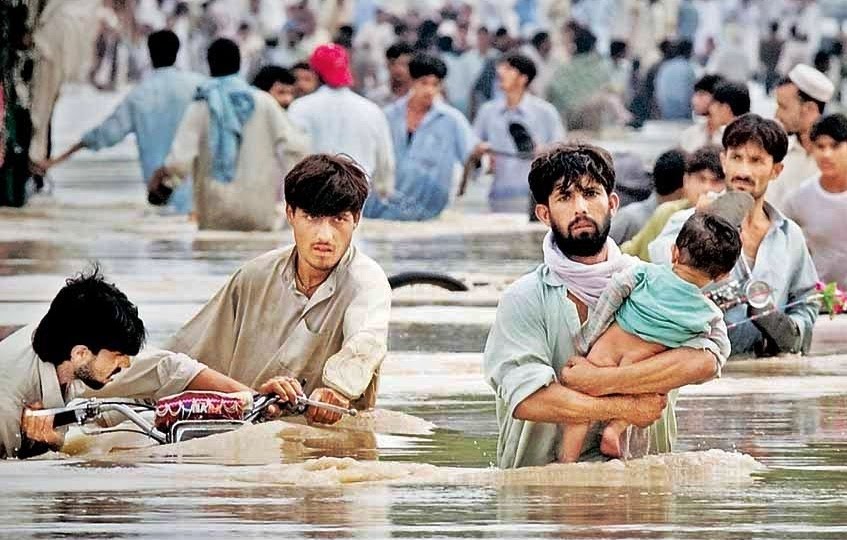
The situation on the ground is difficult to come to terms with. First is the massive scale of the problem. Secondly, is the almost impossible task of getting an accurate picture of what is being done and where. What is easy to understand is that this is not a single shock event such as a tsunami. This is a rolling disaster which will effect millions of lives for years into the future.


The initial phase of the tragedy began more than three weeks ago, when the worst floods in decades, triggered by unusually heavy monsoon rains, swept through the northwestern provinces, have receded in some areas in the northwest and Punjab, while aid agencies now say southern Sindh province is most vulnerable to rising waters of the Indus river. To complicate matters the Sutlej river, in the south, is at critical levels and will be impacted further if the Indian government releases water from their dams further upstream.

Estimates of the number of deaths is sketchy, but the Pakistan government report that more than five million people have been displaced. If this figure is correct then this is the largest mass movement of people in the country since Partition in 1947. Other reports claim that one fifth of Pakistan's land mass is under water and the total number of people affected has topped a staggering 20 million.

In Sindh province a further 200,000 people have been evacuated in the last few days. On top of those rescued or evacuated there remains a further 800,000 people who are still waiting to be rescued by air. For a country, where there are few helicopters, this task verges on the impossible. The World Food Programme has urged Pakistan's government to quickly assist those 800,000 who, according to the World Food Program spokesperson, Amjad Jamal, "There is a real fear that they may die of hunger or disease outbreak".

Whatever the figures, the brutal truth is that there are millions without homes, food and medicine. The local stocks of rice have been depleted in Sindh and Balochistan by the washing away of the rice stocks estimated to be worth $3.7 million dollars.


There are those who question the ability of the Pakistani government to handle the situation and who claim this is the reason for a slow response from the international community. This is the wrong way to approach the problem. Firstly, having seen the American response to Katrina it is arguable that there is no government anywhere equipped to handle a disaster of this magnitude. Secondly, the government has sent all branches of the armed services who have so far carried out their task with courage and determination. Some commentators outside of Pakistan have talked about the possibility of military rule. Talk to both army and civilian authorities and they will tell you this is nonsense. As one senior army officer told us, "The army is a wing of the government, not the other way around."

Support for Pakistan at this time and into the future is essential. This is not the time or place to be playing politics.

The View from Fez will have further reports from Pakistan on the floods, the security situation and the world's response, in coming days.