Showing posts with label USA. Show all posts

Friday, April 14, 2017

On the Lighter side - Anything is Possible in Morocco

Recently a tourist guide in Fez was overheard saying "Anything is possible in Morocco." Generally, we would agree with that. However, a recent email asking where to get food for a pet snake, had our colleagues flummoxed!

So, the challenge is on to see if such a request can be met in Morocco.

Which brings us to another story about Sidi Hamza, a Moroccan from Fez, who went to the US embassy in Rabat to get a visa for a visit to his friends in America.

When asked where he was going, Hamza replied,"San Jose".

The embassy official frowned and then corrected Hamza, informing him that San Jose is pronounced "San Hose" and that the "J" is pronounced as "H" in the States...

"So how long is your stay in San Jose?"

Hamza didn't miss a beat: "Six months; from Hanuary to Hune."


SHARE THIS!

Wednesday, February 01, 2017

Morocco's King Warns against US Embassy Moving to Jerusalem


Morocco's King Mohammed VI has expressed his strong opposition to the Trump administration plan to move its embassy to Al-Quds (Jerusalem). In a letter to Mahmoud Abbas, HM the King stressed the need to preserve the status of the holy city

President Mahmoud Abbas and King Mohammed VI


In the letter addressed to Palestinian President Mahmoud Abbas the sovereign warned of the serious consequences of such an initiative for the efforts to resolve the Palestinian question and also on "peace and security", not only in the Middle East, but also on the rest of the world.

The monarch, who presides over the Al-Quds Committee, reiterated his commitment "to defend the holy city" and "its inhabitants" and "to protect their legitimate rights guaranteed by the International resolutions and the principles of the Fourth Geneva Convention ".

The King said he followed with particular interest the developments of the American project and that he makes a "regular evaluation of all the indicators and the probabilities". At the same time, Mohammed VI affirmed his readiness to "coordinate" with Mahmoud Abbas and the "other Arab and Islamic leaders" as well as those "friendly countries that support Palestinian law" in order to "defend with all possible legal means, political and diplomatic, the legal status of Al-Quds-East in accordance with the international resolutions.

On 23 December, the Security Council voted in favour of a text condemning Israeli settlement activities in the Occupied Palestinian Territory, including East Jerusalem. The resolution was made possible thanks to the Obama administration's abstention. However, the appointment of Donald Trump has completely changed the situation. Encouraged by plans to move the US Embassy to Washington, Israel announced last week the construction of 566 homes in three Arab neighbourhoods in Al-Quds East.


SHARE THIS!

Tuesday, January 31, 2017

Royal Air Maroc and the Trump Ban

The controversial decree signed by Donald Trump, prohibiting the access to US territory of the nationals of 7 Muslim countries is having repercussions in Morocco for national airline Royal Air Maroc (RAM)

RAM reports that it has received no formal notification of the presidential decision and remains in what the company describes as a "total blur" as to the procedures to follow.

However, the airline authorities have opted for caution in order to prevent passengers from being stopped at the US border. RAM is awaiting clarification from US Civil Aviation and IATA, the International Air Transport Association.

To avoid any inconvenience to passengers without a document issued by the American Embassy or consular authorities authorising travel, RAM will prohibit them access to flights from Casablanca to New York and Casablanca to Washington.

This decision by Royal Air Maroc is not an isolated case: the majority of airlines serving the United States also aligned themselves with this choice.

President Trump's decree is being labelled "anti-Muslim" by the Moroccan media.

At the same time, the media is reporting what it describes as an "encouraging choice by Starbucks and Airbnb".

The online news site http://lesinfos.ma/ writes ... "If air carriers are cautious, other companies clearly show their opposition to this shameful decree. At the head of the line: Airbnb and Starbucks. The Starbucks coffee chain will recruit 10,000 refugees in the next five years, said its CEO Howard Schultz on Sunday. These are people who have fled wars, persecution and discrimination in the 75 countries where the American group is present.

CEO Howard Schultz 

In the United States, Starbucks will start by recruiting refugees who have worked for the US military, such as interpreters.

Mr Schultz, points out that Starbucks is in contact with employees affected by the presidential decree that has imposed severe restrictions on access to US territory and "extreme checks" against nationals Of seven Muslim countries (Syria, Libya, Sudan, Iran, Iraq, Somalia and Yemen).

"We live in an unprecedented period, a time when ... the promise of the American dream is being challenged," he says

And Airbnb has stepped up with offers of free accommodation for those affected, refugees as travellers stranded at airports by these restrictions.

"Airbnb provides free accommodation for refugees and anyone who is banned from entering the United States," said CEO Brian Chesky on Twitter, pledging additional ads. "Contact me if you need accommodation," he concludes. The group plans to use its natural disaster program, which provides for hosts to provide housing for displaced persons.

The online accommodation rental platform, of which about 80% of the accommodation offers are outside the United States, is also considering specific emergency measures if there are no hosts close to where a person struck by the anti-immigration decree is stuck.

SHARE THIS!

Monday, February 02, 2015

African Lion 15 ~ Largest Military Exercise in Africa


African Lion 2015 will be the biggest military exercise on the African continent. Military contingents from Morocco, the U.S.A, Germany, United Kingdom, Tunisia, Mauritania and Senegal will begin the first phase of Exercise African Lion 2015, in Agadir,  today (Feb. 2)


African Lion 15 will begin with an intelligence capacity building workshop during the first week of February. The international coalition will then stand up a Combined Joint Task Force and plan for a simulated international crisis the week after. This will prepare them for the main phase of the exercise scheduled to take place mid-May.

The exercise is conducted in accordance with U.N. mandated peace operation standards. Each event is designed to strengthen cooperation and operational proficiency between the nations for future crisis and contingency response in the region. The training focuses on building combined military capabilities and integrating experiences and lessons learned from the participants.

The second phase of the exercise involves approximately 2,500 personnel from participating countries and will also include contingents from the Netherlands and Belgium. The CJTF will work through a scenario that focuses on humanitarian aid, disaster relief, stability operations, command and control, and maritime prepositioning integration. The 2015 edition also integrates the Moroccan and U.S. Air Force in "Exercise Majestic Eagle", which will occur simultaneously with the second portion of African Lion, and focuses on aerial refuelling and close air support training missions.

“The foundation of how our international community responds to a crisis in any region will be established during theatre security cooperation exercises such as African Lion,” said Maj. Gen. Richard L. Simcock, commander of the CJTF. “This exercise allows the U.S., allies and partner nations to strengthen our relationships with our Moroccan hosts and improve how we will work together in the future.”


African Lion is held every year in Morocco and US Marine officials say they are impressed by the Royal Moroccan Armed Forces.  Exercise African Lion 14 was held in Tifnit and at the time 1st Lt. Shane G. Livingstone, a military police platoon commander said “The Moroccans simply amazed the Marines. This morning we did a ‘check on learning.’ There’s nothing like being able to watch them pick up and execute everything they learned the day before with speed and accuracy, even after having received a lot of classes the same day,” he explained.

However, this exercise was not only beneficial for Morocco; the US military learned from the Royal Moroccan Force’s experience as well. “This training was good for us, because we’ve learned just as much from the Moroccans,” said Sgt. Keenan M. Kite, with the U.S. Army military police.


SHARE THIS!
Print Friendly and PDF

Saturday, June 15, 2013

Patti Power to the People: Closing Concert of Fes Festival of World Sacred Music 2013


Patti Smith Rocks Bab Al Makina in Fez

"My first concert in Morocco"

“That will be one of my great memories of being here in Fes, the continuous song of the birds.”

The birds had heard Patti Smith, as a crescent moon rose thousands of alpine swifts were wheeling and circling over Bab al Makina, like a swirl of feathered confetti. A lone falcon swooped over the stage, symbolic of the spirited lone huntress of freedom who was to step onto it shortly thereafter.

Patti took to the stage for her opening number Dancing Barefoot, the lyrics of which were to set the tone of the evening: “some strange music draws me in, it makes me come up like some heroine.” This was the subtle beginning of Patti’s call to arms, the first stirring of the uprising that was to follow.

Redondo Beach came next, and then the first track from her new album Banga, called April Fool. The lyrics, like many of Patti’s songs, were a strange fit for a festival of sacred music in Fes, one of Morocco’s most spiritual and conservative cities.

We'll burn all of our poems
Add to God's debris
We'll pray to all of our saints
Icons of mystery
We'll tramp through the mire
When our souls feel dead
With laughter we'll inspire
Then back to life again

After this song, she began to spin slowly like a whirling dervish, her long hair plaited into dreadlocks fanning outwards. Her attire was her classic punk rock look – faded black jeans, white t-shirt with holes, black waistcoat and jacket, black beanie and heavy metallic leather boots.


She sang another song from the new album – Fuji-San – but in a nod to where she was and perhaps in acknowledgment of the incongruity of her performing at a festival with a religious slant, added the lyrics “the spirit of a dervish, whirling into infinity.”

This was the mark of an experienced performer. Not only the deliberate slow spinning before the song – which was noted – but the tailoring of her songs to the local audience.

At this point there was a glitch with the video projection on the screens that flanked the stage. In the time it took to restore the live feed, and in a hugely ironic gesture of bad taste, the logo of Royal Air Maroc was projected onto the screens. For someone so anti-corporate (she sung later in the concert “the dark forces of government bending to corporations”) she would have hated it had she noticed.

In another nod to local sensibilities she declared “we dedicate this next little song to the poet Rumi,” as she launched into Mosiac.

This was a song that she had talked about in her press conference of the previous day, saying it had some Moroccan influence and was “a Sufi style song merged with rock and roll.”


Patti was beginning to warm up and at this point she removed her beanie and tossed it to the drummer before moving on to the most poignant moment of the evening.

“Today is a very special day for me, it is the birthday of my late brother Todd,” she said.

The word ‘late’ was lost on some of the crowd who began to sing ‘Happy Birthday’ at which Patti laughed and continued, “he died in 1994 but his spirit is here with us tonight. Happy birthday Toddy.”

She began Ghost Dance, with the lyrics ‘we shall live again’ having especially strong meaning for her as she remembered her lost brother.

“Shake out the ghost!” she proclaimed, shaking her hands and imploring the crowd to do the same.


“This next song is dedicated to all the poets in history, the poets who did not write, the poets of the future, all the poets,” she said as she picked up her guitar and began Beneath the Southern Cross, a song whose lyrics really show why she is described as the poetess of punk.

Oh
to be
not anyone
gone
this maze of being
skin
oh
to cry
not any cry
so mournful that
the dove just laughs
the steadfast gasps

oh
to owe
not anyone
nothing
to be
not here
but here
forsaking
equatorial bliss
who walked through
the callow mist
dressed in scraps
who walked
the curve of the world
whose bone scraped
whose flesh unfurled
who grieves not
anyone gone
to greet lame
the inspired sky
amazed to stumble
where gods get lost
beneath
the southern cross


The musicians began to really amp up at this point as Patti paced the stage with her guitar, drawing out clanging riffs and heavy drums causing the crowd to whoop with their hands in the air.

Patti then introduced the band – guitarists Jack Petruzzelli and Tony Shanahan, drummer Jay Dee Daugherty and bassist Lenny Kaye.

A reflective moment sitting on the edge of the stage

This was her cue to hand over to her band and as she bowed out and sat on the edge of the stage Lenny Kaye took over, saying “this is dedicated to all the fans of Le Rock Garage!”

While her musicians launched into a heavy punk rock number, Patti jumped off the stage and in front of the sponsors all sitting placidly in the front row. More enthusiastic concert-goers surged forward from the wings and she began to dance surrounded by a circle of fans.

This was a turning point in the concert, inspired by Patti reaching out to her fans and the truly head-banging guitar coming from the stage, a crowd gathered in the front and began to dance frenetically.


Back on stage and moving into Ain’t it Strange, Patti’s performance went up several notches, moving her arms like she was trying to pull the notes out of Lenny Kaye’s bass and bowing down to the mastery of her musicians.

“Transcend, transcending it!” she roared, spitting onto the stage to the amusement and shock of the Moroccan men in the front. This was a woman like none they had come across, a woman with attitude, who rocked, and spat, like a man.

“I MOVE in another dimension!” she declared, strutting and growling. And she truly does.


The introduction to Peaceable Kingdom was another acknowledgement of Morocco: “Today we took a walk and we saw the beautiful declaration of independence of Morocco, written in the blood of your country men. This declaration should be written for all the people of the world. Return to nature, return to the world!”

Her delivery was another reminder of her inner poet, with the lyrics simply spoken with backing music.

Maybe one day we'll be strong enough
To build it back again
Build the peaceable kingdom
Back again

She finished the song by adding “the people have the power, it is decreed. The people rule.”

And the people heard her. As she launched into Pissing in a River the security guards decided it was time for people to retake their seats. They obviously hadn’t been listening or hadn’t reckoned on the effect that Patti’s cry of “the people rule” would have on the crowd.


Standing firm in solidarity, there was a determination not to comply. And collectively the group in front of the stage, inspired by her words, decided to stage a ‘60s style sit-in. They didn’t stay seated for long however, as Patti began her best known hit Because the Night. The music and lyrics could not be ignored and after a couple of verses the crowd jumped to their feet again declaring with rebellious passion “Because the night belongs to us!”

Some improvised poetry was up next, as Patti undertook her most significant lyrical change to the song Land.

“The boy was in the hallway drinking a glass of tea
From the other end of the hallway a rhythm was generating
It was a long hallway of blue and white tiles, blue of the city, blue of the sky
The fragrance of mint wafted around him and he felt. That He. Could. Do. Anything!”


As she sang HORSES, HORSES, HORSES people began pogo-ing with fists in the air and it became a proper, old school rock concert, the likes of which Fes has never seen.

Patti sang to the crowd with her arms outstretched “I’m dreaming of complete freedom unfettered by things, like a bird in the sky” and then continued her Fes-inspired improvisation: “He was deep within the medina and he could smell the herbs, the herbs all around him, he could hear the sound of the gnawa, he could hear the sound of those in prayer, and it was beautiful.”

The song moved straight into Gloria and Patti again demonstrated her gift for infusing her performance with genuine feeling as she approached the edge of stage, leaned on the shoulders of the security guards and reached for the hand of a young girl. “All children are beautiful and we were all once children,” she had said the previous day.

Then came her most controversial lyric, said with emphatic feeling: “Jesus died for someone’s sins. BUT. NOT. MINE.”

“This is our first concert in Morocco!” she enthused as they left the stage. The crowd were not satisfied however and repeated chants of ‘Patti, Patti, Patti’ brought them back out for a rollicking three-song encore.


Summertime Blues was first up, and her moves prompted a man in the audience next to me to say “she may be in her 60s but she can still rock!”

As if she heard him, they moved onto the rocking title track of her new album, Banga.

She has said previously “Banga is a dog in The Master and Margarita (by Mikhail Bulgakov) who loyally sat with his master for 2000 years on the edge of heaven while his master waited to speak to Jesus Christ. I thought that any dog who waited for 2000 years deserved a song. People ask me, what’s Banga about? It’s not about anything really, it’s just an absurd kind of song. It’s our anthem, it means nothing except that we’re all together.”

And all together we were, enthusiastically singing along with Patti as she mimicked the sound of the electric guitar ‘woaw woaw woaw woaw’, then we all howled and barked like dogs, Lenny Kaye playing on stage with his tongue out, panting, and his hands like a dog begging. “Say BANGA!”


The final song, People have the Power, was as appropriate to the mood she had inspired as it was potent, given the residual feeling in Morocco still simmering under the surface in the wake of the Arab Spring.

The power to dream / to rule
to wrestle the world from fools
it's decreed the people rule
LISTEN
I believe everything we dream
can come to pass through our union
we can turn the world around
we can turn the earth's revolution
we have the power
People have the power…

An expat resident chose this moment to throw his customized Moroccan hat to Patti on stage, who, seeing the metallic CND sign on it, obviously approved and pocketed the gift.

“Dream to vote, to live, to love,” she commanded the crowd.

And her last message was “This is the sacred music festival. Remember that all life is sacred, all people are sacred. Be healthy, be strong, be free.” With that, she left the stage for the last time and in her wake left a group of people newly invigorated by their desire to be free.

"Power belongs to the people" - and the crowd erupted
Audience reaction:

Alfred, who’s hat Patti so approved of was delighted.
“I think she picked it up because there was the symbol of peace on it, she saw the symbol and she got it, she just GOT it – it was so nice to give it to her, I’m so happy. The concert was just great.”

“It was incredible, beautiful, wonderful, she IS rock!”
Selma, Fes

“At the end, the people ruled over the corporations – the area at the front of the stage was a sponsors area and they asked us to move but we stood up and stood strong for the love of the music,” Hassan, Fes

“I thought she was wonderful and I loved the fact that she adapted the songs for here. I wonder if everyone understood the words of her last song though, if you listen to it, it’s a wonderful message but quite severe and not for this culture who is bound by religion and government. I have so much respect for her.” Stephen, Fes/USA

Text: Vanessa Bonnin
Photographs: Suzanna Clarke 

Patti Smith Press Conference
Fes Festival Fringe program
Fes Festival Medina Map
Fes Festival Food! 
Fes Festival Site

The View from Fez is an official media partner of the Fes Festival of World Sacred Music

SHARE THIS!

Print Friendly and PDF

Wednesday, April 24, 2013

Moroccan News Briefs #95


Gabonese President in Morocco

President of the Gabonese Republic, Haj Ali Bongo Ondimba and his wife Sylvia Bongo, arrived in Fez on Monday ahead of a visit the opening of the 6th edition of the foundations of Agriculture exhibition in Meknes. His Majesty King Mohammed VI presided over the opening ceremony on Tuesday.

HM The King and the President 

During the ceremony, the Minister of Agriculture and Maritime Fisheries, Aziz Akhannouch, gave a speech  in which he presented the results of the plan "Green Morocco" and laid out the future development paths for Moroccan agriculture. The minister pointed out that the agricultural gross domestic product recorded during the period 2008-2012 showed an increase of nearly 32% compared to the period 2005-2007.

While the president of Gabon is visiting the agricultural show in Meknes, Princess Lalla Salma and the First Lady of Gabon visited the Oncology Hospital CHU Hassan II in Fez. HRH Princess Lalla Salma, Chairwoman of the Lalla Salma-Prevention Foundation for cancer treatment, accompanied  Sylvia Bongo.

The hospital serves a population of over three million inhabitants of the Fès-Boulemane region and other regions of the North and East of the Kingdom. With a medical oncology, a nuclear medicine department and one radiotherapy department, the hospital has a medical staff of 15 specialist doctors, 45 nurses and five physiotherapists. It focuses on the medical care of cancer patients using chemotherapy, hormonal therapies, immunotherapies and palliative care.


Morocco Cancels "War Games"

Morocco has cancelled its annual military exercises with the United States after the Obama administration supported adding human rights monitoring to the U.N. mission to the disputed Western Sahara territory, U.S. officials said.

African Lion exercise in 2012

The 13th annual "African Lion" exercise — involving 1,400 U.S. servicemen and 900 Moroccan troops — had been set to start Wednesday with many personnel already in place and international observers invited.

The U.S. officials spoke on condition of anonymity because there has not yet been a formal announcement of the cancellation. Morocco's government spokesman declined to comment.

Mustapha Khalfi, the spokesman who doubles as the minister of communication, did summon journalists on Tuesday to express his government's anger over initiatives to broaden the U.N. mission's mandate to include human rights monitoring.

"It is an attack on the national sovereignty of Morocco and will have negative consequences on the stability of the whole region," he warned. "We count on the wisdom of the members of the Security Council to avoid such initiatives."

"Morocco rejects any proposals to expand the mandate of the MINUS or establish an alternative international mechanism for monitoring human rights in the southern provinces," Moroccan Foreign Minister Saad Dine El Otmani said on yesterday.

The manoeuvres have been a part of an annual joint exercise carried out since the 1990s.

NOTE: Also see the opinion piece at the end of this post for more background


Weather warning

The unusual amount of wind in Fez over the last few days may well be advanced warning of some bad weather. Violent rainstorms have been predicted for Morocco's western Mediterranean region. According to the weather channel heavy rains and thunderstorms are possible until Friday. The North East of Morocco will be most threatened along with northern Algeria and a large part of the Spanish coast areas.It is predicted that if the rains arrive they could be as heavy as 150 mm of rain in a few hours. A short lull is expected on Friday. Europe will be affected in turn by these disturbances with dropping temperatures.


The Moroccan economy grew by 4.8% in the first quarter of 2013

Morocco has recorded economic growth of 4.8% for the first quarter of 2013 against 2.7% in the first quarter of 2012, according to a statement of the Planning High Commissioner to Plan. This result highlights an agricultural activity enhanced by abundant rainfall, well distributed during the winter and spring period and noted a slight improvement in industrial activity. However, household consumption would have posted a smaller increase over the same period, estimated at 2.8% against 4.8% last year, due to a rise in consumer prices.


More migrant deaths

Eleven migrants trying to reach Europe died after their boat capsized off the north coast of Morocco, medical sources and a human rights group said on Wednesday.

Of the 34 people travelling in the boat, reached up by the Moroccan navy at midday on Tuesday, two children, three women and six men died, and another 12 were hospitalised, a doctor in the coastal town of Hoceima reported. All but one of the victims drowned, the other dying while being transported to Hoceima hospital, according to Faisal Oussard, local representative for the Moroccan Association of Human Rights.

They were all sub-Saharan migrants but their nationalities were not known.

Oussard said the boat capsized nine kilometres (six miles) off Hoceima, having set off from Nador, 130 kilometres to the east, either headed for the north African Spanish enclave of Melilla, or mainland Spain. The sea was calm when the accident took place, but the boat, a rigid inflatable, or RIB, was far too small for the number of people it was carrying, he added.

The condition of those those hospitalised in Hoceima and the fate of the 11 people who escaped without injury were not known.

The Moroccan authorities frequently expel sub-Saharan migrants across the Algerian border, which is their main point of entry.

The tiny Spanish occupied enclaves of Ceuta and Melilla, perched on the coast of north Africa and both claimed by Morocco, are key launching pads for clandestine migration to Europe.

Melilla received 2,224 illegal immigrants last year, 262 more than in 2011, according to Spain's Interior Minister Jorge Fernandez Diaz. He blamed instability in Africa's Sahel region, and especially in Mali, for the rise in illegal immigrants trying to enter the territory.

Local associations estimate that Morocco was hosting between 20,000 and 25,000 migrants from sub-Saharan countries in 2012 hoping for access to Europe through Spain.


Solar boat in Morocco 

After last year's visit of the solar powered aircraft, Solar Impulse, now it is the turn of the Swiss boat "Tûranor Planet Solar" (Power of the Sun) to anchor Morocco. The largest solar boat in the world visited the Marina Bouregreg. The crew chose Rabat as a starting point for its second transatlantic crossing which will begin in May. At a press conference on April 18 at the Marina, Didier Rabo communication director at the University of Geneva, partner of the event, said that the expedition will collect measurements along the Gulf Stream, as ocean current that is of paramount importance in regulating the climate in the northern hemisphere.


MS Tûranor Planet Solar is the largest solar-powered boat in the world. The vessel was designed by LOMOcean Design, built by Knierim Yachtbau in Kiel, Germany and launched on 31 March 2010. In May 2012 it became the first ever solar electric vehicle to circumnavigate the globe.


Opinion -
W Lebed writes on the US Morocco News Board about the background to the US - Morocco war games fiasco
US-Morocco: The Blunder & The 200 Year Relationship

There are days when reality parodies better what the likes of Mark Burnett in Expedition Impossible can come up with. Take 1,400 U.S. military personnel, ship tons of heavy military equipment to Agadir and Marrakech, add more than 900 Moroccan RAF staff to the mix and invite 14 partner nations from NATO, but then as they are about to kick-start their pre-planned annual war games, blow the whistle and call the whole thing off because a clumsy US bureaucrat at the United Nations decided to put the kibosh, albeit briefly, on the longest peace and friendship treaty that the US have with a foreign power.

You could not make it up, really. That's what actually happened this week when Susan Rice hatched a plot supposedly on her own or more likely with the wink and nudge of some malevolent hand to undermine Moroccan sovereignty over Western Sahara.

The result is a hand grenade in the Moroccan royal palace that no one really anticipated even in the most far-fetched of Hollywood scenarios. That definitely got everybody's hackles up in Morocco from your average Omar and Nadia to the most seasoned diplomats. What's more upsetting is to see senior US security and military officials have eggs on their face in Agadir and Marrakech. And, believe me, it was not a pretty picture either. They were all left dashing left, right and centre wondering what on earth has possessed their Moroccan counterpart. Sunstroke. Definitely not.

The answer is to be found hidden in Susan Rice's drawer. Her draft document was a pernicious and malicious idea meant to remove bit by bit Morocco's authority over Western Sahara to satisfy the greed and voracity of the anti-Moroccan lobby, which operates in Washington and New York on behalf of the cack-handed but brutal military junta of Algeria.

Humphrey Bogart and Ingrid Bergman of Casablanca may possibly have applauded the ingenuity and creativity of these graceless co-conspirators. However, this gauche idea would definitely not have pleased a former US diplomat who runs the show at Rick's Cafe in Casablanca. Just imagine the pretty place packed with Russian spies, Iranian agents, North Korean loonies and Chinese businessmen plotting together to take over lock, stock and barrel the running of the show in this sensitive and strategic part of the world.

Western powers would rue the day a certain Susan Rice had been promoted above her station under Obama's administration. Of all the gin joints in all the towns in all the world, Susan Rice walks into the minefields of North Africa and the Middle East. Unprepared, unready, unaware and more significantly unsuspecting of the trap that the moustached and evil-minded generals of Algiers were laying for her.

Luckily, the wise men and women of the Obama administration in Washington who know the ins and outs of this tricky part of the world came alive in time and swept clean Rice's mess far away from the U.N. headquarters. Now is the time for the US military personnel to enjoy the golden beaches of Agadir where they can have some rest and relaxation, play football with the local kids and enjoy Moroccan hospitality despite the blues that befell them once they were told that what their commander in chief sent them to do was postponed to a later date.

The sages at the Pentagon know very well that Morocco is the only safe place in the whole Muslim world where their soldiers can walk, talk and interact with the local population without fear of being stabbed or murdered by some crazed person sent by a mad mullah, and more interestingly without staying inside some green zones or high fortification.

What's more, the wise heads of the Central Intelligence Agency are also well aware that Morocco is the only safe place in North Africa and the Middle East where their future intelligence officers can be sent to live with a local Muslim family to learn the language and culture of this troubled parts of the world.

Many a Peace Corps volunteers who spent time in Morocco working in projects for technological, agricultural and educational improvement are now in office across the MENA region serving their homeland with professional aplomb.

Let's hope for the sake of more than 200 years of US-Morocco peace and friendship a mediocre person is not allowed once again to blemish this pristine record. Amen!


SHARE THIS!
Print Friendly and PDF

Tuesday, March 19, 2013

Moroccan News Briefs #91


PM Benkirane in Rome to represent HM the King in Rome


At the inauguration ceremony of Pope Francis, the leader of the government, Mr. Abdelilah Benkirane, praised Rome's unwavering commitment to Morocco as a triumph of the values ​​of peace, understanding and cooperation among peoples and followers of divine religions. Benkirane said his presence in the Italian capital to represent HM King Mohammed VI, demonstrates the values in international relations.

The head of government remarked on the secular nature of relations between Morocco and the Vatican "We are convinced that the future can be built on friendly relations based on cooperation, understanding and tolerance in the service of peoples and nations in general, and Muslims and Catholics in particular".

Benkirane arrived in Rome in the early evening yesterday to join an expected total of 132 delegations, including some including heads of state. The official ceremonies will be held on Tuesday from 9:00 to (8:00 GMT). The new pope was elected last Wednesday and becomes the 266th Pope in the history of the Catholic Church.


35 immigrants rescued aboard makeshift boats

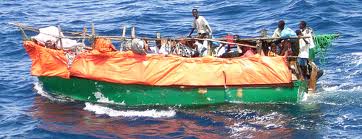
On Monday Spanish Maritime Rescue Services intercepted 35 illegal immigrants trying to cross the Strait of Gibraltar aboard makeshift boats to reach the Spanish coast. The 35 migrants from Africa had embarked on four inflatable boats. The Red Cross was able to rescue nine of them before a passing ship helped rescue 26 migrants traveling in the other three boats.

Illegal migrants in a boat attempt to reach Spain

Rescuers distributed blankets before returning to the port of Tarifa, on the coast of Andalusia, in southern Spain.

At the end of October, at least 16 illegal immigrants were killed while trying to reach the Spanish coast from Morocco. Spain has tightened security around its enclave of Melilla by enhancing border fence after an attempted incursion of sixty illegal migrants. The enclaves of Ceuta and Melilla, both on the northern coast of Morocco are the only land border between Africa and Europe. Fifty migrants from sub-Saharan Africa, however, were able to cross the border at Melilla a week ago. In that attempt 12 people were wounded according to the Spanish authorities. But the Moroccan Association for Human Rights puts the figure at 25. Since the summer, hundreds of other migrants have tried to force their way through the border. The humanitarian organization Médecins Sans Frontières (MSF), which is preparing to leave Morocco, denounced last week an increase in "violence" inflicted by Spanish and Moroccan police against illegal migrants from sub-Saharan Africa trying to reach Europe.


Casablanca: beware the false policemen

Casablanca police have had a small triumph of fact over fiction - by arresting a fake policeman. District police in the Hay Hassani area nabbed an alleged fake police officer who, along with two others were the subject of complaints, says a police source.

Their last victim was suspicious of the behaviour of three alleged police who threatened first take him to the police station before demanding money for their "services". If he paid up he would be allowed to go free, he was told. The victim gave them 4500 dirhams, but the fake police said it was not enough and demanded he write a cheque payable to the bearer as collateral and then find the rest of the agreed amount.

Investigations by the real police were aided by detailed descriptions of the false police and were quick to identify the the crooks. Once surrounded by investigators the crooks were discovered to be intoxicated and tried to resist by flashing a knife. They attacked the police but were finally subdued and taken into custody.

19th International Festival of Mediterranean Cinema

Twelve films will compete for the Grand Prize at the 19th International Mediterranean Film Festival in Tetouan. The festival is scheduled to run from March 23 to 30. The films in competition are from ten Mediterranean countries: Morocco, Egypt, Tunisia, Algeria, Palestine, Spain, France, Italy, Croatia and Romania.

The Italian producer, Grazia Volpi, will chair the feature film jury alongside Moroccan director Abdelmajid R'chiche, actress Teresa Taba from the Ivory Coast, Egyptian actor Fathy Abdelouahab and Portuguese director Pedro Antonio Vasconcelos.

This 19th edition of the festival will open with the Franco-Romanian film "Beyond the Hills" and closed by the Moroccan film "The Horses of God". This year the festival will feature Algerian and Portuguese cinema by screening an anthology of film's such as "Chronicles of Years of Fire" by Mohamed Lakhdar Hamina, and the film "La Montagne de Baya" by Azeddine Meddour. The festival will also pay tribute to many Mediterranean cinema greats, including the Egyptian actor Ahmad Hilmi who will be present at the screening of his latest film "Ala Jottati" (2013), the Tunisian director and filmmaker Reda Bahi and Spanish director Fernando Trueba.

Moroccan cinema will also be honoured in the person of actress Touria Alaoui whose film "Bab Tarfaya Labhar" will be screened and director Saad Chraibi whose film career is traced through the films "Jawhara, Daughter of Prison", "Thirst", "Women and Women", "Islamour" and "Women in Mirrors".


Boxing at Jardin des Biehn

A reminder that the boxing training with Christophe Tendil begins Saturday, March 23 at 9:30.

If you decide to attend, please let the good folks at Jardin des Biehn if you need boxing gloves.

Le Jardin des Biehn is not all about the pugulistic art - the stomach is also being catered for with the news that on Monday, March 25, there will be a dinner concert at Fez Cafe Restaurant.

Rocked by the talented Leo and his Oud, intoxicated by the Chef Hicham, the fixed-price menu is 220 dirhams per person.  The concert begins at 20h and it is suggested you make a reservation.

Menu - 220 dirhams

- Terrine of sole, celery root and saffron
- Chicken breast stuffed with mushroom polenta, artichokes and beans
- Strawberry Mousse


OPINION
This week The National Interest ran an interesting article by Ahmed Charai "The Great Potential of a U.S.-Moroccan Relationship".

The West faces a serious dilemma on the African continent as French forces begin the process of withdrawing troops from Mali in April. As the New York Times noted this week, French troops were critical in routing Al Qaeda-linked militants from the northeastern part of the country, where the extremists had managed to conquer a territory the size of France itself and subject the population to a reign of terror. The enclave was fast becoming a bastion of support for Al Qaeda in the Islamic Maghreb and other affiliated groups below the Sahara—whose growth on the African continent poses one of the most grave terror threats to global security today.

The reason for Western concerns about French withdrawal is that the coalition of African armies with whom they are now allied lack the capacity to hold the territory on their own. “No amount of exercise or training in the next couple weeks or months can, in itself, prepare African forces for their new role in Mali,” U.S. counterterrorism specialist Benjamin P. Nickels told the Times. And so at precisely the time when most Western governments wish to reduce their military commitments abroad in light of trying economic circumstances, they face pressure to do the opposite.

This problem, in turn, is only part of a larger challenge Europe and the United States face in Africa, a continent which, though formidable, poses opportunities as well as risks. As Assistant Secretary of State Johnnie Carson noted in a statement earlier this year, “It is my firm belief that Africa represents the next global economic frontier. Sub-Saharan Africa continues to weather the global economic crisis more successfully than other regions, and is home to six—and soon to be seven—of the ten fastest growing economies in the world.” Yet he also noted in substance that American entrepreneurs lack the knowledge base and network on the continent to take advantage of the opportunity.

Meanwhile, elites in the U.S. private sector have observed that foreign direct investment in Africa, while promising in terms of its potential to develop and enrich the continent and investors, could easily be reversed through capital flight should Al-Qaeda gains imperil the security of multinational installations.

In order to scale back military commitments, strengthen indigenous military capabilities, and benefit from the business opportunities Africa poses, the United States would do well to find a local partner that can facilitate all three. A strong candidate to play this role is a staunch US ally, the Kingdom of Morocco: Since Muhammad VI assumed the throne in 1999, the country has worked to establish goodwill, political and economic ties, and a strong security footprint across the continent—both north and south of the Sahara.

King Mohammed VI visited three countries in sub-Saharan Africa last week: Senegal, Gabon, and Ivory Coast. As in forays to seven other African states since February 2005, he brought along teams of intelligence, political and cultural advisors, as well as Moroccan entrepreneurs. This mixed portfolio, unleashed in a series of working sessions with counterparts in each country, reflects the monarchy’s approach to building ties deep into Africa while bolstering continent-wide security as well.

King Mohammed appears to believe that security in any developing country rests on a combination of military operations, intelligence work and policing on the one hand, and anti-poverty measures, the promotion of religious tolerance and opportunity-boosting political reforms on the other. This is the approach he has employed in his own country since a 2003 triple suicide bombing rattled the kingdom. It was recently consolidated by a new constitution that grants sweeping domestic authorities to an elected chief of government, mandates equal opportunity for women and minorities, and democratizes domestic security by establishing a consultative security council bringing the monarchy and elected officials together.

In accordance with these principles, Morocco has established goodwill in much of Africa through a series of development projects. Among the more prominent examples, the kingdom’s National Office of Electricity is now electrifying rural areas along the Senegal River, affecting 550 villages and 360,000 people. Along the way, the venture trains Senegalese experts in techniques honed inside Morocco, thanks to a homegrown project that brought electricity to 98 percent of villages countrywide.

Other Moroccan-led ventures are improving health services on the continent. For example, the kingdom’s pharmaceutical giant, Sothema, was tapped to establish a branch in Dakar which now makes and exports affordable drugs to treat cholera, malaria, and diarrheal diseases in Africa’s poorest countries. These projects, along with the Moroccan private sector’s investments in many sub-Saharan states, are facilitated by a Moroccan banking network spanning 20 African nations. Human resources for the work are typically drawn from a combination of indigenous talent and Moroccan expatriate communities across the continent who lend their bilingual, bicultural skills to these bilateral ventures.


SHARE THIS!
Print Friendly and PDF

Monday, January 28, 2013

Want to Study in the US?


Recently The View from Fez highlighted a scholarship programme for Moroccan students (see story here). But there are other avenues available for those who want to study in the United States. There are a wide variety of exchange programs available. Find out more at an information night this Wednesday at 5pm.
Deputy Cultural Affairs Officer, Sam Werberg, from the U.S. Embassy in Rabat will give a presentation and discuss the various U.S. government-sponsored exchange programs available to Moroccans, including exchange programs for high school students, university students, post-graduate students, and professionals.

We will discuss who is eligible for these programs, how to apply, and how to find out more information about each program. We will talk about the benefits of these programs and what some of our exchange program alumni have done once they returned to Morocco.

Who: American Language Center students, high school and university students and professionals
When: Thursday January 30 at 5pm
Where: American Language Center, Fez, Room 1

SHARE THIS!
Print Friendly and PDF

Saturday, January 19, 2013

USA Offers Scholarships for Moroccan Students


The Public Affairs Section of the U.S. Embassy in Rabat is seeking candidates for the 2013 Middle East Partnership Initiative (MEPI) for Student Leaders program. 


University level students between 18 and 24 years of age who have a good command of English; who demonstrate leadership through academic work, community involvement and extracurricular activities; who have a strong interest in civic engagement and learning about the United States and its societal institutions; who have never traveled to the United States, are invited to apply for this program.

The program offers up to three (3) scholarships for Moroccan students currently at university or a higher educational institution. The application deadline is Friday, February 8, 2013.

For more details:
http://photos.state.gov/libraries/morocco/19452/pdfs/2013MEPIStudent.pdf

Application form:
http://photos.state.gov/libraries/morocco/751088/WordDocs/2013MEPIForm.docx


SHARE THIS!

Thursday, September 13, 2012

Anti-Muslim Film Protests Spread - Update


On Tuesday, the US ambassador to Tripoli, Chris Stevens, and three other Americans were killed in the Libyan city of Benghazi when an armed mob stormed the consulate, torching the building after looting it. The protests were sparked by the American-made amateur video called "Innocence of Muslims." 

The low-budget movie, in which actors have strong American accents, portrays Muslims as immoral and gratuitously violent. It also pokes fun at the Prophet Mohammed and touches on themes of paedophilia and homosexuality. According to the Wall Street Journal the film was produced by Israeli-American Sam Bacile who describes Islam as a cancer.

Protestors in Casablanca

Morocco has described as "shameful aggression" the attack on the US consulate in the Libyan city of Benghazi, and presented its "sincere condolences" to the US government and people, while denouncing the film that prompted the attack. The Moroccan government stressed that the attack "cannot, in any case, be justified," in a statement carried by the official MAP news agency.

In Casablanca on Wednesday hundreds of people protested outside the US consulate. The protesters, numbering between 300 and 400 mostly young activists, gathered around 200 metres from the consulate amid a heavy police presence. Some shouted anti-US slogans, including "Death to Obama!", but without resorting to violence. The Casablanca protest appeared to have been called spontaneously, via social media networks, and without the involvement of any particular organisation.

Police guard the US consulate in Casablanca in 2007 (photo: Abdelhak Senna)

The two-hour movie that sparked the protests first came to attention in Egypt after its trailer was dubbed into Arabic and posted on YouTube.

The reaction in the social media has been swift and angry, with one Moroccan woman's Facebook comment about the film's makers "I will enjoy seeing them all burn in hell, inshallah" being typical of many responses.

Unfortunately, in the United States, the film is being promoted by an extreme anti-Muslim Christian pastor Terry Jones. On Wednesday, a MSNBC panel debated whether Jones should be held responsible for the deaths resulting from the protests. Others on the left have presented similar arguments, saying the film is to blame for the attacks, seemingly deflecting blame from the radical Islamists who carried out the acts of violence.

Hillary Clinton Comments

US Secretary of State Hillary Clinton has called a US-produced anti-Islam film that has angered Muslim communities in North Africa "disgusting" but said it cannot be used as a justification for the kind of violence seen at the US embassy in Libya.

The US Embassy in Morocco, like other  embassies, has moved quickly and widely disseminated Secretary Hilary Clinton's earlier remarks about the killings in Libya - in Arabic. (See the Arabic text here)


The film's director in hiding

The director of a film that sparked protests says he is "upset" at the death of the US ambassador to Libya and has gone into hiding, a consultant on the project said on Wednesday.

"He's very upset that the ambassador got murdered," Steve Klein told AFP, adding that he had spoken to filmmaker Sam Bacile by phone earlier in the day, but did not know his location.

When Bacile - not his real name - was told about the death of US ambassador to Libya Chris Stevens, "he melted, he fell apart," added Klein, who said he was one of some 15 people behind the film, "Innocence of Muslims."  He added that the reported Israeli-American director could suffer the same fate as Dutch filmmaker Theo Van Gogh, who was assassinated in 2004 after triggering protests with an anti-Muslim film.

Asked if Bacile could be killed, he said: "If he goes public I'm sure he will."


Protestors on the walls of the US Embassy in Cairo 

Other reaction

In Cairo, several thousand people stormed the US embassy in a similar protest against the film. On Thursday Egyptian police used tear gas as they clashed with the stone-throwing crowd after 13 people were injured in overnight unrest, according to the health ministry.

The U.S. embassy in Cairo issued an apology to Muslims shortly after rioting Muslims tore apart the American flag outside the embassy: “The Embassy of the United States in Cairo condemns the continuing efforts by misguided individuals to hurt the religious feelings of Muslims – as we condemn efforts to offend believers of all religions.”

A protester throws a tear gas canister near the US embassy in Cairo   photo: Amr Dalsh

Algeria's foreign ministry, meanwhile, condemned the low-budget movie, "Innocence of Muslims," The Algerian Foreign Minister, Mourad Medelci, offered his condolences to his US counterpart Hilary Clinton, after the deadly attack. Ministry spokesman Amar Belani meanwhile deplored "the irresponsibility of the authors of the film... which offends Islam and his prophet".

"The outrages on the sacred religious symbols... can only result in disapproval and indignation, because these provocations are designed to fuel hatred," he added.

The US embassy in Algiers issued an emergency travel warning, urging US citizens to avoid large crowds, and to "be aware of the potential for protests or demonstrations at any time."

Protestors in Gaza  photo: Suhaib Salem

Further, U.S. embassies in at least seven countries in the Middle East, including Sudan, Tunisia and Morocco, Africa and the Caucuses are warning of possible anti-American protests.

The embassies in Armenia, Burundi, Kuwait, Sudan, Tunisia and Zambia, along with the embassy in Egypt, which was hit by a protest on Tuesday, all issued warnings on Wednesday advising Americans to be particularly vigilant.

The warnings, posted on the embassies’ websites, do not report any specific threat to Americans but note that demonstrations can become violent.

Protests have also broken out in Kuwait, Tunisia, Yemen, Gaza and Sudan.

Yemeni police shot dead a protester and wounded five others when they opened fire on a crowd attempting to storm the United States embassy in Sana'a to protest the film. The shooting in Sana'a came as protesters, chanting "O, messenger of Allah... O, Mohammed" launched a second charge on the complex which they had stormed earlier, but were ejected by the security forces.

Yemen president Abdrabuh Mansur Hadi apologised to his US counterpart Barack Obama and the American people for the acts of a "mob" and ordered a probe.

In Iran, up to 500 people protested in Tehran, chanting "Death to America!" and death to the movie's director. The rally took place near the Swiss embassy, which handles US interests in the absence of US-Iran diplomatic ties.

Fearing a violent backlash, Afghan president Hamid Karzai has postponed a planned visit to Norway.

The US has sent a detachment of 50 marines to secure the American embassy in the Libyan capital Tripoli, where staff numbers were being cut to emergency levels.

Washington also began evacuating all its staff from its mission in Benghazi while at the same time sending two destroyers to "the vicinity of Libya" as a precautionary measure, a senior US official said.

SHARE THIS!

Monday, August 13, 2012

The U.S. Millennium Challenge and Morocco’s Fez Medina Project - UPDATE


Morocco’s Fez Medina project is an ambitious and challenging undertaking that includes renovating four 14th- and 15th-century fondouks in the ancient medina of Fez, as well as a public square called Place Lalla Yeddouna, and renovating or reconstructing approximately 20 buildings surrounding Place Lalla Yeddouna. While there has been progress, challenges still lie ahead.


The sites will eventually house production and sales facilities for some of Fez’s world-renowned artisans, as well as boutiques, cafes, restaurants, a hotel and other services — all intended to improve livelihoods for artisans and to revitalize the medina, where an estimated 30 percent of the population lives below the poverty line. One site, Fondouk Barka, has been reserved for use by women artisans.

Morocco’s Fez Medina project is part of the country’s compact with the U.S. Millennium Challenge Corporation (MCC) and is a good example of the way MCC works with its partner countries to manage completion risks associated with the five-year clock on its compacts, MCC said in a July 27 press release.

Any country working under an MCC compact hears the persistent ticking of the clock running on the compact’s deadline, which starts the moment implementation begins (which MCC refers to as “entry into force”). It seems to get louder as the compact’s end approaches.

MCC and partner countries design projects with the five-year timeline in mind, and the time limit creates strong incentives to complete compact activities on time. But despite the care that goes into compact development, things do not always go according to plan.


OBSTACLES TO COMPLETION

There have been many challenges. The Medina, a living vestige of the past, is a walled, carless urban area founded in the ninth century that was declared a UNESCO World Heritage site in 1981. It is one of the world’s most densely populated areas. Equipment and materials must be maneuvered through narrow passageways sometimes less than 2 meters wide, usually by donkey. Change is not always welcome — or easy — and time can seem to move slowly.

When the project was first proposed, none of the requisite market, feasibility or socio-environmental studies had been done. Architectural designs did not exist, and some of the sites were occupied by people who would have to be relocated according to MCC’s rigorous resettlement guidelines. The government of Morocco had been trying for more than two decades to rehabilitate Place Lalla Yeddouna, but it faced stiff opposition to relocating some of the polluting activities, which were creating environmental, health and safety hazards.


Conceptual design of the new Place Lalla Yeddouna.

Now, nearly four years into the compact, most of these obstacles have been overcome. Reconstruction of the fondouks, though still facing risks, is expected to be completed before the end of the compact. A resettlement action plan to improve the livelihoods of more than 1,000 persons affected by the project has been developed and implemented.

An MCC-sponsored open international architectural design competition for Place Lalla Yeddouna  drew worldwide attention and participation from more than 175 architectural teams representing more than 40 countries.  (See our story here) The competition generated an unprecedented level of public consultation and dialogue about the future of the medina and how to revitalize it while respecting its rich cultural, social and architectural heritage.

The US$55,000 winning entry was by London-based Mossessian and Partners, with Casablanca-based architects Yassir Khalil Studio. Their vision includes public squares, shops, residences, a hotel, restaurants, an art gallery and lots of space for artisans’ workshops.

Winning architects - Michel Mossessian & Yassir Khahlil

MCC and the government of Morocco have closely monitored progress and continuously assessed, managed and attempted to mitigate completion risk. But it became clear earlier in 2012 that, despite everyone’s best efforts, construction and rehabilitation at Place Lalla Yeddouna  was unlikely to be completed before the end of the compact. The parties faced a difficult decision: either stop the project immediately or find a creative way to complete it — even if some of the work had to continue after MCC’s funding stops in September 2013.

A COMMITMENT TO COUNTRY OWNERSHIP

The Moroccan government committed to financing and completing all work that remains unfinished at the compact’s end. In addition, the government agreed to pre-finance these works, and MCC committed to reimburse the government for defined packages of work completed before the compact’s end. This creative risk-sharing mechanism, the first of its kind for MCC, has allowed the project to proceed even though the Moroccan government acknowledges that work will continue beyond September 2013.

The importance of this goes well beyond securing the necessary post-compact funding for completion of the project. MCC took a calculated risk in agreeing to fund the project and the Moroccan government has stepped up to share that risk, proving that the Fez project is truly aligned with the country’s national development priorities.

In the end, U.S. taxpayer funds are leveraging the Moroccan government’s resources in a great example of a real development partnership. At the same time, capacity building in Morocco continues as the project is implemented to MCC’s rigorous procurement, environmental and social assessment, fiscal accountability, and monitoring and evaluation standards, which provide an opportunity to reach better, more sustainable outcomes.


There is a 14th century bridge called Bim Lamdoun at Place Lalla Yeddouna . Its name is Arabic for “between two cities” because it connects the al-Qarawiyine and al-Andalous sides of the old city. The bridge has come to symbolize this project — the link between Fez’s rich past, its revitalized future and the shared commitment of the United States and Morocco.


SHARE THIS!