Wednesday, October 10, 2012

Fes Festival of World Sacred Music - another view


Over the years there have been a lot of articles written about the Fes Festival of World Sacred Music all complimentary, but few have captured the Festival spirit as well as this beautifully crafted piece by Salima Yacoubi Soussane. It first appeared back in September on MTV Iggy
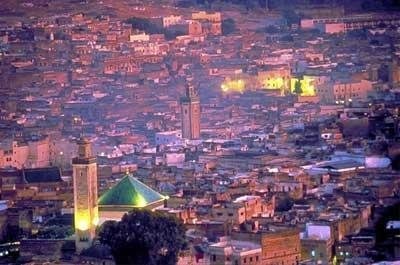
The Fez Medina

Tripping Out: Finding Bliss at the Fes Festival of World Sacred Music

It’s morning, and you’re listening to the news as you drink your expresso. You think that the world sucks. Like Hiro Nakamura from the TV show Heroes, you wish you were able to teleport yourself to a better world. A place where you could get high on adventure, culture and music… Well then, come to Morocco in June, to the Fes Festival of World Sacred Music. With musicians and artists from all over the world, this event is off-the-charts and will transport you to 9 days and 9 nights of discovery, astonishment and just plain fun.

The kingdom of Morocco, one of the oldest in the world, has historically seduced numerous artists. With its Arab, Berber, African and Western influenced traditions, the country has inspired painters like Matisse and Delacroix, fashion designer Yves Saint Laurent and Beat writers like Paul Bowles and William Burroughs.

Musical adventurers like Jimi Hendrix, Ornette Coleman and the Rolling Stones have been infatuated by Morroco’s mystical rhythms, too, specially the Sufi beats of Gnawa and Joujouka music. Not surprisingly U2 has also had a long history with Morocco. They visited the country in 1998 for their classic album Achtung baby. And more recently, the Medina of Fes (or “Fez”), the old walled city, was the cinematic backdrop for their 2007 video “Magnificent.”

There’s a reason for this fascination with the Medina. In it, the senses open up in a cascade, like a swarm of orange blossoms. Its overcrowded streets are jammed with color-saturated shops. Merchants sell oriental perfumes, spices and djellabas and every imaginable delightful handicraft. The maze of its tight alleys never fail to open up the mind. Isn’t Fes a historic centre for exchanges, both spiritual and cultural?

Certainly, the Fes Festival bears proof of it. “Re-Enchanting the World” was the theme and promise of its 2012 edition. An ambitious goal but one that it surely delivered.

For its 18th year, the festival’s musical program stretched from ancient Sufi chants to the intimate incantations of the Iranian Vahdat sisters, to the poignant vibrato of Joan Baez and Björk’s futurist electro-rhythms.

It should be noted, Björk, the atypical singer who often arises from a dreamlike world, had visited the mystical city in 1998 and has remained a fan ever since. Zeyba Rahman, Director of the Festival for Asia and North America, recalls: “We were in a house near Jamai Palace at a private music jam with Jon Pareles (Chief Popular Music Critic for the New York Times) when we saw this young woman in the doorway. She was wearing a pink tutu and a beaver fur hat —in the middle of the Fassi summer! She also had on retro pink slippers with pom-poms… The music woke her and she got up, followed the sound and arrived at the door. That was incredible!”

Björk was one of several headliners at this year’s event, arguably one of the best vintages of the Festival.

From the diverse programming to the unique settings and passionate audiences, this edition is like a total acid trip, without the acid. It takes you through crazy moments that eventually lead you to new realizations: you blackout in groups, listening to voices from other times. You see mirages in the medina and fall into trance with Sufi music. At the end of this 5-step journey towards re-enchantment, you feel closer to the stranger-cum-spectator sitting next to you, no matter where he’s from. Your emotional fiber is called upon repeatedly. You consider new ideas, experiences and become more aware of your own humanity.


1. Take a Magical Ride Back Into Time in Fes

Upon arrival you climb onto a flying carpet and see Fez’s rooftops run by like a dream. Here “the past is still alive,” says Paul Bowles. But don’t worry, you can still use your iPhone, Blackberry or any other survival device!

The experience of the Medina, the ancient city (a UNESCO World Heritage Site) awaits you. Once you cross its massive medieval gates, you find yourself in tight, sepia lit alleys. The warm and dry wind of the 15th century still blows here. It’s total immersion into another time! A time when Leo Africanus was first discovering the world on the benches of Al Qarawin, the oldest university in the world, when Fes was still the capital of the kingdom.

Then, there’s the festival. All the Fes Festival venues are ancient palaces or riads (historic mansions) within the Medina. Originally Sultan Moulay Abd al-Aziz’s 19th century summer palace, the Dar Batha Museum is the epicenter of the festival. In the morning, there are current affairs centered talks; in the afternoon, performances are presented—both under the museum’s majestic hundred-year-old oak tree.

Festival magic in Fez - Photo: Vanessa Bonnin (The View from Fez)

Bab Al Makina, a monumental gate built in 1886 during the reign of Moulay Al Hassan, is the stage for the 2012 grand opening concert – a stunning homage to poet Omar Khayyam. French movie director Toni Gatlif, who directed the special work, assembled singers from countries bordering the Middle Eastern Highway of the Kings and Central Asian Silk Road for a unique performance. Inspired by Khayyam’s words: Be happy for this moment. This moment is your life—the artistic setting was minimal, yet rich with symbols. The chandeliers that floated on the stage were reminiscent of an opulent reception room. Among them, a cylinder wrapped in a white sheet spinning incessantly, the sheet moving with the wind acts as a nod to the Whirling Dervishes and the Sufi philosophy of the Persian poet. In the audience, the wife of the King Of Morocco, Princess Salma, added magic to the evening. As Gatlif explained to MTV Iggy, “This setting evokes the lives of the Andalusian kings. They used to host private evenings with the best artists of the world.”

2. Treasure hunting

Some evenings of the Festival are like treasure hunts. In the labyrinth of the Medina, you have to find the night’s performance, nestled in one of the many historic riads. Tonight, as you follow the arrows leading to the concert at Dar Al Mokri, you run into children playing football. Beggars float by like ghosts. In the alleys squeezed between high terracotta walls, clouds of incense waft out from dark windows. Veiled women and sinuous men, like models from Calvin Klein ads, linger about. But don’t expect them to give you directions. Great treasures do not reveal themselves so easily. You will have to earn them.

Tripping Out: Finding Bliss at the Fes Festival of World Sacred Music
  Photo by Nusrat Durrani

It is the Sufi songs of the Vahdat sisters that you need to seek out this evening. The sound of the “ney” is a good hint to where they might be. Literally translated as “reed” in Persian, this flute weaves its mystical magic around the songs of the Iranian women. Their otherworldly voices seem to come from a forgotten place, possibly because in Iran, women have no right to stage performances, except in private venues. Every time we travel, we are rewarded with a moment of grace. For the festival’s audience, this intoxicating performance might have been it. A moment where the rarely seen, beautiful face of Iran was finally revealed.

Last year’s moment of bliss came with the a capella, sacred and secular, songs by Terra Maire, a mother-daughter duo from southern France singing in the Occitan dialect. On the rooftop of the riad “Le Jardin des Biehn,” under the moon’s warm, golden light, they sang medieval and sacred melodies using primitive instruments. The exceptional range of their powerful yet, soft voices felt like balm for the heart. The audience was transported with their otherworldly voices for a couple of minutes. A thick silence froze the moment until a wave of goosebumps swept across the crowd. Once everyone pulled themselves together, Sandrine (24), a French student sitting next to me, whispered: “This is what I love about the festival. This timeless performance is the very soul of the Fes Festival.”

3. Sufi Trance and the Vanishing of the Ego

In the gardens of Dar Tazi, the Festival headquarters in the heart of the Medina, a diverse crowd flows in for the free Sufi nights program, generally after the evening concert. The gardens are often totally packed with people dancing and clapping along with the Sufi rhythms. Three generations of Fassi families, Parisian students, German professors, English artists, all converge there to lose themselves and bliss out. The ecstatic, trance-inducing Sufi music bridges the gap between East and West. And because Sufism preaches tolerance and openness, it is an easily accessible doorway into Muslim culture. The purpose of Sufi music is to get closer to the Divine through music and dance rituals. There are several Sufi communities or Tariqas that are still in practice and exist in Fes including: the Aissawas, Charkawas, Tijaninias —Youssou N’Dour’s Sufi community, and others. Each night, a different community shares their sacred songs and ritual offerings, a variation on themes of love and devotional surrender.

Sufi Hadra Chefchounia - Photo Phil Murphy (The View from Fez) 

The repetitive rhythms and pulsating percussion invite our overwhelmed minds to slow down and “free” ourselves through dance. The body starts moving back and forth in a hypnotic fashion until the ego vanishes and rapture takes hold. We start to fly… It is this state of contemplation and a feeling of soaring that we feel, like what the Whirling Dervishes reach when they spin into communion with the Divine. With the right hand pointing at the sky, the left at the ground, their dance is a prayer.

Sufi music from other parts of the globe were also presented during the afternoon shows at Batha. Most memorable was the performance of the revered Mukhtiyar Ali from Rajasthan, India. Singing Sufi poetry by 15th century mystical poet Kabir, his pure and light voice did full justice to Kabir’s verse, transporting us again and again as he sang:

“I went out in search of the worst person
And later, on searching my own soul,
Realised that none could be worse than me
For looking for the worst in others”

or

“I sing and play, I entertain everyone;
I am unaware of caste or religious barriers”

Mukhtiyar represents the 26th generation of a humble community of Rajasthan’s musicians, which has successfully kept alive the oral tradition of Sufiana kalam or repertoire. This particular form of Sufi music uses powerful words to reach Divine communion, ectasy and total detachment from worldly concerns.

4. Rebellion with Björk and Joan Baez

In another time, space and faithful to her futuristic universe, Björk landed on the main stage of Bab EL Makina with a dress made of electric blue helium balls and a huge orange wig. She was backed by a choir of barefoot young women in robes and an ecletic band. Projections of quirky images of nature set the backdrop, which created a surreal and beautiful environment for her soaring voice.


Björk live in Fez - photo Suzanna Clarke (The View from Fez)

The Icelandic pixie smiled, sang, whispered and endeared herself to her fans in so many ways including the charming way she rolled the ‘Rs’ of “miracles.” Her fans were thrilled. Those who did not know her were dumbfounded. The anthemic finale, “Raise the flag,” urged the audience to raise the flag of independence “higher and higher.” Words that are particularly resonant in the Arab world today.

Joan Baez brought the Festival home in style - Photo Sandy McCutcheon (The View from Fez)

“The Arab Spring is as extraordinary as having a black president,” said Joan Baez the following night. Wearing an elegant black dress and a red scarf, the American folk singer and icon, 70, performed the Festival’s closing concert. Still beautiful and generous, she quickly created a close relationship with the audience. She told the story of each song, evoking its context and its cause. Her set included Bob Dylan’s ”With God on Our Side,” which she ended with John Lennon’s classic “Imagine,” warmly accompanied by the audience, of course. She also urged the youth to take risks because ”for small victories, one has to accept great defeats.” An inspiring thought indeed from someone who has dedicated her career to fighting for peace and equality.

5. Re-Enchantment

At the end of this whole trip, you feel that something has changed inside you.

Backpackers from Hong Kong, intellectuals from Europe and America— they all made the trip to the festival. Hassan, a 35-year old babouche salesman from down the block in the medina, asked his friend Ali to mind his shop in order to attend a show. And Amine, a 24-year old waiter at Café Clock, switched shifts to be able to attend an evening show. Regardless of where anyone was coming from, they all made the pilgrimage to the Festival of World Sacred Music. They knew that they would be moved and enriched by the experience.

Kathak dance: Anuj Mishra and Niha Singh from India - Photo Suzanna Clarke (The View from Fez)

So now you have listened to the meditative songs of musicians from far flung parts of the world. You have met scholars, visionaries and dignitaries from countries you knew nothing about. A much more colorful, nuanced vision of the world has taken shape inside you. Now, foreigners cease to appear abstract. They become people with names, dreams and feelings, just like you.

“I feel relieved,” said an American professor from Connecticut.

‘Relieved of what,’ I asked.

“Well I thought that Morocco was dangerous. All my friends and family were worried for me. You know, we hear so many things about Muslims and Arabs… Now I’d like to invite Moroccan musicians to lecture to my students and to show them another face of the Arab world.”

In the same vein, for Omayyah Louisa Al-Shabab, an American University of Paris alumni, “The Festival is a great opportunity for Westerners and especially the Western youth to get to know the Arab Muslim culture and experience it firsthand.”

Faouzi Skali would be delighted to hear these sentiments. The festival is his brainchild. He sees it as a “spiritual Davos,” where the priority comes back to human values. Skali is also an anthropologist, a Sufi and a fervent optimist. His festival has been honored by the United Nations as “one of seven world heroes for the Dialogue Amongst Civilizations.”

Thus, through its richness, character and ability to awaken awareness, this festival is a beautiful way to bliss. When you return home, your morning coffee tastes slightly different. Now you quietly savor it, a little more assured about the state of the world. Unlike most festivals we frequent these days, the Fes Festival of World Sacred Music is anchored in spirituality. Its 9 days and 9 nights will make you believe again.

Read more about the 2012 Fes Festival of World Sacred Music here
Fes Festival of World Sacred Music 2013 June 7 - 15


 SHARE THIS!

Tuesday, October 09, 2012

Microsoft Supports Tamazight (Berber) Language in Morocco


The IT giant Microsoft has announced that their newest Operating system, Windows 8, will include the ability to use Tamazight as a language of choice.


The new Windows 8 version is going to be launched this week during a visit by Microsoft president Jean-Philippe to Morocco.

Users can choose between two main keyboards. The first one is the Tefinagh alphabet of Morocco developed by the Royale Institute of Cultural Tamazight and the second one is the Kabylian version of Tifinagh.


Microsoft has added Tamazight in order support Morocco's democratic transition and to enhance the integration of Tamazight as a formal language of the country.

According to Larbi Arbaoui, writing for Morocco World News, first news of the release came during the celebrations of the International Organization for Science and Culture of the mother tongue in the United Nations on 21 February, when Microsoft announced that Windows 8 would be available in 14 new languages, including Tamazight.

Microsoft has not yet announced the retail price of Windows 8 Pro, but observers say that Microsoft’s Windows 8 Pro software will be priced at $199 after a promotional price of $69.99 that will expire on January 31st 2013, and that Microsoft users are to be offered Windows 8 Pro upgrades online for $39.99.

The official release of Microsoft Windows 8 is scheduled for October 26. Microsoft has also announced there will be a new service in the field of Cloud Computing in Morocco.

While the news was welcomed in Morocco by Amazigh activists, several have told The View from Fez that it is more important to alleviate the conditions of poverty and disadvantage experienced by Amazigh families living in very poor conditions in the Atlas Mountain regions of the country.

SHARE THIS!

Beware Moroccan Internet Scam

A warning that there is a scam email circulating at the moment that may fool the unwary. Usually scam emails are easy to pick because the domain is Nigerian, Russian, Ukrainian or Bulgarian, but the reason we are pointing this one out is that the email, claiming to be from the CIA, is from a domain in Morocco.


Take close look at the email below and you will soon see that it is a very amateur attempt. For a start "Capt. Jeffry Adams, Investigation Officer of the Email Investigation Agency" is writing to "undisclosed recipients" from a Moroccan email address: blotel@menara.ma. which was not a CIA account when we last checked. Hopefully the Moroccan ISP Menara will close the account. Probably most embarrassing for the CIA is Captain Jeffry Adams himself, whose awkward use of the English language would certainly not be up to the Agency standards. One suspects he would have failed the entrance test!

This is from the email account investigation agency, we where set up by the U.N working under the CIA (Central Intelligence Agency) Bodies, our duties is to monitor and investigate email addresses and mails to prevent individuals from getting scam.

You are hereby required to forward to this office via email; investigation-team@live.com every mail and content of anyone you are dealing any transaction with online or paying money to, or any email you suspect to be scam, so we can investigate them and let you know the legitimacy, and if any is to be Fraudulent, we shall immediately send the FBI after them, and charge them for Fraud


Our duties is to fight against scam and terrorism.
If Capt Adams would like to send us his personal details we will see if we can enrol him in an English Language class at the American Language Center.  Jokes about the poor language skills aside - never send personal email information to someone you don't know or open an attachment from an unfamiliar email address. Here are the basic rules.

If you encounter an unsolicited e-mail that asks you, either directly, or through a web site, for personal financial or identity information, such as Social Security number, passwords, or other identifiers, exercise extreme caution.

If you need to update your information online, use the normal process you've used before, or open a new browser window and type in the website address of the legitimate company's account maintenance page.

If a website address is unfamiliar, it's probably not real. Only use the address that you have used before, or start at your normal homepage.Always report fraudulent or suspicious e-mail to your ISP.

Most companies require you to log in to a secure site. Look for the lock at the bottom of your browser and "https" in front of the website address.

Take note of the header address on the web site. Most legitimate sites will have a relatively short internet address that usually depicts the business name followed by ".com," or possibly ".org." Spoof sites are more likely to have an excessively long strong of characters in the header, with the legitimate business name somewhere in the string, or possibly not at all.

If you have any doubts about an e-mail or website, contact the legitimate company directly. Make a copy of the questionable web site's URL address, send it to the legitimate business and ask if the request is legitimate.


SHARE THIS!

Marrakech: The City '1062-1957 - Exhibition in Salé


An exhibition that journeys into the heart of the history of urban Marrakech is set to open on October 11 in Salé. Featuring texts from travellers, writers, architects and planners, as well as engravings and drawings of antique prints, "Marrakech: The city '1062-1957', will draw the crowds at the Mulay Rachid Maamara in Salé before showing at other cities around the country.

The exhibition has been produced by the Montada Project and Barcelona's College of Architecture and Engineering ​​in collaboration with the Sala Al Moustaqbal Association and the Regional Development Centre of Tensiff. The show will feature a variety of valuable works.

Marrakech and El Badi Palace in 1640 , by Adrian Matham 

Among these are reproductions, such as an engraving (above) by Adriaen Matham, Palatium Magni Regis Maroci In Barbaria (1640-1641) from the Rijksmuseum, and the map of the Palace of the Emperor of Morocco, by Antonio de la Conceiçaeo (1549-1589) from the Royal Library of the Monastery of San Lorenzo in Escorial.

The exhibition, which is aimed at integrating different ages and cultures, also includes reproductions of works by urbanist Henri Prost (1874-1969).

"During Project Montada we have promoted the use of high quality information and materials", project director and Unesco expert Xavier Casanovas told ANSAMed.

"We want to bring reproductions of great prints and engravings and historic sights of Marrakech to the people. At the same time we want to show the short textual works of the writers, architects and planners linked to the city, who symbolize the bridge between cultures", he said.

The Montada Project, part of the Euromed Heritage IV Programme, is co-funded by the European Union for three years. "The great fortune of this city is that so much remains of its heritage to study and to learn", Faissal Cherradi, a specialist on Morocco's cultural heritage, told ANSAmed.

And, if our readers are wondering how the English saw Salé in the 1600s - The View from Fez recently discovered this ancient delight! (note: this is not in the exhibition).


SHARE THIS!

Monday, October 08, 2012

Movie ~ Une Seconde Femme - at Cinema Rex, Fez


CINEMA  -  A SECOND WIFE

Wednesday, October 10, 19h Rex Cinema
Presented by the French Institute in Fez

Members and students: 10 dh
Non-members: 20 dh

Directed by Umut Dag
Koldas with Nihal, Begüm Akkaya, Vedat Erincin
Genre Drama
Duration 1:33 min
Austrian nationality 

Fatma lives in Vienna with her husband, Mustafa, and their six children. After all these years, she tries to preserve the traditions and the social prestige of their family of Turkish immigrants. Ayse, a girl of 19 years is chosen in a village in Turkey to officially marry their son and join the family. The reality is quite different, in secret, because the Fatma decided Ayse is promised to the father, as his second wife. Thus, a relationship of trust and complicity will develop between the two women. But this event will jeopardize the stability of the entire family, who will face the eyes of the community and new challenges ...


SHARE THIS!

Morocco's “Château de Mer” in Danger of Collapse


Al Arabiya online is reporting the worrisome news that one of Morocco’s most important archeological sites, the “Château de Mer” or Palace of the Sea, is threatened with collapse. The news site attributes this to a combination of natural and man-made conditions. The Palace of the Sea, also called in Arabic Qasr al-Bahr, is a fort on the Atlantic built in 1508 by the Portuguese in the city of Safi in Western Morocco. In 1924, the fort was the classified by the French occupation as Morocco’s number one archeological site owing to its historic importance.

photo: Al Arabya

For five centuries, the castle has been exposed to ocean waves that kept eroding the stone cliff on which it was built. Now Qasr al-Bahr is in danger of collapse.

According to Abul Qassem al-Shibri, head of the Moroccan Portuguese Studies Center, erosion has gone further than just the the site in which the fort is located and extended to the main street and part of the old city. “When the tide in high, water spatters from a well in the fort’s courtyard and could travel for a distance of 20 meters,” he told Al Arabiya. “Even the iron barricades placed around the fort six meters away from that well keep shaking during this time.”

Shibri explained that the walls of the fort have been subjected to several restoration attempts, following the appearance of cracks as a result of the collapse of part of the northern tower. “However, the same cracks appear again which means that the fort is about to collapse. The cliff on which it was built can no longer stand the impact of the waves.”

Shibri attributes part of the current situation to the construction of the Safi Port pier in 1930. “Concrete barriers were built to redirect the waves in a way that allows the ship to set anchor smoothly. The waves then started beating against the cliff on which the fort is built.”

Another damage, he added, was done by the phosphate-loaded train that passes near the fort on its way to the industrial port. “The train causes tremors in the fort as well as in the old city next to it.”

Shibri stressed that the fort needs to be rescued before it is too late and explained that this requires a set of procedures. “The marine fishing port and the industrial pot need to be relocated to another place on the city shore so that the waves can go back to their normal direction. Concrete barriers also need to be built around the fort.”

Owing to the hefty cost of this project, Shibri suggested the construction of an amusement port in the place of the industrial port to generate an alternative income and promote tourism. “This will make up for the losses incurred by demolishing the old port and the cost of building the new one.”

Moroccan Minister of Culture Mohamed Amin al-Subeihi said that the decision to implement this project is not, like many believe, up to the Ministry of Culture. “This project involves the ministers of planning, industry, tourism, finance, municipalities, and others,” he told Al Arabiya.

Other relevant bodies, he added, have to take part in preparing the necessary studies for the implementation of the project. “We cannot afford to lose an invaluable historic site like this one,” he concluded.

SHARE THIS!

Sunday, October 07, 2012

Free Yoga Lessons for Women in Fez


FREE AUTUMN YOGA SESSIONS

Dynamic Yoga lessons begin again this Tuesday with classes taught by yoga enthusiast and qualified teacher, Nora, in Ziat, just 2 mins walk left of Fes et Gestes on Derb Fidayli.

Classes will be twice a week @ 11 am on Tuesday and Thursday for an hour followed by tea and cookies. Classes are a mix of Hatha, Ashtanga and Sivananda styles and can be adapted to all levels and ages.

To sign up just call 0661650017.

Come the chill the location will move into the heated yoga shala at Riad
Verus in Batha.

Sessions are female only and you'll need to bring with you a mat or rug (limited number are provided) and a bottle of water. There is also an onsite crèche so you can leave your babies and young kids to be looked after.

Private lessons available on demand for just 50 Dhm an hour.


SHARE THIS!

"Justice Without Corruption" ~ Moroccan Magistrates


Morocco magistrates stage sit-in - photo AFP ( Abdelhak Senna)

A rare Protest

More than 1000 Moroccan magistrates and judges held a sit-in on Saturday outside the Courts in Rabat.

The demonstration was organized by the Judges’ Club, a group formed in August 2011 to push for judicial reform. The group has been officially banned, but is tolerated. Club founder Yassine Mkhelli, a judge from Taounate in northern Morocco, said that more than 2,200 judges — around two-thirds of the country's total — have signed their petitition calling for reforms.

"Justice without corruption," and "We demand the independence of the judiciary," some of them read, while others called for an "urgent improvement" in the working conditions of magistrates, as promised by King Mohammed VI.

Since early last year, Morocco has witnessed sporadic social unrest, spearheaded by the February 20 protest movement demanding action on a wide range of social grievances and calling in particular for an end to corruption.

Reforms

The king has vowed to press ahead with reforms, including strengthening the judiciary's independence and battling corruption, after constitutional changes he introduced last year in a bid to contain the Arab Spring-style protests.

But frustration remains over the slow pace of reform and ongoing corruption, with hundreds of activists frequently taking to the streets of Morocco's main cities to call for change. The Islamist Justice and Development Party that won last year’s elections made battling corruption and creating a truly independent judiciary a main plank of its campaign, but judges say little has changed. An interesting observation by one judicial expert was that a lot of the impetus for these protests emanates from the north of Morocco and has now spread countrywide.

“This issue concerns all the Moroccan people who deserve a truly independent judiciary,” said Mohammed Anbar, the vice president of the club and a Supreme Court judge. “We are here, simply put, for the independence of the justice system. We want a justice system which is effective, has integrity, is strong and is independent.”

Last Friday, prior to the protest by the judges, Justice Minister Mustapha Ramid said that the judiciary is a locomotive for growth and economic prosperity because it encourages investment and guarantees the rights of individuals.

"An adaptive judicial system, and the legislative that is just, fair, equitable and effective, are required," he said. He noted that the national dialogue on the judicial reform had put in place mechanisms to protect the efficiency of the judiciary and ensure rights and freedoms.

A Basic Irony?

Maati Monjib*, a political analyst and historian, says "The irony here is that fighting genuine, large-scale corruption in Morocco isn’t really on the agenda of either the palace or the government: It is so deeply entrenched in the state that an actual attempt to uproot it could uproot the regime itself."

 *Monjib is the editor of “Islamists versus Secularists in Morocco” (2009). His remarks, translated from the Arabic, first appeared at Sada, an online journal published by the Carnegie Endowment for International Peace.


SHARE THIS!

Moroccan Chocolate Magic?


Omar and Driss entered a chocolate shop.

As they were busy looking around, Omar steals three chocolate-nut bars.

After leaving the store Omar says to Driss, "Brother, I'm the best thief ever, I stole three chocolate-nut bars, and no one saw me, you can't beat that".

"Oh, you thinks that's good?" Driss replies, “You want to see something better? Let’s go back to the shop and I'll show you real stealing."

So they went to the counter and Driss says to the shopkeeper: "Do you want to see some magic?

Shopkeeper replies, "Yes!"

Driss says, "Ok, give me one chocolate-nut bar."

The shopkeeper gives him one, and he eats it.

He asks for the second and he eats it as well.

He asks for the third and finishes that too.

The shopkeeper, fearing he is being played for a fool, asks, "Hang on! Where is the magic?"

Driss replies: "Check in my friend Omar's pocket and you'll find them!"

SHARE THIS!