Showing posts with label Polisario. Show all posts

Tuesday, May 01, 2018

Breaking News: Morocco Cuts Diplomatic Ties with Iran


Moroccan Foreign Minister Nasser Bourita said today that his country has suspended relations with Tehran and urged the Iranian ambassador to leave the country, "because of the relationship between Hezbollah and the Polisario".

Bourita said in an interview with reporters, including Anadolu's correspondent, that "Morocco has decided to close its embassy in Tehran and has asked Mohamed Taqi Muayed, the Iranian ambassador to Rabat, to leave the country".

He added that the reason for this measure was "the commitment of the Lebanese Hezbollah, backed by Iran, in a relationship with the Polisario, which threatens the security and stability of Morocco".

And explain that "his country has evidence that Hezbollah leaders had financed the Polisario and trained some of its elements."

"Rabat has information that diplomats from the Iranian embassy in Algeria have facilitated the meeting of Hezbollah leaders with the leaders of the Polisario," he added.

Iran's Embassy in Rabat

The diplomatic channels between the Islamic Republic and the kingdom were interrupted in March 2009 unilaterally by Morocco.

Officially, Rabat challenged the vision of a senior Iranian official who said the state of Bahrain was "the fourteenth province of Iran". In solidarity with the small state of the Gulf, Morocco had broken all ties with the Islamic Republic. Diplomats also spoke of the interference of Iran, and Tehran-sponsored Shiite proselytising activities.

SHARE THIS!

Friday, August 31, 2012

Moroccan News Briefs #70


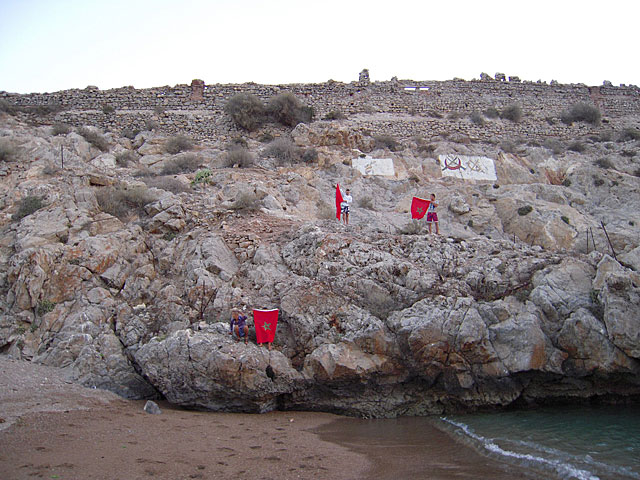
Free Ceuta (Sebta) and Mililla activists detained

Moroccan activist make their statement 

Four Moroccan activists from the Committee to Free Ceuta (Sebta) and Melilla were briefly detained at dawn on Wednesday this week after trying to occupy the Penon de Velez de la Gomera fortress off the Moroccan coast. Both Ceuta and Melilla are considered by Moroccans as their territory.

A total of seven activists reached the fortress, on a peninsula 130 kilometers west of Melilla. Arriving on foot at 6.30am, they tried to place flags from their movement. Stopped by Spanish military border police, three activists fled while the other four were questioned, identified and then released, said a Spanish enclave government delegate, El Berkani.

Committee activists have made several attempts to occupy Spanish-occupied rock fortresses recently, El Berkani said. In 2002, the landing of Moroccan troops on Spain's Perejl Island in the Strait of Gibraltar caused a diplomatic incident between the two countries.


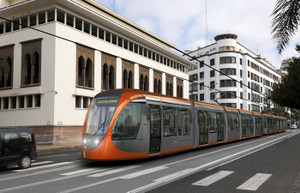
The Casablanca tramway - nearing completion


The construction work on the first tramway in Casablanca is nearly completed with October the 15th set as the date for test driving trains in actual traffic conditions and checking all equipment. The October  date is nearly two months before the expected commissioning of the giant urban development.

Work on the railway platforms is on schedule with finishing touches underway with full completion expected on September 10.

The 22 km of overhead contact lines are in place and 15 km has already been electrified.

The control centre of the operation will initially run 37 trains, but capacity has been built into the system to accommodate 49 trains and in anticipation of new line extensions or an increase in the number of trains.

The first tramway line, which crosses the city from east to west covers a distance of 30 km, linking the main areas of the city include 48 stations and stops travelers. Each train, with a length of 65 m, can accommodate 600 passengers with 100 seats, an expected number of 250,000 travelers daily via a fleet of 37 trains.

To give a new visual identity, it is also planned the construction of two large squares - UN and Casa Voyageurs and the planting of 2,000 trees. In all, some 90 hectares of the city of Casablanca which will be fully refurbished.


"Human Rights" delegation criticised

Human rights observers held meetings with tribal leaders, peacekeepers and Moroccan officials on Monday as they wrapped up a visit to the Morocco's Western Sahara.

Their visit comes amid a row between the United Nations and Rabat, which has demanded the replacement of new UN peace envoy Christopher Ross, whom it accuses of "bias" in efforts to resolve the status of the territory.

The delegation, led by Kerry Kennedy, of the Robert F Kennedy Centre for Justice and Human Rights, and Mary Lawlor, director of rights group Front Line Defenders, held morning meetings with tribal leaders and the region's governor, an AFP reporter said.

In the afternoon, the group visited the headquarters of the UN peacekeeping mission.

On Sunday, the delegation held a closed meeting at their hotel with Sahrawi pro-independence groups, who repeated their demands to see the mandate of the peacekeeping mission extended to cover human rights. It also met pro-Moroccan groups.

However there has been widespread cynicism about the biased nature of the trip. Richard Miniter, writing for an on-line journal criticised "...chumming around with a group credibly linked to terrorists who are at war with the United States, and consorting with drug smugglers who are essentially at war with all civilized peoples."

Morocco is a frontline state in America’s war against “Al-Qaida in the Islamic Maghreb” (AQIM), a branch of the late Osama bin Laden’s terror network. This is the group that plotted to bomb the U.S. Embassy in Bamako, Mali. It schemed to kidnap drivers on the Paris-Dakar road race. It has held for ransom more than a score of Europeans.

AQIM also plots to kidnap or kill American diplomats all across North Africa. Morocco is a constitutional monarchy with an elected government, so undermining it hurts a vital U.S. ally in both the war on terror and the war on drugs.

Miniter claims that both the terrorists and the drug lords have been repeatedly linked to the Polisario Front — the same anti-Moroccan rebel group that hosted the Kennedy women.

Miniter is scathing about the visit saying "Two scions of the Kennedy clan went to Morocco and came away with a breathless tale of police brutality against separatists. The problem? The separatists represent the Polisario Front, a brutal rebel group linked to al-Qaida and drug smugglers. Their first-hand account, which was published by The Huffington Post, doesn’t mention that their radical chic tour continued to the Polisario Front’s remote Saharan camps in Southern Algeria, where the rebels used the naïve Kennedy women for all the propaganda value they could wring out of them." Read the full article here

A source within the Moroccan government, not authorized to speak on the record but with direct knowledge of the circumstances surrounding Kennedy's visit, expressed concern for the peace process. "Kennedy and her team, after asking for Moroccan assistance to organize the trip, refused to meet with anyone not supportive of the Polisario." Further, the official was adamant that the Moroccan government communicated to Kennedy and the RFK Center they were "welcome here (Morocco,) could stay as long as they want, and we are pleased to arrange meetings with Moroccans and Sahrawis with differing views than those within the Polisario."

Inquest into couple's deaths in Morocco

A joint inquest into the deaths of a couple from Worcestershire killed in separate falls while on holiday in Morocco is due to take place today. Roger and Mathilde Lamb, from Pensham near Pershore, were with their four sons in the tourist resort of Essaouira last August when they died in separate incidents.

Mrs Lamb, who was 43, is believed to have fallen from the apartment her family were staying in on August 17. She died the next day.  Mr Lamb, who was 47, died after falling from a separate building a few days later.

Mechanisation gives Argan oil a boost

A Moroccan university professor’s interest in the economic preservation of the declining Argan tree has resulted in women harvesting the tree’s valuable oil increasing their income by more than ten times.


Zoubida Charrouf (pictured above), a professor at Mohamed V. University in Morocco, initially developed an interest in the tree and its oil for conservation reasons, but has since improved the extraction of oil by establishing processing cooperatives – such as the Ajddigue and Taitmatine cooperatives – run entirely by local women. This commercialisation of Argan oil has boosted business in the cooperatives and emancipated the women by offering them a meaningful livelihood. Charrouf says that Argan Oil “should readily find a place of choice amid the most profitable oils for human health”. Celebrities as diverse as Sophie Dahl, model and writer, and Heston Blumenthal, one of Britain’s leading chefs, are fans.

The commercialisation was achieved by mechanising some of the tedious production tasks, such as grinding the nuts and pressing the oil. This sped up the operation and also improved the quality of the oil, doubled its shelf life, and reduced waste. Membership in the cooperatives now ranges from 35 to 40 women, who now earn about $8.60 a day, an increase of more than ten times from when the projects began in 1997. Argan oil is now a high value niche product on the international market, and what began as a cottage industry could now provide more employment to Moroccan women.

”At the time [the project started], we were losing more than 600 hectares of Argan forest each year,” says Charrouf. “But we also wanted to convert this ecological problem into an economic opportunity. I knocked at several doors, but no one believed in my project. Now Argan oil is known around the world.” The economic opportunity that Charrouf uncovered for Moroccan women is now being supported with grants from the Moroccan government and the European Union.

“Being part of the cooperative freed me from tedious domestic work in people’s homes,” said one member of the Taitmatine cooperative. “Now I’m learning to read and write and I’ve learned how to ensure the quality of the Argan kernels. The cooperative has made me more independent. I’ve been able to visit other cooperatives in other provinces. I’ve seen how girls and women like me have been able to shape their own destiny and move ahead to develop their cooperatives.”


The hunt for oil in Morocco heats up

Morocco is becoming an increasingly attractive prospect for International Oil Companies (IOCs) looking for new exploration opportunities to add to their portfolios .With one of the most attractive tax regimes in the world and political stability unlike many of its neighbours, companies like Cairn are moving into Morocco.

Cairn will buy 50 percent of the Foum Draa blocks in Morocco, a third purchase this year after acquiring North Sea explorers Agora Oil & Gas AS and Nautical Petroleum Plc. After investing nearly US$ 1 billion in Greenland and still looking for results Cairn needs to diversify its exploration efforts in new areas and Morocco and the Mediterranean fits the bill. Cairn has sold most of its Indian holdings and thus has money to invest.

Much of Morocco remains unexplored and although there have not been significant finds yet the 3 D seismic surveys and geographical data are promising , particularly for offshore. The Edinburgh-based Cairn will pay US$ 60 million for fifty percent stake in a license shared with a number of small companies at Foum Draa block located in the western offshore of Agadir.

The current license holders San Leon, Serica and Longreach will hold interests of 14.2 percent, 8.3 per cent and 2.5 percent respectively, while the Office National des Hydrocarbures et des Mines (ONHYM) will hold 25 per cent.

Recent news flow from Morocco is a “very positive indicator” for Tangiers Petroleum which has significant acreage in the sought-after stretch of coastal north-west Africa, according to City broker Old Park Lane.Genel Energy has farmed into the Sidi Moussa block, and its investment together with Cairns amounts to deals worth in excess of $100 million and committments to drill two wells in the area.

Morocco has become a honey-pot for the ambitious mid and large-cap exploration groups as the geological understanding of coastal West Africa has increased.

Alongside Genel and Cairn, are Total , Repsol , Anadarko and Kosmos which are all active in the waters of the country’s coast.

Compared with its near neighbours Morocco is still largely under-explored, although this is changing with the latest influx of oil companies.

Moroccan Sufi expert dies

The specialist on Moroccan Sufism, Zakia Zouanat, died this week.


Zakia Zouanat Anthropologist, specialist of Moroccan Sufism and author of an important work on the extensions of this heritage in the world, died Thursday night at the age of 55, following a long illness.

Zouanat, who was a researcher at the Institute of African Studies of the Mohammed V University in Rabat, is particularly known for her work on the Sufi heritage aspects of Morocco and its influence around the world. Her seminal work on this subject is "The Kingdom of the Saints" (le Royaume des Saints).


"In the era of globalization the soul is desperate. How does one give to the other if one does not know oneself; if one has not preserved what we value most, our identity? Sufism is the central part of the Moroccan identity!"  Zakia Zouanat


The Germans are coming

Lufthansa launches new flights to Marrakech. September 1, 2012 will see the start of flights to Marrakech from Berlin and Dusseldorf, with two weekly frequencies. These air links will meet the ambitions of Morocco in relation to the German market, which in 2011 accounted for 4% of the tourist activity in Marrakech, with arrivals and overnight stays exceeding 70,000 and 165,000 nights respectively. Morocco has set a goal of doubling the number of German tourists in 2020, from 200,000 to 400,000 tourists per year.

Forest fires threaten rosemary plantings

Between January and this week, 326 forest fires have occurred in Morocco, according to figures from the Office for Water and Forests and the Fight against Desertification (HCEFLD). 3406 hectares of vegetation were destroyed, the equivalent of 3,400 football fields went up in smoke. The East is the region most affected by the fires. Near Nador, Berkane and Taourirt, 1866 hectares of vegetation burned in the latest fire. Commercial rosemary is almost certain to sustain damage.


OPINION

Morocco Is on the Path to Change

Hicham Ben Abdallah el Alaoui is a consulting professor at Stanford University's Center for Democracy Development and the Rule of Law, and is the president of the Moulay Hicham Foundation. He is a cousin of King Mohammed VI of Morocco and third in line for the throne. He wrote this piece for the New York Times

The Arab monarchies have survived the turmoil in the Middle East for several reasons. First, the monarchic institution remains deeply linked to national identity in many of these countries because of anticolonial struggle and the historical importance of the institution itself. Second, monarchies have traditionally arbitrated conflicts between different groups and classes, acting as benevolent caretakers of society. They have also allowed other institutions, like parliaments, to represent the people, thus staying above the political fray.

Like Jordan, Morocco is trying to satisfy its citizens by liberalizing instead of democraticizing.

These factors have earned Arab monarchs a respite from the wave that swept away regimes in Tunisia, Egypt, Libya and possibly Yemen, but the respite will not last forever.

In the Gulf, enormous oil revenue has permitted monarchies to initiate new welfare and development programs to deflect public pressure. Geopolitics matter too: it has become clear that Saudi Arabia will not permit the crisis in Bahrain to truly threaten the existence of its monarchy. Likewise, at the international level, the United States and the European Union have little desire to encourage any more instability in this economically vital area.

The issue of monarchical survival has become inextricably entangled with the dynamics of Sunni-Shiite sectarian tension, which pits Iran against the Arab Gulf kingdoms. This discourse has grown hegemonic: not just the monarchies but also oppositionists have internalized these fears, blunting the demand for political reform.

Morocco and Jordan — the two oil-poor monarchies — are trying to satisfy their citizens by liberalizing instead of democratizing. They have turned to controlled political openings cloaked in the language of freedom but intended to perpetuate the status quo. Limited constitutional reforms, tolerance of more opposition and new parliamentary elections are welcome steps, but such measures do not devolve power away from the palace.

And such policies cannot indefinitely quiet the restive middle classes, who are no longer satisfied with constrained pluralism and demand genuine participation. What they desire is not revolution but reformation toward constitutional monarchy, a new system of governance that embodies the spirit of democracy while retaining the historical role of monarchism in these societies. The path to change may be uneven, and sometimes even chaotic, but it has begun.

SHARE THIS!
Thursday, February 16, 2012

Controversial Fishing and Farming Pact Signed

Morocco has cause to celebrate the signing in Strasbourg on Thursday of the controversial fishing and farming accord with the European Union. The issue has been divisive, with strong opposition from European farmers as well as some environmental groups. Critics say it will hurt small family farms in France, Spain and Morocco and swing the economic advantages towards the large European food conglomerates

the European Parliament will revisit the vetoed fishing agreement


The European Parliament approved the new fishing and farming accord with Morocco by 369 to 225 votes. It is intended that the new agreement will reduce customs costs and boost trade across the Mediterranean.

Supporters of the accord maintain that it will allow European access to a key market and show European support for Morocco as it undertakes democratic reforms prompted by the Arab Spring uprisings.

The win for Morocco comes in the wake of their embarrassing defeat on the proposed extension of the European Union-Morocco “agreement on fishing”. The resolution to scrap the EU-Morocco fisheries deal was approved on the 14th December, 2011 with 326 votes for, 296 votes against and 58 abstentions.

The fishing fleet in Agadir


However, despite last year's setback, two days ago all the countries of the European Union formally approved to authorize the Commissioner for Fisheries, Maria Damanaki, to resume contacts with Morocco and to sign a new fishing agreement, to replace that vetoed by the European Parliament last year after sustained social media pressure from supporters of the Algerian backed Polisario rebels.

The decision of the 27 member states does not expressly mention the Sahara or Polisario, references to which the governments of Spain and France opposed. The parliament's approval is now needed for it to be valid.

 According to European sources consulted by Europa Press Agency, the measure provides a "geographical description" of the regions covered by the agreement.and that should benefit from the advantages it offers. Specifically, the text mentions 'south 27° 40'N' The Polisario have been attempting to claim that Morocco is exploiting its resources and claims to be excluded from any agreement with Morocco.

On this occasion, Sweden, Finland, United Kingdom and the Netherlands voted against the document because they argued that there is no express reference to the Sahara region. In light on the online activism by Polisario supporters, it is a timely reminder for Morocco that the inability of the Moroccan representatives to understand the importance and impacts of blogs, online activism, and “the internet diplomacy” can have very negative consequences.

SHARE THIS!

Sunday, January 22, 2012

Morocco's Foreign Minister to Visit Algeria


News reports from Rabat, say that Morocco's new foreign minister Saad-Eddine Othmani (pictured left) will visit the Algerian capital Algiers next week. It is an early indication that the new government will continue the efforts of the previous government to normalise ties strained for decades over the disputed Sahara region.

The visit is scheduled to be a short one, lasting only two days, but starting on Monday Saad-Eddine Othmani will hold talks with his Algerian counterpart Foreign Minister, Mourad Medelci and a meeting with the longterm president, Abdelaziz Bouteflika.

As The View from Fez reported recently, there was a small sign of relations improving, when a judge in the Algerian town of Maghnia agreed to a temporary opening of the Zouj Bghal crossing in order to allow Moroccan cyclists to take part in a cycle race (see our story here).The border between the two countries was closed in 1994 following an Islamist militant attack in Marrakesh in which the involvement of Algerian secret services is widely suspected. Tensions in the border region occasionally flare and a July clash between Moroccan border guards and armed men crossing from Algeria left one soldier dead.

Al Qaeda in El Islamic Maghreb
photo Morocco World News
However, the most serious diplomatic issue between the two countries is the decades-long problem of the Algerian-backed Polisario guerrillas in the Sahara. Morocco's reclaiming of the former Spanish colony in 1975 sparked a war between its forces and Algerian-backed Polisario guerrillas until a ceasefire in 1991.  UN-sponsored talks on Western Sahara's future have since made no headway.

One positive sign that may open the door to progress is the discontent within the Algerian military with the Polisario over infiltration by AQIM (Al Qaeda in El Islamic Maghreb) in the Tindouf refugee camps.

For Foreign Minister Saad-Eddine Othmani, there will be no quick fix. He does, however have the backing of his predecessor, Taeib Fassi Fihri who, back in November said,  "Whatever the differences, it's abnormal not to have a normal relationship with a neighbouring country".


SHARE THIS!

Wednesday, November 17, 2010

Palestinian outrage at Polisario "disinformation"


Spanish News Agency EFE Admits Publishing 4-year-old Gaza Photos from Pro-Polisario Source that Falsely Identified Victims as Coming from W. Sahara


Palestinian chief negotiator Saeb Erekat on Saturday condemned Spanish news agency EFE's "unacceptable and unfounded" publication last week of 4-year-old photos of Palestinian infants injured in Gaza which were falsely identified as photos of victims of Monday's unrest in Laayoune, in Moroccan Sahara. The false photos (see example below)  were printed in the major Spanish newspapers El Pais and El Mundo prior to a pro-Polisario demonstration this past weekend in Madrid.


"I saw the EFE's pictures; they well and truly come from the Gaza Strip and not Laayoune," said Erekat, who denounced the photos as "disinformation" to mislead international public opinion and distort Morocco's record. He reaffirmed Palestinian support for Morocco's efforts to settle the Western Sahara conflict through dialogue and peaceful means, and condemned EFE's failure to respect journalistic ethics.

EFE admitted the error on Friday, saying it purchased the photos from activists at a pro-Polisario website. The photos showed the Gaza infants with their heads bandaged in a hospital. The caption in El Pais said: "Two injured Saharan children are treated at a hospital in Laayoune."

The Polisario Front and its supporters have made a number of unsubstantiated allegations over the past week to cover up serious violence committed by their backers in Laayoune.

Last Monday, Moroccan authorities attempted to peacefully disperse a protest in Laayoune that began legitimately but was taken over by pro-Polisario militants. 70 Moroccan police were injured and 10 police killed when they moved in with non-lethal gear, no weapons, and were attacked by militants with knives, bottled gas canisters, and Molotov cocktails.

This account was supported by independent eyewitnesses. After examining the protest site, the UN Secretary-General's representative Hany Abdel-Aziz, head of MINURSO, the UN presence in Western Sahara, told French daily Le Monde, "I saw no trace of bullet cartridges." Instead, he was "amazed by the number of butane gas bottles" which militants used to set fires.

Most of the demonstrators left the camps when authorities asked and escaped serious harm. Abdel-Aziz commented that the truth was far from the thousands of civilian casualties the Polisario claimed.


Sunday, June 13, 2010

Anti-Obama lobby throws Morocco to the wolves


The Morocco Board reports that in the US, House of Representatives Tom Lantos, Human Rights Commission, which is chaired by James McGovern (Democrat, Maryland) with ranking Republican congressman Frank Wolf (Republican, Virginia), will hold a hearing on human rights and religious freedom in Morocco on Thursday June 17th, 2010.

The hearing will be open to the press and the public. The reason for the hearings, according to the commission, is the deportation of approximately 40 American citizens and scores of other foreign nationals on charges of proselytism, thus “it has raised serious concerns about the status of religious freedom in Morocco”.

The individuals deported, according to a statement from the commission, ran a wide array of humanitarian organisations, which provided services vital to the community. One of the organisations targeted was the Village of Hope, an orphanage that takes in children that have been abandoned by their parents (see our story here).

A statement from the commission cited an article by Time Magazine that said, “The Village of Hope deportations are part of what appears to be a widespread crackdown on Christian aid workers in Morocco.”

Also cited as an example is the Freedom House’s annual Freedom in the World Report, which noted “a backsliding in Morocco on a host of other democracy and human rights issues over the course of the last year”.

Republican Frank Wolf spearheaded the hearings. He is a long time critic of Morocco and a proponent of Algeria-backed Western Sahara Separatists; he is also considered to be a friend of the Christian Fundamentalist lobby on the Hill.

According to local sources, congressman Frank Wolf has recently met with representatives of Morocco in Washington. During the meeting he became so irritated and furious that he shouted at the Moroccans who were taken aback by the intensity of the Congressman’s emotions. He also threatened, during the meeting, to work to cancel the US Morocco free trade agreement and he flatly stated that Morocco is “no friend of the US”.

Later on, when a fellow Christian fundamentalist leader and a friend of Morocco called on the congressman to inquire about the issue, the congressman was again furious and called the Christian leader a “traitor” for sympathizing with Morocco. The congressman subsequently called on US State Department Secretary Hillary Clinton to cancel Morocco’s Share of the $700m Millennium Fund.

The witnesses that are invited to speak on the hill are Katie Zoglin, senior program manager of Freedom House, 
Michael Cloud, president of Association Nichan, Herman Boonstra, leader of the Village of Hope in Ain Leuh , Morocco, 
Mr. & Mrs. Eddie and Lynn Padilla, foster parents at the Village of Hope and Dr. Sandra Bunn-Livingstone, executive director of Jus Cogens LLC.

The hearings will take place at the 2325 Rayburn House Office Building at 1-3 p.m. on June 17th, 2010.

Our politics correspondent, Ibn Warraq, has this to say about the hearings:

Morocco is an Islamic society, with the King as defender of the faith. When people of other faiths come to Morocco to work in NGOs or aid organisations, they sign a paper declaring that they will not proselytise. These Christians broke the law - it's as simple as that. Why doesn't the US hold a similar hearing for Saudi Arabia? I imagine they wouldn't be too keen on evangelising Christians, either.

By holding this hearing, the US risks alienating one of its few moderate Muslim allies and playing into the hands of the Islamists, who will use it as an example of how the Americans are trying to take over Morocco with Christianity and need to be actively resisted. It's a very stupid move.

It also does not seem fair that the hearing doesn't appear to include testimony from the Moroccan point of view.

A small incident with inflexible American missionaries knowingly violating Moroccan law should not overshadow more than 200 years of good relations between Morocco and America.

The United States should show respect for Morocco's Islamic religious beliefs, while recognizing that Morocco has long respected the rights of Christians and Jews to maintain and practise (but not proselytize) their religious beliefs.

Good relations with Morocco are essential to good relations with the Arab World.

Morocco is an essential ally in the "War on Terror."

Morocco has played an instrumental role in attempting to resolve the Israeli/Palestinian conflict.

As a valued ally of the United States, Morocco should be subject to gentle persuasion from the United States on the issue of religious freedom, not condemnation. If the Congressman thinks that Morocco has not acted appropriately, he should approach the Moroccans from the point of view of a counselor to a dear but misguided friend, not as an enemy.

Let's take a look at this congressman Wolf. It is disturbing to think that someone in his position thinks he gains credibility when he says he supports groups such as the Algerian-backed Western Sahara Separatists. In addition, his links with Christian Fundamentalist lobby groups should immediately set alarm bells ringing. Let us all remember that fundamentalism of any kind, Islamic, Hindu, Jewish or Christian, is a problem we all need to deal with.

Freedom of speech is a right Congressman Wolf enjoys, but he needs to remember that with such a right comes responsibility to use that freedom wisely. Sadly there is no sign that he has an interest in anything other than destabilising Obama.

Wednesday, May 26, 2010

49 People Flee Polisario's Camps


According to reports (MAP) just in, another forty-nine Saharawis escaped the notorious Tindouf camps (south-west of Algeria) to join their homeland, Morocco.

This new wave of returnees, which included youngsters, women and children, arrived in two groups of 30 and 19 people during the last two days.

In recent weeks, hundreds of people, most of them youngsters, managed to join Morocco by groups of 15-40 people. There has been no explanation given by the Moroccan government for the sudden upsurge in escapes from Tindouf.

The returnees said the camps' population, held against their will by the Algeria-backed separatist government of Polisario, opposes the Polisario's actions and policies, adding that Algeria's leaders use the population as tools to undermine Morocco's territorial integrity.

Readers interested in other opinions should read : Global Post Opinion


Sunday, February 22, 2009

Algeria opens its border with Morocco - for Gaza aid.


For over fifteen years the the border between Morocco and Algeria has been closed and in a welcome development has been opened to allow passage for an aid convoy heading towards the Gaza Strip. The opening, near the Moroccan town of Oujda,is described as "temporary", but Morocco, which has long been calling for Algeria to open the border, hopes the opening will be the start of better relationship.

The frontier was shut in 1994 after Morocco accused Algeria's secret services of masterminding the attack on a hotel in Marrakech. However, according to the BBC's James Copnall, though the Morocco-Algeria crossing was opened for the convoy, there is little sign ordinary people will be able to travel overland between Morocco and Algeria any time soon.

The convoy of 99 vehicles which left from the UK loaded with medicine, food, clothes and toys is due to cross from Egypt to Gaza in early March.

Diplomatic relations between the Algeria and Morocco have long been poor, and disagreements are currently focused on the disputed territory of the Western Sahara which Moroccans considers part of Morocco. Algeria is one of the few countries that supports the Polisario Front independence movement - a position that has prolonged the tension between the two nations.

Algeria does not intend to finalise a normalisation with Morocco, including reopening borders with her, unless some conditions are met, Secretary General of FLN, the Personal Representative of President Bouteflika said on Saturday.

Abdelaziz Belkhadem told a press conference at the government owned TV headquarters, that opening borders with Morocco for an aid convoy heading towards Gaza Strip does not mean that Algeria is considering reopening the long closed borders, for the moment. Belkhadem added that such a decision would be taken after that Rabat responds to a line of conditions, including security cooperation, countering smuggling, narcotics trafficking and illegal migration, as well as “some other things” which he did not detail.

Yet observers believe that “the other things” are about Morocco being urged to give up her position on the Western Sahara issue by accepting the principle of self-determination, as well as ceasing to accuse Algeria of hindering UN efforts to find a solution to the Sahraoui conflict.


Tags:

Wednesday, January 28, 2009

Moroccophobia?


The Moroccan American Community Board has a recent article that is worth sharing. The subject is the Algerian influence on the world's understanding of the Western Sahara issue. The Board is an internet portal for Moroccan Americans. The board covers Moroccan American Community life, functions, conferences and festivities. The article was written by Hassan Masiky.


Algerian Diplomacy and Moroccophobia

Algerian diplomacy has been surfing from a debilitating condition called Moroccophobia. One of the many symptoms of this condition is an obsessive compulsive disorder to destroy the image of the kingdom of Morocco. In fact, for many years Morocco has been a punching bag of the Algerian diplomacy in order to hide internal governmental failures and to portray Algeria as a regional and international power player. By crafting their diplomacy around the Western Sahara conflict and making supporting the Polisario separatist movement as the center piece of its international relations with other countries , Algerian diplomacy reduced its foreign affairs to a child's play intended for children's playground rather than the international arena.

Algiers is well aware that the Sahara dossier is the best obstacle to a bigger Moroccan role on the international scene, and thus makes the Algerian diplomacy looks clever and effective.It is a myth that Algerian diplomacy is an effective diplomatic machine. With few exception, notably the role of Algerian diplomats during the crisis of American hostages in Iran, Algeria has nothing to brag about but its ongoing and relentless efforts to make Morocco look unscrupulous. From calling Morocco an aggressor and the last colonial power in Africa, the Algerian military establishment has been using their diplomacy to counter any efforts by Rabat to explain its position on the Sahara issue.

Since Morocco re-established control over its southern provinces, the Algerian diplomacy has been on the offensive to dispute the legitimate Moroccan claims, but more alarming, to damage the reputation of Morocco on the international scene. The Algerian military created, armed and diplomatically supported the Polisario separatist movement since its creation.

The Algerian support of the Polisario is more of vehicle to harm Morocco than to support a supposedly pseudo self determination attempts by Sahrawi people.

The bluntest manifestations of the Algerian Moroccophobia are the maneuvers of the Algerian diplomacy at the UN. The role of the Algerian mission to the UN is not to represent the interest of Algerians but to discredit Morocco. Instead of efforts to support the Palestinians and other truly oppressed people, Algerian diplomats are paid to watch the Moroccan delegation and counter any efforts by the Moroccan diplomacy that might make Morocco shine.

On the European side, the Algerian government and press have been working hard at mocking and second guessing Moroccan policy towards the European Union. In many instances, as in the case of the creation of the Mediterranean Union, Algeria has been skeptical of the intention of this newly created body and very suspicious of the Moroccan role of the inter-working of this Union. Instead of crafting an Algerian foreign policy that would protect the interests of the Algerian people, the Algerian foreign policy is based to a large extend on how a given country stands on Moroccan national integrity. If a country refuses to buy the Algerian propaganda against Morocco's claim on its Sahara, then that country is labeled as anti-Algerian regardless of how that country may feel about the interests of the Algerian people.

Aside from the Moroccan-Algerian cat and mouse dance, Algiers is facing other setbacks. The efforts of President Boutaflika to resolve the Touareg rebellions in Northern Mali have all but collapsed after renewed attacks by Touareg militants against the Malian Army. Some experts are blaming Libya's Khaddafi of behind the failure of the Algerian efforts to mediate in this conflict. Khaddafi who views himself as the true Pan-African leader is not happy with Algerian diplomacy muddling in is "backyard".

By reducing its diplomacy to a single issue machine, Algeria is losing even more grounds to a meek Moroccan diplomacy. Moroccan diplomacy has self-inflicted many wounds that have cost Morocco dearly; these same mistakes had portrayed an Algerian diplomacy far more potent than its true effectiveness.

Tags:

Tuesday, January 23, 2007

Feeding the news hungry in Fez, Morocco.


Our Special Affairs editor, Lumen, was musing out loud the other day about how difficult it was to get news in English. And a lively discussion ensued - the gist of which was that we need an English language daily in Fez - or a weekly.

Of course I pointed out that as far as news went we were like Meknes - not a lot happening. Well, you can imagine the outpourings of anger from all those Meknesophiles, standing up for their much underrated city. I say "imagine" - because in fact nobody said a word. But was it true? How much is really happening that is news. Just how much news do you really need?

Then Madam Zany said - what about international news?
"Why stop there?" interjected El Glaoui glumly, 'Why not the galactic news - the universe..."

So, dear reader - just for once, an exclusive look at the news through the eyes of the team at The View from Fez as we present ... ( drum roll optional)...


THE DAILY PLANET -
All the news that's fit to eat.

  • Fès and Marrakech among world top ten tourist destinations in 2007

  • Dateline London, Jan. 23 - Morocco's imperial cities of Fès and Marrakech, were once again listed in the world top ten tourist destinations for 2007. Once again, Meknes did not get a mention.

    The survey by the well known internet site, Trip Advisor , places Marrakech in the fifth rank after Pamukkale, Turkey; Parga, Greece; Ayr, Scotland; and Campeche. Fès closes the list.

    The two cities have thus outranked traditional destinations such as Miami, Honolulu and Acapulco, noted Trip Advisor, which conducted the study through information compiled from 4,000 world tourists.

    A spokesperson for Meknes, who chose to remain anonymous, claimed it would have been different if any of the 4000 world tourists had been to the city. "Meknes has a lot going for it. Really. Truly. Look, trust me."


  • King Dedicates Urban Projects in Meknès

  • Dateline Meknès, Jan. 23 - There was much excitement on Tuesday in Meknès (60km from beautiful Fez ) when HM King Mohammed VI dedicated a number of urban projects aimed at fighting unhealthy housing, upgrading the city infrastructure and creating green spaces.


    The sovereign handed property deeds to the beneficiaries of the operation aiming to relocate the inhabitants of unhealthy housing in the city and was briefed on the USD 40Mn "Slum-Free City" program in Meknès, which has allowed, so far, for relocating some 5,5039 households, i.e. 76% of the population living in unhealthy housing.

    King Mohammed VI also launched several projects to upgrade the city of Meknès and revamp its historical monuments. The sum of 4.5 million USD has been dedicated to improve public lighting and roads, to promote the cultural and civilizational dimension of the city and take up the challenges of national and international tourism competitiveness.

    The sovereign also inquired about the USD 8.5Mn project to upgrade green spaces, create a large green center and several gardens, and improve public lighting in these spaces.


  • Landmines kill girl and two officials in Sahara

  • Dateline Laayoune, Jan. 23. A rare succession of mine blasts has prompted Moroccan newspapers to speculate that the attacks could be part of a plot by the Polisario Front to end a 16-year U.N.-sponsored ceasefire. A young girl and a town mayor in Sahara died in two landmine explosions, four days after a member of parliament was killed in a similar blast.

    But government officials in the territory and in Rabat dismissed such speculation, saying desert winds and rain unearthed some of the thousands of mines planted close to populated areas during decades of conflict.

    On Monday, 8-year-old Fatima Bent Ibrahim died when a landmine exploded while she played outside her house in al Haouz 200km to the north-east of the town of Smara. The blast seriously injured her six year old younger brother

    Hours earlier Mohamed Joumani, mayor of Gueltet Zemmour town, died in a similar blast. Another three people, who were accompanying the victim, were also injured in the accident.

    Morocco's upper house parliament member Mohamed Laroussi was killed four days ago when a landmine explosion hit the car he was travelling in on Bir Inzarane area, about 160 km (100 miles) northeast of Dakhla coastal town,

    The Southern Provinces, a former Spanish colony, were retrieved by Morocco under the Madrid Accords, signed with Spain and Mauritania in 1975. During the period from the late Seventies to 1991, the Polisario declared war against Morocco and placed thousands of mines in the Moroccan southern territory. The armed conflict was stopped under a UN-brokered cease-fire concluded in 1991.

    A delegation of ministers and senior officials traveled to Laayoune to deliver the condolences of King Mohammed VI to the families of the people killed and injured by the landmine explosions.
    The delegation included Interior minister Chakib Benmoussa, Delegate Interior minister Ali El Himma, Education minister Habib El Malki and chairman of the Royal Advisory Council for Saharan Affairs (CORCAS).


  • Second cold snap is a killer

  • Dateline Settat, Jan. 23 - Two girls from the same family perished, on Tuesday in the region of Ben Ahmed (157km south of Rabat), by a cold snap. This is the second deadly chill this winter with around a dozen deaths coming from a previous event.

    This time, the two sisters, aged 7 and 10, died of pneumopathy due to extreme cold that has gripped the region, where temperature dropped to reach 2 and -6 Celsius degrees at night. The local medical authorities, who paid a visit to the region, noted that death was ascribed to pneumopathy caused by cold and lack of heating, ruling out the hypothesis that death might be due to meningitis. Medicines against pneumopathy were handed out to the region population.


  • Libya in the firing line

  • Dateline Europe: Jan 23. The European Parliament has requested that the European Union review its relations with Libya unless Tripoli releases five Bulgarian nurses and a Palestinian doctor, jailed and sentenced to death in a controversial HIV infection case.

    If Tripoli fails to take steps towards a positive resolution, the EU should consider "a revision of the common policy of engagement with Libya in all relevant fields as the Union would deem appropriate," members of the EP (MEP) said in a joint resolution, adopted by a 567-1 vote with seven abstentions.

    In a retrial that ended on December 19th, the six medics -- Bulgarian nurses Kristiana Vulcheva, Nasya Nenova, Valentina Siropulo, Valya Chervenyashka and Snezhana Dimitrova and Palestinian doctor Ashraf Ahmad Jum'a -- were sentenced to death for deliberately infecting 426 Libyan children with HIV.

    The health workers were arrested in February 1999, less than a year after they arrived in Libya to help care for patients at the Al-Fateh Hospital in Benghazi. Their first trial ended in May 2004, when they were first condemned to death by firing squad. Following a wave of outrage, Libya's Supreme Court overturned the ruling and ordered a retrial.

    Expressing their "serious concern" about the grounds on which the foreign medics were prosecuted and about the way they were treated while in custody, the MEPs condemned the verdict. They also stressed that, with Bulgaria's EU entry on January 1st, the case now concerns five citizens of the 27-nation bloc.

    Maintaining their innocence, the Bulgarian nurses have retracted the confessions they made early on, insisting they were extracted by torture.

    Leading AIDS experts, including French Professor Luc Montagnier, one of the co-discoverers of the HIV virus, say the outbreak in the Benghazi hospital preceded the medics' arrival in Libya by at least a year and was likely caused by poor hygiene at the facility.

    Urging Libyan authorities "to take the necessary measures to review and annul the death sentence," the MEPs said this would help meet the requirements for the continuation of the common policy of engagement with the oil-rich country.

    They also urged Libyan leader Muammar Qadhafi "to exercise his powers and bring about the release of the imprisoned medics as a matter of urgency".

    In an address at the end of last year, Qadhafi said the six medics would only be released if a Libyan national serving a prison sentence in Scotland for the 1988 Lockerbie bombing were set free and if Libya received financial compensation for the HIV infections.

    Libya has demanded that each of the families of the 426 infected children be paid 10m euros as "blood money". Under Islamic law, this would allow the victims' relatives to pardon the nurses.

    Bulgaria has ruled out such a move, saying it would amount to an admission of guilt.

    "There isn't the slightest proof that these people are guilty and the EU will not allow any other case to be used as leverage," EU Consumer Affairs Commissioner Meglena Kuneva told Reuters. "It is intolerable."

    For its part, Libya has said it will not give in to EU pressure aimed at securing the early release of the prisoners. The EP resolution also prompted a reaction from one of Qadhafi's sons, who heads an organisation that has been involved in the HIV infection case. In a statement issued on Friday, Seif al-Islam Qadhafi warned EU lawmakers that attempts to politicise the case could prove counterproductive.

    "Calls from European members of parliament for pressure to be put on Libya, and any EU measure against Tripoli, could have negative consequences," the AFP quoted the Qadhafi Goodwill Foundation's statement as saying. "Such pressures are of a nature that would undermine mediation aimed at resolving this affair."

    Qadafi's uses of the doctor and nurses as a bargaining chip comes very close to extortion and has justifiably been condemned around the world.


  • Campaign against child maids kicks off

  • Magharebia: Jan 23. A month-long nationwide awareness campaign to prevent the employment of child maids has been launched in Morocco, part of a national project to raise awareness about the phenomenon.

    "We hope that this campaign will raise public awareness of the dangers of this social problem, which is denying several thousand girls of their human rights and jeopardising them and their futures," Yasmina Baddou, the secretary of state for the Family, Childhood and the Disabled in Rabat.

    Baddou said the campaign marks the beginning of project Inqad, which is part of the Childhood National Action Plan adopted by the government last year.

    The campaign, which runs from Monday through February 23rd, will feature a series of radio and television awareness and information spots. Discussion forums with a wide range of information materials targeted at people who employ child maids will be held in each of the four regions covered by the project -- Casablanca, Rabat, Fes and Marrakech. A publicity caravan will roam in the target cities, distributing awareness materials to families who employ child maids and families considered likely to contract their daughters to do domestic work.

    It is difficult to estimate how prevalent the phenomenon is in Morocco since it happens within families, and there is a severe lack of statistical data on the employment of child maids. Human Rights Watch says there may be as many as 66,000 in Morocco. A study carried out in the Grand Casablanca region put the number of child maids in the city at 25,000.

  • Lebanon protest leaves 60 wounded
  • Dateline Lebanon.Jan 23. Clashes in Lebanon pitting pro-Syrian Opposition supporters against those of the Government have left about 60 people wounded in Beirut and elsewhere. Some of those hurt suffered gunshot wounds.

    The violence marked the start of a general strike led by the militant group, Hezbollah, which is demanding a new government. The protesters used burning tyres to barricade major routes in and around the Lebanese capital and other centres.

    Air traffic to and from Beirut has also been disrupted.

    The economy and trade minister, Sami Haddad, says the Government will not give in to the opposition. "The Prime Minister has accepted many weeks ago the principle of changing the Government into a government of national unity, it's only the terms and composition of the government that remainl to be decided]," he said.

    "And obviously since the majority is the majority, it is not acceptable to be dictated to by the Opposition."


  • Apartment renovation? Go micro!

    Dateline London. Jan 23. If you think that the cost of purchase and renovation in Morocco is steep, spare a thought for the poor old poms. In England, an apartment the size of a snooker table has gone on sale in London's up-market district of Belgravia. This table-sized apartment for sale is a converted basement storeroom and has not been used in 15 years, and real estate agents estimate, despite its tiny size, that it is still expected to fetch 170,000 pounds - more than $425,000. Interior design specialists say it will take a further $75,000 to renovate.

  • Consumer madness

  • Dateline; Netherlands Jan 23. At a time when the world is short of food, people in many countries face drought and natural food security disasters and the Americans are taking huge amounts of grain and using it to make bio-fuel, a small brewery in the Netherlands has launched what the world really needs - a beer for dogs.

    The beverage, made from beef extract and malt is the creation of pet shop owner who wanted to share her refreshment with her dogs after a day's hunting. The beer is non-alcoholic and fit for human consumption but comes with a bite. It costs four times as much as a normal beer.

  • Tourism coup for Meknes!

  • Dateline: Sublett, Idaho. American tourist, Jack Langerhorn, thinks Meknes is the best. From the US state of Idaho, Jack(61) and his wife, Dotty (36) and daughter Lolita(17) spent an entire weekend in Meknes recently and can't wait to return. "It was the best two days of relaxation we have ever had," chirps Dotty, who says her favourite pastime is knitting. 'We walked around and had a look and I finished a book I have been reading."

    "The cafe we went to was clean and friendly," enthuses Jack, a retired pump attendant. "And the Coke tasted great, just like home."

    "Meknes is way cool,' says Lolita. 'Lots of people and lots of walls with gates. You don't get that in our town."

    The family come from Sublett, Idaho, in the Minidoka Ranger district. "Our town has seven camp sites and 6 vault toilets. So this was pure luxury," says Jack. He is hoping to raise support for a twin town arrangement with Meknes. However a local official said that the Meknes authorities couldn't find Sublett on the map. We will keep you posted.


    Tags:

    Tuesday, January 09, 2007

    Morocco's position on Sahara gathers wide support


    Visiting President of the parliamentarian majority group in Peru, Luis Javier Gonzales Posada Eyzaguirre, says the vote of the United Nations General Assembly on the Sahara is "a clear turning point" in favor of the autonomy project, which Morocco proposes to settle the Sahara dispute.

    Peru backs Morocco's territorial integrity, Posada told press at the end of a meeting with the Chairman of the Royal Advisory Council for Sahrawi Affairs, Khalihenna Ould Errachid, recalling that his country abstained from voting at the last UN General Assembly in favor of an Algerian draft on the Sahara.

    He also stressed the importance of dialogue in the conflicts resolution, calling to promote dialogue with Latin America countries to acquaint them with the realities of the Sahara issue.The Peruvian MP hailed the excellent relations between Morocco and Peru, deeming them "exemplary".

    Luis Javier Gonzales Posada, who is on a visit to the kingdom till January 10, also met Moroccan Prime Minister Driss Jettou.

    More support has come from Singapore. The country backs Morocco's efforts to reach a "just and equitable" solution to the Sahara issue, according to Singaporean Senior Minister Goh Chok Tong.

    "We support the efforts displayed to reach a just and equitable solution to the Sahara issue," stressed Chok Tong in an interview published Monday by the French-speaking daily "Le Matin du Sahara et du Maghreb".

    He also deemed that the settlement of this issue "would bring a lasting and stable peace to the region," noting that "the position of Singapore on such issues is based on two principal considerations. Initially, it is preferable to reach any solution in a peaceful way and by consensus. Secondly, we are attached to the respect of the rule of the international law, as well as of international agreements and engagements."

    Bulgaria also reiterated its support. "We support a final solution to the Sahara issue that is accepted by all parties", said Bulgaria's ambassador in Rabat, Katya Petrova Todorova.

    Bulgaria "will continue to back up the efforts aiming to find a final solution that is accepted by all parties within the framework of the UN," said Petrova Todorova in an interview published Friday by the French-speaking daily "Le Matin du Sahara et du Maghreb".

    The Bulgarian diplomat noted that the solution to this conflict should emanate from an agreement based on negotiations between the concerned parties.

    Evoking the autonomy project in the southern provinces within Moroccan sovereignty, Petrova Todorova said his country "appreciates that the project elaboration emanates from dialogue between political parties and representatives of all Saharawi population components."

    The Sahara issue was triggered in the mid-seventies by the claim of the Algeria-backed "Polisario" to separate the Moroccan southern provinces, known as the Sahara, from the motherland, after they were retrieved from Spanish rule in line with the Madrid accords signed in 1975.

    Most of the Sahrawi population aspire to continue to belong to their country, Morocco, said government spokesman, Nabil Benabdallah (pictured left).

    The Sahara issue took a new direction in 2006, the minister told the second national TV channel "2M", noting that the Royal Advisory Council for Saharan Affairs (CORCAS) plays a major role in this respect by presenting Morocco's new approach to the international community, which consists in granting a large autonomy to the southern provinces, known as the Sahara.


    Tags:

    Friday, January 27, 2006

    Moroccan News Briefs - #18


    Moroccan News Briefs published in The View From Fez draw on open source material, contributions from readers, as well as material from Maghreb Arabe Presse (MAP), Morocco Times and official Moroccan Government press releases.

  • King lays mosque foundation


  • King Mohammed VI has set in motion the building of a new mosque by laying the foundation stone in "Al Matar" place in the northern town of Tetuan. According to the Morocco Times, the mosque is expected to cost MAD 18Mn, about US$ 02Mn. The mosque is to be constructed on 4970 m2, in 24 months and would accommodate up to 3000 people for prayer. The facility comprises a room for men and another for women, a library and a Koranic school.

    After the Friday noon prayers at the Hassan II mosque of Tetuan, The king was briefed on the literacy program conducted in the mosques of the kingdom by The Habous and Islamic Affairs Ministry.

    In The 2005-2006 academic year, some 60,000 people benefited from the literacy program courses dispensed by 2091 teachers in 1655 mosques throughout the country, including 677 in rural areas.

    The Ministry literacy program to span from 2005 to 2010 is to target during this period around 500,000 people to attend the courses in 2334 mosques under a 1837 strong teaching staff and some 265 supervisors. The Habous Ministry earmarked MAD 22.8Mn for 2005-2006 and could spend MAD 53Mn for the program in 2009-2010.


  • Call to back political solution of Western Sahara issue


  • "It is in the best interest of the United States, France and Spain to support a political solution to the Sahara conflict," said former UN deputy-secretary general and former special representative of the UN secretary in Western Sahara Eric Jensen. For "different motives, the United States, France and Spain should support a political, negotiated and mutually accepted solution," he said at the opening of an international conference called "Sahara: Visions for the Future" on Thursday (26 January) in Las Palmas, Canary Islands.

    The former UN official cited a number of changes that have challenged the region recently -- especially globalisation, terrorism and illegal immigration. He said Morocco witnessed great changes since the coronation of King Mohammed VI, "who has put the country on the way of modernisation, democratisation and respect of human rights". Jensen noted history has shown that "Sahrawis are pragmatic" and that Algeria "aims to leave behind her bitter past".

  • 44% of young say al-Qaida is not a terrorist organisation

  • A recent survey by the Moroccan daily, L'Economiste has revealed that 44% of young Moroccans aged between 16 and 29 believe that al-Qaida is not a terrorist organisation, 31% said they had no idea whether al-Qaida is a terrorist organisation or not. The paper questioned if the 31% were really ignorant about al-Qaida or whether it was a way of not stating an opinion.

    According to L'Economiste, claiming that al-Qaida is not a terrorist organisation is mainly due to the US-led war in Iraq. For 76%, the US war in Iraq is unjustified and negative. The paper said there is a real condemnation by the Moroccan youth of the US foreign policy. �For them the al-Qaida represents an opposition to the US power. That could explain why many young Moroccan say al-Qaida is not a terrorist organisation,� explained the paper. However in an interesting socio-economic view, the survey points to the fact that those who asserted al-Qaida is not a terrorist organisation belong to lower socio-economic groups. Only 30% of rich people said it is not. "The poorer we are, the more we love al-Qaida," reported L'Economiste.

    In other findings the survey, which questioned a sample of 776 young people, showed that 85% of young Moroccans practise their religion regardless of where they live or their social background. 99% of young men and women fast in Ramadan, and 90% of them perform their prayers regularly or occasionally. Only 9% of them declared they had never prayed.

    The survey stated that age is not a factor that contributes to the change in religious habits. However, the social background may be a reason why some young people don't perform their religious rituals. The survey said there are more "non-performers" among the rich and middle class: 16% of them belonging to rich families said they don't pray or have never prayed; 8% from Middle class and 9% from poor families.

    Asked about marriage, 67% of them said they could marry a non-Moroccan, but 73% said they won't marry a non-Muslim. In a surprising finding, given the influence of modernity in Morocco, the survey also revealed that 49% of young men prefer their wives to wear the veil.

    These results explain, according to the paper, that the majority of Moroccans feel themselves Muslims before being Moroccans. "And this gives us an idea about the identity of the adults of tomorrow," stated the paper.

  • Huge drug hauls in north-east Morocco

  • Authorities in the north-east region of Morocco seized over 15 tons of chira (extract of cannabis) in 2005 to 18 tons in 2004, a senior Customs officer in the region said. The drug was seized in 650 operations lead by local authorities in the north-east towns of Oujda, Taza, Nador and Al Hoceima. The figures were announced by El Arbi Belbachir, Customs Director of the north-east region, in a press conference during the celebration of the World Customs day.

    The said quantities do not include other substances seized as (kif, tobacco, cocaine, heroine, and ecstasy), Belbachir stressed.

  • UNESCO sets up chair at Al Akhawayn University

  • The UN Educational Scientific and Cultural Organization (UNESCO) and Moroccan university Al Akhawayn of Ifrane have signed an agreement to set up a UNESCO chair under the theme "Water, Women and Decision Power". The main objective is to teach women in rural areas how to use water as a sustainable resource, as well as to facilitate collaboration between professors, researchers and decision-makers with UNESCO/chair international network members -- particularly in Argentina, Sudan, Burkina Faso, and Brazil.

  • African Cup hopes bleak

  • Morocco desperately need to come out victorious in their last Group A fixture against Libya on Saturday while hoping for already-qualified Cote d'Ivoire to beat hosts Egypt, if they are to make it through to the second round of the African Cup of Nations. The 2004 finalists, who are yet to score a goal in the tournament after a 1-0 defeat and a goalless draw, are third in the pool standings with only one point.

    Full Story: Morocco Times - Atlas Lions grasp at straws.

    Tags:

    Monday, January 23, 2006

    Moroccan News Briefs - #17


    Moroccan News Briefs published in The View From Fez draw on open source material, contributions from readers, as well as material from Maghreb Arabe Presse (MAP), Morocco Times and official Moroccan Government press releases.

  • Morocco to unveil its plan for Western Sahara in April


  • Morocco is planning to submit a proposal in April to grant autonomy to Western Sahara. An unnamed Moroccan source close to the situation told Reuters, "Morocco will certainly present a paper (in April) in the framework of autonomy, but not independence. The UN has stated that it would welcome any Moroccan proposal in this direction".

    The Moroccan government has repeatedly said it had a new plan to unblock the diplomatic impasse over Western Sahara, but it has never set a date for unveiling it. The UN Security Council has regularly adopted resolutions pressing Morocco and the Polisario to resolve their three-decade long impasse.


  • Spain requested to ban 'Polisario criminals'.


  • The chairman of the Association des disparus victimes du Polisario, Dahi Agay, sent a letter on Monday to the Spanish Foreign Ministry asking to ban Polisario torturers Spanish territory.

    The letter, a copy of which was sent to the Moroccan News Agency office in Madrid, said alleged torturers such as Brahim Ghali, delegate of the Polisario separatist movement in Madrid, have to be banned from staying in Spain.

    Agay said he was "pained by the welcome and support Spain gives to the torturers who victimize the true sons of the Sahara."

    The Algeria-backed Polisario has been inflicting untold suffering to Sahrawis living in the camps of Tindouf, south-west Algeria, after the populations were lured into the camps in mid seventies by false propaganda and the movement's claim to separate the Moroccan southern provinces, known as the Sahara, from the motherland.

    The southern provinces were retrieved in 1975 by Morocco from the Spanish rule in line with the Madrid accords signed by Spain, Morocco and Mauritania.

    The association for the disappeared victims of the Polisario said the presence on the Spanish territory of Polisario criminals is abnormal and an offence that does not honour a democratic country, such as Spain that paid a high price for freedom?".

    It denounces alleged Polisario criminals such as Brahim Ghali, Lincolon EL Mahjoub, Ahmeddou Ould Bad, Mohamed Louchaa Oubeid, Omar Boulsan Ould Salek and Mouilid Lahcen and other alleged torturers representing the separatist movement in Spain.

    "We ask Spain, in line with resolutions and reports of international
    organisations, such as Amnesty International, to ban these torturers from staying on its territory and that they are brought to justice?," the association said.


  • Three Brits awarded Alaouite Wissam


  • Three British personalities from the world of business received Moroccan royal decorations in recognition of their efforts in reinforcing friendship and cooperation ties between Morocco and Great Britain.

    Josef J. Gaggero, president of the British airliner, GB Airways, and chairman of the British Moroccan Society, was awarded the Alaouite Wissam with the rank of commander, Jim Furlong, president of the Sunways company, and Annie Austin, director of CLM Limited were both awarded the Alaouite Wissam with the rank of officer. The Wissams were handed by the Moroccan ambassador in London, Mohamed Belmahi.

    "Under the enlightened leadership of HM King Mohammed VI, Morocco achieves significant progress in all fields, especially in tourism," underlined Gaggero, who said he was honored by the royal decoration.

    Annie Austin said that, by its strategic location, its culture and its multiple potentials, Morocco is a very promising market in tourism.

    Furlong expressed the conviction that the reforms introduced in Morocco will surely attract more Irish investors.

  • African Union Summit opens in Khartoum


  • The 6th ordinary Summit of the African Union (AU) opened today in the Sudanese capital Khartoum amid controversy over Sudan's candidacy for the presidency of the Union. During the two-day summit, African leaders will discuss critical issues, especially the Darfur conflict.

    The country hosting the Union's summit traditionally becomes the next head of the body. But most analysts expect the long lasting problem in the Darfur area could prevent president Omar el-Beshir (pictured above) from gaining the chairmanship.

    Full Story: Morocco Times.

    Tags:

    Wednesday, November 30, 2005

    Polisario torture decribed.


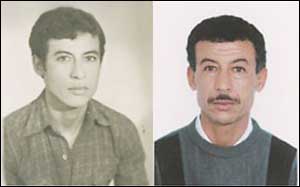
    I have posted before about the Polisario and the way they have kept their own people as virtual hostages by demanding autonomy for a region that according to every credible expert has no future as an economic entity. Today the Morocco Times has a lengthy article about the fate of Lamani Abdellah a prisoner of the Polisario for twenty-three years.

    Lamani Abdellah before he was kidnapped (1980) and after he was released (2003)

    Lamani is one of the many prisoners who were either caught up or kidnapped during the Sahara war opposing Morocco to the Algeria-backed Polisario Front. He says in the Morocco Times interview that the Polisario has committed the most horrific kinds of violations of human rights against the Moroccan prisoners in the Tindouf camps, southern Algeria. This, of course is not new information as there have been frequent reports of Polisario attroicities - but it is worth reading.

    You will find the full article here: Horrors of Tindouf camps

    Tags:

    Monday, November 28, 2005

    Human rights defenders on trial


    Morocco/Western Sahara: Human rights defenders on trial

    Amnesty International announced today that it is sending a delegate to observe the trial this week of seven human rights defenders from Western Sahara who the organization believes may be prisoners of conscience. They are standing trial together with seven other accused who are being prosecuted for participating in demonstrations against Moroccan rule.

    Tunisian lawyer Samir Ben Amor will be representing Amnesty International at the trial proceedings, which are due to begin at the Court of Appeal in Laayoune on 30 November 2005. He is an experienced human rights advocate who previously was Amnesty International’s observer at the October 2003 trial of Algerian human rights activist Salaheddine Sidhoum in Algiers.

    Currently detained in Laayoune Civil Prison, the seven human rights defenders – Aminatou Haidar, Ali-Salem Tamek, Mohamed El-Moutaouakil, Houssein Lidri, Brahim Noumria, Larbi Messaoud and H’mad Hammad – were arrested between June and August 2005. They face charges of participating in and inciting violent protest activities and belonging to an unauthorized association, charges which they deny. Two of them allege that they were tortured during questioning.

    Amnesty International is concerned that the seven and an eighth activist, Brahim Dahane, appear to have been targeted because of their leading roles as human rights defenders, as well as their public advocacy of self-determination for the people of Western Sahara. Most recently, all eight have been instrumental in collecting and disseminating information about human rights violations committed by Moroccan forces against Sahrawi protesters in the context of demonstrations in Laayoune and other towns and cities in Morocco and Western Sahara since May 2005.

    Brahim Dahane, who was arrested on 30 October 2005, is also facing charges related to his human rights activities but his case remains under judicial investigation and he is expected to be brought to trial separately. Amnesty International believes he too may be a prisoner of conscience.

    Amnesty International’s concerns and recommendations regarding these cases are the focus of a newly released report Morocco/Western Sahara: Sahrawi human rights defenders under attack (AI Index: MDE 29/008/2005), which can be consulted on Amnesty International’s website at the following address: http://web.amnesty.org/library/Index/ENGMDE290082005

    The report also details cases of other Sahrawi human rights defenders who have been subject to harassment and intimidation by Moroccan security forces in recent months and allegations of human rights violations against demonstrators, including the death in suspicious circumstances of a protester in October 2005.

    Background
    Human rights activists in Western Sahara have repeatedly been targeted for their human rights work in recent years. Some have been prevented from travelling abroad to report on human rights violations, while others have been arbitrarily imprisoned.

    Since May 2005, the territory of Western Sahara, particularly the town of Laayoune, has been rocked by a series of demonstrations. In many of them, demonstrators have expressed their support for the Polisario Front, which calls for an independent state in the territory and has set up a self-proclaimed government-in-exile in refugee camps in south-western Algeria, or called for independence from Morocco. These views are anathema to the Moroccan authorities, who have responded in a heavy-handed manner to the protests, exacerbating tensions.

    Western Sahara is the subject of a territorial dispute between Morocco, which controversially annexed the territory in 1975 and claims sovereignty there, and the Polisario Front. Both parties have agreed that a referendum on the future status of Western Sahara should be organized under UN auspices, but this has been repeatedly postponed and is yet to be held.

    Tags: