Showing posts sorted by relevance for query Moroccan Caftans. Sort by date Show all posts

Wednesday, November 27, 2013

Moroccan Caftans in Paris Fashion Show


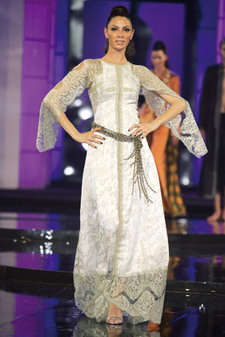
This week the Moroccan designer Albert Oiknine charmed a capacity Parisian audience with his latest creations based on the Moroccan caftan. The show, under the evocative name of “Sultans”,  reflected the long history and traditions of the Moroccan caftan as well as the skill and creativity of Moroccan manufacturers

“above all, a hymn to the eternal feminine,”

Albert Oiknine’s caftans are “above all, a hymn to the eternal feminine,” wrote fashion critic Hasna Daoudi.

According to the Maghreb Agence Press, the Parisian public came in large numbers to discover the skills and dexterity of Moroccan artisans, and was charmed by the latest haute couture collection of Albert Oiknine, showing oriental costumes, primarily Moroccan caftans.

“Fitting shapes, silky and transparent materials, all adorned with jewels and embroidery, have enhanced this collection in which originality rhymes with sensuality,” one critic wrote.

Based for 15 years in Casablanca, where he gained all skills in oriental design, Albert Oiknine has contributed to the modernization and diffusion of the Moroccan Caftan and its popularity worldwide.


SHARE THIS!
Print Friendly and PDF

Wednesday, June 11, 2008

New Moroccan Caftans unveiled in Fez


Space to relax at Riad Alkantara

With the completion of work at the stunning Riad Alkantara, Camille Lorenzetti and Abdelfettah Seffar invited a select group of friends join them to celebrate the upcoming opening in September.

Abdelfettah Seffar

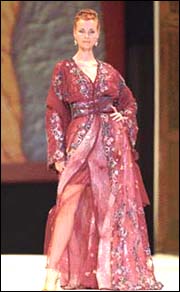
Camille Lorenzetti models one of the caftans

Sofia and Ghizlane of G&S Haute Couture Traditionnelle

Camille promised surprises, and there certainly were - a display of Moroccan Caftans designed by Ghizlane and Sofia of G & S Haute Couture Traditionelle.

fabric detail

The garments were sumptuous, of fabulously rich fabrics embroidered and embellished and modelled by three young Moroccan women. Much to the amazement and delight of the crowd, a young man in traditional dress arrived on a hennaed and caparisoned stallion.


There was a chance to take a look at the beautiful gardens and swimming pool at the riad, as well as plenty of delicious food.

The construction work has been carried out with superb attention to the smallest detail and the result is an establishment that should set a benchmark for top of the market accommodation. It is pure luxury - but with refined taste.


Musicians, including the renowned Anass Habib, entertained the A-list crowd. The View from Fez wishes Camille and Abdelfettah all the best with their wonderful new venture and we're looking forward to being invited for a dip in the pool!


Tags:

Wednesday, July 28, 2010

Moroccan Caftans - A Royal Parade


Moroccan caftans (kaftans) are closely watched by the fashion industry around the world and now a new wave of both male and female designers are taking things a step further. As one male designer says "I am liberating Moroccan women with my designs". The old values are changing - gone are the full length dresses and the covered bust. New daring designs are making an entrance and it will be interesting to see how they are accepted.

Here is a recent compilation of Royal Caftans!


Tuesday, December 05, 2006

Moroccan Caftans 2006


Due to a publicity bungle, a fabulous Moroccan Caftan display arrived in Fez and unfortunately few people knew about it until it was over. However we can at least show you what we all missed out on.


Thankfully, our fellow blogger, Maryam in Marrakech is plugged into the right social set and managed to score a timely invite - so check out the other photographs here: Glamour, Moroccan style You can read our previous caftan story here: Moroccan Fashion Week - Daring caftan show.

Advance publicity is extremely important in a world where there are so many competing events. The recent Jazz in the Riads fell down in this respect and in previous years the Sacred Music Festival has also been slow in its English language information. Hopefully all that will change with the new director in charge.

Tags:

Tuesday, August 31, 2010

What to wear in Ramadan: the Moroccan djellaba


Many women don traditional caftans or djellabas during Ramadan, even if they don't usually wear them. The View from Fez takes a look.


The djellaba is a long garment, usually with bell-shaped sleeves and a hood. It usually features heavy embroidery and hand-made silk buttons. It can be a work-a-day coverall, or a highly fashionable statement. As people look to tradition during the holy month of Ramadan, many women wear them as a matter of course. Tailors do a roaring trade just before Ramadan starts, and again just before the Eid, when many people like to have new clothes.

silk embroidery and hand-made buttons adorn a djellaba

Imane Belhaj, writing for Magharebia, reports that interest in the djellaba grows around national and religious holidays.

"In Ramadan, I stop wearing modern clothes and I wear djellabas that I buy especially for this occasion, because we are supposed to wear decent clothes, and there is no better option than the djellaba," said Farida Nasi, who chooses modern designs.

modern caftans
The garment has actually started to respond to the fashion of the times. It no longer is restricted to one type of sewing or one colour as was the case in the past. Rather, traditional tailors have excelled in sewing and making them a form of dress that responds to fashion without losing its peculiarity and identity.

"This has made it a uniquely Moroccan form of dress that is indispensable at all times and occasions, even in the workplace for female employees, as it no longer impedes them from moving easily," says tailor Hajj Bouhlal.

There are sleeveless djellabas to suit the hot weather, and dresses made of silk of different colours and patterns.

Fatima Mourad, a university history researcher, explains that "the djellaba has a traditional image that embodies the past and links it to the present by adding a modern touch that makes it suitable for all time and for all generations."

Rashida al-Jabri, a teacher, added that she can't foresee the extinction of the djellaba. Regardless of developments taking place over time, she stated, the garment will be passed on to later generations.

Although some types of Moroccan djellabas are still affordable to a large category of middle class citizens, the innovations of top designers and dressmakers have made them very costly. Prices in some cases are now higher than those of traditional caftans or takchitas (a form-fitting dress with matching coat).

"These prices are due to the type of fabric and sewing accessories used, which are often of very high quality so that we may not let our customers down when they are looking for quality and elegance" said designer and dressmaker Soad Benkirane.

Benkirane added that customers could choose to have more affordable djellabas made.

"Everyone knows that the hands that excel in making djellabas are very cheap, while all the huge profits go to the owners of stores or holders of trademark," lamented Nora, a consumer.

Tuesday, July 08, 2008

How to get the most of a trip to Morocco


One of the most surprising thing about many of the visitors to Morocco is how little they know about the country they are visiting. A small amount of time doing research before you set out will assist any visitor in having a far more rewarding experience. Over the last few years we have assembled a vast amount of information about Morocco in general and Fez in particular. So - before you set out - check out the things that interest you. The View from Fez is fully searchable. For example; if your interest is in Sufi Music - then simply type the word Sufi in the search box at the lop left of this page. The results will come up and as you scroll down them you will come to a link marked "older posts" clicking on this will open up even more results for a Sufi search

Here are some of the most commonly searched for items:

Travel writing about Morocco

Accommodation
Sacred Music Festival
Moroccan Caftans

There are a lot of internet sites with practical tourist information such as maps of the Fez Medina and suggestions for sightseeing and so on and our links will also take you to some of the better ones. For restaurants you can see a guide here : Fez Restaurants or our listings with photographs Fez Food Guide


For those who are new to The View from Fez, we have hundreds of stories rangiing from renovation to culture, antiques to music and, of course, all the gossip and news.

If you are interested in buying property in Morocco or a riad in Fez, then it would be worthwhile browsing our Moroccan Property pages.

Lifestyle issues ( restaurants, bar guides and accomodation) can be found on The View from Morocco.

The free classified advertising pages are at ArtiZany

Other quick links:

  • Eating out in Casa

  • Eating out in Fez

  • Marrakech guide

  • Meknes bar guide

  • Tangier Bars

  • Rent a Fez Riad


  • Some basic contacts:

    Police-Emergencies phone number is 19
    For the Fire Brigade phone 15
    If you have a car breakdown or want to report an accident to the police - 177
    It is wise to post valuable articles from the Central Post Office · Grande Poste, on the corner of Avenue Mohammed V and Hassan II.
    There is an all-night pharmacy Av. Abdelkrim El Khattabi - Tel: 62.33.80
    Omar Drissi Hospital is in Place de l'Istiqlal (phone) 63.45.51
    For Ghassani Hospital phone 62.27.76 / 77
    Tourism Office · Place de la Résistance, Tel: 62.34.60 / 62.62.97
    Railway Station · Rue Imarate Arabia - Tel: 62.50.01
    Fès - Saïss Airport · Route d'Imouzzer - Tel: 62.47.12 / 62.43.00
    Royal Air Maroc · 52, avenue Hassan II - Tel: 62.04.56 / 57
    Renting a Riad in the Medina contact: http://www.fez-riads.com

    Tags:

    Thursday, June 17, 2010

    Festival of Amazigh Culture in Fez


    The 6th Festival of Amazigh Culture will be held from 1-4 July at the Palais de Congres in Fez.
    Organised by the Spirit of Fez Foundation in collaboration with the Fes-Saiss Association and the South North Centre, with support from the Royal Institute of Amazigh Culture, the University of Fez and the BMCE Foundation, the festival has as its theme Migration and Hybridity: the Maghreb-Europe Paradigm. The Festival Director is Dr Moha Ennaji.

    The word Amazigh is a collective name for the various Berber people living in the Maghreb.

    the Amazigh flag, symbol of all the Amazigh peoples

    Here is the programme:

    THURSDAY 1 JULY
    16h00: opening
    17h00: tribute to El Houssain el Moujahid, Secretary General of the Royal Institute of Amazigh Culture (RIAC)
    17h45-19h50: talks by Gérard-François Dumont (Rector of the University of Paris-Sorbonne); Mohamed Taifi (University of Virginia); Fatima Boukhris (RIAC); Fatima Sadiqi (INLAC, Fez);

    CONCERTS (ALL CONCERTS ARE FREE OF CHARGE)
    20h00 at Boujloud Square
    -Ahidous Ouyoun Oum Errabie
    -Groupe Imazzalen

    21h30 at Bab al Makina
    -Ahidous Ouyoun Oum Errabie
    -Charfadi (Italian group)
    -Abdelaziz Ahouzar

    FRIDAY 2 july
    Morning talks from 09h00 by Tijani Boulaaouali (Netherlands); Abdelkader Benhamadi (University of Oran); Smaïn Laacher (France); Bashir El Kot (University Al Fateh); Hassan Id Belqacem (RIAC); Bennacer Azday (RIAC); El Houssain El Moujahid (RIAC); Didier Le Saout (University of Paris 8);
    Afternoon talks from 15h00 by Nabil Cherni (University of Manouba, Tunisia); Alfonso de Toro (University of Leipzig); Khalid Zekri (University Moulay Ismail, Meknès); Amel Grami (University of Manouba, Tunisia); Charles Bonn (France); Zahia Salhi (University of Leeds, UK); Sanae Ghouati (Universit Ibn Tofail, Kénitra); Moha Ennaji (INLAC, Fès); Salim Jay (Moroccan writer, France)

    CONCERTS
    20h00 at Boujloud Square
    - Oriental dance Alforja
    - Singer Mourad Majid

    21h30 at Bab al Makina
    -Groupe Tagadda
    -Fashion show of Moroccan Caftans (Couture Quatre Saisons)
    -Singer Abdellah Daoudi

    SATURDAY 3 JULY
    Morning talks from 09h00 by Maati Kabbal (Institut du Monde Arabe); Jilali El Koudia (University of Fez); Jean-Marie Simon (French writer); Assia Belhabib (University Ibn Tofail, Kénitra); Mustapha Bencheikh (University Ibn Tofail, Kénitra); Aïcha Bouhjar (RIAC); Azelarabe Lahkim Bennani (University of Fez); Fouad Brigui (University of Fez).
    Afternoon talks from 15h00: Abdelouahad Mabrour (University Chouaïb Doukkali, El Jadida); Abdelkrim Chiguer (University Moulay Ismail, Meknès); Khalid Bekkaoui (University of Fez); Michiel Leezenberg (University of Amsterdam).
    16h30-17h00 Poetry readings from Mohamed Ouagrar, Asmae Belkasmi, Bassou Oujebbour, Abdellah Ahllal and Abid Himmich.
    17h00-18h00: the stories of Jean-Marie Simon
    18h00: Fashion show of Amazigh costumes (Hajiba Belghazi)

    CONCERTS
    20h00 at Boujloud Square
    -Group Ahwash Tissant
    -Group Fuzanarouz

    21h30 at Bab al Makina
    -Group Ahwash Tissant
    -Group Tagrawla (Algeria)
    -Singer Ammouri Mbarek

    SUNDAY 4 JULY
    17h00 at Complex al Houriya: Film screening Itto Titrit by Hicham Ayouch (producer Mohamed Abbazi)

    CONCERTS
    20h00 at Boujloud Square
    -Group Tifraz
    -Polish group Joculatores


    Saturday, March 17, 2007

    Fez in the New York Times


    Our dear friend David Amster and his wonderful house Dar Bennis received a wonderful boost by being mentioned in the New York Times travel pages. The writer, Seth Sherwood, did a really good job of describing one of the great shops in Fez. The article is reprinted below.

    David is something of a legend in Fez for his tireless assistance to people purchasing property and for his own fastidious restoration work
    .

    Photo credit: Ed Alcock for The New York Times

    Arriving in Fez in the early 1600s, the Scottish traveler William Lithgow was astonished to find that Morocco’s religious and cultural capital was also a shopper’s paradise. “The city aboundeth in all manner of provision fit for man or beast,” he observed.

    Mohamed Bouzidi-Idrissi is part-owner of this quartet of small clustered stores, where a neo-sultan might furnish his palace.

    If the errant Scot explored the 1,200-year-old city today, he would still find the place full of the artisans’ stalls and workshops that have long made Fez the capital of North African craftsmanship. And at Coin Berbère, he might even unearth the same creations he glimpsed four centuries ago.

    Owned by brothers Khalid and Mohamed Bouzidi-Idrissi, the quartet of small clustered stores is where a neo-sultan might furnish his palace, clothe his staff and carpet his floors. One chamber is full of huge 17th- and 18th-century wooden doors. These impressively carved portals now enjoy second lives as wall-mounted artwork. Another nook holds venerable Fez pottery, prized for its distinctive cobalt blue glaze. Earthenware jugs, brass kettles and silver jewelry burst from the corners.

    Hanging on a wall, an exquisitely sewn 18th-century silk caftan highlights one of the store’s specialties: textiles. Even more astonishing is the Star of David stitched deftly into a button. It’s a quiet reminder that Jews historically formed a vibrant component of Moroccan society. (Most emigrated to France and Israel in the 20th century.) Upstairs, carpets testify to the artistry of another Moroccan minority, the Berbers, the indigenous inhabitants of North Africa.

    Like everywhere in the country, prices are unmarked and negotiable. In general, Mohamed says, doors run from 5,000 to 10,000 dirhams ($585 to $1,175, at 8.70 Moroccan dirhams to $1), caftans from 3,000 to 8,000 dirhams, chests from 1,500 to 4,000 dirhams and embroidery from 10,000 to 12,000 dirhams. That will almost certainly include a glass of mint tea.

    “It’s one of the best antique and carpet shops in Fez,” said David Amster, a 12-year resident who has outfitted his guesthouse, Dar Bennis, with textiles and wooden furniture from the store. “The owners are friendly, honest and fair,” he said. “But of course you have to bargain a bit.”

    Coin Berbère is at 67 Talaa Kebira in the Haddadine quarter of the Fez medina (212) 35-63-69-46.

    David Amster's site and info on Dar Bennis: House in Fez

    Tags:

    Monday, May 06, 2013

    Caftan 2013 ~ A Marrakech Fashion Extravaganza

    Last weekend saw the opening of the 17th edition of Caftan, one of the most prestigious events in the traditional Moroccan haute couture scene. It is all over in only a couple of hours, but the work behind the glitz and glamour has taken months.


    There is tremendous competition even before a single caftan glides down the catwalk. Only fifteen fashion designers are selected from the more than 50 who submitted their portfolios to the organizers. Once chosen, the designers have only four months to prepare a collection of eight caftans.  Then comes the tension of waiting to see how the critics react to the new designs.

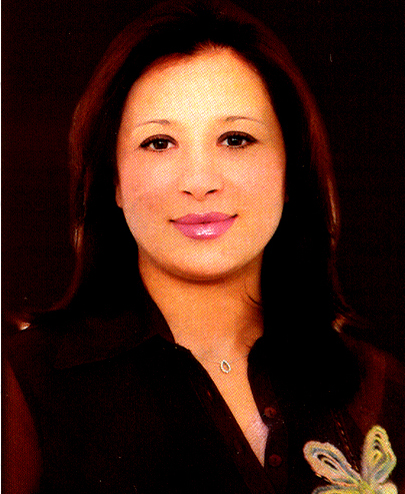
    Top fashion designer Meriyem Boussikouk from Casablanca (pictured left) has 20 years of experience in the industry. Yet she said she was still nervous about how the public would react to her new collection. “We have been nervous since we started preparing for the show, and our nerves grow as the event gets nearer, because we are not sure about ourselves 100 percent. There are new creations as well as new ideas we want to propose to the public, and we are not sure about the reaction (it’ll get). Will the public accept or reject what we offer?”

    The theme chosen by this year’s event organizers, a Fashion magazine called FDM, or Femmes du Maroc, was “Women of Legend”. The designers were to be inspired by a variety of women who made history for a variety of reasons, such as Audrey Hepburn, Umm Kulthum, Cleopatra, Coco Chanel and Marilyn Monroe among others.


    Khalid Bazizd, the show’s producer, said the goal was to pay tribute to these fascinating women who seemed to have had everything: beauty, power, talent, knowledge and glory. “We chose the theme of ‘Women of Legend’ because it inspires fashion designers. These women have always been full women (the embodiment of womanhood). In the Moroccan history, we took Kahina. We also chose Umm Kulthum, Marilyn Monroe and other women. The most important thing is that women are not there just to complement men. At the same time, we revisited the history of Morocco as well as the world’s history to put women up front. What can you find more beautiful than a caftan to showcase women?”

    Designer Dany Atrache
    Each edition of Caftan has a guest of honor, and this year it was the turn of the French-Lebanese designer Dany Atrache. “I came to Morocco to learn how Moroccans work on this traditional garment, because there is a lot of work involved in it and also it is made in a special way,” said Atrache. “We cannot call it a designer piece, because a designer piece is linked to fashion that changes every six months. Here, we are talking of a traditional garment that is centuries old, yet it looks as new. It is not easy to reach this level of perfection,” he added.


    The audience was entertained by colourful dance sequences inspired by Coco Chanel, Marie Antoinette and Marilyn Monroe. The Choreographer was Moroccan Malika Zaidi. “I will show off all these women through choreography and acting. What strikes me most is the beauty. For me, all women are beautiful regardless of their shape. They could be tall, short or fat - they are always beautiful”.


    SHARE THIS!
    Print Friendly and PDF

    Saturday, June 28, 2008

    Caftan Fashions at The Clock


    A fashion show of caftans by Sefrou haute couture designers Nany Cerise was recently held on the terrace at Cafe Clock. Helen Ranger was there for The View from Fez. 


    This green velvet caftan embroidered in gold started the proceedings. It reappeared later with a gold lace takshita (long jacket worn over the caftan) encrusted with 'emeralds'. There were some beautiful designs in bold colours, augmented by the passementerie (elaborate embroidery and tiny buttons) that Sefrou is famous for.


    Crowd-pleasers included a floaty pink floral, a dramatic black with silver embroidery and large silver buckle on the belt, a cherry ice satin with maroon velvet trim and a stunning lemon and lime. Not to be left out, the men wore handsome outfits too, one in black and one in white with brown embroidery, particularly on the stand-up collar.


    The models were all from Sefrou, coached by local Peace Corps workers, and were very professional.

    The Nany Cerise boutique is in Sefrou, ph 061 52 27 71 or 066 73 52 80.


    photo credits: top, Helen Ranger; all others Omar Chennafi


    Tags:

    Thursday, May 17, 2007

    Silkworms - the little workers of Fez


    It’s a craze every year. All over the medina you’ll see boxes of small grey silkworms being fattened up on layers of mulberry leaves. Now there are boxes of yellow cocoons too. The View from Fez spotted these fine specimens half way down Tala’a Sghira this week. But it’s not just children collecting the voracious little worms. Lumen Reports:


    Travelling by taxi past the Baladiya’s office the other day, we saw grown men stripping a mulberry tree of its leaves. So while there are plenty of carts full of pale green or black mulberries for sale, the leaves are being collected all over the city to feed these hungry pets. And there are plenty of mulberry trees … hard little unripe fruits are scattered across the table at Thami’s restaurant, there’s a magnificent old tree by the fountain in Derb Jama’a El Hamiya … you can find them everywhere.


    But what becomes of the silkworms? Will there be a cloud of white moths over Fez when they all emerge from their cocoons? Are the cocoons sold and silk spun to embroider rich caftans? Or maybe there’ll be a forgotten shoebox full of brittle, dusty cocoons under every child’s bed …

    Words: Lumen
    Photographs: Sandy McCutcheon


    Tags:

    Friday, March 06, 2009

    Fez Medina's new antique shop


    What do you do when you have TWO houses full of antiques and beautiful objets? This little conundrum has been solved by Mehdi Msefer, who has recently opened his new shop, Boutique Numero 1, in Batha.


    The shop stocks ceramics, brassware, furniture, carpets, hendiras, jewellery and clothing such as caftans, djellabas, scarves and belts. Mehdi tells us that he has over 700 Berber carpets, and they are of particularly high quality.

    carpet detail

    The hendiras and cushion covers also display very fine work.

    cushion cover

    In the glass-fronted cabinets you'll find superb examples of jewel-coloured silk scarves and belts. Saleswoman Beatrice admits that it will be a wrench to sell anything at all, so attached is she to these beautiful pieces of artistry.

    silk belts and scarves

    When Helen Ranger visited, she was delighted to find that she knew Mehdi of old. He's also the owner of the excellent restaurant, Trois Sources.

    Boutique Numero 1
    1 Rue Ahmed Mekouar, Batha
    (almost opposite the Treasury Office)
    ph 0661 35 02 50
    open 9am to 9pm daily

    Tags: