Showing posts sorted by relevance for query Jearld Moldenhauer. Sort by date Show all posts

Monday, May 16, 2011

Dar Balmira - Superb photo gallery to open in Fez


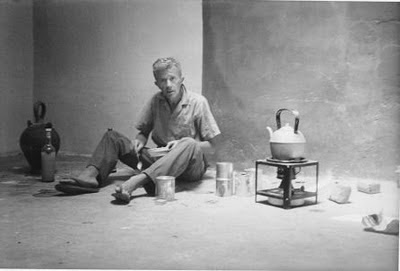
In theses days of specialization, it is refreshing to meet a true renaissance man. Fortunately for the cultural life of Fez, Jearld Moldenhauer is such a person. The View from Fez visited him at Dar Balmira to view his galleries of photographs, only to discover that there was much more to the man and the house than we anticipated.

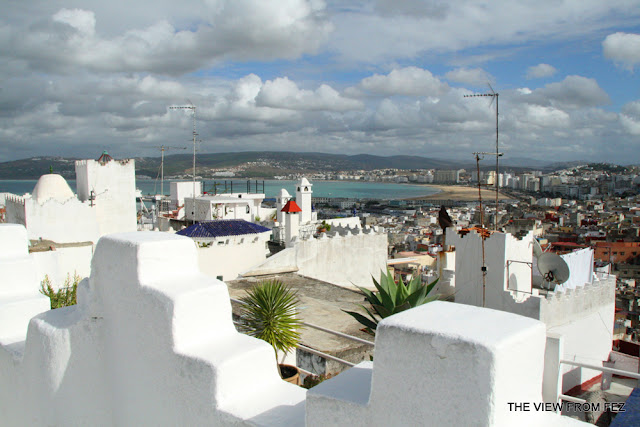
Situated in derb Saoud in Gzira, Dar Balmira is full of surprises. The central courtyard is magnificent tribute to the arts and crafts of Fez. All the huge, ancient doors are in perfect proportion to the space and stand alongside wonderful carved plaster in pristine condition. The surrounding woodwork, carved in bold designs, seems to cascade down from artful niches. One of the salons off the courtyard gives us the first glimpse of the complexity of the softly spoken Moldenhauer. It is his private space, and contains a vast collection of movies and books. A huge home-cinema screen is complimented by tall-standing speakers that would do some full-sized cinema proud.

Jearld Moldenhauer

Upstairs, through smaller doors, we discover a number of cosy l-shaped rooms. "This one is a children's room", he explains. "This one was originally my study," he says of another. It is packed with books. A quick glance at the titles confirms that this man is a reader of a very wide range of literature. This one room alone would keep most bibliophiles happy for years.

Then it is into the photo-gallery spaces. Jearld explains; "The galleries include one salon of historically important photos of the Medina taken by the French in 1912. These pictures have been restored from their original photogravures, enlarged and framed. Another salon and corridors feature my own work, all pictures on Moroccan life, landscape and nature. At present there are around 250 pictures on display."


More surprises were to come. Up to the terrace and suddenly we are in a garden, complete with aviary! A small collection of exotic species is complimented by ducks, a chameleon or two and so it goes. "Did I mention I like bugs?" he quips. But it is not simply a joke. In the photo-gallery where his own collection hangs are wildlife and landscape photographs as well as some wonderful human studies. "I'm fond of bridges... old bridges... and rivers... I also have a pretty good understanding of classical music..." As we said, a renaissance man.

On the terrace... succulents as well !

"The roof deck is pretty unique, featuring several hundred plants as well as an aviary with some 40-50 parrots. The menagerie also includes a pair of ducks (now sitting), four land tortoise, two resident chamelons and a very happy kitten. Each year I raise young falcons taken from their nests by Medina boys. Unfortunately just lost one seriously injured by a sling shot that broke its wing in a place impossible to repair. The roof deck also features an elevated walkway offering a good panorama of the Medina." - Jearld Moldenhauer

Born in Niagara Falls, NY, Moldenhauer attended Cornell University, where he studied biological sciences. After graduation he emigrated to Canada in 1969 and fond a work as research assistant at the University of Toronto. This lasted for about a year as he was fired from his position after founding the first gay student organization in Canada.

While he could, judging by his photographs, have made a name as a photographer, books appear to have been his first love. He opened Toronto's famous Glad Day Bookshop in 1970.

The work on Dar Balmira has been going on for some five years and we understand it will be open to the public in the near future. It will certainly be worth a visit.



Sunday, March 23, 2014

Daily Film Screenings at Dar Balmira in Fez


Gallery Dar Balmira is starting a daily film program at 17:00 pm. The owner, Jearld Moldenhauer, says they are are offering a different film each day of the week. The same films will play the following week as well. A new schedule for the next two weeks can be sent to your e-mail address

Jearld Moldenhauer

Situated in derb Saoud in Gzira, Dar Balmira is full of surprises. The central courtyard is magnificent tribute to the arts and crafts of Fez. All the huge, ancient doors are in perfect proportion to the space and stand alongside wonderful carved plaster in pristine condition. The surrounding woodwork, carved in bold designs, seems to cascade down from artful niches. One of the salons off the courtyard gives us the first glimpse of the complexity of the softly spoken Moldenhauer. It is his private space, and contains a vast collection of movies and books

Guests are welcome to see the photo exhibits and visit the roof deck garden and aviary. The Dar Balmira roof deck offers an exceptional panoramic view of the Medina and Mt. Zalagh so guests are welcome to bring their cameras.

The screenings will be shown on a large 147 cm (diagonal measurement) HD 3-D screen with a separate home theatre 5 speaker sound system. Screenings usually run under 2 hours so that guests may return to their Riads and Hotels in time for dinner. Riad managers are welcome to visit Gallery Dar Balmira to see exactly what we offer to visiting tourists. We also suggest taking a few minutes to look at their web site: Dar Balmira


The schedule

Sunday March 23 European Cinema: Arabian Nights
directed by Pier Paolo Pasolini, 1974, 130 minutes. Blu-Ray

Monday March 24 3D Film Showing: Hugo directed by Martin Scorsese, 2011, 126 minutes
Limited seating, 3D glasses provided. Reserve by phone or e-mail.

Tuesday March 25 Nature Documentaries: Jane’s Journey
The story of Jane Goodall’s life from primatologist to crusader to save our endangered planet. Directed by Lorenz Knauer, 2010, 107 minutes, HD


Wednesday March 26 Hollywood Film: Stand By Me
directed by Rob Reiner. Staring River Phoenix, Kiefer Sutherland and Wil Wheaton, 1986, 86 minutes, Blu-Ray.

Thursday March 27 Exploration: Master & Commander
Directed by Peter Weir. Starring Russell Crowe, 2003, 138 minutes, Blu-Ray

Details

Entrance by donation. Includes Photo Galleries and Film. Film showing begins promptly at the appointed time. Arrive early to see the galleries and the house! Call ahead for someone to meet you and bring you to Gallery Dar Balmira, a 3 minute walk from Rcif.

Program repeats the following week, same day of the week, same film, same time. Films in English, some with French or Spanish voice over or sub-titles.

Contact: 05 35 76 45 85 e-mail:darbalmira@gmail.com
Address: Rcif (Gzira) 1 bis derb Saoud


SHARE THIS!
Print Friendly and PDF

Friday, May 10, 2013

Balmira Gallery Opening ~ A Cultural Boost for Fez


It has taken years of work but now the Dar Balmira Photographic Gallery is about to open. Jearld Moldenhauer has more than 300 photographs on display covering everything from historic photographs of Fes to stunning images from the Moroccan countryside and of Moroccan nature. 


One of the most fascinating sections of the extensive photographic exhibition is the collection of historic Photos of Fes Medina taken in 1915-16 by Commander Larribe. Published in 1917 by Editions G. Bertrand in Paris. Three portfolios include 119 photogravures averaging 163mm x 103mm and a foreword and notes by Alfred Bel.

Jearld has spent a huge amount of time and effort to produce the prints on display. These small photogravures were scanned into Photoshop where a professional conservator restorer did his best to improve these fading images. They were then enlarged This is an ongoing project and there are many more images, both from the Larribe albums and other sources awaiting restoration and printing.


In his own words

Jearld Moldenhauer says this about Dar Balmira

The house named Dar Balmira or “Falcon House” is located in Gzira, a very old area on the Andalousian side of Oued Fes, about a 3-minute walk from Rcif. I bought this particular house for several reasons. The carved painted ceilings in the four salons are exceptionally beautiful and the roof deck offers a wonderful panorama of the Medina with Mount Zalagh prominent on the northwest horizon. The house had been owned by only a few families and had been kept up far better than so many I had looked at.

It didn’t take long for me to conclude that the large salons would be ideal for art galleries and the roof deck with its fantastic relationship with the sky above and view of the Medina as a place I could develop an aviary for various parrots as well as a major collection of botanical specimens.

By chance one day when I was searching the internet for old books about Morocco I came across an antiquarian dealer offering the 3 portfolios of 1915-1916 photogravures of the Fes Medina taken as a sort of pictorial survey by French Army Commandant Françoise Larribe. Once I had them in my possession I realized that these rather tiny, somewhat deteriorated images needed to be restored and enlarged in order to realize their potential as historical documents accessible to the general public.

My own career was that of a bookseller but since the age of 13 I continuously pursued my interest in photography. Now that I am retired this interest has been able to grow and be developed. Once settled into Dar Balmira I purchased a small motor scooter and started to explore the countryside in every direction from Fes. Once I started to see the landscape and variety of nature the country has to offer, this slow method of travel with my photo equipment became a major source of inspiration and personal happiness to my new existence in Morocco.

Most areas I have photographed at present are off the usual tourist beaten path and I have only rarely encountered foreigners along the way. This presented the Dar Balmira gallery project with yet another unique opportunity: to show visitors to Fes images of the country they might otherwise not see, thereby enhancing their sense of understanding and appreciation of the beauty of this country.

Already the salons and corridors exhibit more than 300 photographs. And yet the project has barely begun. Since acquiring the Larribe portfolios I have succeeded in finding other old photograhic images deserving to be brought to life again through the technology at hand. And my own travels around the country need to be both expanded and repeated to do justice to enormous variety of life, culture and topography to be found in every corner of Morocco.


For more information: 
Open 9am to 6pm
1 bis Derb Saoud
(3 minute walk from Bab Rcif
darbalmira@gmail.com
0535764585

SHARE THIS!
Print Friendly and PDF

Saturday, October 27, 2012

Fez Photo Of the Day

With the wet cool weather set to continue until Thursday next week, we selected a wonderful reminder of warmer weather.  Today's photo of the day is a view of Fez in spring, taken from Mount Zalagh. The photograph is by Jearld F Moldenhauer.


photo by Jearld F Moldenhauer  Click photo to enlarge
courtesy Dar Balmira Gallery, Gzira Fes Medina.

The View from Fez welcomes contributors' photographs. 

SHARE THIS!

Thursday, November 22, 2012

Autumn Tourism in Morocco

While the flow of visitors arriving in Morocco had been relatively steady over the last month, the numbers appear to have increased in the last couple of weeks. Tour groups from Europe as well a considerable number of families from South America, Australia and New Zealand have been arriving recently. Guest house owners in the Layoun and Rcif areas of the Fez Medina report being at full capacity and with many forward bookings. Visitors are taking advantage of the fact that autumn is a cool but beautiful time of year and after the recent rains the countryside is green for the first time in months.

A frozen cedar forest - photo Jearld Moldenhauer  - Dar Balmira Gallery 

The snowfalls in the High Atlas have abated for the moment and the roads have been cleared of the snow.


Recent visitors (pictured above and below), Amy from Australia and Saara from Finland, exploring the Fez Medina for the first time found it "awesome". They spent a couple of days shopping in the Medina before heading off on a day trip to the Roman ruins at Volubilis, lunch in Moulay Idriss and a visit to the granaries in Meknes. 


Booking Early

Michele Reeves from Plan-it-Fez says that October was a very busy month, and though the numbers of arrivals have slowed slightly, it remains steady. Recent arrivals have been from America, the UK and countries in South America and most had the foresight to book well in advance. Michele says that last year people were booking accommodation and tours at the last minute which caused problems with supplying vehicles. Now, however, she says people are booking for late November and December, well in advance. Culinary tours and day trips, she says, remain incredibly popular.


Aisha Bail (pictured above), who manages Riad Rcif, says that the last couple of months have been incredibly busy with guests flowing in from European countries (due to the discount flights). The interesting demographic change she has noticed is there have also been many South American vistiors from countries such as Argentina, Mexico, Chile, Columbia and Brazil. They have also had a growing number of tourists from the Scandinavian, Baltic and Eastern bloc countries including Lithuania, Poland and Russia. Other riad owners in the Layoun, next to Rcif, have reported an increase in visitors from the Indian subcontinent.

Aisha Bail agrees with Michele Reeves that there is a trend towards many people booking well in advance. Some, she says, as far ahead as August 2013. Like Michele Reeves, she welcomes this as it makes management so much easier.

False Guides

The problem that concerns Aisha Bail most is the new breed of sophisticated false guides on the trains. The View from Fez has reported on this before, but it is worth repeating the warning. According to Aisha, the men, posing as businessmen, get on the trains to Fez at Meknes or Casablanca, and then try to convince visitors that the riad they are staying at is not a good place. Other visitors say that the men act in pairs with one laying the ground work and a follow-up person backing up the stories of poor accommodation. They also try and convince people that where they have booked is a "dangerous" area of Fez. They then offer to act as their guide in Fez and find them "better" accommodation. Unfortunately, even though many false guides have been stopped in recent weeks, the men on the trains continue to evade the police.

More info: 
Plan-it Fez: email: info@plan-it-fez.com. Website: www.plan-it-fez.com Tel: +212 (0) 678 549 482
Riad Rcif website
Rent a riad in Fez
Morocco Basics 

SHARE THIS!

Saturday, September 02, 2017

Moroccan Photo of the Day

A layer of smoke hangs over the Medina of Fez from the thousands of fires for cooking the Eid sacrifice 

(Click on image to enlarge)

Photo credit: Jearld Moldenhauer

See more in our series Photo of the Day 

The View from Fez welcomes contributions to our Photo of the Day Series

SHARE THIS!

Wednesday, September 21, 2011

Sneak Preview of Fez Photo Exhibition


Trilogy Fassie  is a selection of photographs taken in Fez and Meknes between 1916 and 1917 by the French Commandant, Larribe. They are on show between September 23 to October 31 at the Gallery of the French Institute in Fez. Here is a taste of the exhibition. Note: click on images to enlarge.
 MARCHAND DE FARINE A LA MEDINA

The View from Fez would like to thank Jearld F Moldenhauer from Dar Balmira Gallery, Gzira, Fes Medina, for the images. Jearld purchased these albums several years ago and has been restoring, enlarging and printing the images. These photographs are all by Larribe, the major restoration work was done by Canadian conservator and landscape photographer Philip Atkinson and Jearld did the printing.

 LA MUSIQUE MILITAIRE DE GARNISON DEVANT L'ENTREE DE LA RESIDENCE AUX JARDINS DE BOU-JLOUD    
 L'OUED FES A L'INTERIEUR DE FES EL-BALI
  "I found such a charm to live in Fez for about thirty months (March 1914-August 1916), such an interest for my Muslim studies, such a curiosity to follow the more or less the initial contact between our administration and this population of 100 to 120,000 souls, so confident friendly in all environments, especially among the ulema and Tolba, with whom I work constantly, and among the artisans, who have always provided with a perfect good grace, the basis for my personal documentation of their techniques. Now I know, once again, and always with pleasure, the opportunity to talk about this city and its inhabitants. "

These are the words of preface by Alfred Bel, in the introduction to the albums of photographs taken by the Commandant Larribe. 

 Ce sont des Albums de Photographies prises par le commandant Larribe, avec les notices dʼAlfred Bel, le fondateur du Batha, sous le titre « Le Maroc pittoresque », publiés, en trois tomes par Georges Bertrand, à Paris.

« J’ai trouvé un tel charme à vivre à Fès pendant une trentaine de mois ( mars 1914-août 1916), un tel intérêt pour mes études musulmanes, une telle curiosité à suivre d’un peu près les premiers contacts de notre administration avec cette population de cent à cent vingt mille âmes, une telle confiance sympathique dans tous les milieux, surtout chez les uléma et les tolba, avec lesquels j’avais sans cesse à travailler, et chez les artisans, qui m’ont toujours fourni, avec une parfaite bonne grâce, les éléments de ma documentation personnelle sur leurs techniques, que je saisis, une fois de plus, et toujours avec plaisir, l’occasion de parler de cette ville et de ses habitants ».

LES TIMBRES DE L'HORLOGE A LA MEDERSA BOU ANANIYA

LE SULTAN MOULAY-YOUSEF  LA HEDIA DANS LE MECHOUAR
 The opening is at the Gallery of the French Institute in Fez at 6.30pm on Friday.


Tuesday, November 13, 2012

Moroccan Photo of the Day


This moth of many colours was photographed by Jearld Moldenhauer on the beach at Saida
Photo courtesy Dar Balmira Gallery, Gzira Fes Medina.

SHARE THIS!

Wednesday, September 28, 2011

Important Breakthrough for Moroccan Bird Life


A workshop to develop a roadmap for the transition of BirdLife engagement in Morocco from a country programme to the typical NGO representation was held at the Hotel Ibis in Rabat over the last few days. The outcomes amount to good news for those working preserve bird life in the region.

The BirdLife Partnership has been active in Morocco for more than 15 years through a Country Programme managed initially by BirdLife International, then by RSPB, and later by SEO/BirdLife, with the engagement of other BirdLife Supporting Partners and the BirdLife Africa Secretariat. This has always been in close cooperation with the Moroccan authorities, particularly the High Commission of Water and Forest and Fight against Desertification . In keeping with its vision for developing national capacity, BirdLife International has had a long standing desire for the transition of the representation of the Partnership in Morocco from a country programme to a national Moroccan NGO.

Various efforts have since taken place towards this goal, involving the Council for the Africa Partnership, SEO/BirdLife, RSPB and VBN and the BirdLife Africa Secretariat. These interested parties developed a project titled “Strengthening BirdLife in Morocco: Conservation strategy and NGO development”, through which a plan and set activities were started in 2010, with the aim of transforming BirdLife representation in Morocco to a national NGO by 2012.

“A strong foundation has been set in the transition of the representation of BirdLife in Morocco from a country programme to NGO “ remarked Fred Wouters, Director of VBN and member of the BirdLife Global Council who participated at a workshop to work out modalities for the collaboration between the BirdLife Morocco Programme and GREPOM. “The pace of transition now rests with GREPOM and the BirdLife Morocco programme, who must work with the BirdLife Africa Partnership and Secretariat to signal when they are ready to advance towards BirdLife affiliation”.

“We have already lost a lot of time and wasted efforts working separately in the conservation of biodiversity in Morocco” remarked Prof. Mohammed Dakki, President of GREPOM while accepting to the road map. “ By bringing together the capacities of GREPOM and the BirdLife Morocco Programme and the international support from BirdLife, we will achieve much more conservation impact for birds and people in Morocco”.

“This workshop can be likened to the start of a courtship leading to a marriage between GREPOM and the BirdLife Morocco Programme to become one member of the BirdLife family” remarked Julius Arinaitwe, who delivered the message to Prof. Mohammed Dakki. “The letter can be considered as the blessing from the parents for the courtship to begin, and we are all looking forward to the wedding, when a BirdLife Affiliate in Morocco will be recognized”.

A visibly elated Asuncion Riuz, Director of SEO/BirdLife could not hide her pleasure. “This is a very happy occasion for SEO/BirdLife, who under a mandate from BirdLife Global Council is responsible for the BirdLife programme in Morocco. For a long time, we have worked hard to get the local capacity in place to lead in the very important bird Conservation issues in Morocco. This workshop is a concrete step in realizing this dream. We will continue to work hard, together with other partners , to support this initiative as much as possible for however long it takes. ”

 Photograph of Owl on Mt Zerhoune by Jearld F Moldenhauer,
courtesy Dar Balmira Gallery, Gzira Fes Medina. (Click image to enlarge)

Several presentation helped to set the scene, with a key one by Dr Hazell Shokellu Thompson, Assistant Director in charge of Network and Capacity Development, who explained BirdLife International and the key criteria that have to be met by GREPOM to become a BirdLife Affiliate and advance within the BirdLife Partnership. Dr Imad Cherkaoui presented a draft roadmap that has three phases, the first one focused on collaboration between BirdLife Morocco Programme and GREPOM, the second looking at admission of GREPOM as the BirdLife Affiliate for Morocco and the Country programme acting as a Secretariat for GREPOM and the final stage with the Country Programme fully integrated within GREPOM. This is a process that will take some time, and good collaboration.

Morocco offers a tremendous diversity of habitats and climates which support a wide range of interesting species plants (almost 4000 recognised plants of which 17% are endemic), butterflies, amphibians reptiles (50% more than in the whole of Europe), mammals and, most notably, birds with 481 bird species.
Morocco harbours the last wild breeding colonies in the world of Geronticus eremita (CR), a formerly widespread species, and until recently, was a regular wintering site for small numbers of Numenius tenuirostris (CR). There are globally significant breeding and wintering populations of marmaronetta angustirostris (VU) and Falco naumanni (VU), and significant wintering populations of Lerus audonimii (CD).

Morocco is a bottleneck of a main migration route between Europe and Africa for tens of millions of western Palearctic migrants. Up to 200,000 raptors and 90,000 storks and Cranes have been recorded passing across the Straits of Gibraltar at Jbel Moussa in northern morocco. Most of the coastal wetlands and many of the inland waters are crucial resting and refueling stops, or overwintering sites, for water birds using the ‘Atlantic Coastal Flyway’ that descends the western seaboard of continental Europe and Africa from Norway to Senegal and beyond. A total of 46 Important Bird Areas (IBAs) is identified covering 30,338 km2, equivalent to 4.3% of the country’s land area.

Tuesday, September 20, 2011

Morocco's Last Storytellers ~ review


A new book from Richard Hamilton shares a collection of stories, as told by five storytellers from Marrakech's famous square - the Jemaa el Fna. The storytellers, all old men, sit at the centre of a circle of listeners and as our reviewer discovered, reading The Last Storytellers is to join that circle.


The Jemaa el Fna, in the words of Richard Hamilton, "...has been Marrakech's marketplace, sacred space, cultural crucible, melting pot and meeting point for centuries" and where, in the words of the Moroccan proverb, "everything is possible, but nothing is certain". When Richard Hamilton first plunged into the busy square back in 2006, he must have have reflected on that proverb. It took several trips and three years before he emerged with this collection of stories.

Richard Hamilton

The last storytellers in this collection are Moulay Mohamed El Jabri, Abderrahim El Makkouri, Ahmed Temiicha, Mohamed Bariz and Mustapha Khal Layoun. It is to be hoped that the title of The Last Storytellers is proved wrong. For, as Barnaby Rogerson says in his splendid foreword, 'when an old storyteller dies, a whole library burns'.

The tales contain many of the favourite motifs of the poor and dispossessed. These are rags-to-riches tales and those, too, of the common man struggling through adversity to marry a Sultan's daughter. Escapist maybe, but also offering a grain of hope to the listeners that surround the storyteller.

The tellers of these tales are not published authors with bestsellers to their names, but men eking out a living in a time-honoured way. These thirty-seven tales have left the halka (circle) in which they were first told and made it to the printed page. But the storytellers remain in the circle, each of which is a link in a chain that remains unbroken. Reading these stories it is easy to feel that you have joined that halka and you will find that, like all good stories, each time you read them, new layers will be revealed.

Here you will find ancient echos of tales that predate Islam and which are suffused with magic, witchcraft and unsparing revenge. Amongst these stories are also themes which will seem familiar, such as Mustapha Khal Layoun's Aicha Rmada. The short tale appears at first to be a version of Cinderella, yet it ends with horrors that no parent would want a child to hear at bedtime.

The Storyteller Jemaa el Fna 1984
(
Courtesy Dar Balmira Gallery, Gzira Fes Medina)
Richard Hamilton is correct when he describes storytelling as "a priceless treasure, as precious as mankind's greatest artefact or the planet's most endangered species, and of immeasurable importance to humanity." But hopefully he is incorrect in using the word "last". There is something in our make-up, perhaps in our DNA, that demands stories and while in the modern world the storytellers have been usurped by cinema, television and YouTube, it is a tradition that is likely to survive. Even as you read these words, in mountain villages, around campfires, in forests and at children's bedsides, stories are being told. Long may it be so.


TO PURCHASE, CLICK ON IMAGE


Richard Hamilton is a professional broadcast journalist currently working for the BBC World Service. He has spent time reporting from Morocco, South Africa and Madagascar. While in Morocco he co-authored the Time Out Guide to Marrakech and has written throughout his career for various newspapers and magazines.

The Last Storytellers: Tales from the Heart of Morocco is published by I B Tauris

Reviewed by Sandy McCutcheon.

The View from Fez would like to thank Jearld F Moldenhauer from Dar Balmira for his photograph taken in 1984.

Saturday, March 29, 2014

Paul Bowles and The American Legation ~ Saving the Music of Morocco

Lynnsay Maynard, former public radio producer/host at MPBN, now manuscript reader at Electric Literature, Brooklyn, New York, USA, reflects on the work of Paul Bowles in recording and preserving Morocco's traditional music and the role of the American Legation in continuing his work

Paul Bowles ~ photo by Jearld F Moldenhauer
courtesy Dar Balmira Gallery, Gzira, Fes Medina.

In early March of 1959, the first performances of Tennessee Williams’ play “Sweet Bird of Youth” opened at Martin Beck Theatre in New York City starring Paul Newman and Geraldine Page. Directed by Greek-American Broadway and Hollywood legend Elia Kazan, most famous for conceptualizing ‘method acting’, the production of the Hollywood-lustful gigolo Chance Wayne would go on to garner four Tony Award nominations and enjoy over 350 performances in its initial run. Hidden amongst the dazzling list of cast and crew was the production’s composer: Paul Bowles, an American composer and author known preeminently for his 1949 novel “The Sheltering Sky” and his notoriously colorful expatriate lifestyle in his adopted home base of Tangier, Morocco.

Bowles was busy in 1959. A collection of his short stories, “The Hours after Noon”, was published. From Tangier, he was caring for his wife, writer Jane Bowles, who had suffered a debilitating stroke two years prior. A lifelong friend and collaborator of Williams, “Sweet Bird of Youth” marked the third production to which Bowles penned the music. And in the spring, Bowles was awarded a grant from the Rockefeller Foundation totaling $6,800 to fund an expansive project in conjunction with the American Folklife Center at the Library of Congress (LOC): travel across Morocco and record as much folk, tribal and modern music as possible.

After a weeks’ training on Ampex reel-to-reel recording equipment at the LOC in Washington D.C., Bowles returned to Tangier. In early August, Bowles set out in a Volkswagen Beetle stocked with equipment, bedding and pots and pans accompanied by Christopher Wanklyn, a subdued American associate of Bowles’, and Mohammed Larbi Jilali, a kif-dependent native Moroccan who knew the local officials and the terrain.


My stint, in attempting to record the music of Morocco, was to capture in the space of the six months which the Rockefeller Foundation allotted me for the project, examples of every major musical genre to be found within the boundaries of the country... By [December 1959]... I already had more than two hundred and fifty selections... as diversified a body of music as one could find in any land west of India. - Paul Bowles Their Heads Are Green ("The Rif, To Music")
During four, five-week trips separated by days of respite in Tangier, the trio zipped across Morocco visiting 23 cities and towns along the Rif and Atlas Mountains, northern Sahara and southeastern and northern corners operating from a map of Bowles’ design.  In his essay, “The Rif, To Music”, Bowles details portions of the trip including terse negotiations over performance costs, audible gunfire from Oujda, a town 5km west of Algeria which was in the throes of its revolution against French forces and the unbridled joy of a hot shower after days of traversing unpaved back roads.

The trip yielded 72 reel-to-reel tapes, a total of 250 selections of Moroccan music. Bowles returned the recordings to the American Folklife Center at the LOC. The recordings languished in Washington D.C. until 1972 when Bowles handpicked 20 selections for a two-LP set published by the LOC.

As a composer, Bowles was personally interested in the music but his true investment in the, at times, exhausting, four-month venture was in the preservation of an oral culture that encompassed the people and tradition of Morocco. In “The Rif”, Bowles writes, “The most important single element in Morocco’s folk culture is its music….the entire history and mythology of the people is clothed in song. Instrumentalists and singers have come into being in lieu of chroniclers and poets, and even during the most recent chapter in the country’s evolution – the war for independence and the setting up of the present pre-democratic regime – each phase of the struggle has been celebrated in countless songs.”

A protectorate of France and Spain since the mid-19th century, Morocco gained independence in 1956 when the previously exiled Sultan Mohammed V became king. The monarchy wanted to be seen as modern and resisted the presence of a notable American recording traditional Moroccan music, an experience that Bowles recounts through numerous examples in “The Rif”.

American Legation Institute for Moroccan Studies 

Gerald Loftus, (pictured left) director of the Tangier American Legation Institute for Moroccan Studies (TALIM or, colloquially, the American Legation Museum), credits Bowles for preserving Morocco’s musical heritage at a pivotal time in the country’s history.

“If you look at some of Paul Bowles’ writings, he was worried that some of this music would disappear. He was aware of the fact that the Moroccan government at the time was not terribly enthused about a foreigner recording their music, what they saw as primitive music. They were Western-educated: they wanted to be seen as modern and this was seen as primitive,’ said Loftus.

Nestled on a residential street of Tangier’s medina, or ‘old city’, the American Legation building was gifted to the United States in 1821 by Sultan Moulay Suliman and served as a US consulate and later legation, as well as a heavily trafficked post for World War II intelligence agents and a Peace Corps training facility. Today, its courtyards and narrow hallways serve as an elaborate museum demonstrating American-Moroccan relations and Moroccan heritage, including an entire wing devoted to Bowles.

Paul Bowles, Allen Ginsberg, William Burroughs, Gregory Corso and Ian Sommervill in Burroughs’s Villa Mouniera garden, Tangier - July 1961

A cluster of rectangular rooms with jade green tiles positioned off a lush terrace, the Bowles wing is a venerable monument to the artist’s life and work. A typewriter sits perched on five-tiered stack of faded, tired luggage below a photo of Bowles at the keyboard, with a quote from the author denying that he ever used a typewriter. A framed snapshot of Bowles, barefoot before a fire with a notebook and pen in hand, is signed ‘Allen Ginsberg’. A scrapbook from one the American School of Tangier’s high school play, “The Garden”, to which Bowles contributed incidental music, lies adjacent to a scattered array of typewritten postcards. Loftus taps on the glass case and gestures towards the pile.


“Some of them I turned over; they might be semi-pornographic on the other side. Some of these are business correspondence. It’s like sending an e-mail today from your literary agent to Paul Bowles,” said Loftus, peering over a postcard languishing in the middle of the pile.

Loftus, a former US Foreign Service Officer, took the helm as director of the American Legation in 2010, a year that also happened to mark the centenary of Bowles’ birth. Working with a minimal amount of artifacts compiled 15 years prior by Gloria Kirby, a lifelong Tangier resident and friend of Bowles, Loftus reached out to connections at cultural institutions and notable Tangier expats to expand the existing collection, with a new focus in mind: Paul Bowles the composer, including an entire nook devoted to the 1959 project.

In 2010 when Loftus became director, he had a series of consultations in Washington D.C. before jetting off to Tangier. A meeting at the LOC precipitated a conversation with Michael Taft, former head of the LOC archive, and Judith Gray, a reference specialist at the American Folklife Center. Gray mentioned the Bowles tape in LOC archives and stressed the importance of digitizing the material, a growing trend the American Folklife Center and LOC.

“All of us would have been speaking about digital preservation as the major task needing to be done before any other types of projects, including dissemination of recordings back into Morocco, could be undertaken,” said Gray.

The same year Loftus became director of TALIM, he secured funding from the US Embassy Public Affairs Section in cooperation with the LOC to digitize and repatriate the 72 reel-to-reel tapes to Morocco and its people. Sound Safe Archive in Philadelphia, Pennsylvania, remastered each reel before the entire collection was burned to four sets of CDs, which were sent to Morocco with the intention of distributing them to the Moroccan Ministry of Culture, the Wilaya (an administrative district) of Tangier and His Majesty King Mohammed VI, with the fourth and final set remaining at the American Legation as an educational and research resource.

Paul Bowles' typewriter - "I never used a typewriter!"

In the Bowles wing of the American Legation, a small sign details the digitization process and credits the Moroccan Ministry of Culture as a partner in the undertaking. In 2010, Loftus signed detailed agreement with the Wali of Tangier and the then Minister of Culture, Bensalem Himmich, delineating the transfer of the remastered CDs and the small portion of the digitization fees the Moroccan government agreed to pay. Despite the funding originating from the US Embassy, Loftus said he wanted the Moroccan people to reap the benefits.

Following the agreement and initial fervor for the project, Moroccan officials have yet to claim the material or pay their portion of the agreed upon fee. Loftus’ tenure as director of TALIM will end June 2014; as he prepares for his departure, Loftus hopes to wrap up the four-year-old agreement so Moroccans can enjoy their musical heritage, many of whom are completely unaware of Bowles’ country-wide trek.

In 2012, Loftus appeared on a two-hour Radio Tangier panel discussion about Paul Bowles wherein he described TALIM’s project and brought select samples of Bowles’ recordings to play on-air. The panel, save Loftus, was comprised of native Moroccans.

“They were all familiar with Paul Bowles and his work on music but they had never heard these selections before. They were speechless. It was speechless radio because they were in awe of what he had recorded in 1959,” said Loftus.

While Loftus is also working to host the remastered selections online for global dissemination, his utmost desire in repatriating the recordings are aligned with Bowles’ mission in 1959: to share the preserved music of Morocco with its people.

“It is Morocco’s music recorded by an American and now, it’s back in Morocco,” said Loftus.

Read more from TALIM HERE

SHARE THIS!
Print Friendly and PDF

Monday, September 26, 2011

Fez Photo of the Day


Photograph by Jearld F Moldenhauer, courtesy Dar Balmira Gallery, Gzira Fes Medina. (Click image to enlarge)

Men with mules

Monday, September 22, 2014

Eid is coming ~ and so is commercialisation


Eid al-kabir (also called Eid al-Adha) is one of the two most important Islamic festivals, Eid al-kabir begins on the 10th day of Dhu'l-Hijja, the last month of the Islamic calendar. Lasting for three days, it occurs at the conclusion of the annual Hajj, or pilgrimage to Mecca. Muslims all over the world celebrate Eid al-kabir, not simply those undertaking the hajj. Sadly, there are some countries where the character of Eid is changing

The huge sheep souk in Fez

In Morocco Eid is a time for families

Eid in Fez is a festival that brings families together and is centred around the sacrifice of a sheep and the sharing of food. It is a time of joy, celebration and sharing.

However, in some countries, commercial interests have taken Eid as a time to maximise profits and boost local businesses. For years Christians around the world have lamented the commercialisation of festivals such as Christmas and Easter. Now the signs are that Eid may be heading down that path.

In Dubai, the DFRE (Dubai Festivals and Retail Establishment), an agency of the Department of Tourism and Commerce Marketing, have announced the dates for what they are calling "The Eid in Dubai Festival".

The festival will run for seventeen days and appears to have little to do with the traditional religious festival as we know it.

In Fez and other parts of Morocco the first indications that Eid is coming are the appearance of street sellers offering sheep food and hay and the opening of the large souks selling sheep and goats. Going to the souk and haggling over a sheep is an important moment followed by the struggle to get your sheep home, up the stairs and into your house.

There will be fireworks

It is a different story in Dubai. The Eid in Dubai Festival makes no mention of sheep. It does however promise Eid fireworks on Kite Beach beginning October 2nd and running through until October 11th. In addition they are offering concerts by Australia's Top Ten Tenors and Circo Boom, a comedy circus, who will perform a series of 45 minute shows.

There will be a number of other activities and shows during this period such as the Rotana and Layali concerts, a theatrical performance of Aladdin and a hindi theatrical performance of Ismat Apa Ke Naam.

Children will enjoy the Sesame Street performances and fashion followers can quench their thirst for fashion at the next season of Fashion Forward. The fellows can look forward to the aptly named Big Boys Toys exhibition.

Comedian Wonho Chung and Max Amini bring in the laughs for the season with their very own comedy shows in Dubai.


Laila Suhail, CEO of DFRE, is quite unabashed about the commercialism. "We are delighted to bring to our residents and tourists a distinct agenda of exciting events and activities, in addition to an array of fantastic promotions that are set to further enrich their experiences of Dubai, highlighted by the city's iconic landmarks, leisure and entertainment attractions," she says. She goes on to point out that annual festivals like Eid in Dubai continue to play a pivotal role in strengthening the retail and tourism sectors. It also helps towards remarkable growth in sales at the shopping malls and shopping centres.

Shopping is a big thing in Dubai and during the Eid Festival shoppers can "look forward to a world-class shopping experience with the leading malls and shopping centres extending shopping hours throughout the 17 days of festivities".

Photograph of  sheep on Mt Zalagh by Jearld F Moldenhauer,
courtesy Dar Balmira Gallery, Gzira Fes Medina. 

Meanwhile, back in Morocco, the sheep are getting nervous.

At its heart Eid is a reminder of Ibrahim's willingness to sacrifice his son Ishmael in obedience to a command from God. The occasion serves as a reminder to all Muslims that they should submit to God and be prepared to sacrifice anything that God wishes. It has little to do with shopping and fireworks.

SHARE THIS!
Print Friendly and PDF

Sunday, September 09, 2012

Tantalising Tangier


Glenys Roberts, writing for the Mail Online has a fine piece about Tangier. Here is an edited extract and a link to the full article.

Tangier - photo: Sandy McCutcheon

Bohemian rhapsody: Falling (again) for Tangier, Morocco's exuberant swirl of a city

Welcome to expat heaven Tangier, Morocco, where the British still cling to an elegant social round, for the most part long gone in the mother country.  With their own church, their favourite hotel, the Minzah, built by the immensely rich Marquis of Bute in the Thirties; their own riding school; and their own cemetery (and pet cemetery), it is one of world traveller Michael Palin's favourite destinations as described in his book Sahara. Palin tells of the typically bizarre churchyard scene when Birdie, an elderly white pet cockerel, took a bite out of a retired widow called Lady Baird.

Quite why I fell in love with Tangier and its eccentric ways, I can't remember. I have been visiting it since the Sixties and seen it change from a scruffy town to a modern city with French restaurants, beach bars and a summer influx of some of Europe's richest people.

Mick Jagger, who has kept a flame alive for it almost as long as I have, paid a flying visit this year to see his favourite jeweller Majid, and I met Sixties rock chick Pattie Boyd, still looking a million dollars stretched out under a coconut hair parasol.

Tangier has some fabulous restaurants - photo Sandy McCutcheon

I first visited the white city, as it is known because of its dazzling buildings and fabulous light, on a day trip from Gibraltar on the shuttle plane run in those days by Gibair. When the plane was grounded by sea mist, the company put us up in the Minzah Hotel. With its entrance in the middle of the town and view over the bay, it is surely one of the best-placed hotels in the world.

The view from El Minzah is stunning

It is hard to think of a better positioned town either. On a headland where the Atlantic meets the Mediterranean and overlooking Cape Trafalgar, where Nelson lost his life, it is a must for history buffs. The town has had Western visitors ever since the 17th- century diarist Samuel Pepys was sent there to wind up the British garrison in 1683.

Gore Vidal came to Tangier for the boys, Errol Flynn for the girls. Matisse and Degas came to paint and couturier Yves Saint Laurent to gain inspiration for his collections. Tennessee Williams came to write and so did Jack Kerouac and William Burroughs. Winston Churchill and Aristotle Onassis both visited and the legendary American writer Paul Bowles moved in.

Paul Bowles in Tangier ~ photo by Jearld F Moldenhauer, courtesy Dar Balmira Gallery, Gzira Fes Medina

Today, the King of Morocco, Mohammed VI, is determined to make it a showcase city. He has built a corniche at the base of the kasbah and a marina that he hopes will make it into another Monaco. There is so much confidence in the air that the Spanish come to look for work in construction. And there are so many French intellectuals - French is still the lingua franca - at times it is possible to imagine oneself on the Left Bank in Paris.

Old Tangier hands like myself hope our favourite town will not end up a concrete jungle as parts of Europe have done, but whatever happens it is difficult to imagine it being altogether changed. It is built on so many hills that there will always be those tempting glimpses through the buildings to the sea. When I first visited, many of the women were veiled. Now the French sunbathe topless and the carpet sellers speak perfect English. You can gamble in the casinos, you can drink in the restaurants and quad-bike and surf on the beaches.

In Tangier people still know how to enjoy the moment. They love to sit around in cafes watching the world go by and not worrying what the next day will bring. It is such a cultural shift it makes for a very relaxing holiday. Most of all there is the impression, because of Tangier's history, of living in several centuries and several countries all at the same time.


SHARE THIS!

Thursday, October 27, 2011

Travel Writing About Morocco ~ #32

Regular readers of The View from Fez will be aware that we run an occasional series on travel writing in Morocco. Many times we find the journalism patchy and the research less than thorough. However, back in June this year, we came across journalist Steve McKenna and gave him the "thumbs up" for his piece (see our story here Travel Writing about Morocco #31


Now McKenna has written another interesting piece on Tangier that is certainly worth a look. Here is an edited extract followed by a link to the original article in the Australian Sydney Morning Herald
Tangier - Photo Sandy McCutcheon

Idle time with legends

The Petit Socco square is one of Tangier's liveliest social hubs. A former souk fringed with ramshackle hotels and shabby-chic caffeine dens, artists, writers, wheeler dealers, gangsters, regular folk and tourists have long come here to while away the time.

This haven of lounging and people watching seems resistant to the gentrification that's affecting other parts of Tangier. King Mohammed VI is keen to jazz up and exploit the economic potential of a city at the crossroads of Europe and Africa, the Mediterranean and the Atlantic Ocean.

Unlike Marrakesh, Tangier isn't brimming with must-see sights. But, in its own raffishly charming way, it's equally as fascinating. Hugging the Strait of Gibraltar, just 14 kilometres from mainland Spain, the city's cosmopolitan allure has been shaped over 3000 years. Phoenicians, Carthaginians, Greeks, Romans, Vandals, Byzantines, Arabs and myriad Western powers have all invaded a territory originally home to indigenous Berber tribes.

Some say Tangier hit its zenith between 1923 and 1956 when the city became an International Zone, carved into sectors overseen by nine countries (France, Spain, Sweden, Belgium, Portugal, Italy, Holland, the US and Britain).

The Interzone, as it was known, drew a colourful cast of businessmen, celebrities, go-getters, smugglers, spies, artists and ne'er-do-wells and, according to expat American writer and composer Paul Bowles, it was a place where "you could get anything you wanted if you paid for it. Do anything too, for that matter. It was only a matter of price."

Petit Socco - one of their favourite hangouts - lies at the heart of Tangier's ancient medina, a walled labyrinth of narrow, shaded, car-free streets lined with creaking houses and hole-in-the-wall workshops, kebabaries, confectionery, carpet and jewellery emporiums.

Navigating the medina is a tricky treat. The confusion wrought by a series of dark alleys, arched passageways and dead ends turn what should be five-minute walks into half-hour ones.

I find children in faded football shirts kicking deflated balls and empty yoghurt cartons around, women shuffling along in black burqas and colourful tunics, evocative calls to prayer drifting from mosques and spicy smells wafting from kitchen windows.

The Ville Nouvelle is a different story. Surrounding the medina, this modern French-designed part of Tangier is full of multicultural restaurants and bars, European colonial buildings, wide, palm-lined streets and fountain-studded squares. It's this part of town that has seen big improvements in recent years, from myriad cosmetic changes to the redevelopment of Tangier's decaying old port into a yachting marina and cruise-ship terminal.

The revamped Cinema Rif, a hip art deco hub of movies on the Grand Socco square, epitomises the city's lively cultural scene, hosting January's National Film Festival of Tangier.

North of Cinema Rif, on Rue de la Libertie, Galerie Ibn Khaldoun displays paintings from Mohammed Mrabet, an enigmatic Berber artist and storyteller famed for his collaborations with Bowles.

Paul Bowles ~ photo by Jearld F Moldenhauer,

courtesy Dar Balmira Gallery, Gzira Fes Medina.
The pair worked to preserve classical Moroccan literature and music - a sign of the affection Bowles held for his adopted country.He spent 53 years of his life here and died in Tangier in 1999. The Paul Bowles Wing of the American Legation Institute for Moroccan Studies, tucked inside the southern tip of the medina, tells his story.

Near Ibn Khaldoun, the Institut Francais organises exhibitions at Galerie Delacroix - a spot named after the French painter Eugene Delacroix, who, like compatriot Henri Matisse, was seduced by Tangier's vivid hues.

Across the street, the five-star El Minzah Hotel is a polished Interzone icon and home to Caid's Bar, the model, apparently, for Rick's Cafe in Casablanca. Further on, Grand Cafe de Paris is arguably the most well-known of Tangier's estimated 800 cafes and patisseries.

Facing the crossroads of Place de France, the cafe was a hang-out of William Burroughs, Truman Capote, Jack Kerouac and Allen Ginsberg, the so-called "Beatniks", Interzone-dwellers renowned for their subversive scribbles.

Paul Bowles, Allen Ginsberg, William Burroughs, Gregory Corso and Ian Sommervill in Burroughs’s Villa Mouniera garden, Tangier - July 1961

Tangier has inspired a prodigious output of literature - Samuel Pepys, Mark Twain, Gore Vidal, Samuel Beckett, Gertrude Stein, Paulo Coelho and Ian "007" Fleming have all written about it - so I'm heartened to find a good bookshop.

The newly refurbished Librairie des Colonnes is halfway down Boulevard Pasteur, past the delightfully named Terrasse des Parrasseux (Idlers' Terrace), where couples and friends slouch against old cannon and stare out over the hypnotic strait.

Burroughs, a frequent visitor to the shop, penned Naked Lunch in a nearby hotel, hidden down a side street sloping down towards the bay.

With sunset approaching, I hail a taxi to Cafe Hafa, a cliff-top mecca of mint tea and backgammon, close to the Kasbah, the fortified old sultan's palace.

Apparently, Burroughs, Bowles, the Beatles and the Rolling Stones all came to smoke hashish at Hafa and, judging by the smell, it's a habit that's not been lost.I order a Moroccan whisky and find my own space of fresh air on the cafe's terrace. In a city that's fast changing, simple pleasures like these are still among Tangier's top draws.


Read more in the SMH

The View from Fez sugests: If you intend to visit Tangier, make a point of checking out the fabulously scruffy beat cafe that still runs most nights - The Tanger Inn. The inn also has some stunning old photographs (such as the ones featured above) on their wall of the Beat poets and writers who visited the city in the 50's and 60's. For more information on Paul Bowles visit the official Bowles Website.

Also see our Postcard from Tangier which has information on restaurants in the city.

SHARE THIS!